Juicy meatballs tucked into a rich brown onion gravy hit that rare sweet spot between comforting and practical. The meatballs stay tender instead of dense, the gravy turns glossy and deeply savory, and everything comes together in one skillet before landing over mashed potatoes. It’s the kind of meal that looks like you spent all afternoon on it, even though the method stays straightforward.
The trick is in how little you handle the meat mixture and how patient you are with the onions. Overmixing gives you springy meatballs, and rushing the onions leaves the gravy flat instead of dark and sweet. Browning the meatballs first adds those browned bits in the pan, which turn into the backbone of the sauce once the flour and broth go in.
Below you’ll find the small details that matter most: how to keep the gravy smooth, what to do if your meatballs are browning too fast, and a few smart swaps if you need to work with what’s in the kitchen.
The onion gravy thickened up beautifully and the meatballs stayed tender even after simmering. I served it over mashed potatoes and my husband went back for seconds before I sat down.
Pin these meatballs and gravy for a cozy skillet dinner with tender meatballs, caramelized onion gravy, and mashed potatoes.
The Gravy Starts With the Pan, Not Just the Ingredients
Most meatballs and gravy recipes go wrong when the pan is treated like a bystander. The browned bits left behind after searing the meatballs are the whole reason this gravy tastes finished instead of thin and one-note. If you skip that fond, the sauce can still thicken, but it won’t have the same depth.
The other place people lose control is with the onions. They need enough time to soften and deepen in color before the flour goes in, or the gravy tastes sharp and the onion slices stay lanky instead of melting into the sauce. Once the flour hits the butter and onions, whisk constantly for a minute so the raw flour taste cooks out before the broth goes in.
- Ground beef — An 80/20 blend gives you the best balance of flavor and tenderness. Leaner beef works, but the meatballs will eat a little firmer and the gravy won’t pick up as much richness from the pan.
- Breadcrumbs and egg — These are the structure holders. The breadcrumbs keep the meatballs from turning tight, while the egg helps them hold together without needing a heavy hand when mixing.
- Worcestershire sauce — This is doing quiet work in both the meatballs and the gravy. It adds savory depth that salt alone can’t replicate, so if you swap it out, the whole dish gets flatter.
- Dijon mustard — You won’t taste mustard in the obvious sense. It sharpens the gravy and keeps the richness from feeling heavy.
What Each Ingredient Is Actually Doing in This Recipe

- Primary ingredient (the star) — Quality matters most. Choose the best you can find.
- Cooking medium (oil, butter, or broth) — This carries flavors and prevents dryness.
- Seasonings (salt, pepper, spices, herbs) — Layer flavors so nothing overpowers. Build depth gradually.
- Aromatics (garlic, onion, herbs) — Cook with fat to bloom flavors. Become the foundation.
- Supporting ingredients — Complement the main ingredient without overpowering it.
- Sauce or liquid (if applicable) — Brings flavors together. Balance richness with acid.
- Acid (lemon, vinegar, wine, or other) — Brightens and prevents flat-tasting results.
- Final finish (garnish, glaze, or sauce) — Prevents one-dimensional taste and adds visual appeal.
Building the Meatballs, Browning the Base, and Finishing the Gravy
Mix Only Until the Meat Comes Together
Combine the meatball ingredients with a light hand and stop as soon as everything looks evenly distributed. The mixture should hold together when you roll it, but it shouldn’t feel pasty. If you knead it like bread, the meatballs turn dense and springy instead of tender.
Brown Before You Simmer
Heat the skillet over medium-high and let the meatballs get a real sear on at least a couple sides. You’re not cooking them through here, just building color and leaving behind those browned bits in the pan. If they start darkening too quickly, lower the heat; burnt drippings will make the gravy taste bitter.
Cook the Onions Until They Turn Soft and Sweet
Add the butter and sliced onion to the same skillet and give them time to soften and deepen in color, about 10 minutes. Stir often enough that they don’t scorch, but not so constantly that they can’t take on any real color. When the onions are glossy, soft, and a little amber at the edges, they’re ready for flour.
Whisk the Gravy Until It Turns Smooth
Sprinkle the flour over the onions and stir for a minute so it loses that raw, chalky smell. Then add the broth gradually while whisking so the gravy stays smooth instead of turning lumpy. If it looks thin at first, keep simmering; it thickens as the starch cooks and the steam drives off excess liquid.
Simmer the Meatballs in the Sauce
Return the meatballs to the skillet and let them finish in the gravy for about 15 minutes. The sauce should bubble gently, not boil hard, or the meatballs can tighten up and the gravy can break at the edges. When the centers are cooked through and the gravy clings to a spoon, spoon everything over mashed potatoes and finish with parsley.
Three Ways to Make This Skillet Dinner Work in Your Kitchen
Gluten-Free Version
Use gluten-free breadcrumbs in the meatballs and swap the flour for a gluten-free all-purpose blend or a cornstarch slurry in the gravy. The texture stays close to the original, but the gravy will thicken a little differently, so add the starch slowly and give it a few minutes to settle before deciding it needs more.
Leaner Meatballs
You can use lean ground beef if that’s what you have, but add an extra tablespoon of broth or a splash of milk to the meat mixture so the meatballs don’t tighten up. They won’t be quite as rich, yet the gravy carries enough flavor to keep the dish satisfying.
Make It Ahead for a Faster Dinner
Shape and brown the meatballs earlier in the day, then refrigerate them until dinner. You can also make the gravy base ahead and finish the simmer when you’re ready to eat, but hold back a little broth because chilled gravy often thickens more than you expect.
Storage and Reheating
- Refrigerator: Store leftovers in an airtight container for up to 4 days. The gravy will thicken as it chills, and the meatballs will soak up a little of the sauce.
- Freezer: This freezes well. Cool completely, then freeze the meatballs and gravy together for up to 3 months; thaw overnight in the refrigerator before reheating.
- Reheating: Warm gently on the stove over low heat with a splash of broth to loosen the sauce. Don’t blast it in a hard boil, or the gravy can separate and the meatballs can turn tough.
Answers to the Questions Worth Asking
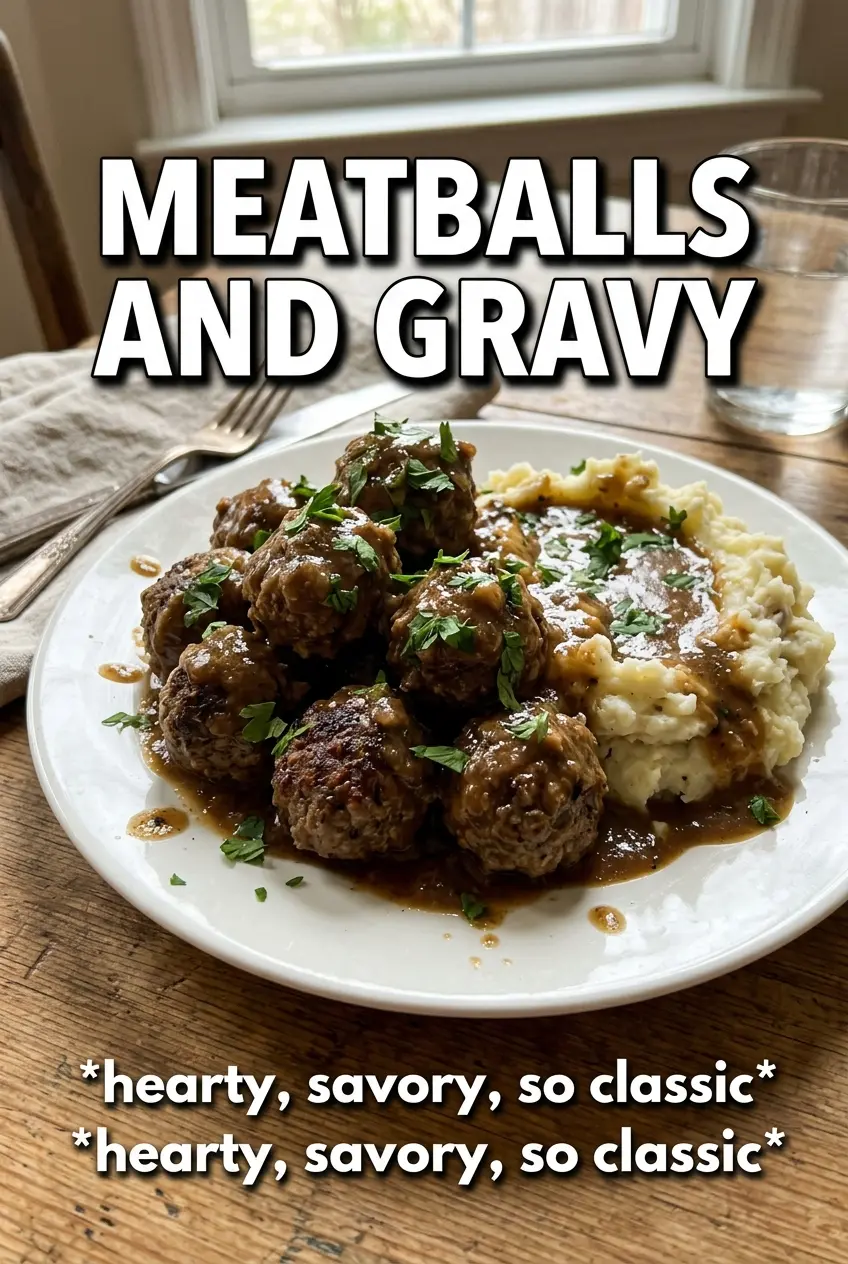
Meatballs and Gravy
Ingredients
Equipment
Method
- In a large bowl, mix ground beef, breadcrumbs, parmesan, egg, minced garlic, onion powder, Worcestershire sauce, salt, and pepper just until combined; stop when you no longer see dry crumbs. (Visual cue: mixture holds together when pressed, not overworked.)
- Roll the mixture into 1.5-inch balls and set them on a plate. (Visual cue: uniform size for even cooking.)
- Heat a large skillet over medium-high heat and brown the meatballs in batches, then remove and set aside. (Visual cue: golden-brown surfaces and light crust.)
- Melt butter in the same skillet, then add the thinly sliced onion and caramelize for 10 minutes, stirring occasionally. (Visual cue: onions turn deep golden-brown.)
- Whisk in flour and cook for 1 minute. (Visual cue: raw flour smell disappears and the mixture looks paste-like.)
- Gradually whisk in beef broth, then add Worcestershire and Dijon mustard. (Visual cue: gravy loosens into a smooth, darker brown base.)
- Simmer the gravy until thickened, stirring as needed to prevent sticking. (Visual cue: gravy coats the back of a spoon.)
- Return the browned meatballs to the gravy and simmer for 15 minutes until cooked through. (Visual cue: meatballs look steaming throughout and gravy is thick and glossy.)
- Serve the meatballs and brown gravy over mashed potatoes. (Visual cue: gravy pools slightly around the potatoes.)
- Scatter fresh parsley over the top before serving. (Visual cue: bright green finish against the dark brown gravy.)