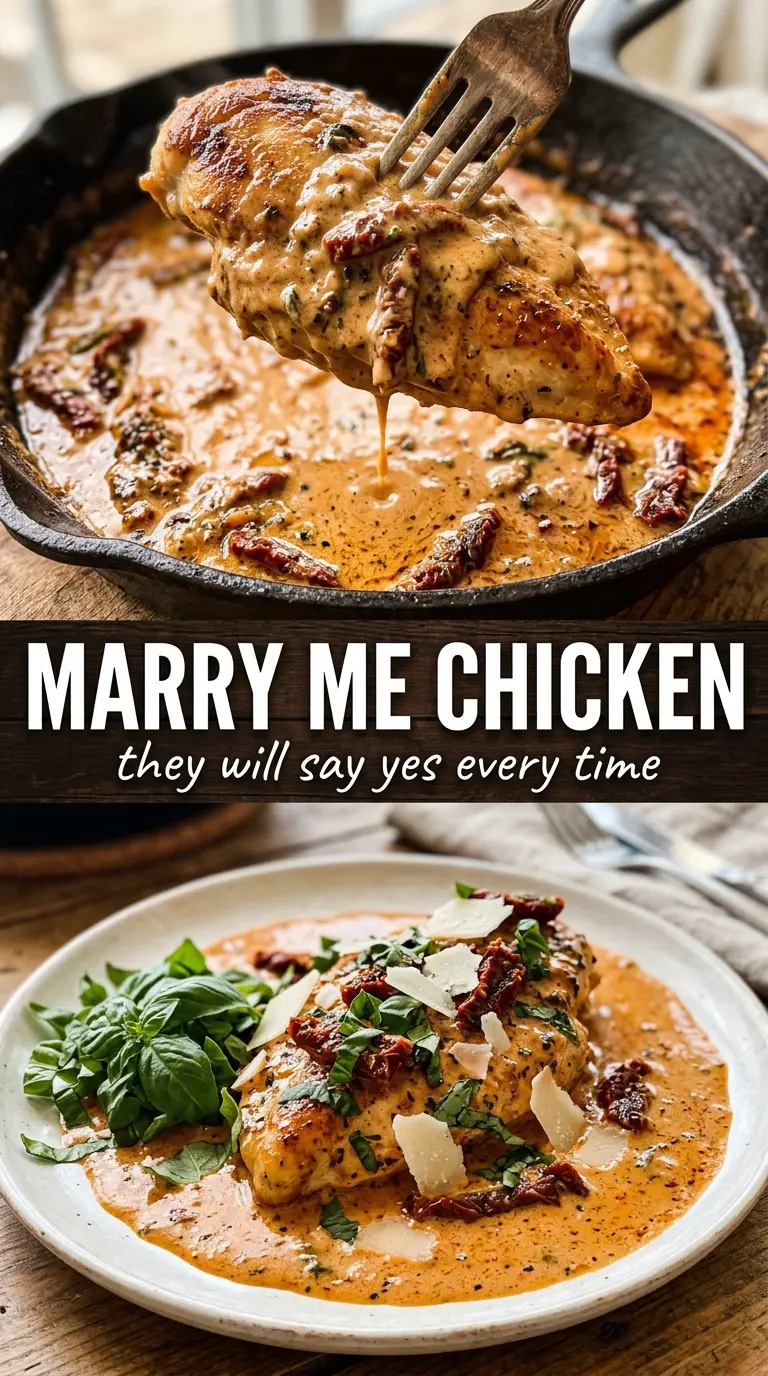
Golden seared chicken breasts bathed in a sun-dried tomato cream sauce earn their place in the dinner rotation fast. The chicken stays juicy because it’s seared hard first, then finished gently in the sauce, and the sauce itself turns glossy and spoonable instead of thin or greasy. It tastes rich without being heavy-handed, with just enough garlic, Parmesan, and red pepper to keep each bite from feeling flat.
The trick is building flavor in stages. Searing the chicken first leaves the browned bits in the pan, and those bits become the base of the sauce once the broth goes in. Heavy cream and Parmesan need low, steady heat; rush that part and the sauce can split or turn grainy. The sun-dried tomatoes bring sweetness and tang, but they work best when they’re sliced small so every spoonful gets a little of that concentrated flavor.
Below you’ll find the exact timing that keeps the chicken tender, the point where the sauce thickens properly, and a few smart swaps if you need to adapt the dish without losing what makes it work.
The sauce thickened up beautifully and clung to the chicken instead of running all over the plate. I used the skillet method exactly as written, and the basil at the end made the whole dish taste fresh instead of too heavy.
Save this Marry Me Chicken for nights when you want a silky sun-dried tomato cream sauce and seared chicken that feels restaurant-worthy without the fuss.
The Part That Keeps the Sauce from Breaking
The biggest mistake with a cream sauce like this is pushing the heat too high once the dairy goes in. The pan should be at a gentle simmer, not a boil. That keeps the cream smooth and gives the Parmesan time to melt into the sauce instead of clumping or turning grainy.
Another thing that matters here is the order. You want the garlic and sun-dried tomatoes to cook briefly in the chicken drippings before the broth goes in, because that quick sauté wakes up the flavor without burning the garlic. If the garlic goes too dark, the whole sauce picks up bitterness fast. The broth loosens the fond from the skillet, and that’s what gives the sauce its depth.
- Chicken breasts — These work best when they’re pounded to an even thickness so the thickest part doesn’t lag behind the rest. If one side is much thicker, the outside dries out before the center reaches 165°F.
- Sun-dried tomatoes in oil — The oil-packed kind gives you better texture and a richer tomato flavor than the dry-packed jars. Drain them before slicing so the sauce doesn’t turn oily, but don’t rinse them; that would wash away flavor.
- Heavy cream — This is what gives the sauce its body and keeps it from splitting under gentle heat. Half-and-half will work in a pinch, but the sauce will be thinner and more likely to break if it boils.
- Parmesan — Grate it fresh if you can. Pre-shredded cheese often has anti-caking agents that make the sauce less smooth, especially in a sauce this tight and creamy.
- Fresh basil — This isn’t just garnish. It cuts through the richness at the end and gives the dish a clean finish, which matters a lot when the sauce is this luxurious.
What Each Ingredient Is Actually Doing in This Recipe
- Primary ingredient (the star) — Quality matters most. Choose the best you can find.
- Cooking medium (oil, butter, or broth) — This carries flavors and prevents dryness.
- Seasonings (salt, pepper, spices, herbs) — Layer flavors so nothing overpowers. Build depth gradually.
- Aromatics (garlic, onion, herbs) — Cook with fat to bloom flavors. Become the foundation.
- Supporting ingredients — Complement the main ingredient without overpowering it.
- Sauce or liquid (if applicable) — Brings flavors together. Balance richness with acid.
- Acid (lemon, vinegar, wine, or other) — Brightens and prevents flat-tasting results.
- Final finish (garnish, glaze, or sauce) — Prevents one-dimensional taste and adds visual appeal.
Building the Sauce in the Same Skillet as the Chicken
Seasoning and Searing the Chicken
Season the chicken generously on both sides before it hits the pan, and don’t be shy about pressing the spices in so they stick. The oil should shimmer before the chicken goes in; if it’s not hot enough, the chicken will pale and steam instead of forming that deep golden crust. Leave it alone once it’s in the skillet so the crust can develop cleanly. If it sticks when you try to move it, give it another minute — it releases when the sear is ready.
Building the Tomato-Garlic Base
After the chicken comes out, add the garlic and sun-dried tomatoes to the same skillet and stir for about a minute. You’re looking for the garlic to turn fragrant, not browned. Then pour in the chicken broth and scrape the bottom of the pan with a wooden spoon. Those browned bits dissolve into the liquid and become the backbone of the sauce.
Turning Broth and Cream into a Sauce
Stir in the cream, Parmesan, Italian seasoning, and red pepper flakes, then let the sauce simmer gently for 4 to 5 minutes. It should thicken enough to coat a spoon and leave a visible trail for a second when you drag a spatula through it. If it still looks thin, keep simmering; if it boils hard, pull the heat back immediately so the dairy stays smooth. The sauce should look glossy, not greasy.
Finishing the Chicken in the Sauce
Return the chicken to the skillet and spoon the sauce over the top so every piece gets coated. Let it simmer for 2 more minutes, just long enough for the chicken to finish and pick up the sauce flavor. If your chicken breasts were on the thick side, check the center again before serving. The goal is juicy chicken, not another round of overcooking.
Ways to Keep the Dish Rich Without Losing the Balance
Make It Gluten-Free Without Changing the Texture
This recipe is naturally gluten-free as written, so you don’t need to change the sauce at all. Just serve it with gluten-free pasta, mashed potatoes, or rice, and keep an eye on your broth label if you’re cooking for someone who’s sensitive to hidden additives.
Swap in Chicken Thighs for a More Forgiving Finish
Boneless thighs work well here if you want darker meat and a little extra insurance against drying out. They need a few more minutes in the pan, but they stay tender even if the timing runs a touch long. The sauce doesn’t change at all, though the finished dish will taste a little richer.
Use Half-and-Half for a Lighter Sauce
Half-and-half will give you a lighter result, but the sauce won’t be as thick or as stable. Keep the heat low and simmer it a bit longer, and don’t let it boil once the cheese is in. If you want the sauce to cling properly, you may need an extra tablespoon or two of Parmesan to help it tighten.
Make It Milder for Kids or Heat-Sensitive Eaters
Cut the red pepper flakes in half or leave them out entirely. The dish still tastes layered because the sun-dried tomatoes and Parmesan carry plenty of flavor on their own. You won’t lose the creamy richness, just the little back-of-the-throat heat.
Storage and Reheating
- Refrigerator: Store leftovers in an airtight container for up to 3 days. The sauce will thicken as it chills.
- Freezer: Cream sauces can separate after freezing, so I don’t recommend freezing this dish once it’s finished. If you need to get ahead, freeze the cooked chicken separately and make the sauce fresh.
- Reheating: Warm gently on the stovetop over low heat with a splash of broth or cream. High heat is the fastest way to break the sauce, so keep the simmer soft and stir often until everything is heated through.
Answers to the Questions Worth Asking

Marry Me Chicken
Ingredients
Equipment
Method
- Season the chicken breasts generously on both sides with salt, pepper, garlic powder, Italian seasoning, and smoked paprika. Pat lightly so the spices adhere.
- Heat olive oil in a large cast iron skillet over medium-high heat until shimmering. Sear the chicken for 5-6 minutes per side until golden, then remove when the internal temperature reaches 165°F.
- In the same pan, cook the minced garlic and sliced sun-dried tomatoes for 1 minute, stirring so the garlic doesn’t brown. Keep the heat at medium-high.
- Pour in the chicken broth and deglaze the pan, scraping up the browned bits. Simmer briefly just to combine, about 30-60 seconds.
- Stir in the heavy cream, grated Parmesan, dried Italian seasoning, and red pepper flakes. Simmer for 4-5 minutes, stirring, until the sauce thickens and looks glossy.
- Return the chicken breasts to the pan and spoon the sauce over each one. Simmer for 2 more minutes to reheat the chicken and coat it thickly.
- Garnish with fresh basil and serve over pasta or mashed potatoes. Spoon extra sauce from the skillet over the top.