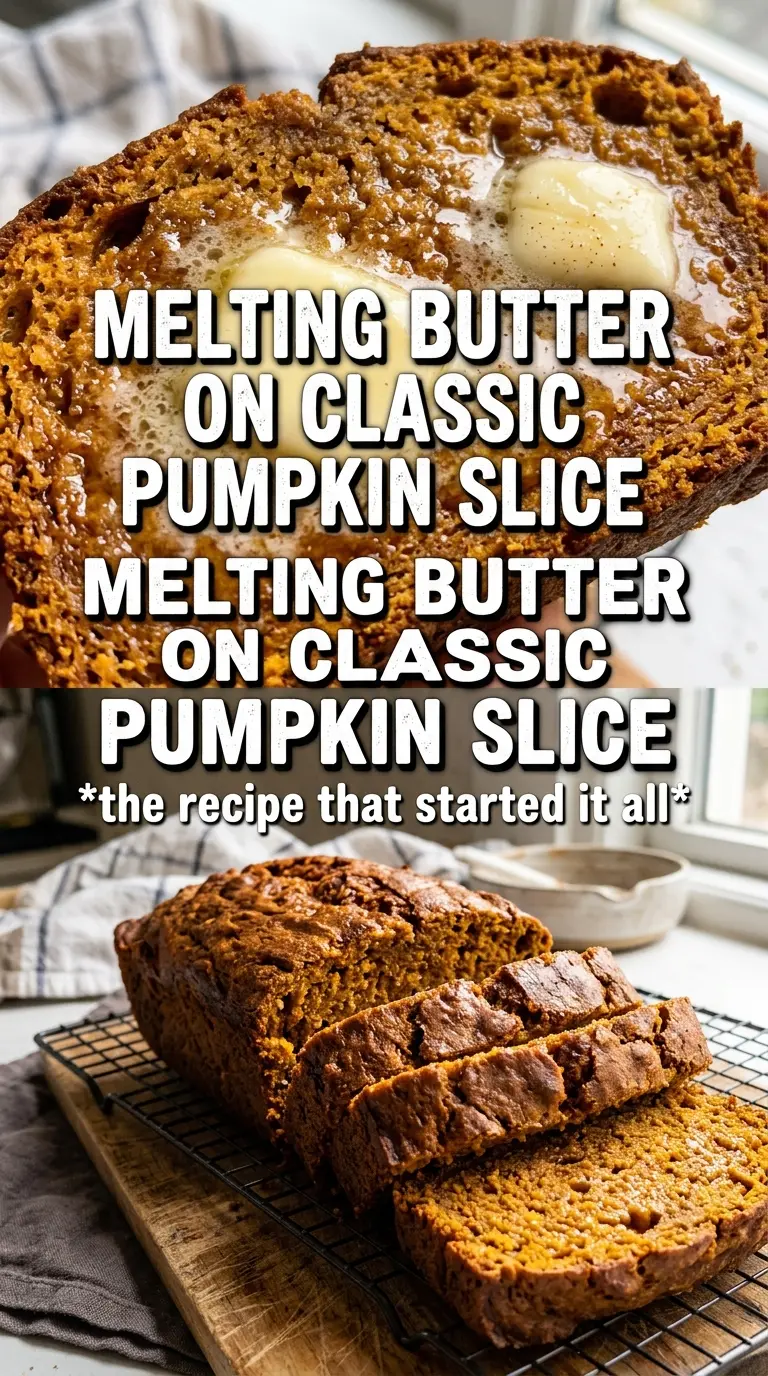
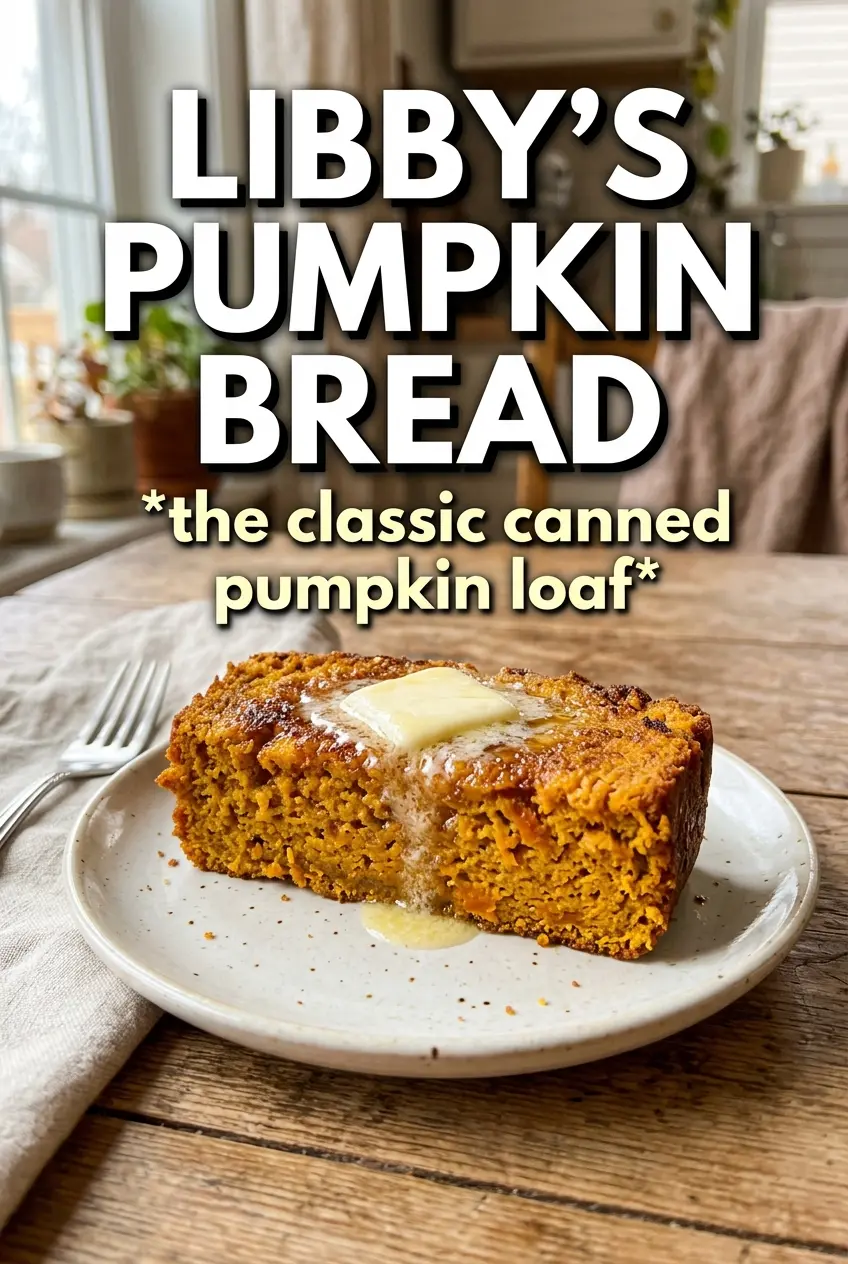
Libby’s Pumpkin Bread bakes up with a tall, domed top, a deep orange crumb, and that old-fashioned spice aroma that fills the kitchen before the loaf is even done. It slices cleanly once it cools, but the texture stays soft and moist for days, which is exactly why this one earns a permanent spot on the counter every time a can of pumpkin gets opened.
The trick is in the balance: enough pumpkin to keep the bread tender, enough sugar to keep the crumb fine and light, and just enough spice to taste warm without turning muddy. The batter comes together fast, and it should stay that way — once the wet and dry ingredients meet, a few gentle stirs are all you want. Overmixing is the fastest way to get a tight, rubbery loaf instead of the soft, bakery-style crumb everyone wants from pumpkin bread.
Below, I’ve laid out the one detail that keeps the loaf from sinking in the middle, what each ingredient is actually doing, and a few smart swaps if you want to adjust the spice or bake it as mini loaves.
The loaf rose beautifully and the crumb stayed unbelievably moist for three days. I baked the mini loaves, and they were done right at 52 minutes with no gummy center.
Save this classic Libby's Pumpkin Bread for the loaf that bakes up tall, tender, and perfectly spiced every time.
The One Mistake That Turns Pumpkin Bread Dense
The biggest problem with pumpkin bread isn’t the pumpkin. It’s the mixing. Once the wet ingredients go into the dry bowl, the batter should look a little rough and just barely combined. If you stir until it’s smooth, you’ve already gone too far and the loaf will bake up tight instead of tender.
The other thing that matters here is temperature and timing. A 9×5 pan gives the loaf room to rise into that classic dome, but the center still needs a full bake. Pull it too early and the middle sinks as it cools. Bake until a toothpick comes out clean from the center, then let it rest in the pan before moving it. That short rest helps the crumb set without tearing the loaf apart.
- Greased and floured pan — This loaf releases cleanly because pumpkin bread is moist and a little sticky. Skip the flour and you’ll lose the bottom crust when you turn it out.
- Two separate bowls — Mixing the dry and wet ingredients separately keeps the baking soda and spices evenly distributed before the batter comes together.
- Patience at the end — The loaf may smell done before it is. Use the toothpick test and cool it at least 10 minutes in the pan so the middle doesn’t collapse.
What Each Ingredient Is Actually Doing in This Loaf
- Libby's 100% Pure Pumpkin — This is the backbone of the recipe. It gives the loaf its color, moisture, and that unmistakable pumpkin flavor, and it behaves predictably because the texture is consistent. If you swap in homemade pumpkin puree, the loaf can turn wetter and denser unless you cook off extra moisture first.
- All-purpose flour — This keeps the crumb soft without making the bread heavy. Bread flour is too strong here and will give you a chewier slice than pumpkin bread should have.
- Vegetable oil — Oil keeps the bread moist for days in a way butter doesn’t quite match. You can use a neutral oil like canola if that’s what you have; just don’t replace it with melted butter unless you want a slightly firmer crumb.
- Eggs — They give the loaf structure so it slices cleanly. Room-temperature eggs blend more evenly, but cold eggs will still work if you whisk the wet ingredients until smooth.
- Spice blend — Cinnamon, nutmeg, cloves, and allspice work together here instead of leaning on one dominant note. Fresh spices matter most in this recipe because the loaf is simple enough that stale spices show up fast.
Building the Batter Without Beating the Crumb Down
Mix the dry ingredients first
Whisk the flour, sugar, baking soda, salt, and spices together until the color looks even from edge to edge. That quick whisk spreads the baking soda and spices through the flour, which keeps you from finding a bitter pocket or a clump of cinnamon in the finished loaf. If you see streaks of spice, keep whisking a few more seconds.
Make the pumpkin mixture smooth
In the second bowl, whisk the pumpkin, oil, eggs, and water until the mixture looks glossy and uniform. You want the eggs fully broken up here so the batter mixes evenly later. If the wet bowl looks streaky, the loaf can bake with little eggy spots or uneven tunnels.
Stop mixing the moment the flour disappears
Pour the wet mixture into the dry ingredients and stir just until you don’t see dry flour anymore. The batter will be thick and a little lumpy, and that’s exactly what you want. Overmixing builds gluten and makes the loaf tough, which is the opposite of the soft, tender crumb this bread is known for.
Bake until the center sets, not just the top
Scrape the batter into the prepared pan and bake until the top is deeply golden and the center tests clean with a toothpick. If the loaf is browning too fast before the middle is done, tent it loosely with foil for the last stretch. Let it sit in the pan for 10 minutes before turning it out, because that short rest helps the loaf hold together.
How to Adapt This Pumpkin Bread Without Losing the Texture
Mini Loaves for Gifting
Divide the batter between two 7×3 loaf pans and start checking at 50 minutes. Mini loaves bake faster and slice beautifully once cooled, which makes them a good choice for gifts or smaller households. The only real tradeoff is that the crust-to-crumb ratio is a little higher.
Dairy-Free by Default
This recipe is already dairy-free as written, since the richness comes from oil instead of butter. That means you don’t need a special swap, and the crumb stays soft even after a day or two on the counter.
A Lighter Spice Profile
If you want a gentler spice note, cut the cloves and allspice in half and keep the cinnamon and nutmeg the same. The loaf will taste softer and more pumpkin-forward, but it won’t have that deep, old-fashioned spice edge.
Freezing for Later
Pumpkin bread freezes well once completely cool. Wrap the loaf or individual slices tightly, then store in a freezer bag for up to 3 months. Thaw at room temperature so the crumb doesn’t get gummy from rushed reheating.
Storage and Reheating
- Refrigerator: Store tightly wrapped at room temperature for up to 4 days, or refrigerate for up to 1 week if your kitchen runs warm. The crumb will firm up in the fridge.
- Freezer: Freeze the whole loaf or slices for up to 3 months. Wrap well to prevent freezer burn and slice only what you need after thawing.
- Reheating: Warm slices briefly in the microwave or toast them lightly. Don't overheat or the crumb will dry out fast, especially if the bread has been chilled.
Questions I Get Asked About This Recipe
Libby's Pumpkin Bread
Ingredients
Equipment
Method
- Preheat oven to 350F and grease and flour one 9x5 loaf pan (or two 7x3 pans for mini loaves).
- Whisk all-purpose flour, granulated sugar, baking soda, cinnamon, nutmeg, cloves, allspice, and salt in a large bowl.
- Whisk Libby's 100% Pure Pumpkin, vegetable oil, eggs, and water in a separate bowl until smooth.
- Pour the wet ingredients into the dry ingredients and stir until just combined; do not overmix.
- Pour batter into the prepared pan and level the top with gentle taps.
- Bake at 350F for 60-65 minutes for a large loaf or 50-55 minutes for mini loaves, until a toothpick inserted in the center comes out clean.
- Cool in the pan for 10 minutes so the loaf sets before removing.
- Remove from the pan and cool on a wire rack until no longer warm, with a domed top and moist interior visible when sliced.