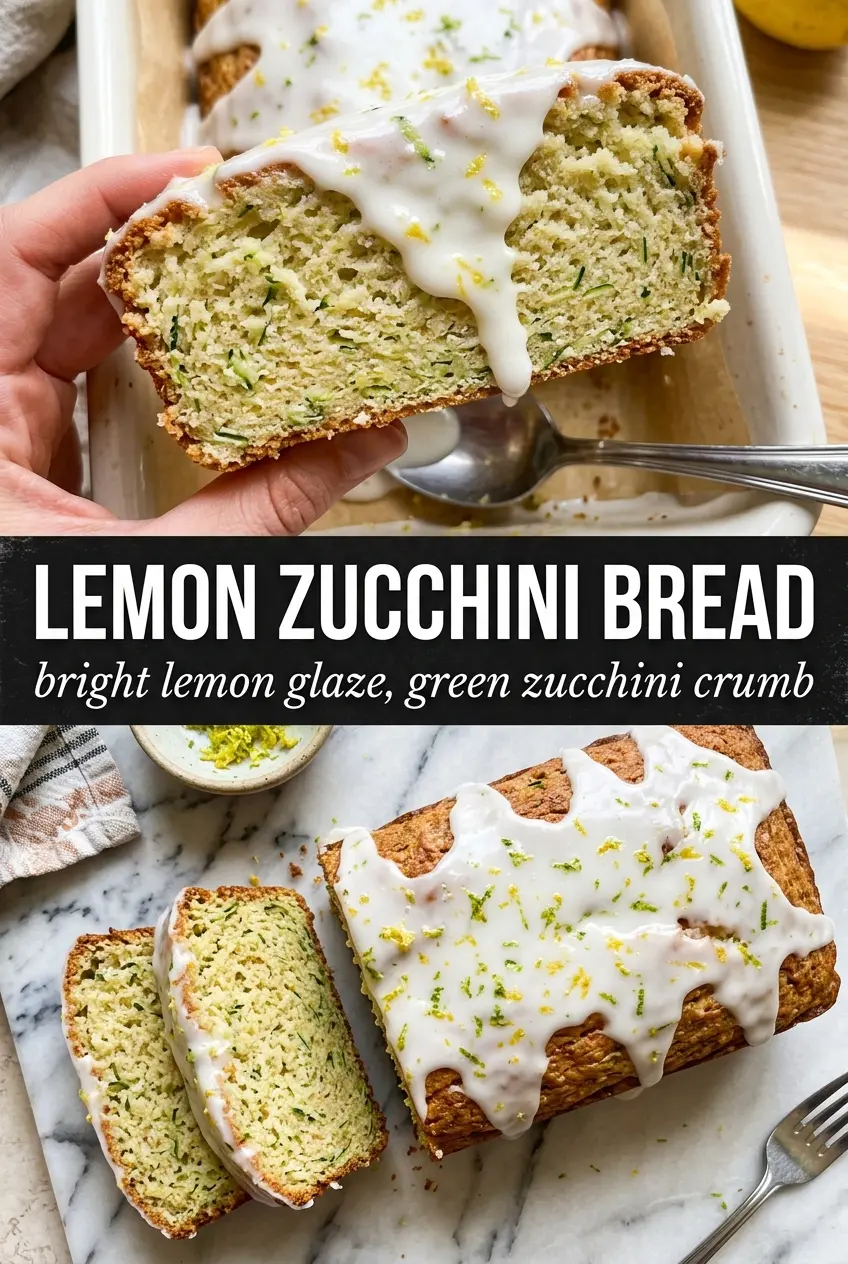
Golden lemon zucchini bread bakes up with a tender crumb, a bright citrus aroma, and just enough moisture to stay soft for days without turning heavy. The zucchini melts into the loaf as it bakes, which means you get all the freshness and none of the vegetable-forward texture people worry about when they hear zucchini bread. The lemon glaze sets on top in a thin, glossy layer that soaks slightly into the warm loaf and gives every slice a sweet-tart finish.
What makes this version work is balance. The zucchini is squeezed dry first, so it adds moisture without making the batter gummy, and the combination of yogurt and oil keeps the crumb plush instead of dry. Lemon zest does the heavy lifting for flavor here; the juice adds brightness, but the zest gives you that clean, fragrant lemon taste that holds up after baking. If you’ve made quick breads that sank in the middle or came out dense, the fix is usually in the mixing and the moisture level. Both are handled carefully here.
Below, I’ve included the small details that matter most: how to keep the loaf from getting watery, when to stop mixing, and a few smart swaps if you want to adjust the dairy or make the lemon flavor louder.
The crumb stayed unbelievably moist, and squeezing the zucchini dry made the loaf bake up perfectly instead of gummy. The glaze set just enough to drip down the sides without running off, and my kids kept sneaking slices all afternoon.
Love the bright lemon glaze and tender crumb? Save this lemon zucchini bread for the next time you want a soft, citrusy loaf that uses up extra zucchini.
The Real Trick Is Keeping the Zucchini From Turning the Batter Wet
Zucchini bread falls apart when the vegetable is treated like a loose add-in instead of a source of moisture that has to be controlled. Grate it finely, then squeeze it dry until it feels damp, not dripping. That single step keeps the loaf from baking up dense or sunken in the center.
The other place people run into trouble is overmixing after the flour goes in. Once the dry ingredients hit the bowl, fold just until you stop seeing dry streaks. If you keep stirring, the loaf gets tough instead of tender, and all the bright lemon flavor gets buried under a heavy crumb.
What the Lemon, Yogurt, and Oil Are Each Doing Here

- Greek yogurt or sour cream — This adds body and a slight tang that makes the lemon taste brighter. Sour cream gives a richer loaf, while Greek yogurt keeps things a little lighter. Either one works; use the thickest version you have so the batter stays balanced.
- Lemon zest — This is where the strongest lemon flavor comes from. Fresh zest beats bottled juice every time here because the oils in the peel carry the perfume that survives baking. Don’t skip it, and zest the lemons before you juice them.
- Vegetable oil — Oil keeps the crumb soft even after the loaf cools. Butter can work, but it firms up more once chilled and gives a slightly less plush texture. Neutral oil is the better choice if you want that classic quick-bread tenderness.
- Zucchini — Use it for moisture and texture, not flavor. Once it’s grated and squeezed dry, it melts into the loaf and leaves behind softness without chunks or wet pockets. If your zucchini is especially large, remove the seedy center before grating for a cleaner crumb.
From Mixing Bowl to Glazed Loaf Without Losing the Tender Crumb
Building the Lemon Base
Start by whisking the sugar, eggs, oil, yogurt, lemon zest, lemon juice, and vanilla until the mixture looks smooth and a little glossy. This is where the lemon flavor gets distributed evenly, so don’t rush it. The zest should look suspended in the batter, and the sugar should be mostly dissolved into the wet ingredients before you move on.
Folding in the Zucchini
Add the grated, squeezed zucchini and fold it in just until it disappears into the batter. You want it evenly mixed, not whipped through the bowl. If you see liquid pooling at the bottom, the zucchini wasn’t squeezed enough and the loaf will bake up damp in the middle.
Stopping at Just-Combined
Add the dry ingredients and fold until no flour streaks remain. The batter will look thick and a little uneven, and that’s fine. Overmixing at this stage develops too much gluten, which is how quick breads get tight and chewy instead of soft and sliceable.
Baking Until the Center Sets
Scrape the batter into a greased 9×5 loaf pan and bake until a toothpick inserted in the center comes out clean, usually 50 to 60 minutes. The top should be deep golden and the center should spring back lightly when touched. If the top browns too fast before the middle is done, tent it loosely with foil for the last part of baking.
Glazing While It’s Still Warm
Let the loaf cool for 15 minutes, then whisk the glaze until smooth and drizzle it over the warm bread. Warm bread helps the glaze settle into the top without disappearing completely, which gives you that pretty white finish and a little extra lemon flavor in every bite. If the loaf is too hot, the glaze runs off; if it’s too cold, it just sits on top and won’t soak in at all.
How to Adjust This Loaf for Dairy-Free, Extra Lemon, or a Bigger Bake
Dairy-Free Version
Swap the Greek yogurt or sour cream for a thick plain dairy-free yogurt. The loaf stays moist, though the tang is a little softer and the crumb can be slightly lighter. Keep the texture of the yogurt thick; a runny substitute throws off the batter.
Extra-Lemon Glaze
Use the full 3 tablespoons of lemon juice in the glaze and add a little extra zest on top. That gives you a sharper citrus finish that cuts through the sweetness. If you like a thicker glaze, add the juice slowly so it stays pourable instead of turning thin.
Gluten-Free Swap
Use a good 1:1 gluten-free baking flour that includes xanthan gum. The loaf will be a touch more delicate, but it still slices well if you let it cool completely before cutting. Don’t use almond flour here; it won’t hold the structure of a quick bread like this one.
Storage and Reheating
- Refrigerator: Store tightly wrapped for up to 4 days. The glaze will soften a little, but the crumb stays moist.
- Freezer: Freeze the unglazed loaf or individual slices for up to 2 months. Wrap well, then thaw at room temperature before glazing for the cleanest finish.
- Reheating: Warm slices briefly in the microwave or toaster oven. Don’t heat long enough to melt the glaze completely, or the top turns sticky and the crumb dries out.
Answers to the Questions Worth Asking
Lemon Zucchini Bread
Ingredients
Equipment
Method
- Preheat oven to 350°F and grease a 9x5 loaf pan, leaving the pan ready to receive the batter.
- Whisk all-purpose flour, baking soda, baking powder, and salt together until evenly distributed and no dry streaks remain.
- In a separate bowl, beat granulated sugar and eggs, then mix in vegetable oil, Greek yogurt or sour cream, lemon zest, fresh lemon juice, and vanilla extract until smooth and glossy.
- Fold the grated zucchini (squeezed dry) into the wet mixture until the batter looks uniformly speckled with zucchini.
- Add the dry ingredients to the wet and fold just until combined, stopping as soon as no flour pockets are visible.
- Pour the batter into the prepared loaf pan and bake for 50–60 minutes, until a toothpick inserted in the center comes out clean.
- Cool the loaf for 15 minutes before glazing so the glaze can set without fully running off.
- Whisk powdered sugar, 2–3 tablespoons fresh lemon juice, and lemon zest until smooth and thick, with a pourable consistency.
- Drizzle the lemon glaze generously over the warm loaf and let it pool over the edges for a glossy finish.