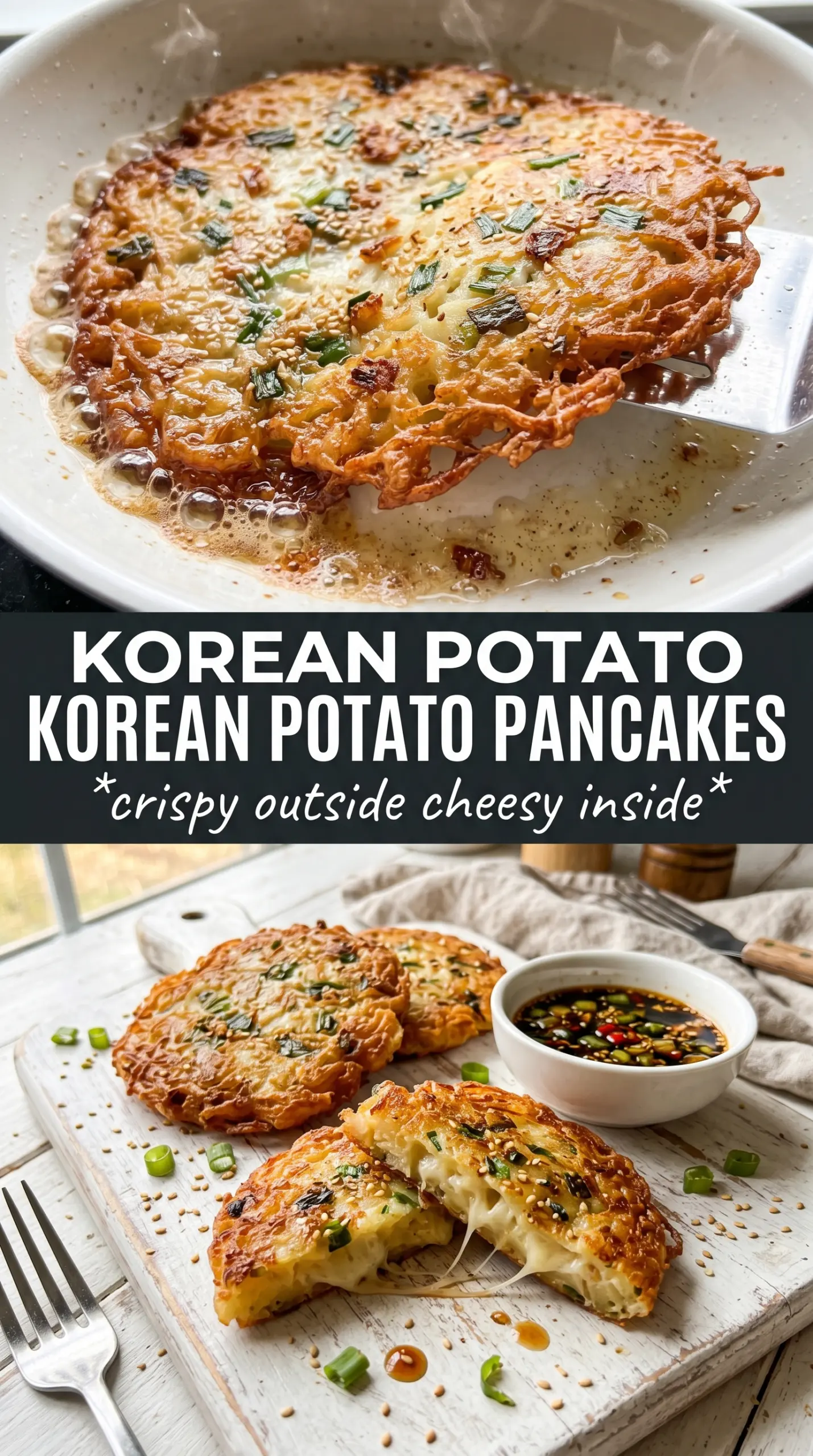
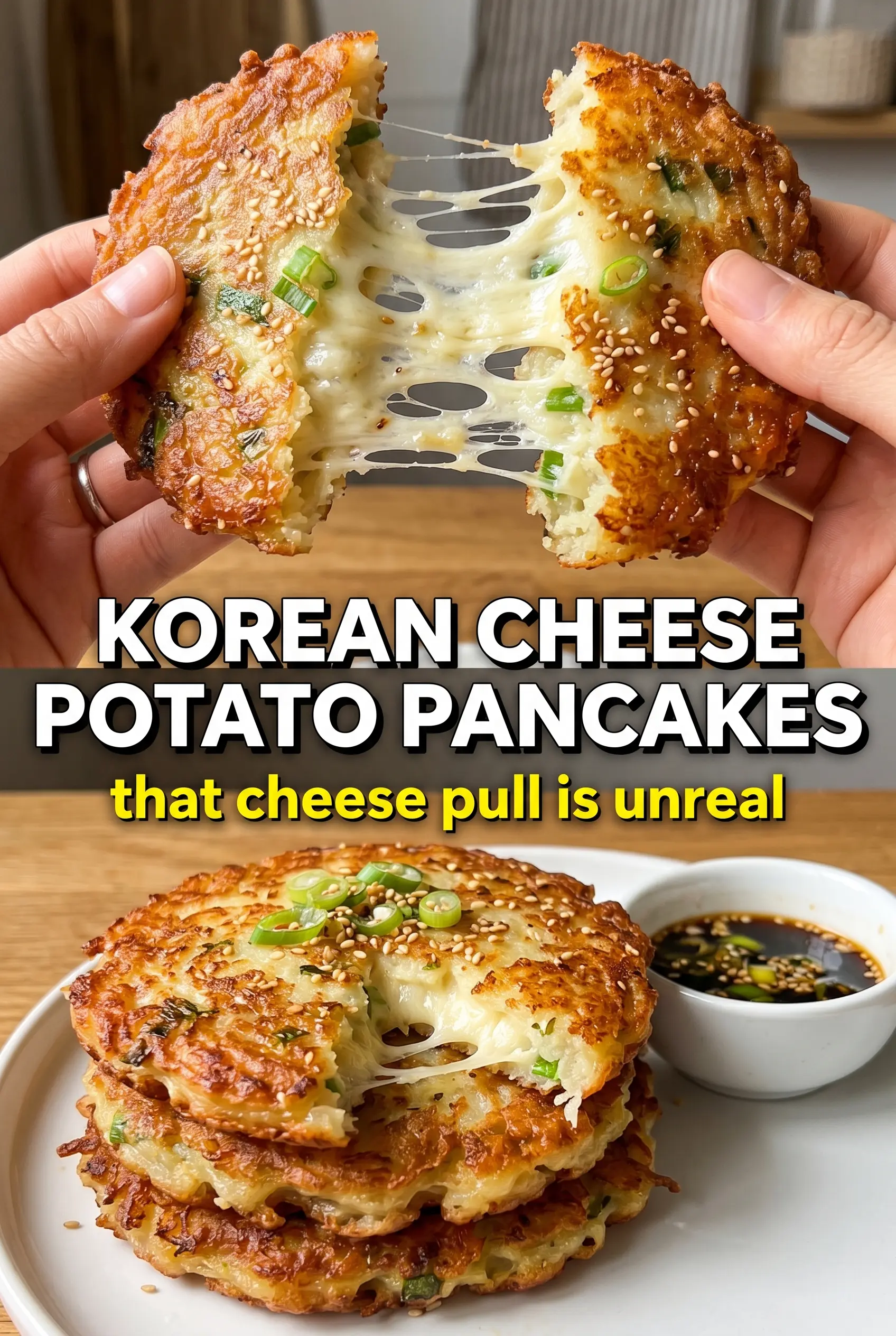
Thin, lacy Korean potato pancakes with cheese hit the pan with a fierce sizzle and come out with crisp edges, a tender potato center, and molten mozzarella threaded through every bite. They’re the kind of snack that disappears as fast as you can fry them, especially when the edges get deep golden and shatter under the fork.
The trick is in the potato prep. Once the grated potatoes are squeezed dry, they fry instead of steam, which is what gives these pancakes their crackly shell. Potato starch tightens the mixture just enough to hold the cheese and aromatics together without making the pancakes heavy, and the mozzarella melts into little pockets that stretch when you pull them apart.
Below, I’ll walk through the part that matters most — how to get the potatoes dry enough and the pan hot enough for that crisp finish. I’ve also included a few swaps and fixes for the moments when the mixture feels too loose or the pancakes brown before the center cooks through.
The potatoes crisped up beautifully after squeezing out the liquid, and the cheese made the centers soft and stretchy without turning greasy. We dipped them in the sauce and finished the whole plate in minutes.
Save these Korean potato pancakes with cheese for the nights when you want something crispy, melty, and fast from ingredients you probably already have.
The Difference Between Crisp Edges and a Steamed Potato Heap
The biggest failure with gamja jeon is moisture. Grated potatoes carry a lot of water, and if that water stays in the mix, the pancakes soften in the pan before they ever crisp. Squeezing the potatoes hard — and I mean hard — is what turns this from a soggy shred pile into a pancake that fries up thin and crackly.
The second piece is heat. A skillet that’s only medium will let the cheese melt before the surface sets, which sounds nice until you realize the pancake spreads, absorbs oil, and turns pale. Medium-high heat with a generous layer of oil gives you the fast sear that locks the outside while the interior stays tender.
- Potatoes: Russets work best because they’re starchy and dry out into a crisp shell instead of a waxy, dense bite. If you use Yukon Golds, the flavor is fine, but the pancakes usually hold more moisture and need extra starch.
- Potato starch or cornstarch: This is the glue that helps the shredded potato hold together after the squeeze. Potato starch gives the most traditional texture, but cornstarch works well if that’s what you have.
- Mozzarella: Use low-moisture shredded mozzarella so it melts into stretchy pockets without flooding the batter. Fresh mozzarella brings too much water and can make the pancakes greasy.
What Each Ingredient Is Actually Doing in These Pancakes
- Egg: The egg adds structure and helps the pancakes set in the center before the outside over-browns. Without it, the mixture can still work, but the pancakes are a little more fragile when you flip them.
- Garlic and green onions: These keep the pancakes from tasting one-note. Garlic can burn if your pan runs too hot, so keeping the pancakes thin and the cooking time short protects it.
- Vegetable oil: You need enough oil to coat the pan well, not just a thin film. That layer is what gives the lacy edge and the shallow-fried texture people expect from Korean potato pancakes.
- Dipping sauce: The soy, vinegar, sesame oil, and sugar bring the salty, sharp, nutty balance that cuts through the cheese. Don’t skip it unless you’re serving these plain as a snack; the sauce wakes up the whole plate.
How to Fry Them Thin Enough to Crisp All the Way Through
Dry the Potatoes Until They Feel Almost Dusty
Grate the peeled potatoes, then squeeze them in a clean kitchen towel until the liquid stops dripping out. The potato shreds should feel compact and dry, not wet and slippery. If you leave too much water behind, the pancakes will sputter in the pan but stay soft instead of crisp.
Mix Just Until the Shreds Look Coated
Stir the drained potato with the cheese, egg, starch, salt, garlic, and green onions until everything looks evenly distributed. Don’t overwork it into a paste. You want distinct shreds so the pancake frills at the edges instead of turning into a dense potato cake.
Press Flat and Fry in a Real Layer of Oil
Drop about 1/4 cup of mixture into the hot skillet and press it thin with the back of a spatula. The edges should immediately start to bubble and sizzle. If the oil is too cool, the pancake soaks it up; if it’s too hot, the outside scorches before the cheese inside melts. Aim for a deep golden color on the first side before flipping.
Flip Once and Leave It Alone
When the bottom is deeply browned and the pancake releases cleanly, turn it over in one confident motion. The second side usually needs a little less time because the pancake is already setting through. Move finished pancakes to a warm oven while you cook the rest so they stay crisp instead of steaming on the plate.
How to Adapt These Korean Potato Pancakes Without Losing the Crisp Edge
Make Them Gluten-Free as Written
This recipe is already naturally gluten-free as long as your soy sauce is gluten-free. Use tamari in the dipping sauce if that’s a concern, and the rest of the texture stays the same because the starch is doing the heavy lifting, not flour.
Swap the Mozzarella for a Sharper Cheese
A mild cheddar or Monterey Jack changes the flavor toward richer and saltier, but the melt won’t stretch quite like mozzarella. Use a low-moisture cheese either way, or the pancakes can turn greasy in the pan.
Make Them Spicier Without Unbalancing the Batter
Add a pinch of gochugaru to the potato mixture or a little more red pepper flakes to the sauce. Keep the heat in the sauce if you want the pancakes themselves to stay kid-friendly and crisp rather than speckled with spice.
Storage and Reheating
- Refrigerator: Store leftovers in an airtight container for up to 3 days. They’ll soften a bit, but the flavor holds up well.
- Freezer: These freeze better after cooking than raw. Lay them in a single layer until firm, then move to a freezer bag for up to 1 month.
- Reheating: Reheat in a skillet or air fryer until the edges crisp again. The oven works too, but avoid the microwave if you want the texture back, because it makes the potatoes rubbery and the cheese oily.
Questions I Get Asked About This Recipe
Korean Potato Pancakes with Cheese (Gamja Jeon with Mozzarella)
Ingredients
Equipment
Method
- Grate the peeled russet potatoes, then squeeze out as much liquid as possible using your hands so the mixture can crisp. You’re aiming for potatoes that look drier and clump slightly when squeezed.
- Mix the drained grated potato with shredded mozzarella, egg, potato starch, salt, minced garlic, and chopped green onions until evenly combined. The mixture should hold together when pressed; if it seems wet, squeeze once more.
- Heat a generous layer of vegetable oil in a skillet over medium-high heat until shimmering. The oil should sizzle immediately when a bit of batter is dropped in.
- Spread about 1/4 cup of the potato mixture into the pan, pressing flat into a thin pancake, and cook 4–5 minutes per side until deeply golden and crispy. For crisp, only flip once when the edges look set and lacy.
- Transfer finished pancakes to a sheet pan and keep warm in the oven while you fry the next batch. Work in batches so the pan stays hot and the pancakes brown properly.
- Mix soy sauce, rice vinegar, sesame oil, sugar, and red pepper flakes in a small bowl until the sugar dissolves. Taste and adjust heat with more red pepper flakes if you want.
- Serve the hot, extra-crispy Korean potato pancakes with cheese right away with the dipping sauce on the side. The mozzarella should be melted throughout with golden lacy edges.