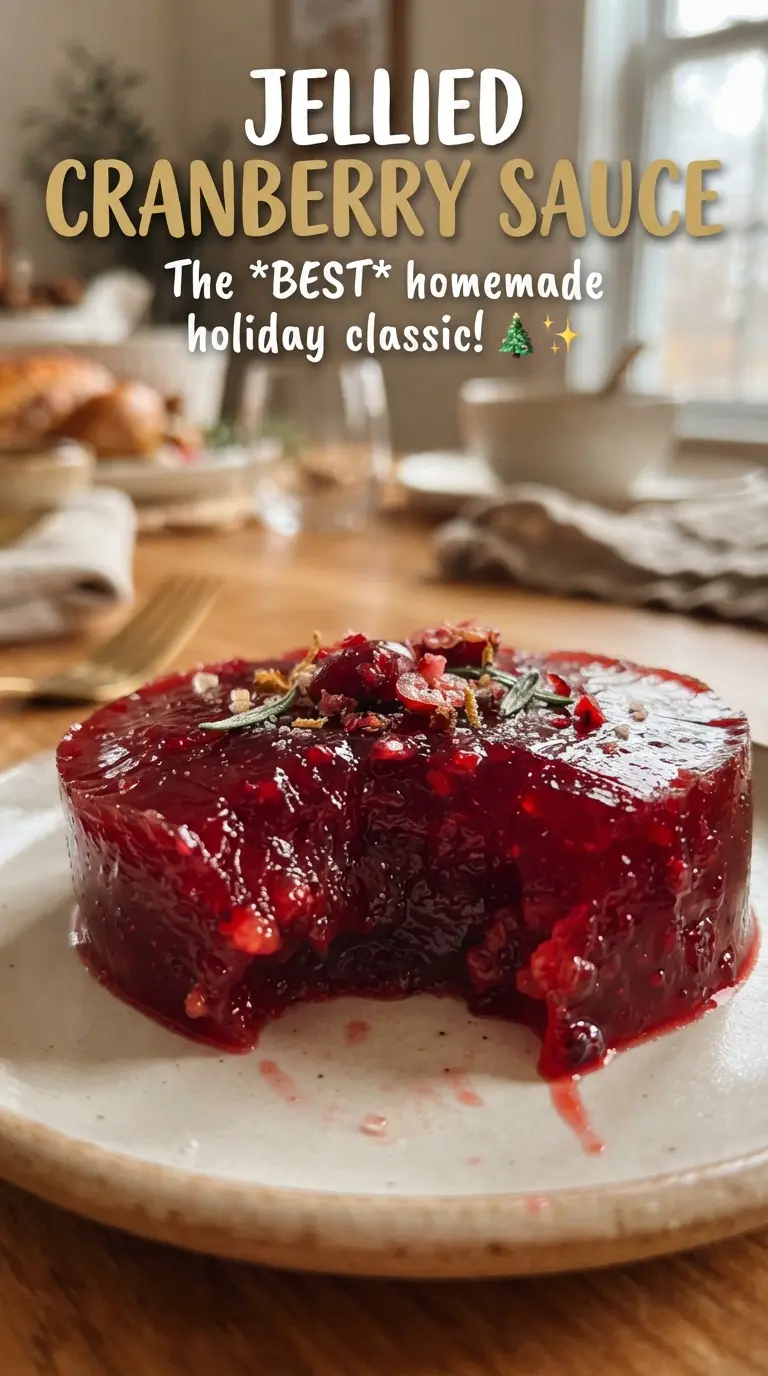
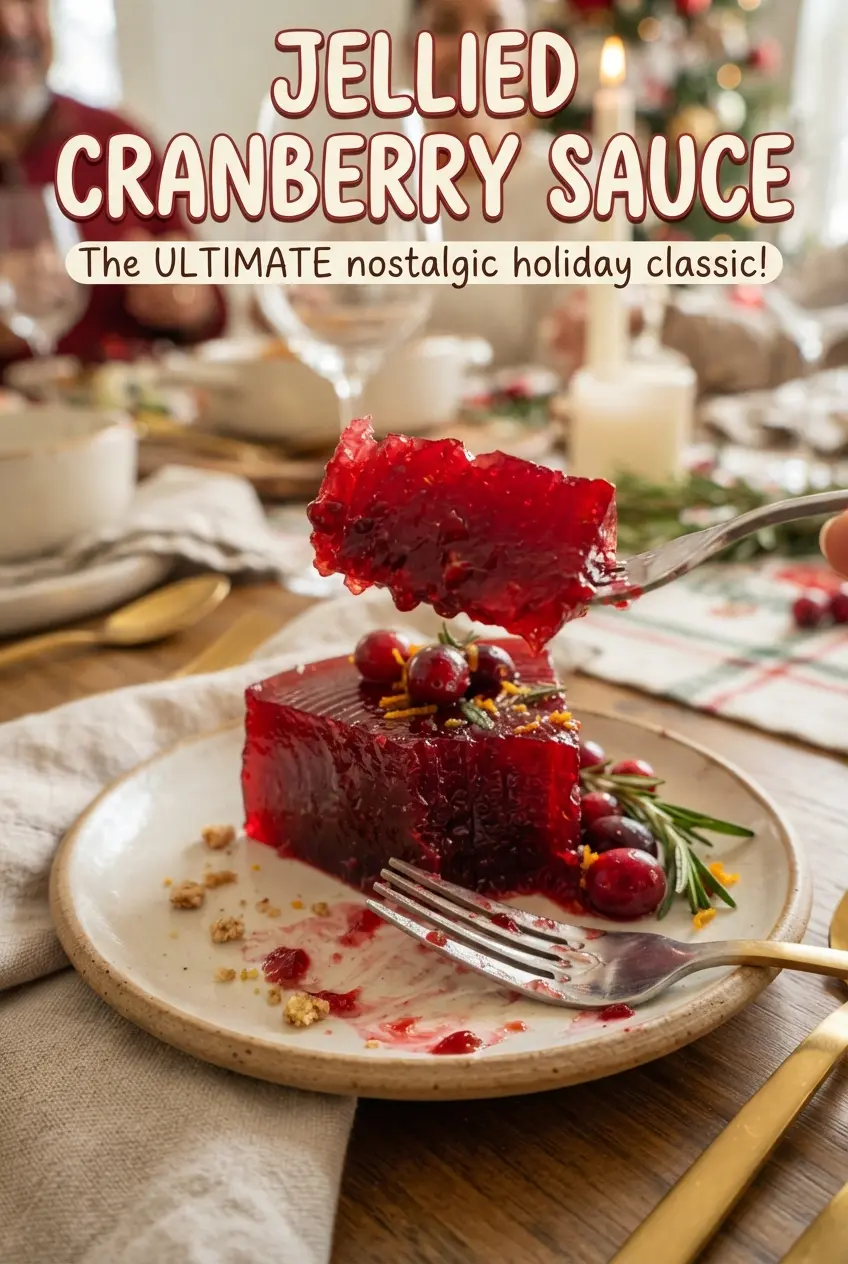
Jellied cranberry sauce should slice cleanly, hold its shape on the plate, and still taste bright instead of candy-sweet. When it’s done right, you get that glossy ruby cylinder with a firm set and a clean cranberry tang that cuts through rich holiday food. The trick is treating it like a real stovetop preserve for a few minutes, not just simmering berries until they collapse and hoping for the best.
This version leans on a short boil, a thorough strain, and a final quick reduction to help the natural pectin do its job. The sugar isn’t there just for sweetness; it helps the sauce set with that classic jellied texture. Lemon juice sharpens the flavor and gives the cranberry taste more lift, while the pinch of salt keeps the finish from tasting flat.
Below, I’ll walk through the part that matters most: how to strain it without losing body, how to tell when the mixture has cooked enough, and how to unmold it cleanly even if you’re using a loaf pan or a plain can.
The sauce set up with that perfect sliceable texture, and the lemon kept it from tasting too sweet. I used a loaf pan and it popped out clean after chilling overnight.
Save this jellied cranberry sauce for the meal where you want clean slices and a bright, glossy finish on the table.
The part that decides whether it slices or slumps
Jellied cranberry sauce fails most often in one of two places: it never cooks long enough for the berries to fully break down, or it gets strained too loosely and stays watery. Cranberries carry enough natural pectin to set beautifully, but only if the mixture reaches a good boil and then gets reduced enough after straining. If it tastes thin in the pot, it will taste thin on the plate.
The other mistake is rushing the chill. This needs time in a mold or loaf pan so the texture can fully firm up. When it’s ready, it should release with a little help from a knife around the edge, not wobble like jam that never made it there.
- Cranberries — Fresh cranberries bring the tart backbone and the pectin that makes this set. Frozen cranberries work too; use them straight from frozen and expect the boil to take a minute longer.
- Sugar — Sugar isn’t just sweetness here. It balances the sharp cranberry flavor and helps the sauce gel into that classic sliceable texture, so cutting it much lower changes the set as well as the taste.
- Lemon juice — The lemon brightens the final flavor and keeps the cranberry taste lively. Bottled lemon juice will work in a pinch, but fresh tastes cleaner.
- Light oil for the mold — You only need a thin coating, but it matters. It gives the sauce a clean release, especially if you’re using a loaf pan instead of a decorative mold.
What Each Ingredient Is Actually Doing in This Recipe
- Primary ingredient (the star) — Quality matters most. Choose the best you can find.
- Cooking medium (oil, butter, or broth) — This carries flavors and prevents dryness.
- Seasonings (salt, pepper, spices, herbs) — Layer flavors so nothing overpowers. Build depth gradually.
- Aromatics (garlic, onion, herbs) — Cook with fat to bloom flavors. Become the foundation.
- Supporting ingredients — Complement the main ingredient without overpowering it.
- Sauce or liquid (if applicable) — Brings flavors together. Balance richness with acid.
- Acid (lemon, vinegar, wine, or other) — Brightens and prevents flat-tasting results.
- Final finish (garnish, glaze, or sauce) — Prevents one-dimensional taste and adds visual appeal.
Cooking the berries until the set is built in
Boiling the cranberries down
Combine the cranberries, sugar, and water in a saucepan and bring it to a real boil. You want the berries to burst and the liquid to turn deep red, which usually takes about 10 minutes of steady simmering after it comes up. If the heat is too low, the berries won’t break down enough and the final sauce can stay loose.
Straining for that classic smooth finish
Press the hot mixture through a fine-mesh strainer and scrape the puree through with a spoon. This is where the texture gets its signature smoothness, so don’t leave a lot of pulp behind. The skins hold onto a surprising amount of flavor, and if you don’t press firmly, you lose both body and that concentrated cranberry taste.
Giving the puree its final set
Return the strained puree to the pot with the lemon juice and salt, then boil it for 3 to 4 minutes while stirring. This short second boil tightens the texture and concentrates the flavor. Pull it off the heat as soon as it looks thick and glossy; if you cook it down too far, it can turn dense and a little sticky instead of smooth and jellied.
Chilling and unmolding cleanly
Pour the mixture into a lightly oiled mold, loaf pan, or even a clean can if that’s what you have. Chill it for at least 6 hours, though overnight gives the cleanest slice. To unmold, run a thin knife around the edge, dip the bottom briefly in warm water if needed, and invert it onto a plate before slicing into rounds.
How to change the mold, the sweetness, or the timing without ruining the set
Loaf pan instead of a decorative mold
A loaf pan makes this easy and still gives you neat slices. Line it with a little oil only, not parchment, if you want a clean-sided loaf that unmolds in one piece. The shape will be more rustic than a ring mold, but the texture stays the same.
Lower-sugar cranberry sauce
You can trim the sugar a bit, but not by a large amount without changing the set and the balance. Less sugar means a sharper, less polished finish and a softer slice. If you want it less sweet, hold the sugar reduction to a small amount and lean on the lemon juice for brightness instead.
Make-ahead for a big meal
This is an ideal make-ahead side because it actually gets easier to slice after a night in the fridge. Make it one to two days in advance, keep it covered, and unmold it just before serving. The flavor gets a little cleaner and more settled as it chills.
Storage and Reheating
- Refrigerator: Store covered for up to 1 week. The texture firms up even more after a day or two.
- Freezer: It freezes, but the texture can turn slightly grainy after thawing, so I’d keep this one in the fridge when possible.
- Reheating: This is best served cold or cool, not reheated. If you need to loosen it for a spoonable version, set the dish in warm water briefly instead of heating it on the stove, which can melt the set completely.
Answers to the questions worth asking
Jellied Cranberry Sauce
Ingredients
Equipment
Method
- Bring fresh cranberries, sugar, and water to a boil in a pot over medium-high heat, then simmer for 10 minutes until all berries burst.
- Keep the mixture at a steady simmer and stir occasionally so the cranberries cook through evenly.
- Press the hot cranberry mixture through a fine-mesh strainer, scraping to push all the pulp through, then discard the skins.
- Work until you have a smooth puree with no visible skin pieces.
- Return the strained puree to the pot with lemon juice and salt, then boil for 3-4 minutes while stirring.
- Stop when the mixture looks glossy and slightly thickened from the reduction.
- Pour the hot mixture into a lightly oiled mold, loaf pan, or clean can.
- Chill at least 6 hours or overnight until firm and fully set.
- Run a knife around the edge to loosen, then invert onto a plate.
- Slice into rounds with a clean cut for a tidy, jellied texture.