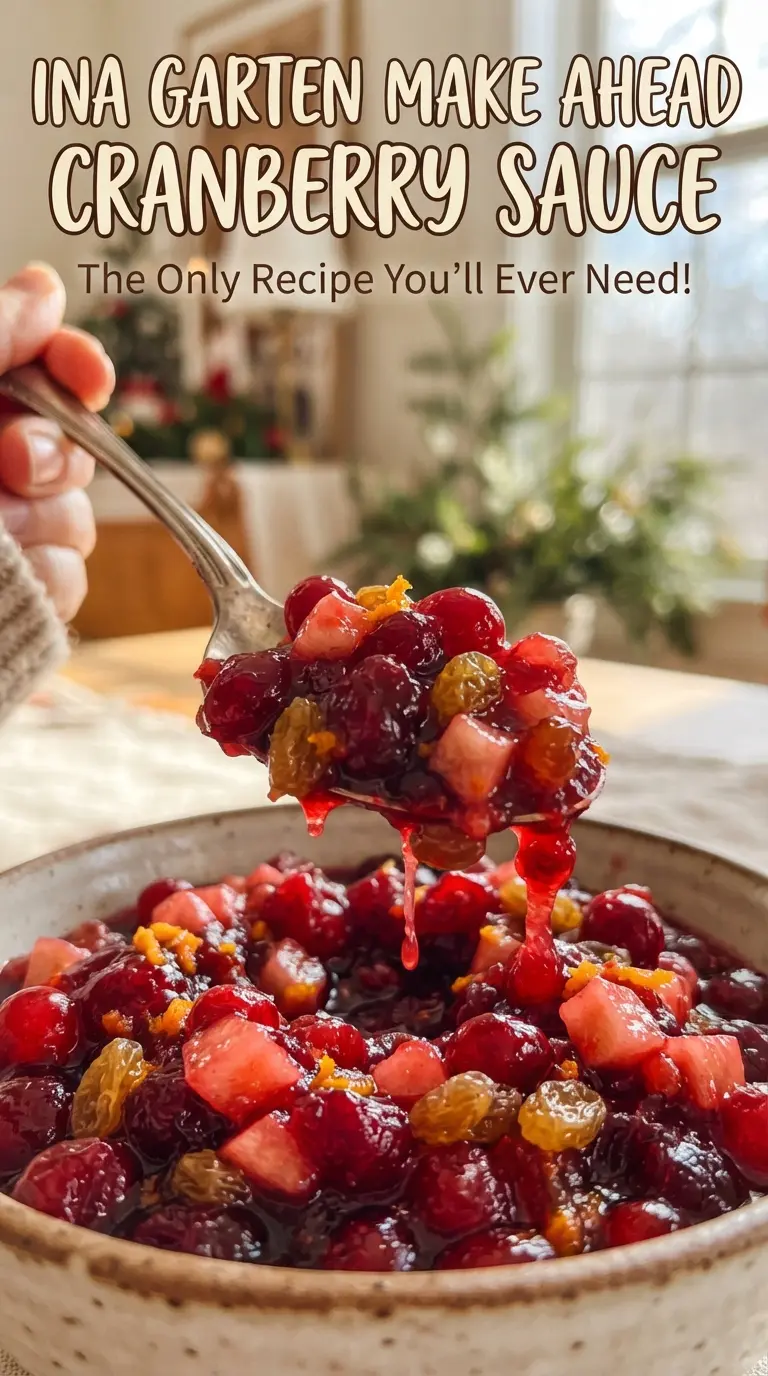
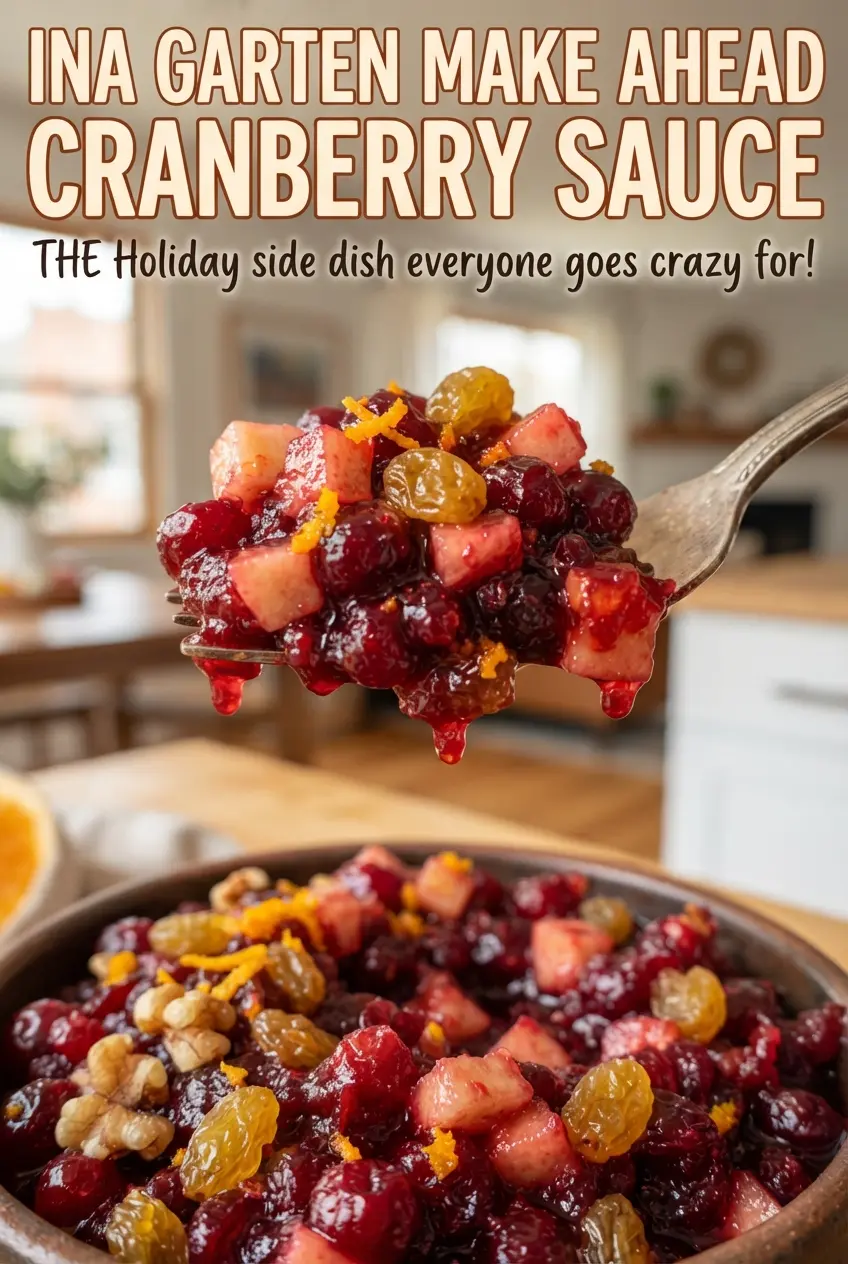
Chunky cranberry sauce tastes brightest when it’s got contrast: tart berries, softened apple, a little chew from golden raisins, and enough citrus to keep every spoonful lively. This version lands on the table with a glossy, jewel-toned look and a texture that’s spoonable without turning jammy, which is exactly why it earns a spot next to the rest of the meal instead of getting pushed aside.
The trick is building the sauce in stages. The cranberries cook first with sugar and water until the skins pop and the mixture starts to thicken, then the apple, citrus, and juice go in to add body and lift. The raisins and nuts wait until the end so they keep their shape instead of dissolving into the pot. That timing gives you a sauce that tastes made ahead in the best way: balanced, settled, and better after a night in the fridge.
You’ll find the best way to keep the fruit pieces distinct, a couple of smart swaps if you need them, and the storage note that matters most when you’re cooking this for a holiday spread or a make-ahead side dish.
I loved that the cranberries popped in just a few minutes and the sauce set up beautifully after chilling. The apple stayed tender but not mushy, and the orange zest made it taste fresh instead of overly sweet.
Save this make-ahead cranberry sauce for a chunky, citrusy side that gets better after a night in the fridge.
The Part Most Cranberry Sauces Miss: Texture That Still Tastes Like Fruit
Many cranberry sauces cook until they’re smooth, thick, and a little dull. That’s where this one stays different. The cranberries break down just enough to thicken the sauce, but the diced apple, raisins, and chopped nuts keep it from turning into a flat, one-note puree.
The other thing that matters is the order. If you add everything at the beginning, the apple disappears and the raisins turn plump but muddy. By letting the cranberries soften first, then adding the fruit and citrus, you keep each element identifiable in the bowl. The result is more like a bright relish with body than a dessert-style jelly.
- Fresh cranberries — Use fresh here if you can. Frozen cranberries work too, straight from the freezer, but they’ll release a little more liquid and may need an extra minute or two to reach the right consistency.
- Granny Smith apple — This is the piece that gives the sauce structure. A firm tart apple holds its shape better than softer varieties, which is why it stays visible after simmering.
- Orange and lemon zest plus juice — The zest carries the aroma, while the juice sharpens the sweetness. Bottled juice won’t give you the same lift, especially in a recipe this simple.
- Golden raisins and toasted nuts — Add them at the end so they stay pleasantly chewy and crisp. Toasting the nuts first matters; raw nuts taste flat next to the bright fruit.
What Each Ingredient Is Actually Doing in This Sauce
- Sugar — It doesn’t just sweeten the sauce; it helps the cranberries break down into a glossy, spoonable mixture. Cutting it too far will leave the sauce harsh and thin.
- Water — This gives the cranberries enough liquid to start cooking before the fruit begins releasing its own juices. You need the full cup at the start so the sugar can dissolve without scorching.
- Apple — Diced small, it softens just enough to blend into the sauce without vanishing. If you cut the pieces too large, they stay awkwardly firm after chilling.
- Orange and lemon — The orange brings sweetness and fragrance; the lemon keeps the flavor from drifting heavy. If you only have one citrus, use orange and add a little extra lemon zest or a tiny splash of apple cider vinegar to replace the brightness.
- Golden raisins — They plump in the warm sauce and give you little bursts of sweetness. Regular raisins will work, but they taste darker and less delicate.
- Walnuts or pecans — Pecans are softer and sweeter; walnuts are a little earthier and more rustic. Either way, toast them first so they stay crisp in the finished sauce.
Cooking the Berries Until They Pop, Not Until They Collapse
Starting the Cranberry Base
Bring the cranberries, sugar, and water to a boil in a saucepan, then drop the heat to a lively simmer. You want to hear the berries begin to pop; that sound tells you the skins are splitting and the sauce is thickening. If the heat is too low, they’ll sit there looking stubborn and the sugar can turn grainy. Stir occasionally so the sugar dissolves evenly and doesn’t settle at the bottom.
Adding the Apple and Citrus
Once the berries have burst, add the diced apple, orange zest, orange juice, lemon zest, and lemon juice. The pot will look loose at first, then it tightens up as the apple softens and the liquid reduces. Keep the simmer gentle; a hard boil can break the apple down too fast and make the sauce cloudy instead of chunky.
Finishing for Texture
Take the pan off the heat before stirring in the raisins and nuts. That keeps the raisins plump and the nuts crisp enough to notice in the final bite. If you add them while the sauce is still boiling, the nuts lose their crunch and the raisins can turn gummy. Cool the sauce completely before covering it, or condensation will thin the top layer in the fridge.
Swap the Nuts Without Losing the Crunch
Pecans give the softest, sweetest finish, while walnuts bring a more bitter, woody note. If you need a nut-free version, leave them out and add an extra tablespoon or two of diced apple for texture. The sauce will still work, but it won’t have the same contrast against the softer fruit.
Make It Ahead for a Crowd
This sauce is built for advance prep. Make it a day or two before serving so the citrus and fruit settle into each other, which gives the flavor a cleaner finish. The texture also firms up as it chills, so it serves neater on a buffet table.
Skip the Nuts for a Dairy-Free, Gluten-Free Side
The recipe is naturally dairy-free and gluten-free as written, so the easiest adaptation is to leave the nuts out if you’re cooking for a nut-free table. The sauce will be softer and a little brighter without them, which works well if you’re serving it alongside rich or salty mains.
Storage and Reheating
- Refrigerator: Store covered for up to 1 week. The sauce thickens as it chills, and the fruit pieces hold their shape best during the first few days.
- Freezer: It freezes well for up to 2 months. Use a freezer-safe container and leave a little headspace, then thaw overnight in the refrigerator.
- Reheating: This is best served cold or at room temperature, so you usually don’t need to reheat it. If you want it slightly looser, warm only a small portion gently on low heat; boiling will turn the fruit mushy and make the nuts soft.
Questions I Get Asked About This Recipe
Ina Garten Make Ahead Cranberry Sauce
Ingredients
Equipment
Method
- Bring fresh cranberries, sugar, and water to a boil in a saucepan over medium-high heat. Simmer for 5 minutes, and watch for the skins to pop as the sauce thickens slightly.
- Add diced Granny Smith apple, orange zest, orange juice, lemon zest, and lemon juice to the saucepan. Simmer for 15 minutes until the mixture is thick and the cranberries have burst, with visible fruit pieces throughout.
- Remove the pan from heat and stir in golden raisins and toasted, chopped walnuts or pecans. Mix until evenly distributed so the sauce stays chunky.
- Cool completely at room temperature, then cover and refrigerate until ready to serve. Chill for up to 1 week for best flavor, then serve chilled or at room temperature.