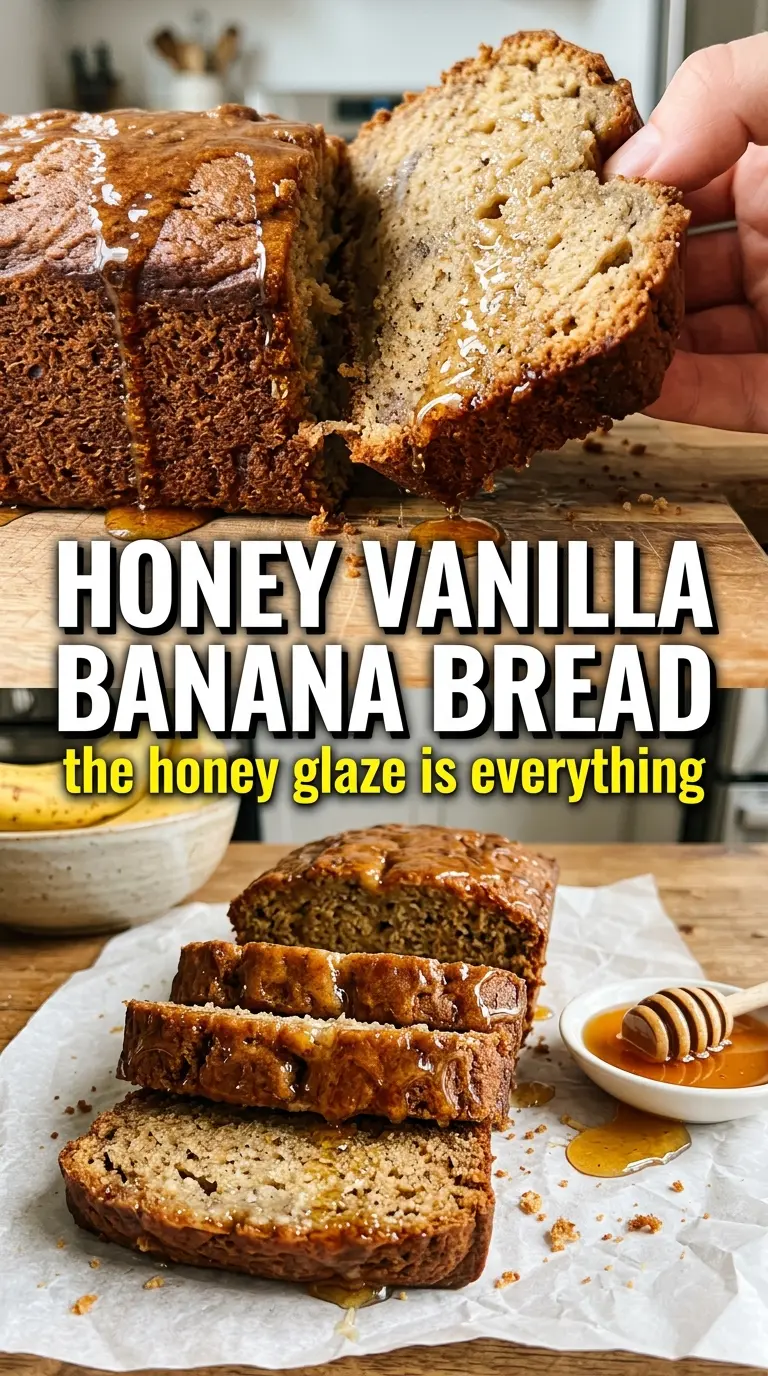
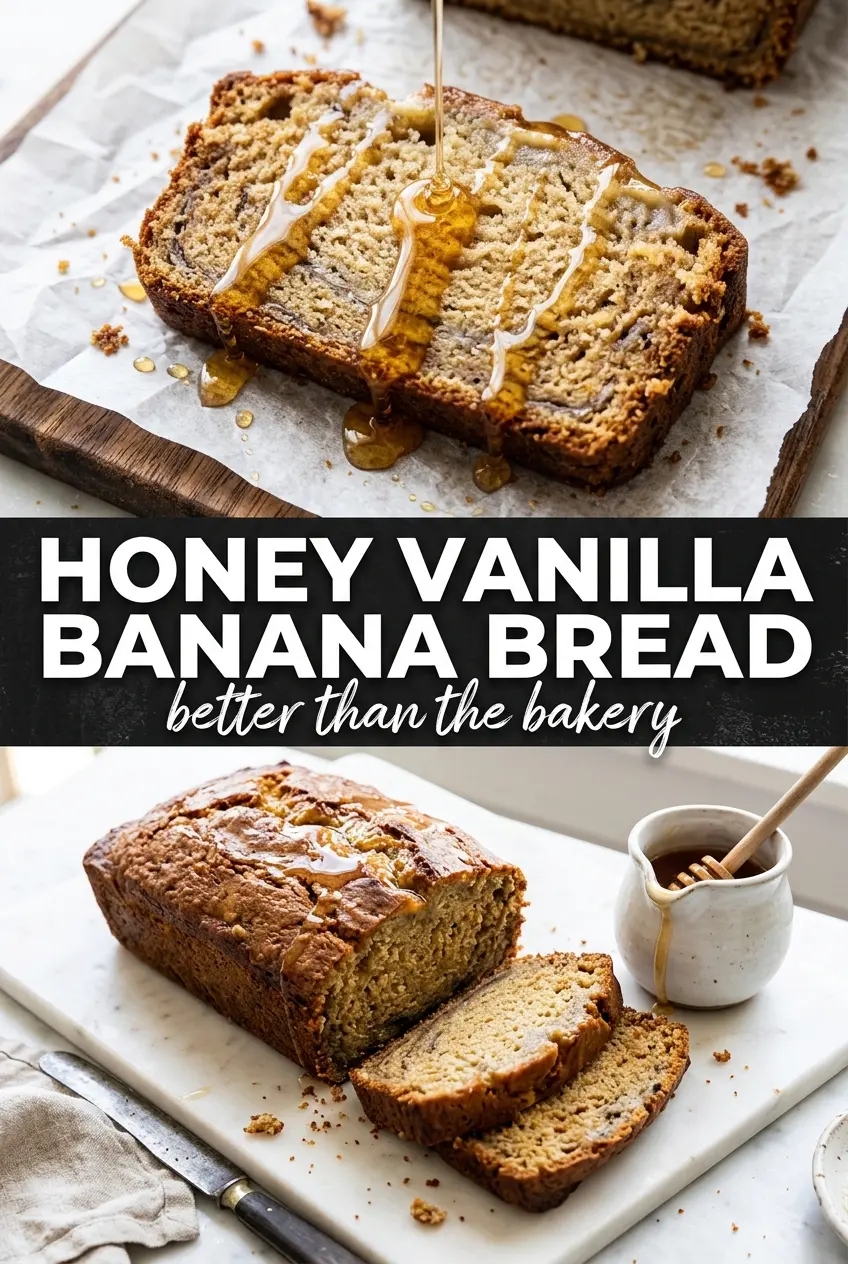
Honey vanilla banana bread bakes up with a tender, moist crumb and a glossy, lightly sticky top that tastes like the best part of a bakery loaf. The bananas bring softness and depth, the honey keeps the sweetness rounded instead of sharp, and the vanilla gives every slice a warm, floral finish that lingers after the last bite.
What makes this version stand out is the balance. Honey sweetens the loaf without making it heavy, but it also browns faster than plain sugar, so the bake time and pan size matter. The bananas need to be ripe enough to mash easily with plenty of brown speckles, and the batter only needs a brief mix once the flour goes in. That keeps the crumb light instead of dense or gummy.
Below, I’ve added the small details that matter most: why the honey goes on the warm loaf at the end, what to watch for if your bananas are extra large, and a few practical swaps if you want to change the flavor without losing that soft, fragrant crumb.
The honey glaze on top made the loaf taste bakery-level, and the crumb stayed soft for three days. I loved that the vanilla came through without overpowering the banana.
Save this honey vanilla banana bread for a loaf with a glossy honey top and a soft, fragrant crumb.
The Trick Behind a Moist Banana Bread That Still Slices Cleanly
The difference between banana bread that feels plush and banana bread that turns gummy usually comes down to two things: how wet the bananas are and how long the batter gets mixed. Honey adds moisture too, so this loaf has plenty going on before it even hits the oven. That means the flour only needs to disappear, not get worked into a smooth, elastic batter.
Another thing to watch is browning. Honey helps the crust take on color faster than granulated sugar, which is great if you love that deep golden top, but it also means the loaf can look done before the center is set. Use the toothpick test near the center, and if the top is getting dark before the middle finishes, tent it loosely with foil for the last stretch of baking.
- Ripe bananas — The riper they are, the sweeter and softer the loaf will be. You want bananas that mash into a thick puree with lots of brown spots, not firm yellow fruit.
- Honey — This gives the bread its gentle sweetness and the glossy finish on top. Maple syrup can work in a pinch, but it changes the flavor and the loaf bakes a little less richly.
- Butter — Melted butter keeps the crumb tender and gives the bread a rounded, bakery-style flavor. Neutral oil can be used for a softer texture, but you’ll lose some of that buttery depth.
- Vanilla — Pure vanilla extract is perfect here, and vanilla bean seeds make the loaf smell especially warm and floral. Since the recipe is simple, vanilla is one of the flavors you’ll notice in every slice.
What Each Ingredient Is Actually Doing in This Bread
- Flour (the structure) — All-purpose or bread flour provides the base. Protein content affects texture.
- Leavening (baking powder, baking soda, or yeast) — This creates rise. For quick breads, chemical leavening works. Yeast requires time.
- Wet ingredients (milk, eggs, oil, or applesauce) — These hydrate flour and add richness. Balance moisture so bread isn’t gummy.
- Sugar (sweetness and structure) — Sugar tenderizes and adds flavor. Too much makes dense, gummy bread.
- Salt (the flavor enhancer) — Salt brings out natural flavors and prevents flatness.
- Flavorings (vanilla, spices, or zest) — These define the bread personality. Use quality extracts.
- Mix-ins (nuts, chocolate, fruit) — These add texture and prevent one-dimensional taste. Toast nuts first for better flavor.
- Proper baking temperature (350-375°F) — Moderate heat bakes bread evenly. Higher temps create dark crust before inside bakes.
Building the Batter Without Beating the Air Out of It
Mashing the Bananas Into a Smooth Base
Start with bananas that are heavily speckled and mash them until they’re mostly smooth, with just a few soft lumps left. Those little bits melt into the loaf while it bakes and keep the texture from feeling flat. If the bananas are watery, the bread can turn heavy, so avoid draining off any liquid that comes out during mashing. That liquid is part of the flavor.
Combining the Wet Ingredients
Whisk the melted butter, honey, egg, and vanilla into the bananas until the mixture looks glossy and even. The butter can be warm, but not hot enough to scramble the egg. If the butter is too hot, the egg cooks in streaks and you’ll see little bits instead of a smooth batter.
Folding in the Flour
Add the dry ingredients and stir just until the flour disappears. A few streaks are fine when you stop; they finish mixing as the batter rests in the pan. Overmixing is the fastest way to get a dense loaf with tunnels running through it, and banana bread should be tender, not chewy.
Brushing on the Honey Finish
As soon as the loaf comes out of the oven, brush the top with the extra tablespoon of honey while it’s still warm. That’s what gives the crust its sheen and a little tacky sweetness that sets this loaf apart. If you wait until it cools, the honey sits on top instead of soaking in and you lose that glossy finish.
Swap in maple syrup for a deeper, earthier sweetness
Use the same amount of maple syrup in place of the honey if that’s what you have. The loaf will still be moist, but the top won’t get quite the same glossy finish and the flavor will lean more caramel-like than floral.
Make it dairy-free with oil instead of butter
Replace the melted butter with an equal amount of neutral oil. The crumb stays soft for days, but you’ll lose a little buttery richness and the loaf will taste a bit cleaner and lighter.
Turn it into vanilla bean banana bread
Split a vanilla bean and scrape the seeds into the wet ingredients instead of using extract. You’ll get those tiny flecks through the crumb and a stronger bakery-style aroma that shows up most clearly once the loaf cools.
Add walnuts or chocolate chips without changing the method
Fold in up to 3/4 cup of chopped walnuts or chocolate chips at the very end. Walnuts add crunch and a toastier finish, while chocolate chips make the loaf richer and a little sweeter, but both can weigh the batter down if you add too much.
Storage and Reheating
- Refrigerator: Keep the loaf wrapped or in an airtight container for up to 4 days. The crumb stays moist, though the top softens a little after the first day.
- Freezer: This bread freezes well. Wrap individual slices or the whole cooled loaf tightly, then freeze for up to 2 months.
- Reheating: Warm slices in the toaster oven or microwave just until heated through. Don’t overheat it or the honey can make the crumb feel sticky instead of soft.
Questions I Get Asked About This Recipe
Honey Vanilla Banana Bread
Ingredients
Equipment
Method
- Preheat the oven to 350°F and grease a 9x5 loaf pan.
- Grease the loaf pan thoroughly so the golden loaf releases cleanly after baking.
- Whisk melted butter, honey, egg, and vanilla into the mashed bananas until smooth and well combined.
- Keep whisking just until no streaks remain through the batter.
- Fold in flour, baking soda, salt, and cinnamon until just combined—do not overmix.
- Stop folding as soon as the dry flour disappears to keep the crumb tender.
- Pour the batter into the prepared pan and bake for 60–70 minutes until the top is deeply golden.
- Bake until a toothpick inserted in the center comes out clean.
- Remove from the oven and immediately brush the top with 1 tablespoon of honey while still warm.
- Cool in the pan 10 minutes before turning out.
- Slice when cooled to room temperature for clean, lightly golden slices.