Honey butter roasted carrots come out glossy, tender in the center, and caramelized at the edges, with just enough sweetness to make the carrots taste richer instead of dessert-like. The glaze clings to every curve, and when the tray comes out of the oven, the carrots have that deep roasted look that makes people hover near the pan before dinner even starts.
This version works because the honey butter goes on in two stages. The first coating helps the carrots roast and brown without drying out, while the second brush of glaze at the end keeps the flavor bright and gives you that shiny finish. A little olive oil keeps the butter from scorching, and the garlic cooks right into the glaze so it tastes rounded instead of sharp.
Below you’ll find the exact roasting cues that matter, plus a few smart swaps if you’re working with thicker carrots, want to change the herbs, or need a dairy-free version that still lands with the same glossy finish.
The carrots got those caramelized edges I never seem to get, and the honey butter stayed glossy instead of pooling on the pan. I served them with roast chicken and there wasn’t a single carrot left.
Love the glossy honey butter glaze and caramelized edges? Save these roasted carrots for your next holiday side or weeknight dinner.
The Part Most Carrots Get Wrong: Too Much Heat, Too Soon
Roasted carrots only turn properly sweet when they get time to soften before the sugars on the outside brown. If the oven is too hot or the pan is overcrowded, they steam first and never develop that glazed, caramelized finish. The goal here is tender carrots with a little bite left in the center, not limp spears that collapse as soon as you move them.
The other thing that trips people up is the glaze itself. Butter and honey can burn if they hit the pan alone at high heat, so the olive oil stretches the fat and helps the coating stay steady in the oven. Tossing the carrots with only half the glaze at the start keeps the pan from getting sticky and dark too early, then the final brush after roasting gives you the shine and full honey flavor.
What Each Ingredient Is Doing in the Glaze
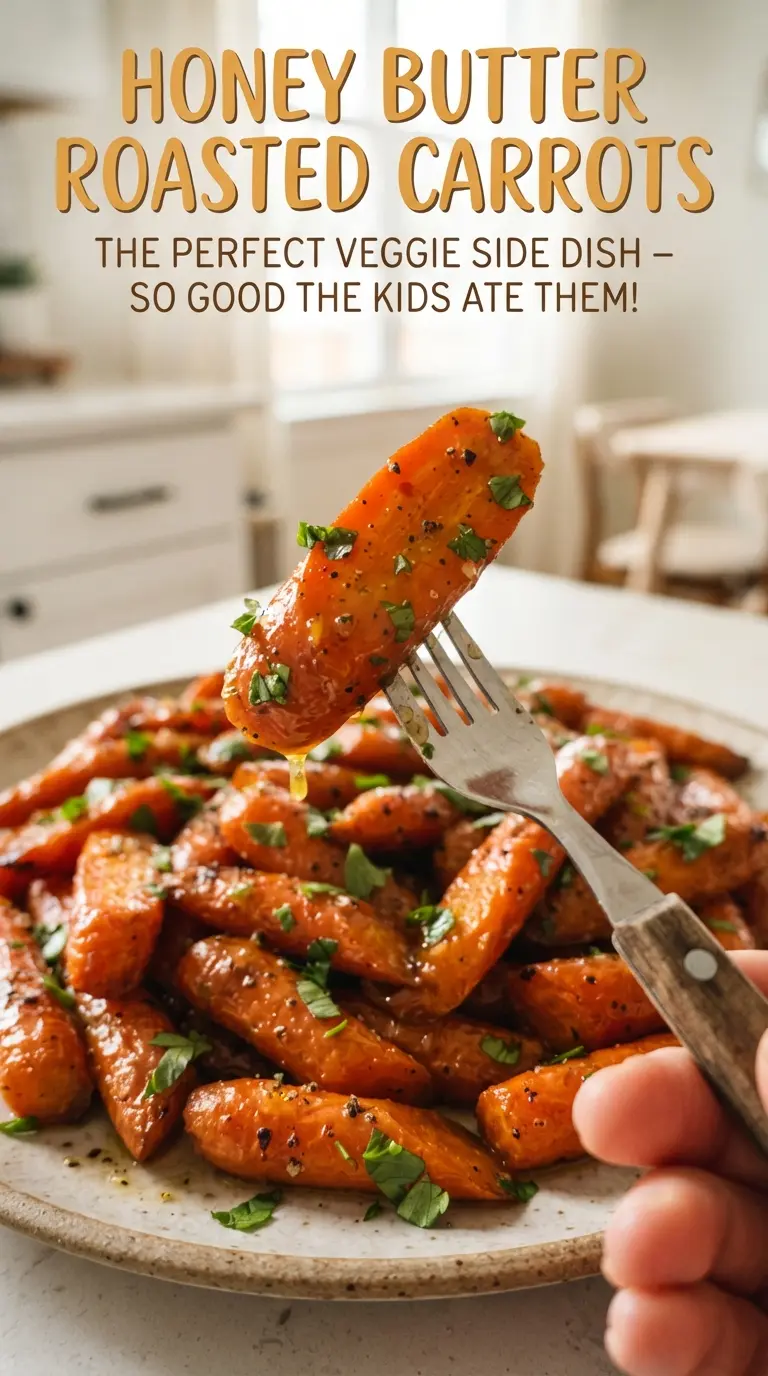
The carrots carry the whole dish, so use fresh ones that feel firm and heavy. Rainbow carrots bring a nice mix of color, but regular carrots roast just as well. If some of yours are thick, slice them lengthwise so they cook at the same pace as the slimmer ones.
- Butter — This gives the glaze richness and helps it cling. Melted butter works here, but it needs the olive oil beside it so the glaze doesn’t brown too fast in the oven.
- Honey — Honey is what creates that lacquered finish. Maple syrup will work in a pinch, but it tastes deeper and a little less floral, and it won’t set quite as shiny.
- Olive oil — This keeps the glaze smooth and helps the carrots roast instead of scorching. A neutral oil can stand in, but olive oil gives the finish a little more depth.
- Garlic — Mince it fine so it melts into the glaze. Big pieces can scorch on the pan before the carrots are tender.
- Fresh thyme — Add it at the end so the leaves stay fragrant. Dried thyme can work, but use less because it reads stronger once it hits the heat.
The Roast-and-Glaze Timing That Gives You Caramelization
Coating the Carrots Evenly
Whisk the melted butter, honey, olive oil, garlic, salt, and pepper until the mixture looks smooth and glossy. Toss the carrots in only half of it so they get a thin, even layer instead of a heavy puddle on the tray. If the carrots seem slippery but not drenched, you’re in the right zone.
Roasting Until the Edges Brown
Spread the carrots in a single layer on parchment so the glaze doesn’t glue them to the pan. Roast at 400F until the thickest pieces are tender enough for a fork to slide in with just a little resistance and the edges are turning deep gold. If the pan is crowded, the carrots will steam; use two pans if needed.
Finishing With the Remaining Glaze
Brush or spoon the rest of the honey butter over the carrots as soon as they come out of the oven. The heat helps the glaze melt into a shiny coating without overcooking the garlic or honey. Finish with thyme and flaky salt while the carrots are still hot so the seasoning sticks cleanly.
Maple Glazed Carrots
Swap the honey for maple syrup and you’ll get a deeper, woodsy sweetness that leans a little less floral. The glaze will still caramelize, but it won’t set quite as shiny, so don’t worry if the finish looks a touch softer.
Dairy-Free Version
Use plant-based butter in place of the dairy butter and keep the olive oil in the mix. You won’t lose the glossy coating, but the flavor will be slightly less rich, so the flaky salt at the end matters even more.
Herb Swaps That Still Work
Thyme is the cleanest match, but rosemary or chopped parsley both work if that’s what you have. Rosemary tastes stronger and more piney, so use it sparingly, while parsley gives you freshness without changing the glaze.
Storage and Reheating
- Refrigerator: Store leftovers in an airtight container for up to 4 days. The glaze will thicken and lose some shine, but the flavor holds up well.
- Freezer: These freeze, but the texture softens after thawing, so I only freeze them if I need the carrots for soup or a mash later. Freeze in a single layer first, then transfer to a container.
- Reheating: Reheat in a 350F oven until warmed through. The microwave works in a pinch, but it can make the carrots watery and dull, so use the oven if you want the edges to wake back up.
Questions I Get Asked About This Recipe
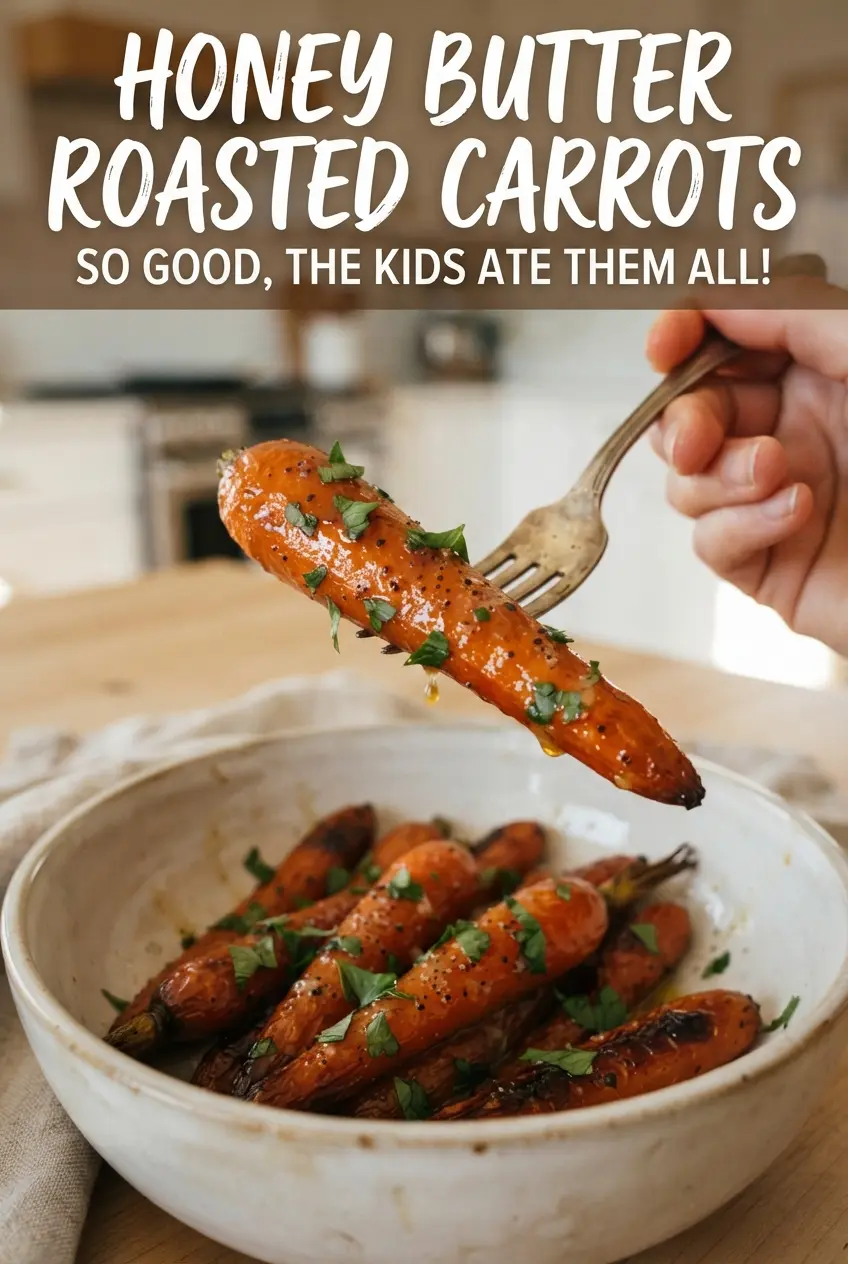
Honey Butter Roasted Carrots
Ingredients
Equipment
Method
- Preheat oven to 400°F and line a sheet pan with parchment for easy cleanup and even roasting.
- Whisk melted butter, honey, olive oil, garlic, salt, and black pepper until the glaze looks smooth and glossy.
- Toss carrots in half the honey butter, then spread them in a single layer so they roast instead of steam.
- Roast at 400°F for 25-30 minutes, until carrots are tender and show caramelized browned edges.
- Brush carrots with the remaining honey butter, then finish with fresh thyme and flaky sea salt while hot so the seasoning sticks.