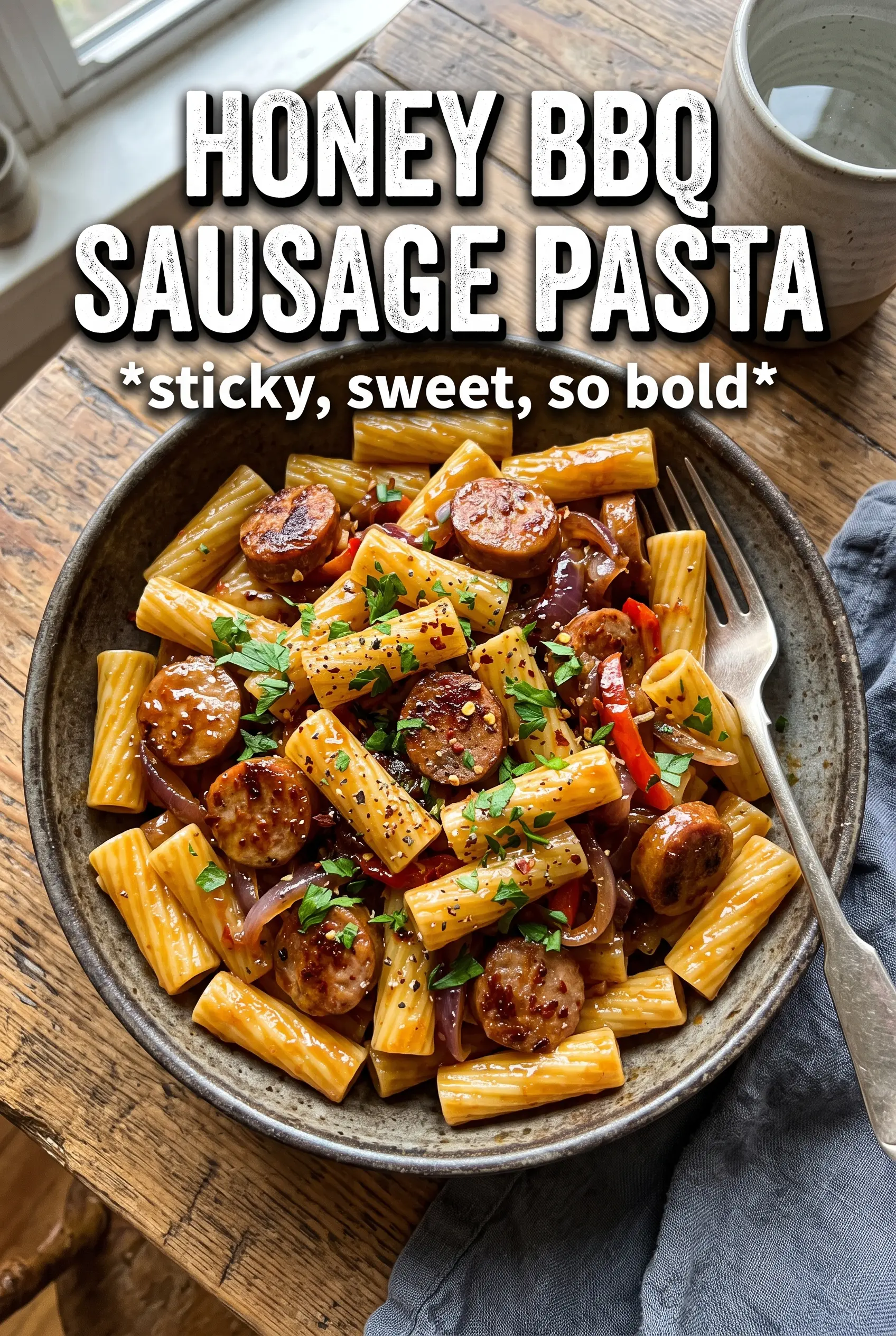
Sticky honey BBQ sauce clings to every ridge of rigatoni here, and the sausage gets those dark caramelized edges that make the whole pan taste deeper than the short ingredient list suggests. The cheddar melts into the sauce just enough to round off the sweetness without turning the dish heavy, so every bite lands somewhere between smoky, tangy, and just a little bit glossy.
What makes this version work is the balance: Dijon sharpens the BBQ sauce, honey gives it that lacquered finish, and a splash of pasta water helps the sauce relax and coat instead of sitting thick and pasty on top. Browning the sausage first matters, because those browned bits at the bottom of the skillet become the backbone of the sauce once the broth goes in.
Below, I’ve included the little details that keep the sauce smooth, the pasta properly coated, and the sausage from tasting boiled instead of seared. If you’ve ever had a BBQ pasta that felt too sweet or too loose, this one fixes both problems.
The sauce coated the rigatoni beautifully and didn’t break when I stirred in the cheddar. My husband went back for seconds and said the sausage tasted like it came off a grill.
Save this Honey BBQ Sausage Pasta for the nights when you want smoky sausage, glossy sauce, and one skillet worth remembering.
The Sauce Breaks When the Cheese Goes In Too Soon
This dish lives or dies on heat control. The BBQ mixture should simmer long enough to thicken and lose that raw, sugary edge before the cheddar goes in, but not so long that it turns syrupy and grabs the pan. If the cheese hits a bubbling sauce, it can turn grainy or clump at the bottom instead of melting into a smooth finish.
The other trap is skipping the pasta water. That starchy liquid helps the sauce cling to rigatoni and gives you enough looseness to stir everything together without forcing the pasta to drink up all the sauce in the skillet. You want the finished pan to look glossy and saucy, not dry with orange streaks stuck to the noodles.
What Each Ingredient Is Doing in the Skillet
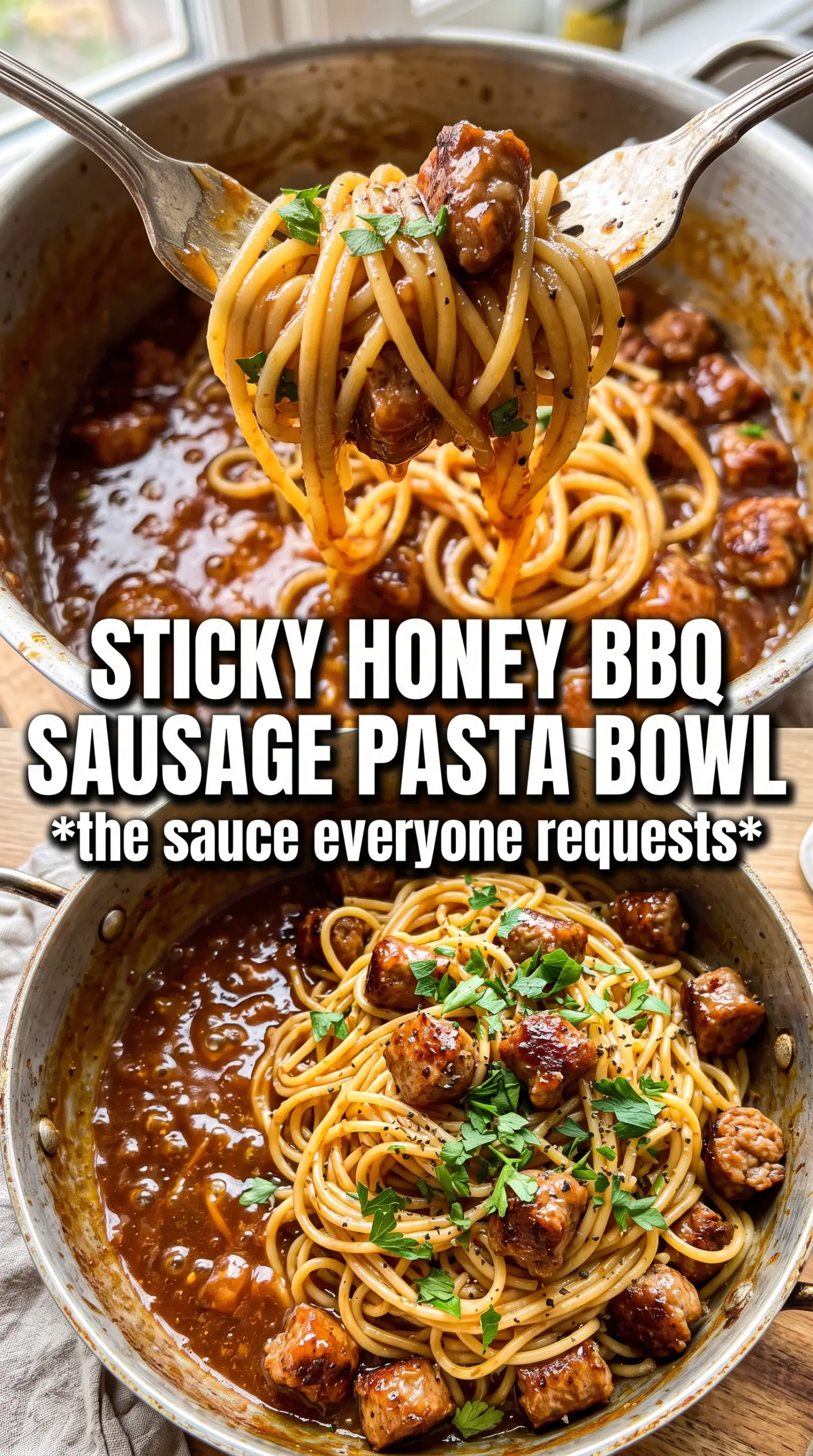
- Smoked sausage — This brings the smoky, salty backbone. A fully cooked smoked sausage works best because it browns fast and stays juicy; fresh sausage needs a different cooking approach and won’t give you the same caramelized slices.
- BBQ sauce — This sets the base flavor, so use one you actually like on its own. A thicker sauce helps the final dish cling better, while a thin, sweet sauce may need a little extra simmer time to concentrate.
- Honey — It deepens the glaze and gives the sauce that sticky sheen. Don’t add much more than called for, or the dish starts tasting candy-sweet instead of balanced.
- Dijon mustard — This is the quiet ingredient that keeps the sauce from tasting flat. It sharpens the sweetness and helps the whole pan taste more complete.
- Chicken broth — This loosens the sauce and carries all the browned bits from the skillet. Water works in a pinch, but you lose a lot of savoriness.
- Rigatoni — The ridges hold the sauce better than smoother pasta shapes. If you swap it, choose another sturdy pasta with grooves or curves, not a delicate noodle.
- Cheddar — It melts into the sauce and gives the finish a little body. Freshly shredded cheddar melts cleaner than pre-shredded because it doesn’t come coated with anti-caking starch.
Building the Pan Sauce Without Losing the Caramelization
Brown the Sausage First
Cook the sausage slices in a hot skillet until both sides pick up deep golden spots and the edges look a little crisp. That browning is the flavor, and it’s worth taking the time to let the slices sit long enough to color before moving them. If the pan looks crowded, the sausage will steam instead of sear, so work in batches if needed. Remove the sausage once it’s browned; it finishes later in the sauce and stays juicier that way.
Cook the Vegetables Just Until They Soften
The onion and bell pepper should go in next and cook until the onion turns translucent and the pepper loses its raw crunch. You’re not chasing deep color here; you’re building sweetness and giving the sauce a softer background. Add the garlic and smoked paprika only after the vegetables have started to soften, because garlic burns fast and turns bitter in a hurry. One minute is enough to wake up the spices without scorching them.
Simmer the Sauce Before the Pasta Joins In
Whisk the BBQ sauce, honey, broth, and Dijon together in the skillet and let it bubble gently for about five minutes. The sauce should look slightly thicker and a little more shiny, with the raw edge cooked out. If it reduces too far, add a splash more broth or pasta water now, not after the cheese is in. This is the point where the sauce builds its body, so keep the heat moderate and steady.
Finish with Pasta Water and Cheese
Add the cooked rigatoni and a bit of reserved pasta water, then stir until every tube is coated and the sauce looks loose enough to move. Return the sausage, then add the cheddar off the hottest part of the burner so it melts smoothly instead of seizing. If the pan looks tight, a tablespoon or two more pasta water will bring it back into a silky sauce. Season at the end so you can judge the saltiness after the cheese and sausage have had their say.
How to Make It Fit Different Nights
Make It a Little Spicier
Use a spicy smoked sausage or add a pinch of cayenne with the paprika. That gives the sweet sauce a sharper edge and keeps the dish from leaning too far into barbecue-joint sweetness.
Gluten-Free Version
Swap in your favorite gluten-free rigatoni and check that the BBQ sauce and sausage are both gluten-free. Gluten-free pasta can get soft faster, so pull it when it still has a little bite and finish it gently in the sauce.
Dairy-Free Without the Cheese
Leave out the cheddar and finish with an extra splash of pasta water plus a small drizzle of olive oil for body. You lose the creamy melt, but the sauce stays glossy and the BBQ flavor comes through even more clearly.
Storage and Reheating
- Refrigerator: Store in an airtight container for up to 4 days. The sauce thickens as it sits, so expect the pasta to soak up some of the gloss.
- Freezer: It freezes, but the pasta softens a bit after thawing. For the best texture, freeze in portions and reheat gently with a splash of broth or water.
- Reheating: Warm it in a skillet over low heat with a tablespoon or two of water or broth. The biggest mistake is blasting it in the microwave until the cheese breaks and the pasta dries out.