Honey baked ham lands on the table with that first glossy slice and a crust that shatters at the edge before giving way to juicy, salty meat underneath. The sugar topping turns deep amber in the oven, and the honey butter seeps into the spiral cuts so every slice tastes seasoned all the way through, not just glazed on the outside. It’s the kind of main dish that looks special without asking you to do much work.
The trick is layering the glaze in stages. A fully cooked spiral ham only needs warming, so the long, gentle bake brings it up to temperature without drying it out, then the hot oven finish caramelizes the sugar into that crackly shell. Spices matter here too: cinnamon, cloves, ginger, nutmeg, and allspice give the glaze warmth and depth, while paprika keeps it from tasting flat or one-note.
Below, you’ll find the timing that keeps the ham moist, the reason the sugar goes on in repeated layers, and a few smart ways to adapt the glaze if you want it a little darker, a little less sweet, or easier to serve for a crowd.
The crust turned out crackly and caramelized, and the ham stayed juicy all the way through the spiral cuts. I used the last sugaring step and it made a huge difference.
Save this honey baked ham for the next holiday table — the layered sugar crust and spiral-slice glaze make it a dependable centerpiece.
The secret to a crackly crust without drying out the ham
A spiral-sliced ham is already cooked, which is why the biggest mistake is blasting it with high heat from the start. You want the ham to warm gently under foil until it reaches 120F inside, then switch to a hotter oven only after the glaze is on. That two-temperature approach keeps the meat tender while the sugars caramelize on the surface instead of burning before the center is hot.
The other detail that matters is placement. Put the ham cut-side down in the pan so the juices stay where they can baste the meat as it warms. If you set it cut-side up too early, the exposed edges dry out before the glaze has a chance to do its work.
What the honey, butter, and spice mix are doing here
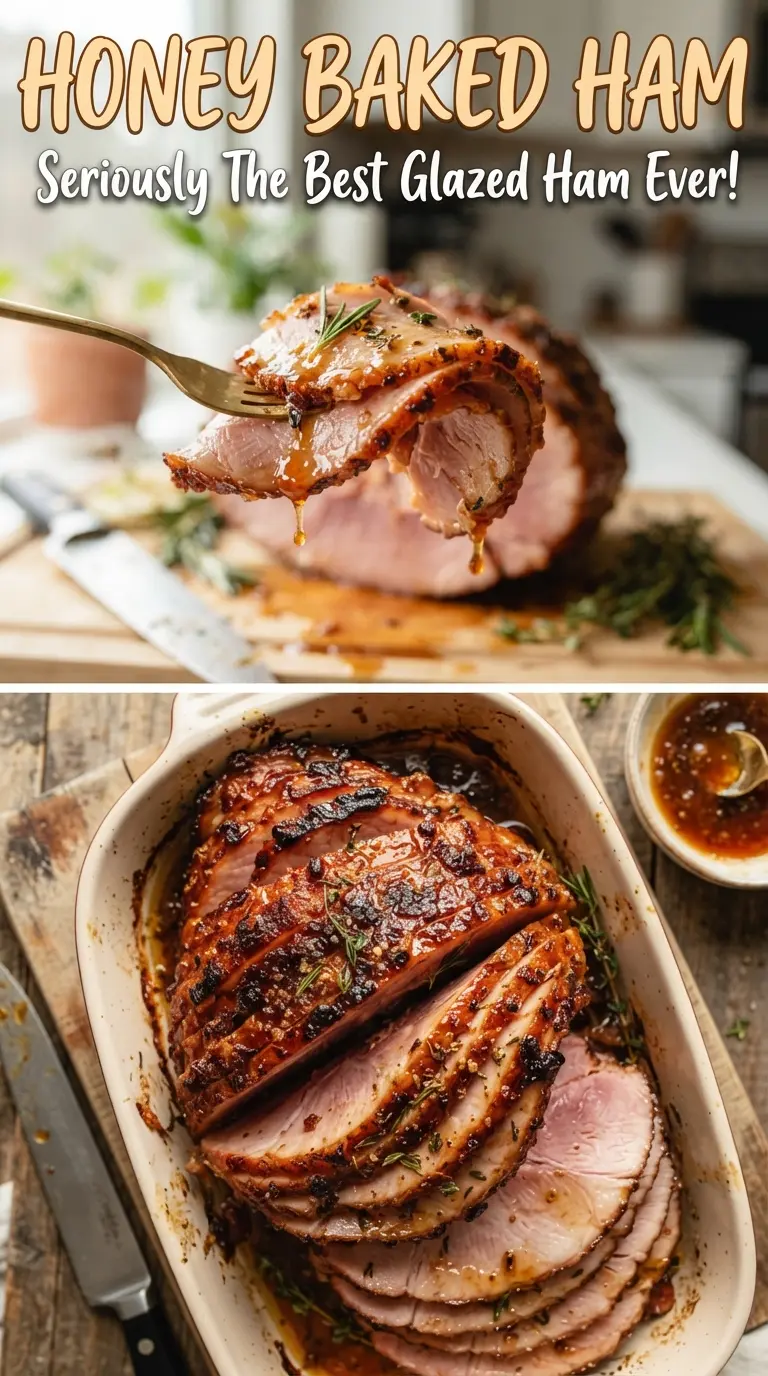
- Honey — This gives the glaze its sticky shine and helps it set into that lacquered crust. If your honey is thick and stubborn, warm it with the butter just until it loosens; you don’t need it boiling.
- Butter — Butter helps the glaze brush on smoothly and carries the spices across the ham. A salted or unsalted stick both works, but if you use salted butter, keep the ham’s saltiness in mind and don’t overdo the finishing salt anywhere else.
- Granulated sugar and brown sugar — Granulated sugar builds the crackly shell, while brown sugar adds molasses depth and helps the topping cling. If you only use brown sugar, the crust will be softer and darker; if you only use white sugar, it will taste sharper and less rounded.
- The spice blend — Cinnamon, cloves, ginger, nutmeg, allspice, and paprika turn the glaze from plain sweet into something layered and warm. Fresh spices aren’t necessary, but stale spices taste dusty here, so check the jar if it’s been sitting in the cabinet for years.
- Spiral-sliced bone-in ham — Bone-in ham gives better flavor and a juicier finish, and spiral slicing lets the glaze slip between layers. A boneless ham will work in a pinch, but it won’t hold onto the glaze in the same way or carve as neatly.
Building the glaze in layers so it caramelizes instead of melts off
Warming the ham first
Set the ham cut-side down in a roasting pan and cover it tightly with foil before it goes into the oven. The foil traps steam and protects the exposed slices from drying out while the center warms. If the foil is loose, the edges can crust over too early and the ham loses moisture before the glaze step even begins.
Mixing the glaze while the ham heats
Melt the honey and butter together just until smooth, then stir the sugars and spices in a separate bowl. Keeping the wet and dry parts separate until the last moment helps the sugar stay loose enough to pat on in an even layer. If the mixture turns into a paste too soon, it still works, but it’s harder to get a uniform crust.
Glazing in repeated passes
Remove the foil, brush on the honey butter, and press on a layer of the spiced sugar. Then raise the oven to 400F and bake for 5 minutes before repeating the brush-and-sugar process two more times. Those short rounds build a thicker, more even crust; if you dump all the sugar on at once, the outside gets patchy and the melted syrup slides off the ham instead of setting on it.
Finishing to the right temperature
Keep baking until the crust looks deep golden and crackly and the ham reaches 140F inside. The crust should look dry at the surface, not wet and foamy, and the glaze should cling to the slices instead of pooling in the pan. Rest the ham for 15 minutes before cutting so the juices settle back into the meat instead of running onto the board.
Three ways to adjust the glaze without losing the caramelized finish
Less sweet, still glossy
Cut the granulated sugar a little and keep the brown sugar. You’ll lose some of the crackly shell, but the glaze will taste deeper and less candy-like, which works well if the ham is serving alongside salty sides.
Gluten-free by nature
This recipe is already gluten-free as written, so the main job is checking the ham label if you’re serving someone with celiac disease. Some hams include spice packets or curing ingredients with additives, and that’s where hidden gluten usually sneaks in.
A darker, more molasses-forward crust
Swap a bit more of the white sugar for brown sugar. The crust will set darker and slightly softer, with a deeper caramel note, but it can edge toward sticky if you don’t keep the final bake short and hot.
Making it ahead for a holiday meal
You can mix the sugar-spice blend a day or two ahead and keep it sealed until you’re ready to glaze. For the best texture, bake and glaze close to serving time; the crust stays crisp longest in the first hour after it comes out of the oven.
Storage and Reheating
- Refrigerator: Store leftovers in an airtight container for up to 4 days. The crust softens in the fridge, but the ham stays juicy.
- Freezer: Freeze sliced ham for up to 2 months, wrapped tightly and packed with a little of the pan juices if you have them. Thaw overnight in the refrigerator.
- Reheating: Reheat covered at 300F with a splash of pan juices or water so it doesn’t dry out. The common mistake is blasting it uncovered until the slices turn tough; low heat keeps the ham tender.
Answers to the questions worth asking before you glaze the ham
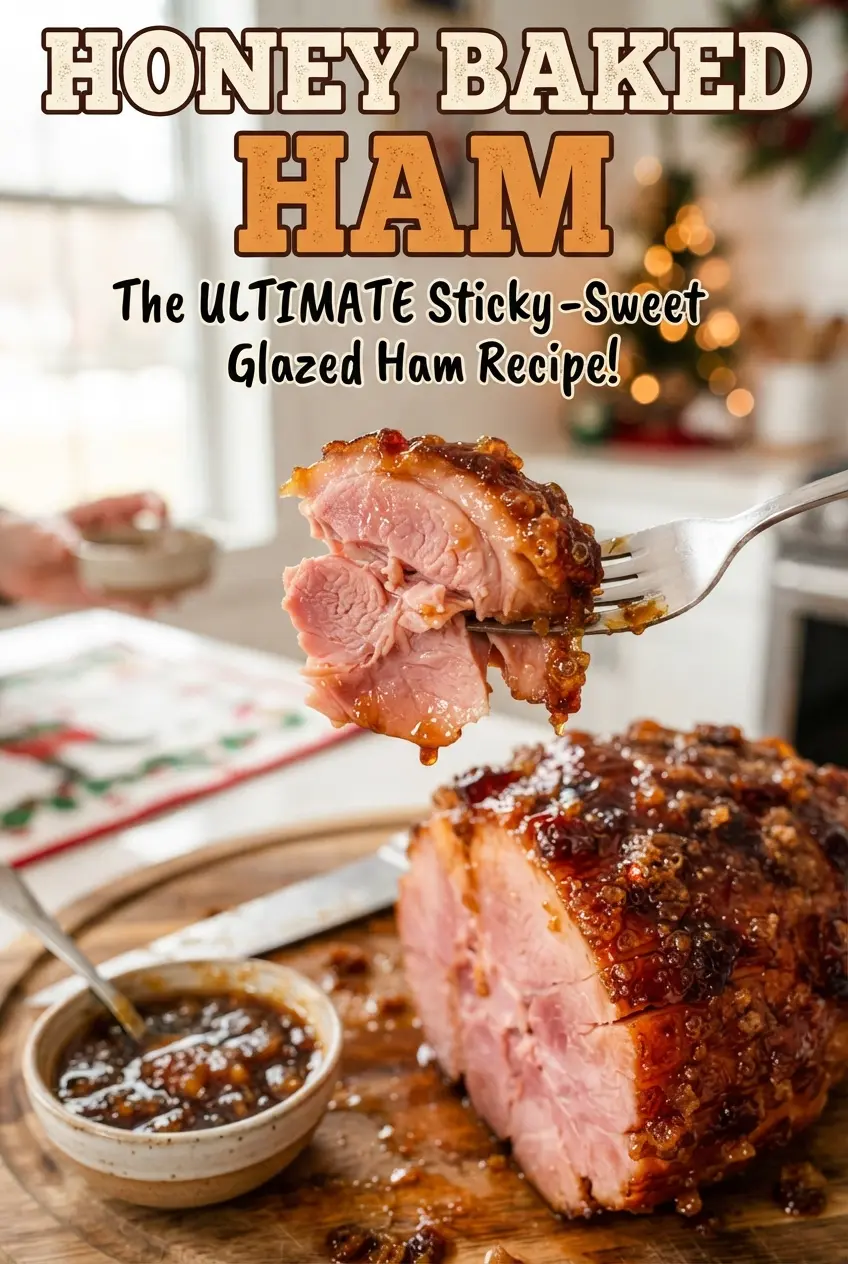
Honey Baked Ham
Ingredients
Equipment
Method
- Preheat oven to 325F. Place ham cut-side down in a roasting pan and cover tightly with foil.
- Bake 12-14 minutes per pound, until the center reaches 120F. Keep the foil on the ham so it heats through without drying out.
- Melt honey and butter together until smooth. Stir well so the glaze is glossy and pourable.
- In a separate bowl, mix granulated sugar, brown sugar, cinnamon, cloves, ginger, nutmeg, allspice, and paprika. Mix thoroughly for an even color and flavor throughout.
- Remove the foil, then brush the ham generously with honey butter. Distribute the glaze between the spiral ridges for full coverage.
- Pat on a layer of the spiced sugar. Add more sugar to any missed spots so the crust forms as it heats.
- Raise oven to 400F, then bake 5 minutes. Look for sugar starting to melt and bubble into a thin caramel film.
- Brush again with honey butter over the bubbling surface. Spread to the edges where the crust is forming.
- Pat on another layer of spiced sugar and bake 5 minutes. Watch for deepening color toward golden-brown.
- Brush with the remaining honey butter, then pat on the last layer of spiced sugar. Make sure the crust is an even coat across the top.
- Bake until the crust is deep golden and crackly and the ham reaches 140F. The surface should look set and crisp while the center finishes heating.
- Rest the ham 15 minutes before serving. This helps the juices settle so slices stay moist.