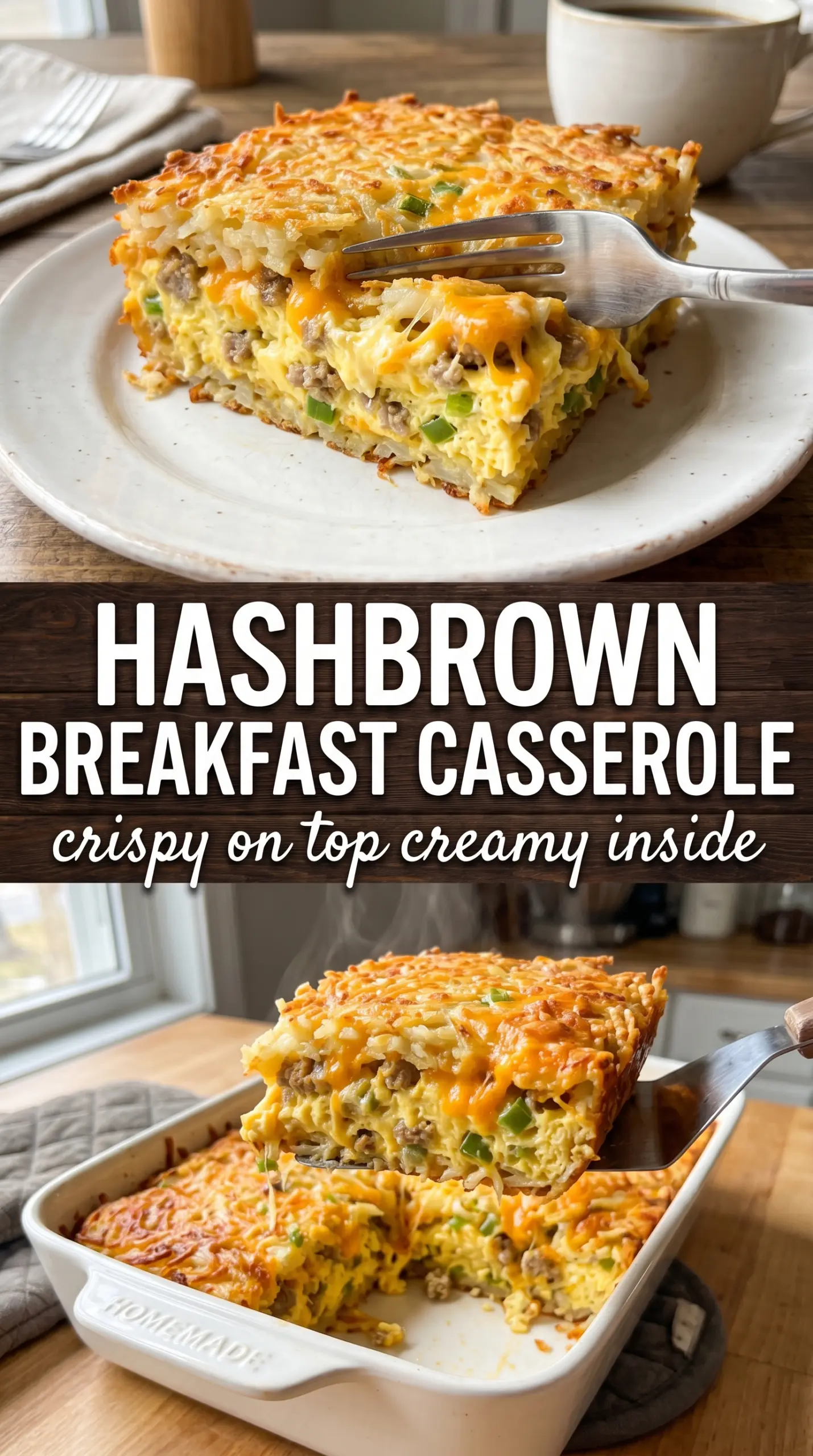
Golden-crusted hashbrown breakfast casserole earns its place on the table because it gives you contrast in every bite: crisp potato edges, a creamy middle, and a bubbly cheddar top that settles into the eggs instead of sitting on them. The best versions don’t bake up watery or bland. They hold together on the plate and still taste rich enough to stand on their own.
The trick is in the balance. Thawed hash browns need enough dairy and egg to turn tender, but not so much that they steam into a soft mound. Sour cream and cream of chicken soup do different jobs here: one adds tang and body, the other brings salt and thickness, so the casserole slices cleanly after baking. A light press into the dish helps the potatoes form a base without packing them down too hard.
Below, I’ll walk through the small details that keep the casserole from going soggy, plus a few smart swaps if you want to make it fit what’s in your kitchen. If you’ve ever pulled a breakfast bake out of the oven only to find the center loose and the edges pale, the notes here will help with that.
The hash browns stayed crisp around the edges, and the center set up beautifully instead of turning watery. I used it for Sunday brunch and everybody went back for a second square.
Like this cheesy hashbrown breakfast casserole? Save it to Pinterest for the mornings when you want crispy potatoes, set eggs, and an easy bake that feeds a crowd.
The Potato Layer Has to Set Before the Eggs Do
If the potatoes go in loose and dry, the eggs slide right through and collect at the bottom. That sounds harmless until you cut into the casserole and find a custardy top with a wet, underseasoned base. Mixing the thawed hash browns with sour cream, soup, and some of the cheese gives them enough body to hold together and enough moisture to bake into one sliceable layer.
Press the mixture into the dish lightly, not firmly. You want contact with the pan, but you don’t want to compact the potatoes into a dense cake. A gentle press helps the edges brown and crisp while the center stays tender.
What the Sour Cream, Soup, and Cheese Are Actually Doing Here
- Frozen diced hash browns — Diced potatoes give you more surface area than shredded hash browns, which means more crisp edges and a better bite after baking. Thaw them first and drain any extra liquid if they seem wet. Frozen straight from the bag tends to steam before it browns.
- Sour cream — This adds tang and keeps the potato layer from tasting flat. Greek yogurt can work in a pinch, but it bakes a little tighter and tangier. If you use it, choose full-fat for the closest texture.
- Cream of chicken soup — It thickens the potato mixture and seasons it from the inside, which helps the casserole hold together. A homemade white sauce can replace it, but it won’t bring the same convenience or the same savory depth. If you swap it, season the base more aggressively.
- Sharp cheddar — Sharp cheddar cuts through the richness and keeps the top from tasting heavy. Pre-shredded cheese works, but freshly shredded melts smoother and gives you a better bubbly crust. I’d use the better cheese here.
- Eggs and milk — This is the custard that sets the whole dish. Whole milk gives the best balance of richness and structure; lower-fat milk will work, but the casserole will taste a little leaner and can bake up less silky.
Getting the Custard to Set Without Drying Out the Edges
Mix the Potato Base First
Stir the thawed hash browns with the sour cream, soup, garlic powder, onion powder, salt, pepper, and one cup of cheddar until the potatoes look coated, not soupy. The mixture should mound softly in the bowl. If it looks wet enough to puddle, the casserole will bake up soft instead of firm.
Whisk the Egg Layer Separately
Beat the eggs with the milk until the mixture looks even and pale yellow, then pour it over the potatoes after they’re spread in the dish. Mixing the eggs in with the potato base makes it harder to control the texture. Separated layers give you a firmer top and a more cohesive center.
Bake Until the Center Stops Wobbling
Slide the dish into a 350°F oven and bake until the top is deep golden and the middle barely jiggles when you nudge the pan. If the edges brown too quickly, the oven is running hot and you should cover the top loosely with foil for the last stretch. The casserole is done when a knife inserted in the center comes out mostly clean and the egg no longer looks wet.
How to Adapt This for Brunch, Leftovers, or a Different Pantry
Make-Ahead for Busy Mornings
Assemble the casserole the night before, cover it tightly, and refrigerate it unbaked. In the morning, let it sit on the counter while the oven heats so the chill comes off a little before baking. Cold dishes take longer in the center, and if you bake it straight from the fridge without adding time, the edges can overcook before the middle sets.
Gluten-Free Version
Use a certified gluten-free cream soup or replace it with a thick homemade sauce made from butter, milk, and a gluten-free flour blend. The texture stays close, but the flavor depends more on seasoning because you’re losing the built-in saltiness of the canned soup. Check the hash browns too, since some brands add stabilizers that aren’t gluten-free.
Bacon or Sausage Addition
Fold in cooked, drained bacon or crumbled breakfast sausage if you want more savory weight. Keep the amount modest so the casserole doesn’t get greasy or crowded, and use fully cooked meat so it doesn’t release extra liquid into the eggs. This change makes the casserole heartier without changing the baking time much.
Dairy-Light Swap
You can use reduced-fat sour cream and milk, but the casserole will bake a little less rich and the center won’t feel as plush. If that’s the swap you need, keep the cheddar sharp so the flavor still has enough punch. Low-fat cheese tends to melt less smoothly, so expect a slightly firmer top.
Storage and Reheating
- Refrigerator: Store leftovers covered for up to 4 days. The top loses some of its crispness, but the casserole stays sturdy.
- Freezer: It freezes well in slices. Wrap individual portions tightly and freeze for up to 2 months, then thaw in the fridge before reheating.
- Reheating: Warm slices in a 325°F oven until heated through, or use short bursts in the microwave if you don’t mind a softer top. High heat dries out the eggs before the center is warm, which is the most common mistake with breakfast casseroles.
Questions I Get Asked About This Recipe

Hashbrown Breakfast Casserole
Ingredients
Equipment
Method
- Preheat oven to 350°F and grease a 9x13 dish. Use a lightly greased coating so the casserole releases cleanly.
- Mix thawed hash browns with sour cream, cream of chicken soup, garlic powder, onion powder, salt, pepper, and 1 cup cheddar. Stir until evenly coated and the mixture looks thick and cohesive.
- Spread the hash brown mixture in the prepared dish and press lightly into an even layer. Aim for full coverage so the edges can crisp as it bakes.
- Whisk eggs and milk together until smooth and uniform in color. Pour the mixture over the potato layer so it settles between shreds.
- Top with the remaining cheddar. Make sure it covers the surface for a bubbly, golden top.
- Bake for 45–50 minutes at 350°F until eggs are set and the top is golden. The center should look firm while the cheddar bubbles and browns; garnish with fresh chives.