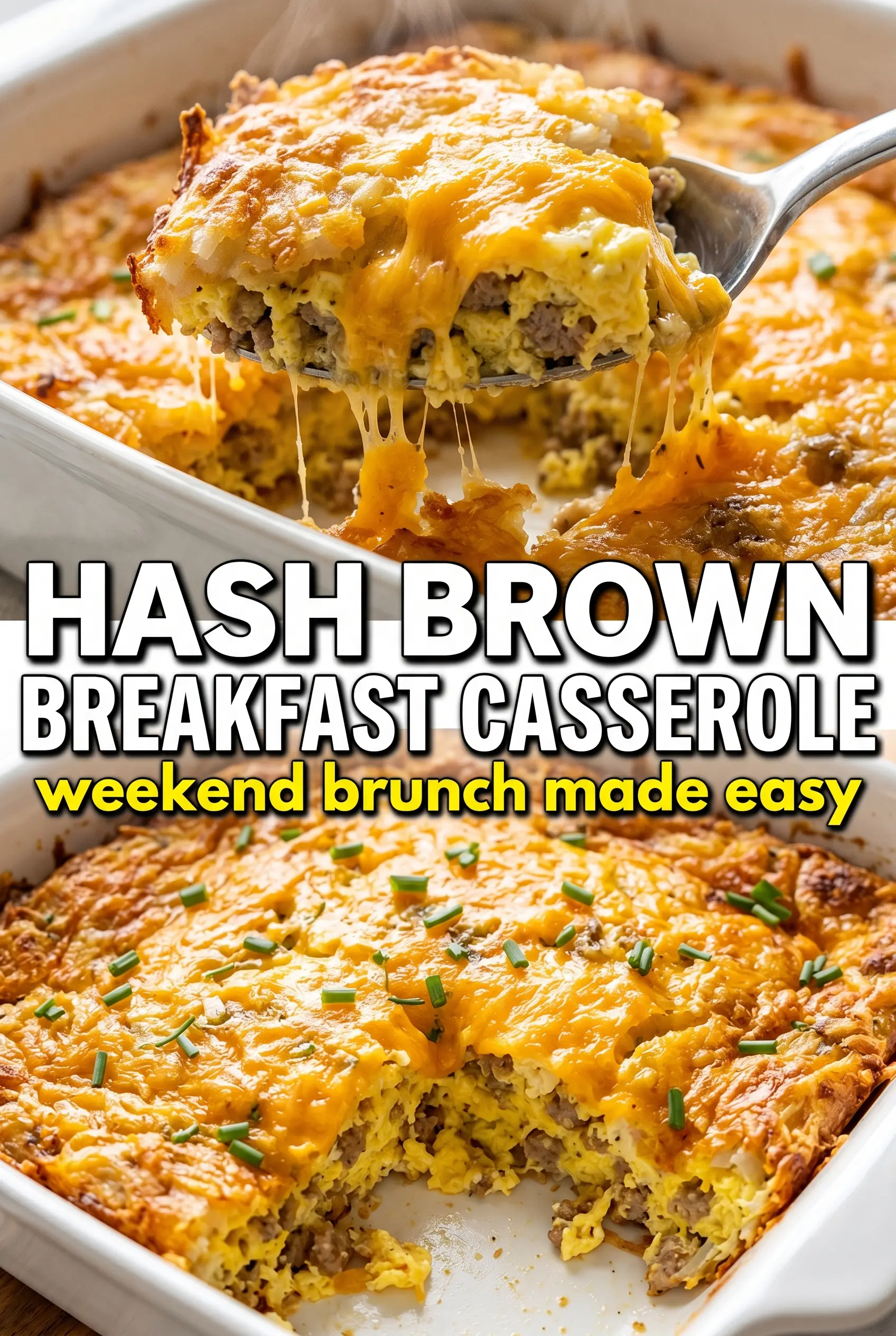
Golden edges, a crisp hash brown base, and a cheesy egg center make this breakfast casserole the kind of dish people keep asking for on repeat. It slices cleanly, feeds a crowd, and still feels homey enough for a quiet weekend breakfast. The best part is that it comes out with real texture: creamy eggs in the middle, browned cheese on top, and potatoes that stay sturdy instead of turning soggy.
The trick is pressing the thawed hash browns into a firm layer before the egg mixture goes in. That gives you a crust that holds the casserole together and keeps the bottom from steaming into mush. Mixing most of the cheese into the eggs also matters, because it seasons the custard all the way through instead of leaving the flavor sitting only on top.
Below, you’ll find the small details that make this bake work every time, plus the easiest ways to change it up when you want to use what you already have in the fridge.
The hash brown layer came out crisp instead of soggy, and the eggs set up perfectly by 50 minutes. I added ham and green onions, and my family kept going back for seconds.
Save this hash browns and eggs breakfast casserole for mornings when you want a crisp potato base, fluffy eggs, and a bubbly cheddar top in one pan.
The Hash Brown Layer Is What Keeps This Casserole from Turning Soft
Most breakfast casseroles fail in the same place: the potatoes release moisture and the bottom turns dense instead of crisp. Pressing the thawed hash browns firmly into the dish gives them a head start before the eggs go in, and baking uncovered lets the surface dry and brown instead of trapping steam.
The other thing that matters is thawing the potatoes all the way. If they go in icy, they shed water as they bake and the casserole needs extra time to set. That extra time is usually what dries out the eggs before the center is done.
What Each Ingredient Is Actually Doing in This Breakfast Bake
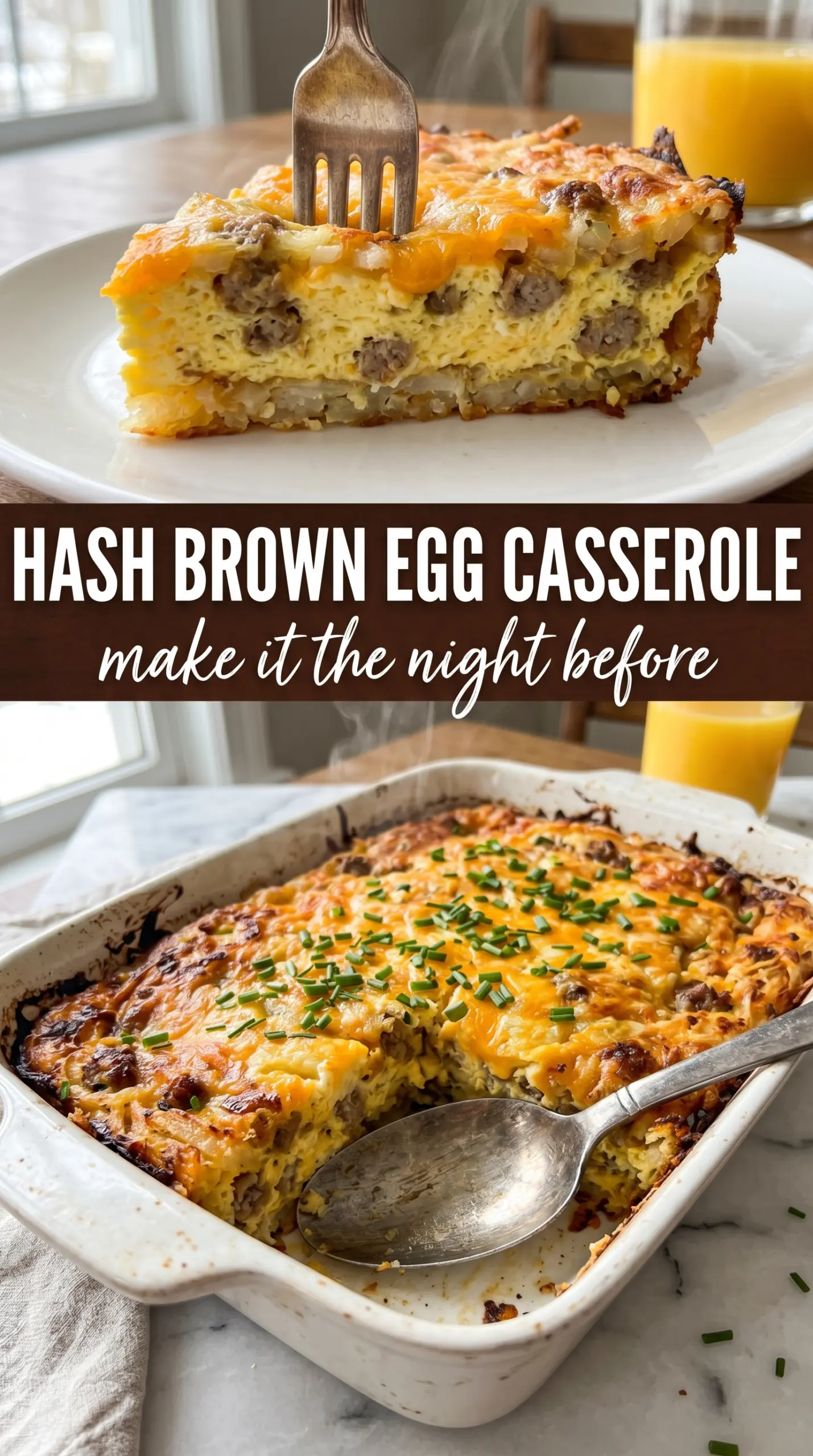
- Frozen hash browns — These are the structure of the casserole. Thawed potatoes press together better and brown more evenly; frozen ones tend to steam and slide apart.
- Eggs and whole milk — This is the custard. Whole milk keeps the texture tender and rich without making the bake heavy. Lower-fat milk works, but the filling sets up a little less silky.
- Sharp cheddar — Sharp cheese gives the casserole its backbone. Mild cheddar melts fine, but it tastes flatter. I like to mix most of it into the eggs so the flavor runs through every bite.
- Garlic powder and onion powder — They season the eggs evenly without adding moisture. Fresh garlic can taste harsh here and doesn’t distribute as cleanly.
- Ham, peppers, or green onions — These are best used as add-ins, not the main event. Keep them diced small so they don’t interrupt the custard or make the casserole fall apart when sliced.
Building the Custard So It Sets Cleanly
Forming the Potato Base
Grease the baking dish well, then press the thawed hash browns into an even layer. Use the bottom of a measuring cup or your hands to compact them, especially at the edges, because loose spots turn dry and crumbly while packed spots hold together like a crust. You want the layer thin enough to cook through but firm enough to support the eggs.
Mixing the Egg Filling
Whisk the eggs, milk, seasonings, and most of the cheese until the mixture looks fully blended and slightly foamy. That helps the cheese disperse instead of clumping in one corner. If you add heavy mix-ins, scatter them over the potato layer first so they stay suspended instead of sinking straight to the bottom.
Baking Until Set, Not Overdone
Pour the filling over the potatoes and bake uncovered until the center is just set and the top has turned golden and bubbling. The casserole is done when the edges are firm and the middle gives only a slight wobble. If the top browns before the center is set, lay a piece of foil loosely over it for the last few minutes rather than lowering the heat and drying out the eggs.
Three Ways to Make This Casserole Fit Your Morning
Make it meatier with ham
Diced ham works well here because it adds salt and a little chew without releasing much liquid. Keep the pieces small so every slice cuts neatly. This is the easiest way to turn the casserole into a fuller breakfast without changing the baking time.
Skip the dairy and keep the structure
Use unsweetened oat milk or almond milk in place of the whole milk, then add an extra handful of cheese only if you’re not avoiding dairy. The texture will still set, but it won’t be as rich. If you leave out the cheese too, expect a more egg-forward casserole with a lighter finish.
Add vegetables without making it watery
Bell peppers and green onions work best, but don’t overload the pan with vegetables that carry a lot of moisture. If you want mushrooms or spinach, cook them first and squeeze them dry. That extra step keeps the casserole from turning loose in the center.
Turn it into a gluten-free breakfast main
This casserole is naturally gluten-free as long as your hash browns and seasonings are certified gluten-free. That’s one of the nicest things about it: the potatoes do the work that bread usually would, so you don’t need a special flour blend or binder.
Storage and Reheating
- Refrigerator: Store leftovers covered for up to 4 days. The potato base softens a little, but the slices still hold together well.
- Freezer: This freezes well in individual portions. Wrap tightly and freeze for up to 2 months, then thaw overnight in the fridge before reheating.
- Reheating: Warm slices in a 325°F oven until heated through, or use the microwave in short bursts. The oven keeps the hash browns firmer; the microwave is faster but can make the eggs rubbery if you heat too long at once.