Golden chicken thighs with lemon, oregano, and feta hit all the right notes: crisp skin, juicy meat, and a pan sauce that tastes bright without turning sharp. The cherry tomatoes collapse just enough in the oven to mingle with the olive oil and lemon, while the feta softens on contact with the heat and turns creamy at the edges. It’s the kind of dinner that looks like you worked harder than you did.
The real payoff here comes from two things: a short marinade that seasons the chicken all the way through, and a hot oven that browns the skin before the tomatoes and lemon slices give up their juices. Bone-in, skin-on thighs stay forgiving, even if you let them roast a few minutes longer than planned. That makes this a smart dish for busy nights when you still want something that tastes layered and intentional.
Below, I’ve included the small details that keep the chicken juicy and the feta from disappearing into the pan. There’s also a couple of easy swaps if you need to stretch the dish or adjust it for what’s already in your kitchen.
The chicken skin came out crisp and the lemon slices caramelized instead of getting bitter. I loved that the feta stayed a little soft on top and the tomatoes made their own sauce right in the pan.
Save this Greek Chicken with Lemon and Feta for a crisp-skinned, tomato-bright dinner with barely any cleanup.
The Trick to Keeping the Chicken Skin Crisp Under Tomatoes and Lemon
The biggest mistake with this kind of baked chicken is crowding the pan with wet ingredients before the skin has a chance to brown. Tomatoes, lemon slices, and the chicken juices all release moisture as they roast, so the chicken has to start skin-side up and have enough space around it for the heat to circulate. That’s what gives you browned skin instead of soft, steamed skin.
The marinade also matters here, but not because it needs to sit for hours. Thirty minutes is enough for the garlic, oregano, and lemon zest to cling to the surface and season the meat without turning the texture mushy. The acid from the lemon juice brightens the dish, but if you marinate much longer than that, the chicken can start to take on a tighter, cured texture on the outside.
- Bone-in, skin-on chicken thighs — These hold up best in the hot oven and stay juicy even after the tomatoes burst. Boneless thighs work in a pinch, but they cook faster and won’t give you the same crisp skin.
- Lemon zest and lemon juice — The zest gives you the fragrant lemon oil that makes this taste vivid. The juice adds the acidic edge, but the zest is what keeps the lemon flavor from tasting thin.
- Feta — Crumble it over the chicken right after baking, not before. If it goes in too early, it melts into the pan; added at the end, it softens on top and keeps some of its salty bite.
- Kalamata olives — They bring briny depth that balances the lemon and tomatoes. If you don’t have them, use another cured black olive, not green olives, which can push the dish in a harsher direction.
What Each Ingredient Is Actually Doing in This Recipe

- Primary ingredient (the star) — Quality matters most. Choose the best you can find.
- Cooking medium (oil, butter, or broth) — This carries flavors and prevents dryness.
- Seasonings (salt, pepper, spices, herbs) — Layer flavors so nothing overpowers. Build depth gradually.
- Aromatics (garlic, onion, herbs) — Cook with fat to bloom flavors. Become the foundation.
- Supporting ingredients — Complement the main ingredient without overpowering it.
- Sauce or liquid (if applicable) — Brings flavors together. Balance richness with acid.
- Acid (lemon, vinegar, wine, or other) — Brightens and prevents flat-tasting results.
- Final finish (garnish, glaze, or sauce) — Prevents one-dimensional taste and adds visual appeal.
Building the Pan so the Lemon and Feta Taste Balanced, Not Sharp
Mixing the Marinade
Whisk the olive oil, lemon juice, lemon zest, garlic, oregano, smoked paprika, salt, and pepper until the mixture looks slightly thick and emulsified. That helps the garlic and herbs coat the chicken instead of sliding off. Toss the thighs thoroughly, then let them sit for at least 30 minutes so the seasoning has time to work into the surface.
Setting Up the Baking Dish
Arrange the chicken skin-side up in a large baking dish with some space between the pieces. Scatter the cherry tomatoes, olives, and lemon slices around, not on top of the chicken, so the skin can brown directly against the heat. If the pan is packed too tightly, the tomatoes steam everything and the chicken loses its roasted edges.
Roasting to the Right Finish
Roast at 425°F until the skin is deeply golden and the thickest part of the chicken reaches 165°F. The tomatoes should look collapsed and blistered, and the lemon slices should be browned at the edges, not pale and wet. Pull the dish as soon as the chicken is done; overcooking won’t help the texture, and the thighs will stay plenty hot while you finish them with feta.
Finishing with Feta and Herbs
Crumble the feta over the chicken and vegetables immediately after the pan comes out of the oven. The heat softens the cheese just enough to make it creamy without melting it away. Finish with fresh oregano so the herbs stay bright and aromatic instead of sinking into the roast.
Three Ways to Adjust This Greek Chicken Without Losing the Character of the Dish
Make It Dairy-Free
Leave off the feta and finish with extra olives, chopped parsley, and a drizzle of good olive oil. You’ll lose the salty creaminess that feta gives the dish, but the chicken, lemon, and tomatoes still carry the meal well.
Use Chicken Breasts Instead
Boneless, skinless breasts will work, but they need less time and a little more protection from drying out. Roast until they hit 165°F, then stop there; don’t wait for them to look as deeply browned as the thighs, because they won’t carry the same fat and can dry fast.
Turn It Into a Bigger Pan Dinner
Add chunks of zucchini or red onion around the chicken if you want more vegetables in the same dish. Cut them large enough that they hold their shape, and keep the pan from getting crowded so the vegetables roast instead of turning watery.
Storage and Reheating
- Refrigerator: Store leftovers in an airtight container for up to 4 days. The chicken stays moist, but the skin softens after chilling.
- Freezer: Freeze the chicken and pan juices for up to 2 months. The tomatoes and feta lose some texture after thawing, so expect a softer, more braised result.
- Reheating: Warm leftovers in a 325°F oven, covered loosely with foil, until heated through. If you microwave it, the skin will go limp and the feta can separate, so the oven is the better call.
Questions I Get Asked About This Recipe
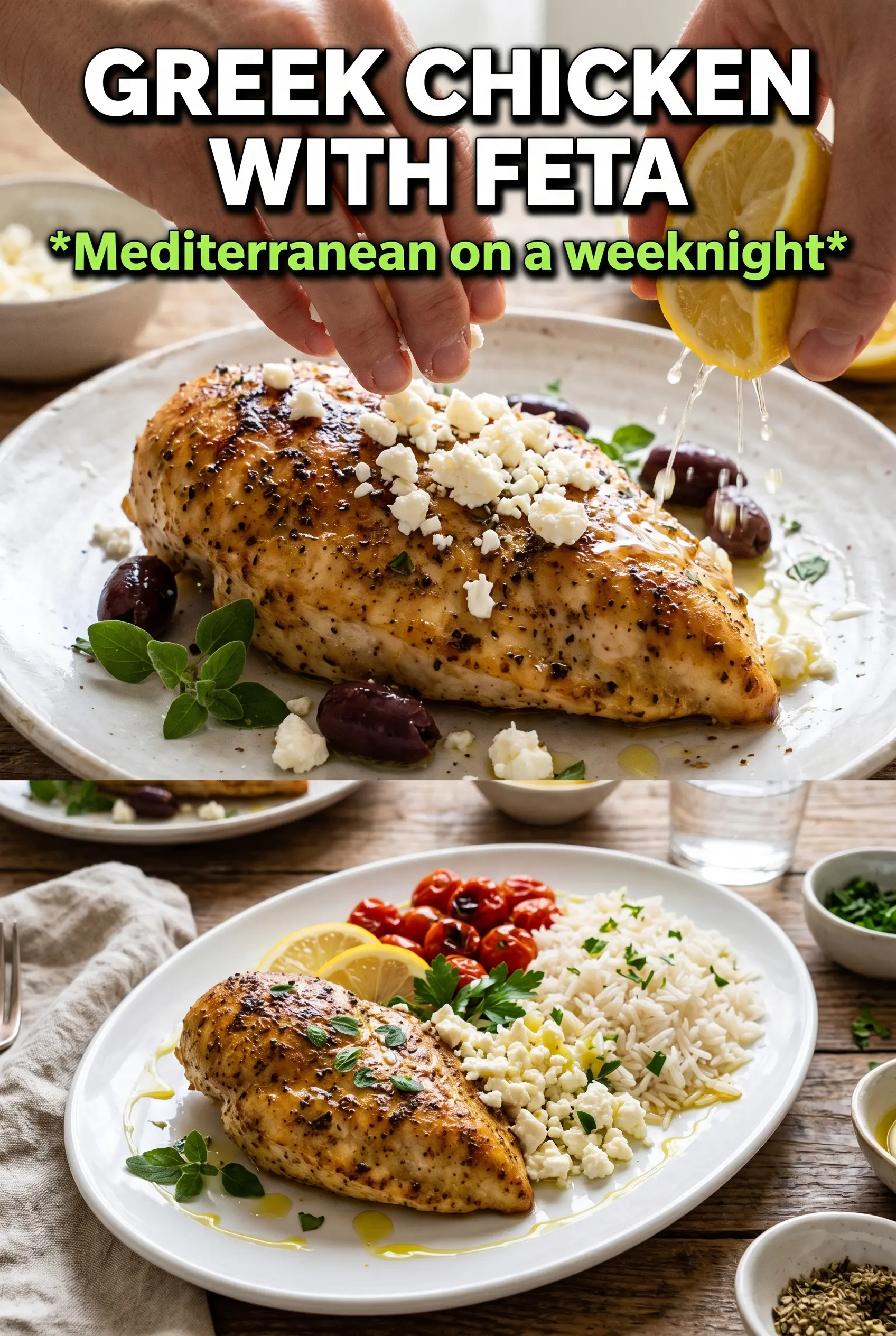
Greek Chicken with Lemon and Feta
Ingredients
Equipment
Method
- Whisk olive oil, fresh lemon juice, lemon zest, minced garlic, dried oregano, smoked paprika, salt, and pepper until evenly combined. Marinate the chicken in the mixture for at least 30 minutes, covered.
- Preheat the oven to 425°F and arrange the marinated chicken skin-side up in a large baking dish. Roast for 25 minutes, keeping the chicken pieces in a single layer.
- Scatter cherry tomatoes, Kalamata olives, and thin lemon slices around the chicken in the baking dish. Roast an additional 3–5 minutes until the chicken skin is golden and the thickest part reaches 165°F.
- Remove the baking dish from the oven and immediately crumble feta over the hot chicken and vegetables. Let it sit for 1–2 minutes so the feta softens slightly.
- Garnish with fresh oregano and serve warm with pita or orzo. Plate with the caramelized lemon slices and burst tomatoes spooned over top.