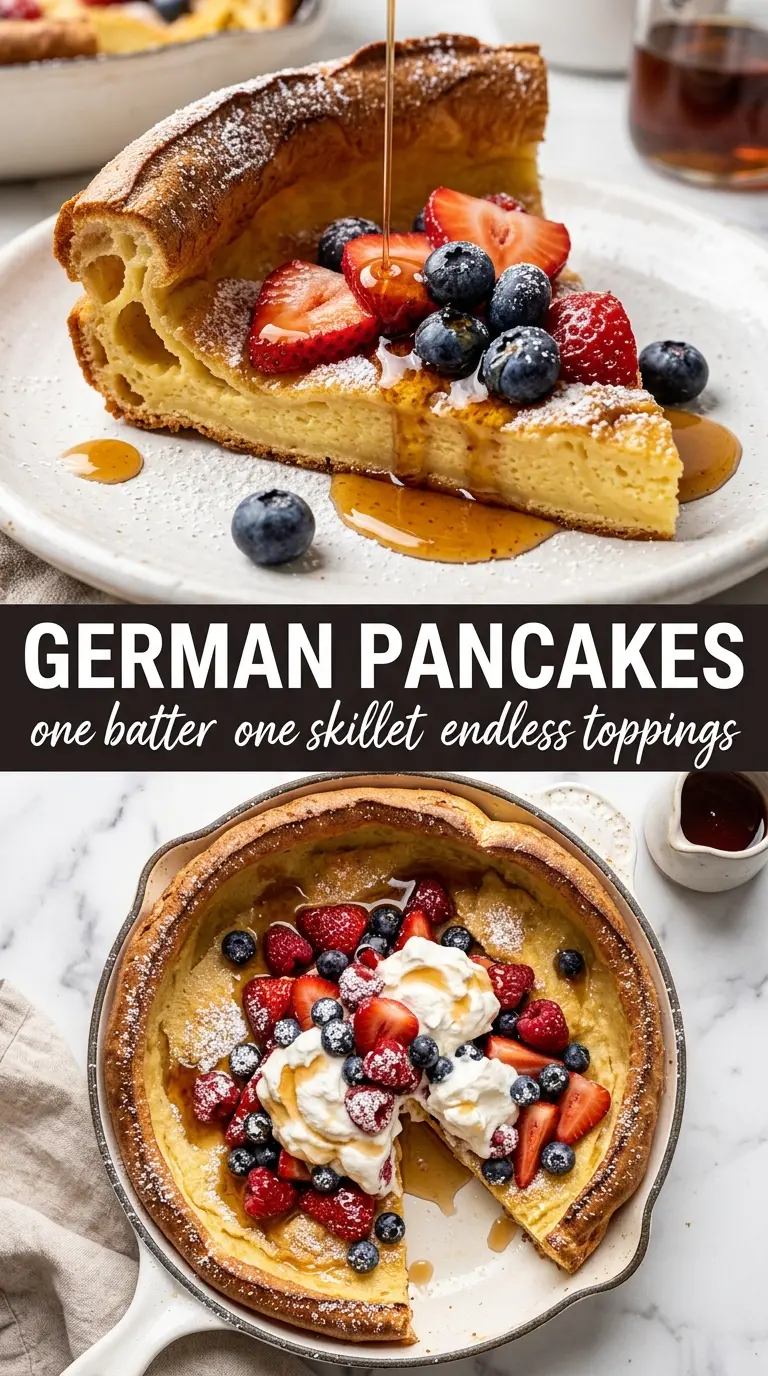
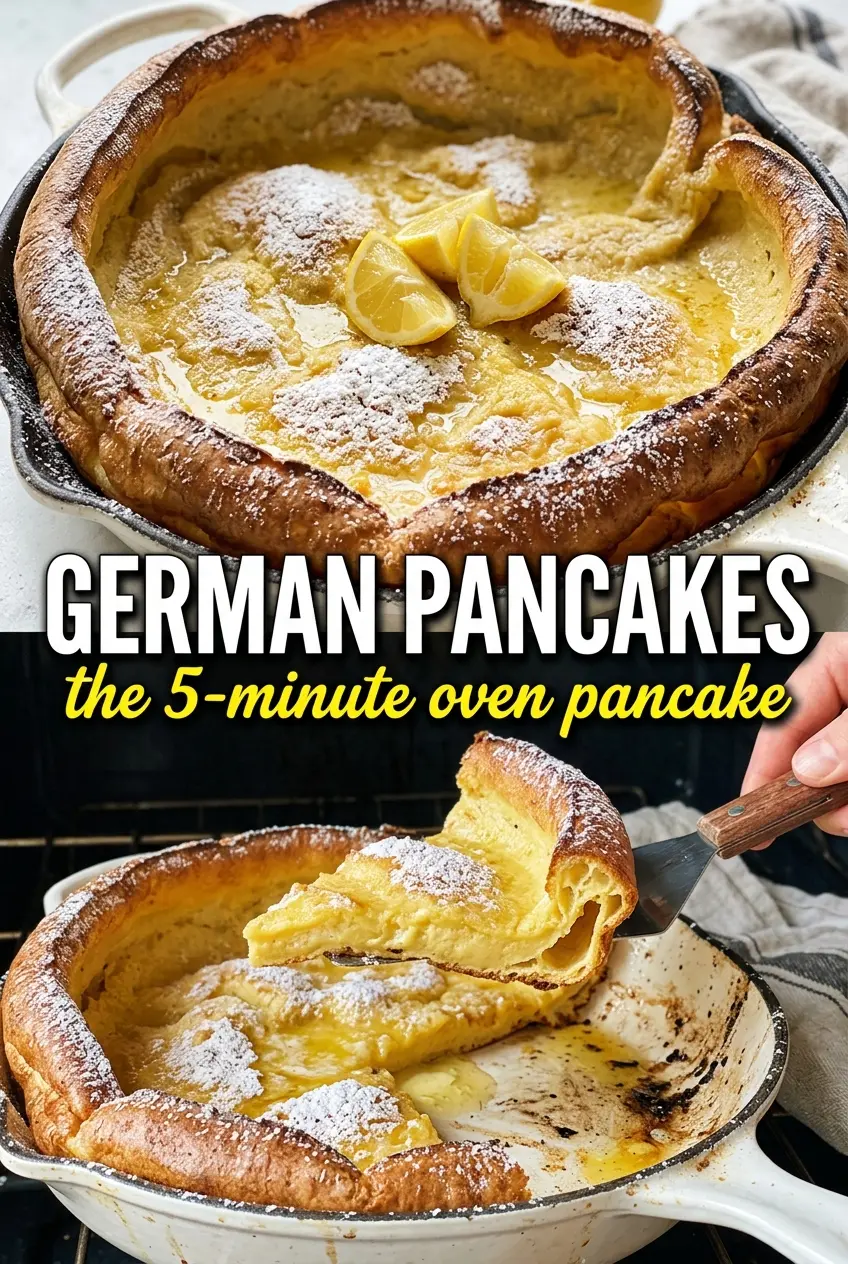
German pancakes rise into a tall, dramatic puff with crisp, buttery edges and a soft, custardy center that lands somewhere between a crepe and a popover. The magic is in the oven heat and the hot skillet. When the batter hits that buttered pan, the edges set fast, the middle lifts, and you get those golden walls that collapse just enough when you bring the pan to the table.
This version keeps the ingredient list short on purpose. Room-temperature eggs and milk blend into a smoother batter, which helps the pancake puff more evenly. A cast iron skillet is worth using here because it holds heat well and gives the bottom a deep golden finish. The batter stays thin, so it bakes into something light instead of dense.
Below, I’ll walk through the one step that matters most for getting that dramatic rise, plus a few ways to serve it depending on whether you like it classic with lemon and powdered sugar or piled with berries.
The pancake puffed up like a cloud and the center stayed custardy instead of turning rubbery. I used the lemon and berries on top, and my kids thought it was the best breakfast ever.
Save this German Pancake for the mornings when you want that big puff, buttery edges, and a lemon-sugar finish.
The Hot Skillet Is What Gives You the Puff, Not Just the Batter
The biggest mistake with German pancakes is putting the batter into a pan that isn’t truly hot. The oven and skillet need to be fully heated before the butter goes in, because that instant sizzle is what helps the edges climb quickly and the center lift instead of spread. If the pan is lukewarm, the pancake bakes flatter and the texture turns more eggy than custardy.
Don’t open the oven while it bakes. That blast of heat is doing the heavy lifting, and even a quick peek can knock the puff down before the structure sets. You want deep golden edges, a high dome, and a center that still has a little wobble when you pull it out. It settles fast once it hits the table.
What Each Ingredient Is Actually Doing in This Recipe
- Primary ingredient (the star) — Quality matters most. Choose the best you can find.
- Cooking medium (oil, butter, or broth) — This carries flavors and prevents dryness.
- Seasonings (salt, pepper, spices, herbs) — Layer flavors so nothing overpowers. Build depth gradually.
- Aromatics (garlic, onion, herbs) — Cook with fat to bloom flavors. Become the foundation.
- Supporting ingredients — Complement the main ingredient without overpowering it.
- Sauce or liquid (if applicable) — Brings flavors together. Balance richness with acid.
- Acid (lemon, vinegar, wine, or other) — Brightens and prevents flat-tasting results.
- Final finish (garnish, glaze, or sauce) — Prevents one-dimensional taste and adds visual appeal.
What the Eggs, Milk, and Butter Are Doing in This Pan
- Eggs — These are the structure and lift. Room-temperature eggs blend more smoothly and help the batter puff more evenly, so don’t skip that detail if you want a taller rise.
- Whole milk — The fat content keeps the pancake tender and gives the center that soft, custardy texture. Lower-fat milk works in a pinch, but the pancake won’t taste as rich or bake up quite as plush.
- All-purpose flour — This is just enough to hold everything together without making it heavy. Bread flour is too strong here and can make the texture tough.
- Butter — The butter should melt in the hot skillet and coat the pan before the batter goes in. That first layer keeps the pancake from sticking and builds those crisp, browned edges.
- Lemon, powdered sugar, and berries — These aren’t garnish in the throwaway sense; they balance the richness. The lemon cuts through the butter and eggs, and the berries add freshness that keeps each bite from feeling heavy.
Getting the Batter Into the Pan Before It Loses Its Edge
Blending the Batter Until It Is Completely Smooth
Blend the eggs, milk, flour, sugar, vanilla, and salt for about 30 seconds, just until no flour streaks remain. The batter should look thin and pourable, almost like heavy cream. If you see little lumps, keep blending; flour pockets bake up unevenly and leave gummy spots in the finished pancake.
Heating the Skillet Until It Is Truly Ready
Set the cast iron skillet in the oven while it preheats so the pan gets hot all the way through. When it comes out, the butter should melt immediately and start foaming around the edges. If the butter just sits there in a slow puddle, the pan needs more time.
Pouring Fast and Baking Without Interruption
Pour the batter into the buttered skillet right away and put it back in the oven at once. That timing matters because the hot pan starts cooking the outside before the batter has a chance to settle. Bake until the sides are deeply browned and the center is puffed high; if it looks pale, give it a few more minutes before opening the oven door.
Serving It While It Still Has Height
Dust with powdered sugar, squeeze over fresh lemon juice, and add berries right before serving. This pancake drops as it cools, so bring it to the table immediately from the skillet. That first warm slice has the best contrast: crisp edges, soft center, and a bright hit of lemon.
Three Ways to Serve German Pancakes Without Losing the Signature Puff
Classic Lemon and Powdered Sugar
This is the cleanest version and the one that shows off the pancake best. The tart lemon juice cuts the butter and eggs, and the powdered sugar melts into the hot surface in the first few seconds after serving.
Berry Topped Brunch Style
Pile fresh berries over the top right before bringing it to the table. This adds brightness and a little juiciness without weighing down the pancake, though soft berries release more liquid than firm ones, so add them at the last second.
Dairy-Free Version
Use a neutral dairy-free butter and an unsweetened non-dairy milk with enough fat, like oat milk. The pancake will still puff, but the flavor is a little less rich and the edges won’t brown quite as deeply as they do with whole milk and butter.
Gluten-Free Swap
A 1:1 gluten-free flour blend works well here if it includes xanthan gum. The texture will be a little less elastic and may settle faster after baking, but the pancake still gets that dramatic, showy rise.
Storage and Reheating
- Refrigerator: Store leftovers in an airtight container for up to 2 days. The pancake loses its puff and the texture turns denser, which is normal.
- Freezer: It freezes, but the custardy center suffers a little. Wrap individual slices tightly and freeze for up to 1 month if you want to reheat them for a quick breakfast.
- Reheating: Warm slices in a 325°F oven or toaster oven until heated through. The microwave softens the edges and makes the pancake a bit rubbery, so use it only if you don’t mind losing the crispness.
Answers to the Questions Worth Asking
German Pancakes
Ingredients
Equipment
Method
- Preheat the oven to 425°F and place a 10–12 inch cast iron skillet inside to heat for 10–12 minutes, until piping hot. The skillet should be fully preheated before you add butter.
- Blend the eggs, whole milk, all-purpose flour, sugar, vanilla extract, and salt for 30 seconds until perfectly smooth. Stop and scrape as needed so no flour pockets remain.
- Carefully remove the hot skillet from the oven, add the unsalted butter, and swirl until fully melted and the pan is coated. Work quickly to keep the skillet hot.
- Pour the batter immediately into the hot skillet and return it to the oven at 425°F. Bake for 18–22 minutes without opening the oven until dramatically puffed and deep golden around the edges.
- Dust the pancake with powdered sugar right out of the oven, then squeeze fresh lemon juice over the top. The center should look custardy as it gently deflates.
- Add fresh berries and serve immediately directly from the pan. Pair with a lemon wedge at the side for extra brightness.