Silky garlic Parmesan sauce clings to every strand of pasta here, and the chicken stays juicy enough to slice cleanly on top without turning the whole bowl heavy. It’s the kind of dinner that looks like you spent far longer at the stove than you did, which is exactly why it keeps showing up on busy nights.
The trick is keeping the sauce gentle. Garlic goes into butter just long enough to soften, not brown, then cream and broth simmer until the sauce has a little body before the Parmesan goes in. That order matters because cheese added to a harsh boil turns grainy fast, and this dish is at its best when the sauce stays smooth and glossy.
Below, I’ve included the small details that keep the chicken tender and the sauce from tightening up as it sits. There’s also a note on what to do if your pasta drinks up more sauce than you expected, because it probably will.
The sauce turned out smooth and clingy instead of oily, and the chicken stayed juicy after slicing. I added a splash of pasta water at the end and it coated the spaghetti perfectly.
Creamy garlic Parmesan chicken pasta with a glossy sauce and juicy sliced chicken is the kind of dinner worth pinning for a fast, comforting night in.
The Sauce Breaks When the Heat Is Too High
Garlic Parmesan pasta fails for two reasons: the garlic browns too hard, or the cheese goes into a sauce that’s boiling like mad. Both problems show up fast. Browned garlic turns bitter and takes over the whole dish, and overheated Parmesan turns the sauce sandy instead of smooth.
Keeping the pan at medium once the butter goes in gives the garlic time to perfume the fat without scorching. Then the cream and broth simmer just until they coat a spoon lightly. That’s the moment to add the Parmesan. If the sauce looks thin at first, don’t panic; it tightens as the cheese melts and the pasta finishes absorbing it.
- Chicken breasts — Slice them thin after resting so they stay juicy and don’t steam the pasta. Thick chunks cool the dish down and make it feel heavier.
- Heavy cream — This is what gives the sauce its body. Half-and-half can work in a pinch, but the sauce will be looser and needs a little more reduction.
- Fresh Parmesan — Grate it yourself. Pre-shredded cheese often has anti-caking starches that keep it from melting into that silky finish you want.
- Pasta water — This is your texture control. The starch helps the sauce cling and loosens it without watering down the flavor.
What Each Ingredient Is Actually Doing in This Bowl
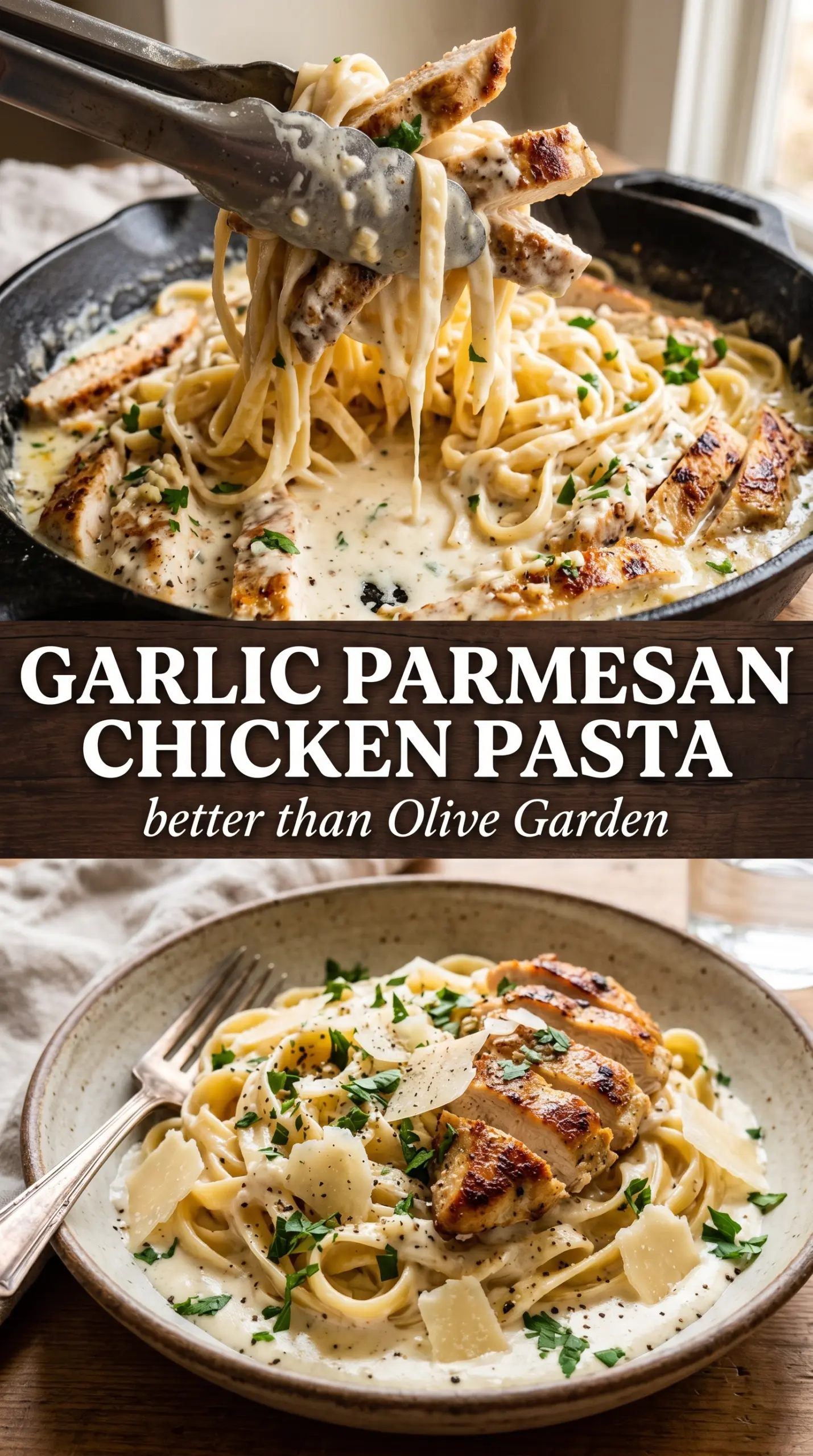
- Chicken breasts — They give the dish its protein and should be cooked just until the center reaches 165°F. Chicken thighs also work if you want a richer bite and don’t mind a slightly softer texture.
- Olive oil and butter — The oil helps the chicken sear without burning, and the butter carries the garlic flavor into the sauce. Don’t swap all the butter for oil if you want the same round, creamy finish.
- Spaghetti or fettuccine — Long noodles make the sauce feel lush because they catch and wrap around it. Short pasta works, but the dish loses some of that silky, twirled presentation.
- Chicken broth — It keeps the cream from feeling flat and adds a little savory depth. Water works in an emergency, but you’ll lose some body and need to season more carefully.
- Red pepper flakes — They don’t make the dish spicy; they keep the sauce from tasting one-note. If you want no heat at all, leave them out, but the flavor will be a little flatter.
Building the Chicken, Then the Sauce, Without Rushing Either One
Sear the Chicken First
Season the chicken well before it hits the pan, then cook it in olive oil over medium-high heat until it’s deeply golden on both sides and cooked through. The surface should release easily when it’s ready to turn; if it sticks, it needs another minute. Pull it at 165°F and let it rest before slicing, or the juices will run straight onto the board instead of staying in the meat.
Cook the Garlic in Butter, Not Before It
Use the same skillet. Those browned bits left behind by the chicken are part of the sauce, and wiping them out would throw away flavor. Add the butter, then the garlic, and stir for about a minute until it smells fragrant and looks softened, not colored. If the garlic starts to take on gold edges, lower the heat immediately because the next minute decides whether the sauce tastes sweet or sharp.
Let the Cream Reduce Before the Cheese Goes In
Pour in the cream and broth and let them simmer until they thicken enough to lightly coat a spoon. This is the point where patience matters. If you add the Parmesan too soon, the sauce stays loose and the cheese can clump; if you reduce too far, the sauce turns pasty once the pasta goes in. Add the cheese off the hottest part of the burner and stir until it melts into a smooth gloss.
Toss the Pasta While the Sauce Is Still Loose
Add the cooked pasta and toss it right away. Long noodles need movement to get evenly coated, and the sauce should look a touch too loose before the pasta finishes absorbing it. Use splashes of reserved pasta water to loosen any dry spots. If the pan looks tight and sticky instead of creamy, it needs a little more liquid, not more cheese.
How to Adjust This Without Losing the Creamy Garlic Balance
Make It Lighter Without Breaking the Sauce
Swap in half-and-half for the cream and use a little extra pasta water to help the sauce come together. It won’t be quite as rich, but the texture will still feel creamy if you keep the heat low and don’t rush the reduction.
Make It Gluten-Free
Use your favorite gluten-free spaghetti and cook it just to tender so it doesn’t fall apart when tossed in the sauce. Gluten-free pasta usually needs a little more pasta water than regular pasta to help the sauce cling, so save extra before draining.
Make It With Thighs Instead of Breasts
Boneless skinless thighs stay tender and add a little more richness, especially if you like a softer bite. They usually need a couple of extra minutes in the pan, but they’re more forgiving if you’re juggling the sauce at the same time.
Storage and Reheating
- Refrigerator: Store leftovers for up to 3 days. The sauce thickens as it chills, so expect the pasta to look a little tighter the next day.
- Freezer: It’s not my first choice for freezing because cream sauces can separate after thawing. If you do freeze it, cool it completely and store it in airtight portions for up to 1 month.
- Reheating: Warm it slowly in a skillet over low heat with a splash of broth, milk, or water. High heat is what causes the sauce to break and the chicken to dry out.
Answers to the Questions Worth Asking
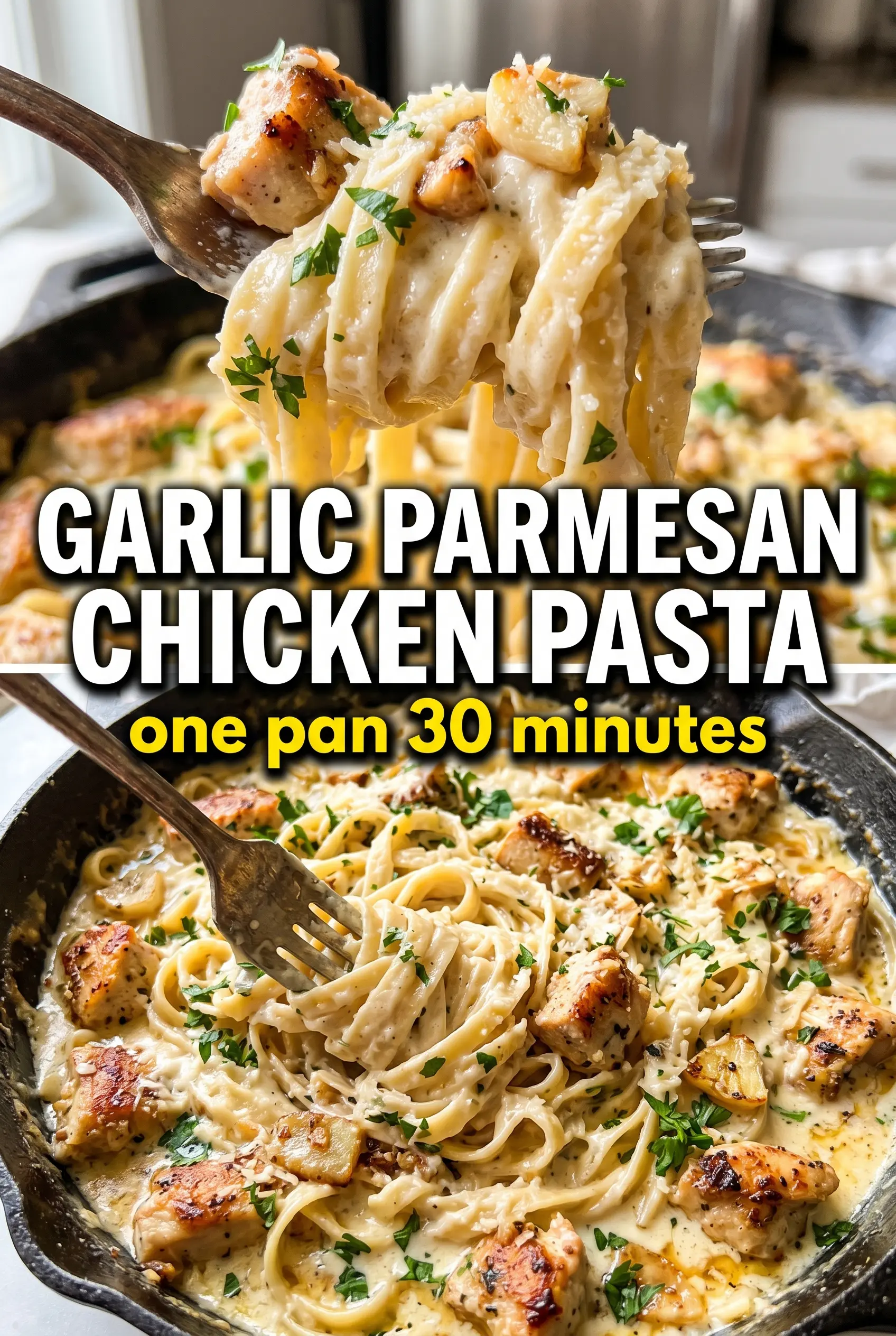
Garlic Parmesan Chicken Pasta
Ingredients
Equipment
Method
- Season the chicken breasts with salt, pepper, garlic powder, and Italian seasoning. Add olive oil to a large skillet and cook over medium-high heat until golden and cooked through to 165°F, about 5-6 minutes per side.
- Remove the chicken to a plate, rest briefly, and slice thin so it’s ready to top the pasta.
- In the same skillet, cook minced garlic in butter over medium heat for 1 minute, stirring until fragrant and lightly golden.
- Pour in the heavy cream and chicken broth, then simmer over medium heat for 4-5 minutes until slightly thickened with a glossy look.
- Stir in Parmesan cheese, 1 teaspoon Italian seasoning, and red pepper flakes until smooth and fully melted.
- Add reserved pasta water as needed to loosen the sauce to a silky consistency that coats the pasta.
- Toss the cooked spaghetti or fettuccine in the garlic Parmesan sauce until every strand is coated and glistening.
- Divide the pasta among plates, then top each serving with the sliced chicken arranged over the top.
- Garnish with fresh basil and extra Parmesan so it cascades across the surface just before serving.