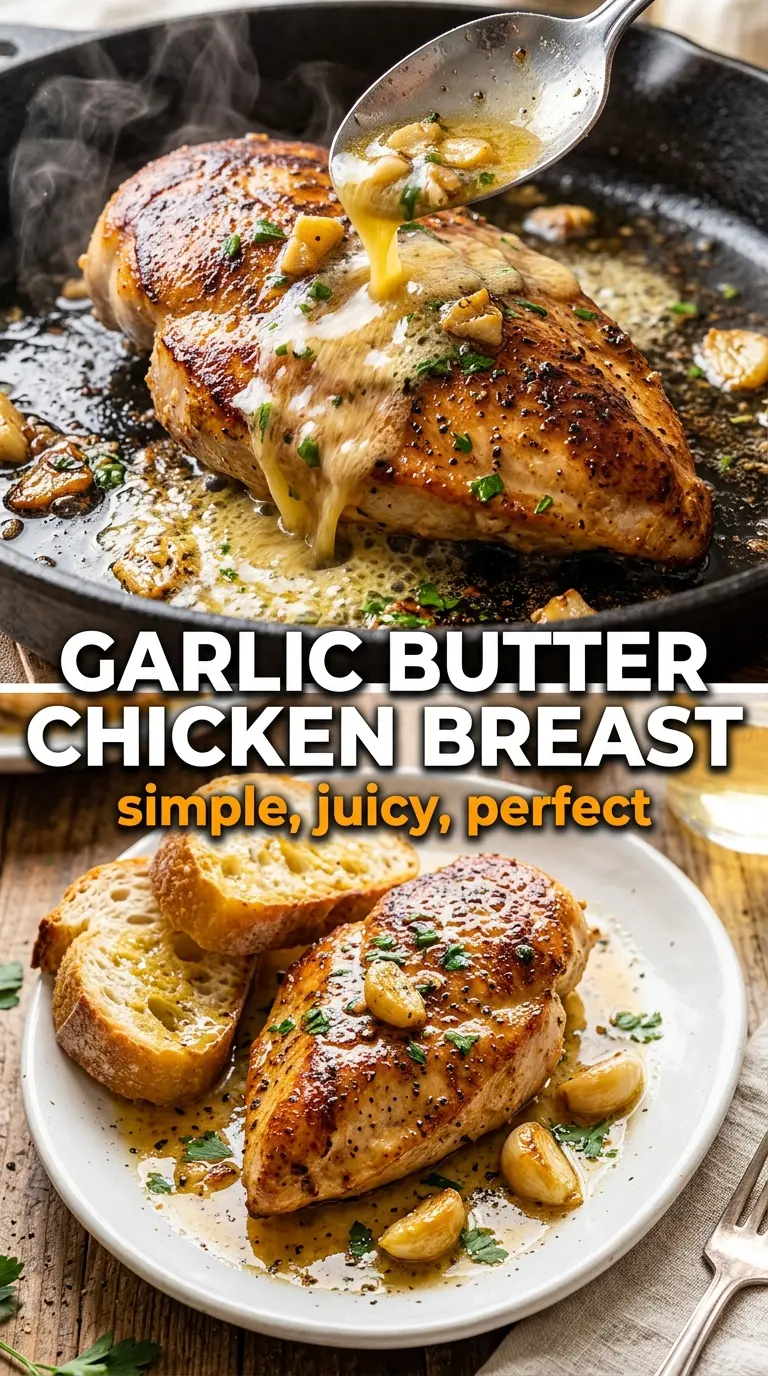
Garlic butter baked chicken breast earns its place in the weeknight rotation because it stays juicy, picks up a deep savory crust on top, and leaves you with pan juices worth spooning over every slice. The butter doesn’t just add richness; it carries the garlic and herbs across the chicken and helps the surface turn glossy and lightly caramelized in the oven.
The trick is simple: season the chicken well first, then baste it with the garlic herb butter while it bakes so the top doesn’t dry out before the center is done. A hot oven gives you that golden finish fast, which is what keeps boneless breasts from turning stringy. Lemon at the end sharpens everything up and keeps the butter from tasting heavy.
Below you’ll find the exact timing that keeps the chicken tender, plus a few ways to adapt it when you want a different herb mix or need a dairy-free swap.
The butter sauce pooled around the chicken and stayed flavorful, and the breasts came out juicy instead of dry. Basting halfway through made a big difference.
Love the glossy garlic herb butter and juicy baked chicken breasts? Save this recipe for the nights when you want a fast dinner with built-in pan sauce.
The Reason This Chicken Stays Juicy Instead of Drying Out
Boneless chicken breasts dry out when they spend too long in the oven without enough fat on the surface. Here, the melted butter coats the chicken from the start, and the pan baste keeps reapplying that layer of protection while the meat cooks. The oven is hot enough to set the outside quickly, but not so aggressive that the butter burns before the chicken reaches temperature.
The other thing working in your favor is thickness. If one breast is much thicker than the others, it will cook unevenly and the thinner pieces will go dry before the center of the thickest one is done. Pound them to an even thickness if they’re all over the place. That small step changes the whole result.
- Hot oven: 425°F gives you a faster set on the outside, which helps the chicken keep its juices.
- Butter baste: The pan juices keep the garlic and herbs moving over the meat instead of leaving the flavor on top only.
- Even thickness: This matters more than almost anything else for juicy baked chicken breasts.
- Rest time: The juices settle back into the meat during the five-minute rest instead of spilling onto the cutting board.
What the Garlic, Butter, and Herbs Are Each Doing Here
- Chicken breasts: Boneless, skinless breasts are lean, so they need help from fat and careful timing. Thighs can work, but they bring a different texture and usually need a few extra minutes.
- Butter: This is what carries the garlic and herbs and helps the surface brown. Olive oil can replace some of it in a pinch, but you’ll lose that rich, silky finish in the pan juices.
- Garlic: Fresh minced garlic gives the butter its backbone. Garlic powder won’t taste the same here, though you can add a little if you want a stronger garlic note on the seasoning side.
- Parsley, thyme, and rosemary: This mix gives you freshness, woodsy depth, and a little sharpness. If your rosemary is strong, mince it finely so it doesn’t land as chewy little needles on the chicken.
- Lemon juice: A small amount cuts through the butter and makes the sauce taste finished. Skip it only if you absolutely have to; the chicken will taste flatter without it.
Basting the Chicken So the Top Turns Golden, Not Dry
Seasoning the Surface First
Pat the chicken dry before you season it. Moisture on the surface keeps the spices from sticking and slows browning in the oven. Coat both sides with salt, pepper, garlic powder, and smoked paprika so every bite tastes seasoned, not just the buttery top.
Mixing the Garlic Herb Butter
Stir the melted butter with the garlic, parsley, thyme, rosemary, and lemon juice until the herbs are evenly distributed. The mixture should look loose and fragrant, not separated. If the butter starts to firm up while you work, warm it just enough to melt again; cold spots make the coating patchy.
Baking and Basting at the Right Moment
Pour the butter over the chicken so it runs into the bottom of the dish as well as over the top. Bake for about 20 minutes, then spoon the pan juices over the breasts once before they finish cooking. That halfway baste keeps the top from drying out and deepens the color, but don’t overbake while waiting for a darker crust — the chicken is done when the thickest part hits 165°F.
Resting Before You Slice
Let the chicken sit for five minutes after it comes out of the oven. If you cut it immediately, the juices run out fast and the center can seem drier than it really is. Spoon the pan butter over the top right before serving, then add the lemon wedges on the side for a bright finish.
Three Small Changes That Still Keep the Chicken Working
Dairy-Free Version
Swap the butter for a good dairy-free butter substitute or use olive oil plus a small extra squeeze of lemon. You’ll lose a little of the classic rich sauce, but the chicken will still roast well and pick up the garlic and herbs cleanly.
Using Chicken Thighs Instead
Bone-in or boneless thighs work if you want a richer, more forgiving cut. They usually need a little longer in the oven, and the final texture will be juicier and less lean than chicken breast.
Making It More Herb-Forward
Add a little extra parsley or thyme if you want the butter to taste fresher and greener. If you increase the rosemary too much, it can overpower the chicken, so keep that one restrained and finely minced.
Storage and Reheating
- Refrigerator: Store leftovers in an airtight container for up to 4 days. The chicken stays moist, though the butter sauce will thicken as it chills.
- Freezer: It freezes well for up to 2 months. Wrap portions tightly and thaw in the fridge overnight so the texture stays as even as possible.
- Reheating: Warm gently in a covered skillet over low heat with a spoonful of the pan juices or a splash of water. High heat dries out the lean breast meat fast, so keep the heat low and stop as soon as it’s heated through.
Questions I Get Asked About This Recipe

Garlic Butter Baked Chicken Breast
Ingredients
Equipment
Method
- Preheat oven to 425°F and lightly grease a baking dish. This helps prevent sticking and promotes browning.
- Season the chicken breasts on both sides with salt, pepper, garlic powder, and smoked paprika. Pat the spices onto the surface so they adhere before baking.
- Melt the butter and stir in garlic, parsley, thyme, rosemary, and lemon juice until combined. Keep stirring until the butter looks smooth and fragrant.
- Place the chicken in the prepared dish and pour garlic herb butter over each breast, coating thoroughly. Make sure some butter pools around the base of each piece.
- Bake for 20-25 minutes at 425°F, basting with the pan juices once at the halfway point. Look for a golden surface and juices that visibly glisten as you baste.
- Continue baking until the internal temperature reaches 165°F. The chicken should be opaque throughout with juices running clear.
- Rest the chicken for 5 minutes. You should see the juices settle and the surface glisten slightly as it cools.
- Serve with the pan juices spooned over and lemon wedges alongside. Add a squeeze of lemon right before eating for brightness.