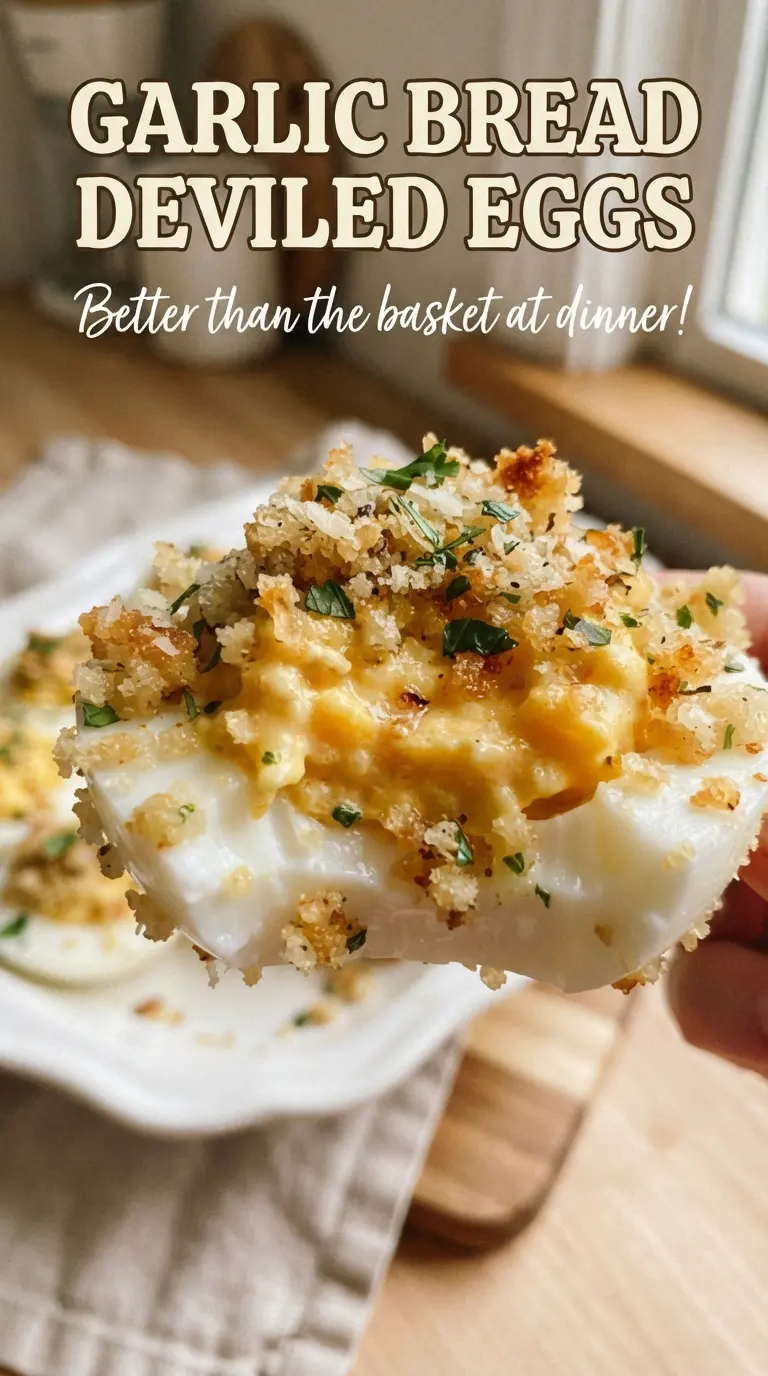
Garlic bread deviled eggs hit that sweet spot between familiar and a little over the top. The filling stays silky and tangy, but the real payoff is the crunchy garlic breadcrumb topping: buttery, toasted, and sharp with Parmesan. Every bite gives you the creaminess of a classic deviled egg and the savory, garlicky crunch of good bread crumbs on top.
This version works because the garlic shows up in two different ways. Grated garlic goes into the yolk filling, where it melts in and gives the eggs a clean, punchy flavor without any harsh raw bite. Then the minced garlic cooks in butter before the panko goes in, which turns it fragrant and mellow instead of bitter. That second layer matters more than people think, because untoasted breadcrumbs or raw garlic would make the whole topping taste flat.
Below, I’ll walk through the little details that keep the eggs easy to peel, the filling smooth, and the topping crisp until the moment you serve them. If you’ve ever had deviled eggs turn watery or breadcrumbs lose their crunch, this version fixes both problems.
The garlic breadcrumb topping stayed crunchy the whole time we were eating, and the filling was smooth with just the right amount of Parmesan. I brought these to a party and the platter disappeared fast.
Garlic Bread Deviled Eggs bring crunchy, buttery breadcrumbs and smooth Parmesan filling together — save them for your next appetizer spread.
The Trick to Keeping Deviled Eggs Smooth Instead of Gritty
The filling here should taste rich and airy, not heavy or pasty. That comes from mashing the yolks until they’re completely fine before you add the mayonnaise, Parmesan, mustard, garlic, and salt. If the yolks stay even a little lumpy, the filling fights you when you pipe it and the texture feels chalky instead of creamy.
Parmesan helps more than just flavor. It adds body and a little saltiness, but it can turn the filling dense if you overload it, so the amount here keeps the eggs balanced. The grated garlic brings the sharp garlic note straight into the center of each bite, while the breadcrumb topping gives you the bread-and-butter effect that garlic bread is known for.
- Eggs — Start with eggs that are cooked just long enough to set the yolks but not overcook them. Overcooked yolks can go dry and gray at the edges, which makes the filling taste flat.
- Mayonnaise — This is what gives the yolks their silkiness. Use a full-fat mayo for the best texture; lighter versions tend to make the filling thinner and less stable.
- Parmesan — Finely grated Parmesan blends into the yolks and seasons them at the same time. Pre-grated works in a pinch, but freshly grated melts into the filling more cleanly.
- Grated garlic — This is a small amount, but it does important work. Grating it instead of mincing helps it disappear into the filling instead of leaving sharp little bites.
Building the Crunch So It Stays Crisp
IMAGE BLOCK — insert the following figure block verbatim immediately after the H2 and before the ingredient notes.
- Butter — Butter coats the panko and carries the garlic flavor. You need enough to toast the crumbs evenly, but not so much that they turn greasy instead of crisp.
- Minced garlic — This garlic gets cooked first so it turns fragrant and sweet. If it goes in raw with the crumbs, it tastes harsh and the topping can burn before it fully cooks.
- Panko breadcrumbs — Panko gives you the light, shattery crunch that regular breadcrumbs can’t match. If all you have is standard breadcrumbs, use less and toast them carefully, since they brown faster and can go sandy.
- Parsley — Stir it in after the crumbs come off the heat so it stays bright. It won’t make or break the recipe, but it keeps the topping from tasting one-note.
Assembling the Eggs Without Losing the Crunch
Cooking and Chilling the Eggs
Cover the eggs with cold water, bring them up to a boil, then take the pan off the heat and let them stand covered for 12 minutes. That gentle finish gives you set yolks without the sulfur smell and green ring that come from overcooking. Chill them fully before peeling, because warm eggs are softer and more likely to tear.
Mashing the Filling
Once the yolks are out, mash them until they look dry and crumbly before you add the mayo and seasonings. Then keep mixing until the filling looks smooth and fluffy. If it seems stiff, add a tiny bit more mayonnaise rather than overworking it, which can make the texture gluey.
Making the Garlic Breadcrumb Topping
Melt the butter, cook the garlic for about 30 seconds, then add the panko and stir until it turns golden. Watch the color closely; it goes from pale to browned fast once the crumbs start to toast. Pull it off the heat before it looks fully done in the pan, because the residual heat keeps cooking it.
Finishing and Serving
Pipe or spoon the filling into the halved whites, then add the breadcrumb topping right before serving. That timing matters. If the crumbs sit on the eggs too long, the moisture from the filling softens them and you lose the garlic bread effect. Finish with a little extra Parmesan and serve them while the topping still has crunch.
Ways to Adapt These Garlic Bread Deviled Eggs
Gluten-Free Version
Swap the panko for gluten-free breadcrumbs with a similar coarse texture. Toast them the same way, but watch closely because some gluten-free crumbs brown faster and can go from golden to dark in a minute.
Dairy-Free Version
Use a good dairy-free mayo and swap the Parmesan for a finely grated dairy-free hard cheese alternative. The filling will still be creamy, but the topping loses a little of that salty, nutty finish, so add a pinch more salt if needed.
Make-Ahead Party Prep
You can cook, peel, and halve the eggs a day ahead, and mix the filling several hours early. Keep the breadcrumb topping separate and add it right before serving so it stays crisp. If you assemble everything too soon, the topping softens and the contrast disappears.
Softer Garlic Flavor
If you want a gentler garlic note, use half the grated garlic in the filling and keep the breadcrumb garlic as written. That gives you the garlic bread impression without the sharper bite that some people expect from deviled eggs.
Storage and Reheating
- Refrigerator: Store the filled eggs without the breadcrumb topping for up to 2 days. The whites can pick up a little moisture, but the filling stays good.
- Freezer: Don’t freeze deviled eggs. The whites turn rubbery and watery once thawed, and the filling loses its smooth texture.
- Reheating: These are best served cold or cool. If they’ve been chilled hard, let them sit at room temperature for 10 to 15 minutes, then add the topping just before serving. Reheating ruins the texture.
Questions I Get Asked About This Recipe
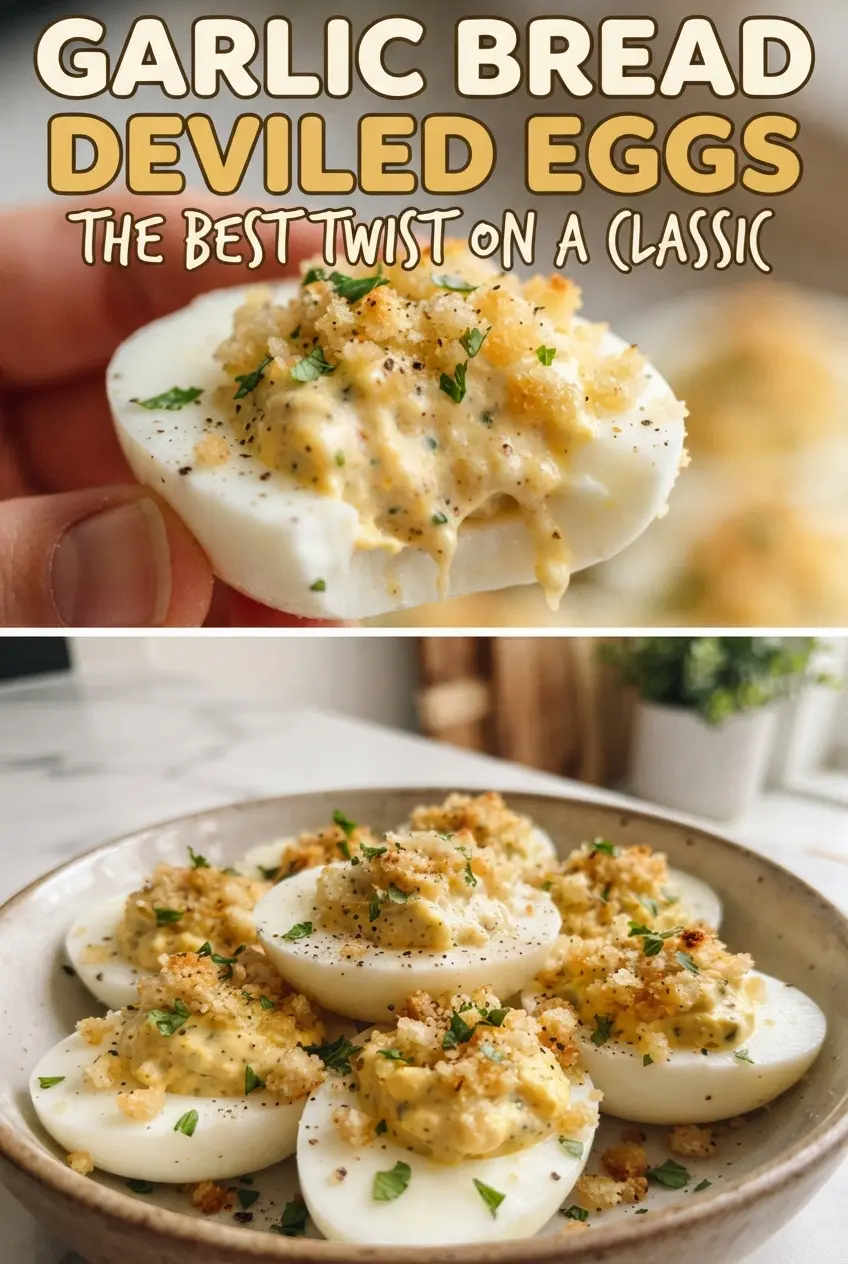
Garlic Bread Deviled Eggs
Ingredients
Equipment
Method
- Melt the butter in a skillet over medium heat, then cook the minced garlic for 30 seconds until fragrant. Stir to prevent browning.
- Add the panko breadcrumbs and toast for 3-4 minutes until golden, stirring often. Pull off the heat as soon as the crumbs look crisp and browned.
- Stir in the chopped parsley and set the breadcrumb topping aside. Let it cool slightly so it stays crunchy.
- Place the eggs in a pot and cover with cold water. Bring to a boil over high heat.
- Once boiling, cover the pot, remove from heat, and let the eggs stand for 12 minutes. Keep the lid on to steam evenly.
- Chill the eggs, peel them, and halve them lengthwise. Aim for clean halves so the filling pipes smoothly.
- Mash the yolks with the mayonnaise, Parmesan, Dijon mustard, grated garlic, and salt until smooth. Mix until no lumps remain.
- Pipe the filling into the egg white halves. Fill to the top for a neat, piled look.
- Sprinkle the garlic breadcrumbs generously over the filled eggs just before serving. Use a light hand so the crumbs stay crisp.
- Finish with extra Parmesan on top right before serving. Add a final pinch for a golden, speckled look.