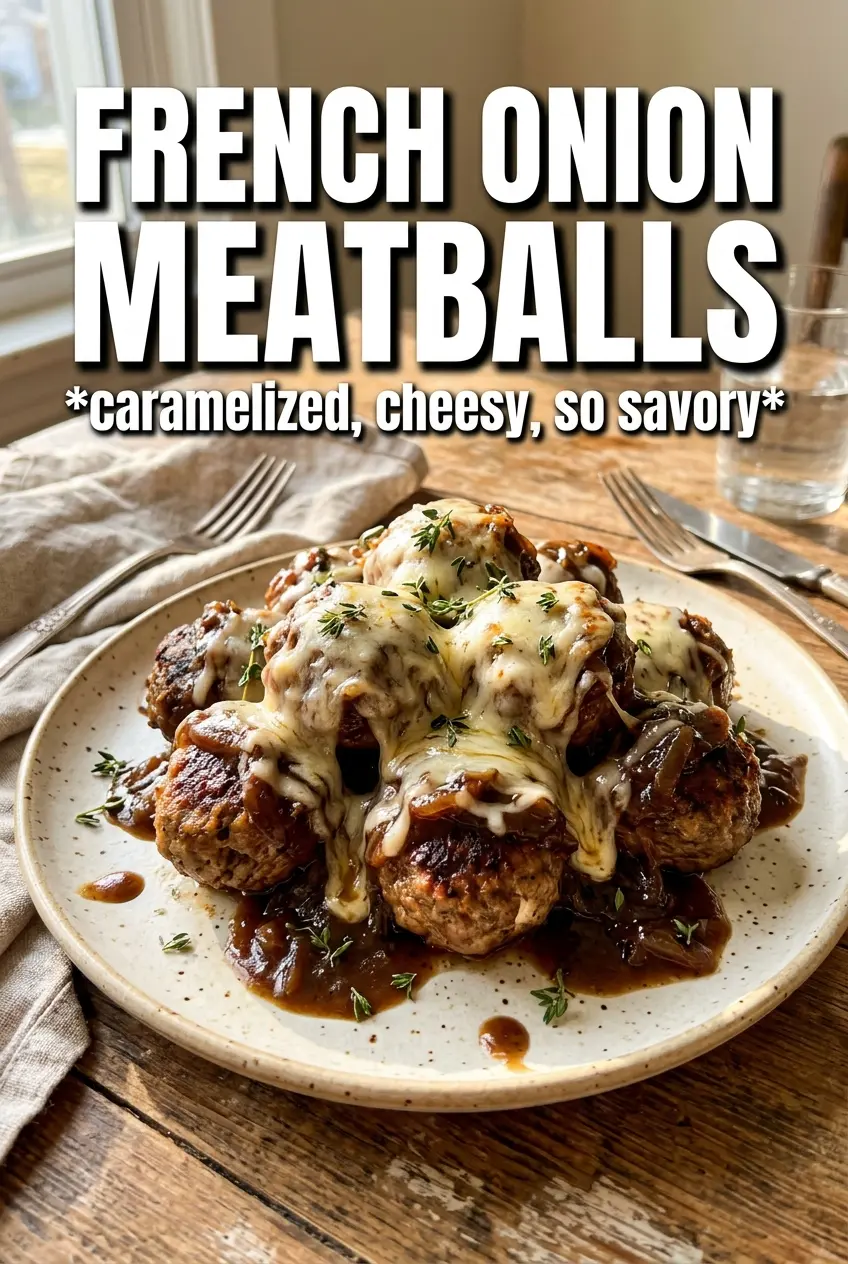
French onion meatballs hit that sweet spot between cozy and a little dramatic: tender beef meatballs tucked into deeply caramelized onion broth, then finished under a blanket of melted Gruyere or provolone. The onions turn silky and sweet, the broth takes on that classic French onion savoriness, and the cheese bakes into a bubbling crust that clings to every bite.
What makes this version work is patience in the pan. The onions need enough time to go from sharp and raw to brown and jammy, and that fond left behind after browning the meatballs becomes the base of the whole sauce. A splash of wine or broth loosens it up, then thyme and Worcestershire pull everything toward that familiar French onion flavor without making the dish feel heavy.
Below, you’ll find the small details that matter most: how to keep the meatballs tender, how far to caramelize the onions, and what to do if you want to swap the cheese or make it ahead.
The onions took their time, but it was worth it — the sauce turned glossy and rich, and the meatballs stayed tender after the broil. My husband went back for seconds before I even sat down.
Save these French Onion Meatballs for a dinner with caramelized onions, melty cheese, and a skillet sauce that tastes like French onion soup turned into supper.
The Onion Caramelization Is the Whole Sauce
If the onions are rushed, this dish tastes flat. The sweet, savory depth comes from coaxing them all the way to a deep golden brown, not just softening them until translucent. That means medium-low heat, a little butter, and enough time for the natural sugars to develop without scorching the pan.
The other place people go wrong is stopping the sauce too soon. Once the wine or broth goes in, scrape up every browned bit from the pan. That fond is what ties the onions, broth, and meatballs together, and it gives the sauce that unmistakable French onion character without needing flour or a long reduction.
What Each Ingredient Is Actually Doing in This Recipe

- Primary ingredient (the star) — Quality matters most. Choose the best you can find.
- Cooking medium (oil, butter, or broth) — This carries flavors and prevents dryness.
- Seasonings (salt, pepper, spices, herbs) — Layer flavors so nothing overpowers. Build depth gradually.
- Aromatics (garlic, onion, herbs) — Cook with fat to bloom flavors. Become the foundation.
- Supporting ingredients — Complement the main ingredient without overpowering it.
- Sauce or liquid (if applicable) — Brings flavors together. Balance richness with acid.
- Acid (lemon, vinegar, wine, or other) — Brightens and prevents flat-tasting results.
- Final finish (garnish, glaze, or sauce) — Prevents one-dimensional taste and adds visual appeal.
What Each Ingredient Is Actually Doing in the Pan
- Ground beef — This is the backbone of the meatballs, so use beef with enough fat to stay juicy. Very lean beef can work, but the meatballs will be firmer and less forgiving under the broiler.
- Breadcrumbs and egg — These hold the meatballs together and keep the texture tender instead of dense. If you need a gluten-free swap, use gluten-free breadcrumbs or crushed gluten-free crackers in the same amount.
- Worcestershire, garlic powder, and onion powder — These season the meat from the inside so the finished dish tastes developed, not just beefy. Worcestershire also adds a little tang that stands up to the sweet onions.
- Dry white wine or beef broth — Wine adds brightness and helps deglaze the pan fast. If you skip it, use broth and let it bubble a minute longer so the sauce still picks up the browned bits.
- Gruyere or provolone — Gruyere gives you that classic nutty French onion finish, while provolone melts into a smoother, milder top. Both work; Gruyere tastes a little more elegant, provolone is easier to find and still gets the job done.
Building the Sauce Before the Cheese Goes On
Mixing and Browning the Meatballs
Work the meat mixture just until everything is evenly combined, then roll it into 1.5-inch balls. If you pack them too tightly, they turn bouncy instead of tender. Brown them in butter until the outside has color but the centers are still undercooked; they finish in the sauce, so you’re only building flavor here.
Slowly Sweating the Onions into Sweetness
Use the same skillet so the onions pick up the browned bits left behind by the meatballs. Cook them over medium-low heat and stir often enough to keep the edges from burning, but not so often that they never brown. When they’re ready, they’ll look jammy, deeply golden, and have lost most of their sharp bite.
Deglazing and Simmering the Meatballs
Pour in the wine or broth and scrape the bottom of the pan right away. Once the liquid has loosened everything, add the remaining broth, Worcestershire, and thyme, then nestle the meatballs back in. A gentle simmer is the goal; a hard boil will tighten the meatballs and muddy the sauce.
The Broil That Finishes the Dish
Transfer everything to a baking dish if your skillet isn’t oven-safe, then scatter the cheese over the top in an even layer. Broil just until the cheese is melted, bubbling, and spotted with gold at the edges. Walk away for a minute too long and it goes from bronzed to bitter, so keep your eyes on it the whole time.
Three Practical Ways to Make These French Onion Meatballs Work for Your Kitchen
Make them gluten-free without losing structure
Swap the breadcrumbs for a gluten-free version in the same amount. The texture stays close to the original, but very coarse crumbs can make the meatballs a little looser, so mix until the meat just holds together and don’t skip the egg.
Use provolone when you want a milder finish
Provolone melts into a softer, less assertive cheese topping than Gruyere. The sauce still tastes like French onion, but the final dish leans creamier and a little less nutty, which some people prefer with beef.
Make the onions ahead when time is tight
Caramelize the onions a day or two in advance and keep them chilled. That saves the longest part of the recipe, and when you reheat them in the skillet with the broth, they slide right back into the sauce without losing much flavor.
Storage and Reheating
- Refrigerator: Store leftovers for up to 4 days. The sauce thickens as it chills, but the flavor gets even deeper.
- Freezer: Freeze the meatballs and sauce without the cheese topping for up to 2 months. Thaw overnight in the refrigerator before reheating, then add the cheese and broil fresh.
- Reheating: Warm gently on the stovetop or in a covered baking dish at 325°F until hot. High heat can tighten the meatballs and split the sauce, so reheat slowly and add a splash of broth if it looks too thick.