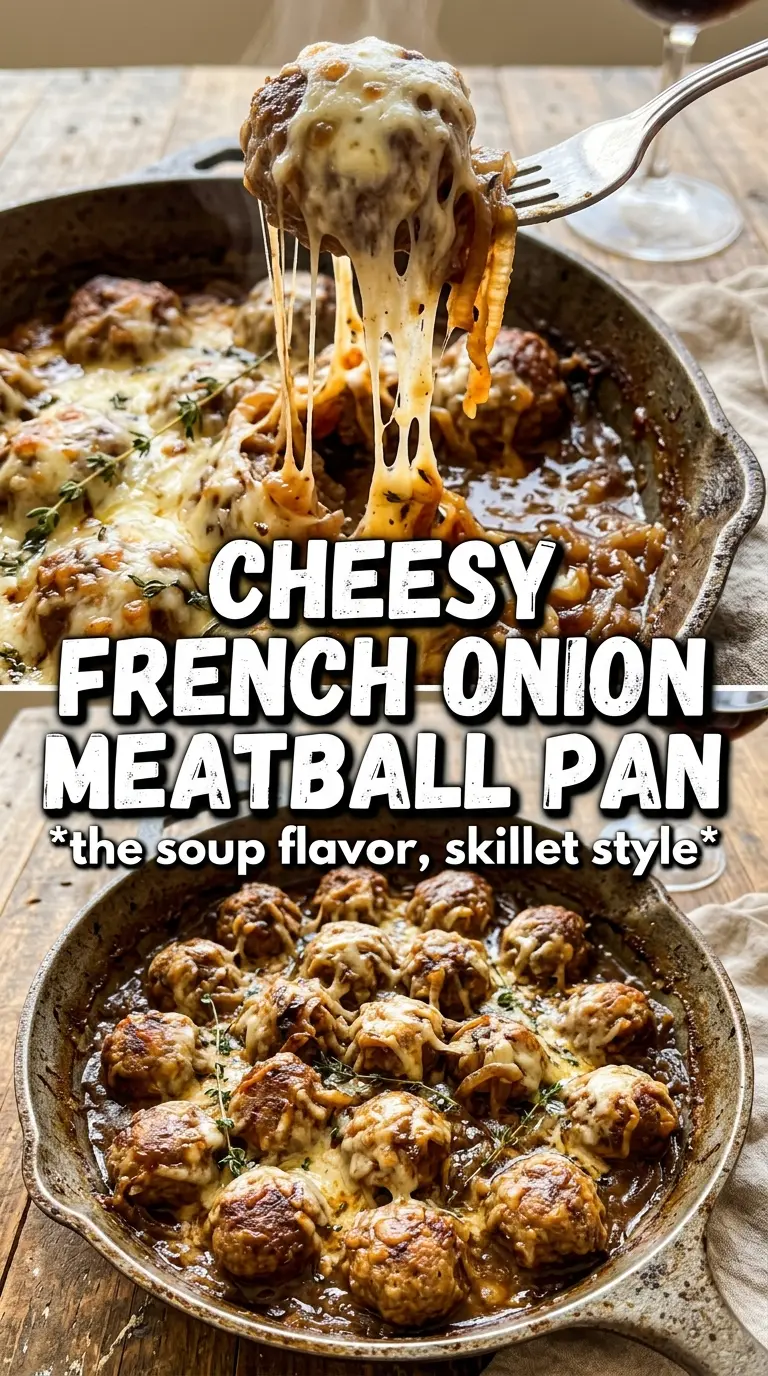
Deeply caramelized onions, tender meatballs, and a bubbling blanket of Gruyere make this French onion meatball skillet taste like a comfort dinner that cooked far longer than it actually did. The onions turn sweet and jammy, the broth picks up all that browned flavor from the pan, and the meatballs finish right in the sauce so every bite stays juicy. Broiled cheese on top pulls the whole dish together with that unmistakable French onion soup feel, only heartier and more substantial.
The part that matters most here is patience with the onions. They need time over medium-low heat to soften, brown, and collapse into a deep, savory base; rush that step and the whole skillet tastes flat. Browning the meatballs first gives the pan the fond that the onions will later dissolve into, which is where a lot of the flavor lives. A dry white wine helps lift everything stuck to the skillet, and Gruyere melts with a smooth finish that doesn’t turn greasy under the broiler.
Below you’ll find the timing cue that keeps the onions from scorching, plus the small detail that keeps the sauce from tasting thin after the meatballs go back in. It’s the kind of skillet dinner that looks dramatic on the table but stays practical enough for a normal weeknight.
The onions went all the way to that deep brown stage and the sauce tasted like it had been simmering for hours. The meatballs stayed tender and the Gruyere browned beautifully under the broiler.
Save this French Onion Meatball Skillet for the night you want caramelized onion flavor, bubbling Gruyere, and a one-pan dinner that feels special without extra fuss.
The Step That Keeps the Onions From Tasting Flat
The onions are the backbone of this skillet, and this is where a lot of versions miss the mark. If they only soften, the sauce tastes sweet but thin. What you want is actual caramelization: the onions should turn deep amber, reduce to a loose jam, and pick up enough color to season the broth all on their own.
Medium-low heat matters here. Hotter heat browns the outside before the onions have time to give up their moisture, and that leaves you with scorched edges and a bitter pan instead of a glossy sauce. Give them the full 30 to 35 minutes, stir often, and let the last few minutes happen slowly. That patience is what makes the final broth taste like French onion soup instead of onion-flavored stock.
What Each Ingredient Is Actually Doing in This Skillet
- Ground beef — Use a beef blend with some fat so the meatballs stay tender after browning and simmering. Very lean beef works, but the meatballs can dry out faster.
- Breadcrumbs and egg — These hold the meatballs together and keep the texture soft instead of dense. If you skip one, the meatballs are more likely to break apart in the sauce.
- Worcestershire — This adds the savory depth that makes the skillet taste built, not just assembled. There isn’t a real substitute that gives the same tangy umami, though soy sauce can cover part of the gap in a pinch.
- Onions — Three large onions may look excessive at first, but they cook down into the sauce base. Yellow onions are the best choice because they caramelize reliably and bring the right balance of sweetness and savoriness.
- Dry white wine — This deglazes the pan and loosens every browned bit from the skillet. If you don’t cook with wine, use extra broth plus a small splash of white wine vinegar or lemon juice for brightness.
- Gruyere — This is the cheese that gives you that classic French onion pull without becoming greasy. Swiss can work, but Gruyere melts silkier and has the nutty finish that makes the topping taste finished.
Building the Skillet in the Right Order
Browning the Meatballs First
Roll the meatballs evenly so they cook at the same pace, then brown them in butter in an oven-safe skillet until they have color on the outside. They do not need to cook through at this stage. The goal is a browned crust and flavorful drippings in the pan, because those bits are what the onions will later pick up.
Caramelizing the Onions Slowly
Use the same skillet and keep the heat at medium-low. Stir often enough to prevent sticking, but not so often that the onions never get a chance to take on color. If they start to catch too quickly, add a small splash of broth and scrape the bottom, then lower the heat. You’re looking for onions that are deep golden-brown and soft enough to collapse when stirred.
Deglazing Into a Real Sauce
Once the onions are deeply caramelized, add the garlic and thyme for just a minute, then pour in the wine. It should sizzle and loosen the browned bits from the pan right away. After the wine reduces slightly, add the broth and Worcestershire; the liquid should look rich and lightly glossy, not watery. If the skillet still looks dry, the onions likely weren’t cooked long enough to create enough base flavor.
Finishing Under the Broiler
Return the meatballs to the sauce and simmer until they finish cooking through and soak up some of the onion flavor. Then scatter the Gruyere over the top and broil just until it melts and starts to blister in spots. Watch it closely during this part — cheese goes from golden to burnt fast, and the skillet needs only a few minutes to get that bubbling, browned top.
How to Adjust This Skillet Without Losing the French Onion Feel
Make it gluten-free
Swap the breadcrumbs for a gluten-free breadcrumb or crushed gluten-free cracker. The meatballs will still bind and brown well, and the sauce doesn’t need any flour at all, so this is an easy change with almost no tradeoff.
Use ground turkey instead of beef
Ground turkey works if you want a lighter skillet, but it needs the butter and the rich onion sauce to keep from tasting too lean. Choose dark meat turkey if you can, and don’t skip the browning step because that color helps make up for the milder meat.
Skip the wine
Use extra beef broth and add a teaspoon of white wine vinegar or lemon juice at the end to bring the sauce back into balance. You’ll lose a little of the layered aroma that wine brings, but the skillet will still taste deep and savory.
Storage and Reheating
- Refrigerator: Store leftovers in an airtight container for up to 4 days. The onions will thicken the sauce as it chills, which is normal.
- Freezer: Freeze the meatballs and onion sauce without the cheese topping for up to 2 months. Thaw overnight in the fridge before reheating, then add fresh Gruyere and broil.
- Reheating: Warm gently on the stove over low heat or in the oven covered with foil. High heat can make the meatballs dry and can cause the cheese to separate if it’s already on top.
Questions I Get Asked About This Recipe
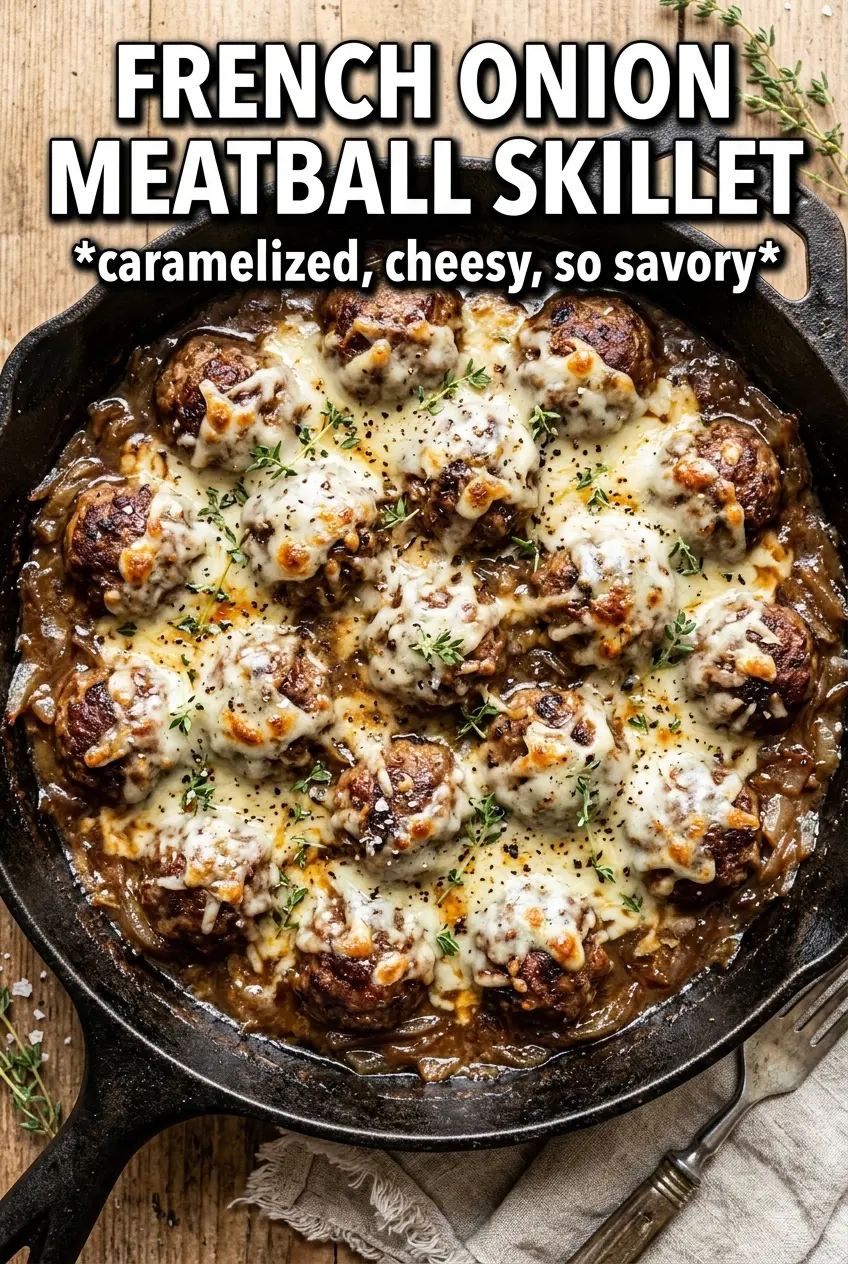
French Onion Meatball Skillet
Ingredients
Equipment
Method
- In a bowl, mix ground beef, breadcrumbs, egg, Worcestershire, garlic powder, and salt and pepper until combined. Roll into meatballs and set aside.
- Heat 2 tablespoons of butter in an oven-safe cast iron skillet over medium-high heat until foaming. Brown the meatballs in batches, then remove to a plate.
- Lower heat to medium-low and melt the remaining 2 tablespoons of butter in the same skillet. Add sliced onions and cook 30-35 minutes, stirring occasionally, until deeply caramelized and dark golden-brown.
- Stir in minced garlic and fresh thyme during the last 1-2 minutes of onion cooking, just until fragrant. Keep the heat at medium-low to avoid scorching.
- Add the dry white wine to the skillet and deglaze, scraping up browned bits from the bottom. Cook 1-2 minutes until the wine reduces slightly.
- Pour in beef broth and Worcestershire, stirring to combine with the caramelized onions. Simmer the sauce for 2-3 minutes to meld flavors.
- Nestle the browned meatballs into the caramelized onion sauce so they’re partially submerged. Simmer for 10 minutes, turning once halfway if needed for even coating.
- Scatter Gruyère over the top of everything in an even layer. Broil 3-5 minutes until golden and bubbly, watching closely to prevent over-browning.