French onion chicken orzo casserole lands in that sweet spot between cozy and practical: deeply caramelized onions, tender chicken, and creamy orzo baked under a bronzed Gruyère top. It eats like the kind of dinner that took all day, but most of the time is just onion patience and a smart pan sequence. The payoff is a casserole with real body, not a soupy bake that slumps on the plate.
The key is building the onion base slowly enough for the natural sweetness to show up before the broth goes in. That long cook gives the dish its French onion character, while the orzo soaks up the broth and wine in the oven instead of turning mushy on the stove. Cream cheese adds steadiness to the sauce, which keeps the finished casserole creamy even after baking.
Below, I’ve included the small details that matter most: when the onions are actually ready, how to keep the orzo from overcooking, and a few smart swaps if you need to adjust for what’s in the kitchen.
The onions turned deep and jammy without burning, and the Gruyère formed the best golden crust. The orzo stayed creamy after baking, not gluey like I’ve had with other casseroles.
Save this French onion chicken orzo casserole for the nights when you want deep caramelized onion flavor and a bubbly Gruyère crust in one pan.
The part most people rush: the onions have to go all the way
The biggest mistake in a dish like this is stopping the onions too soon. Pale, softened onions taste flat after baking, especially once they’re diluted with broth and cream cheese. You want the edges browned, the texture jammy, and the pan bottom coated with those darker bits that carry the whole casserole.
Once the wine goes in, scrape up every browned spot from the skillet. That fond is what makes the casserole taste like French onion soup instead of plain chicken and pasta in a creamy sauce. If the onions start to dry or catch, lower the heat and keep going; rushing them only gives you bitter spots and weak flavor.
What each ingredient is actually doing in this casserole

- Onions — These are the backbone of the dish. Thin slices cook down into sweetness and body, and there isn’t a shortcut that gives the same depth. Yellow onions work best here because they caramelize steadily without turning harsh.
- Dry white wine — This lifts the browned bits from the pan and keeps the sauce from tasting heavy. Use something dry and drinkable, not sweet; if you don’t want to open a bottle, a little extra broth plus a teaspoon of lemon juice can stand in, though the flavor will be softer.
- Gruyère — Gruyère gives the casserole its signature nutty, stretchy top. Swiss cheese will melt in a similar way, but it tastes milder. Pre-shredded cheese works in a pinch, but freshly shredded melts into a smoother crust.
- Cream cheese — This is what keeps the sauce stable while the orzo bakes. It melts in quietly and adds body without needing a flour roux. Cut it into cubes so it disappears faster and doesn’t leave soft lumps in the filling.
- Orzo — Uncooked orzo is the trick that turns this into a true one-pan casserole. It absorbs liquid as it bakes, which gives you a creamy, spoonable texture. Don’t swap in a larger pasta shape unless you also change the liquid and baking time.
How to build the casserole so the orzo stays creamy
Caramelize the onions slowly
Melt the butter in a large oven-safe skillet and let the onions cook over medium heat until they’re deep golden brown and sweet-smelling, about 30 to 35 minutes. Stir often enough to prevent scorching, but not so often that they steam. If the pan starts looking dry before the onions are ready, add a small splash of water or broth and keep scraping the bottom clean.
Wake up the browned bits
Add the garlic and thyme for just long enough to smell them, then pour in the wine and let it bubble for a couple of minutes. This is where the flavor gets layered instead of muddled. The wine should reduce slightly and smell less sharp before the broth goes in; if it still smells boozy, give it another minute.
Let the orzo cook in the sauce
Stir in the broth, Worcestershire, uncooked orzo, and chicken, then bring everything to a simmer. The liquid should look loose at this stage because the pasta needs room to absorb it. Stir in the cream cheese until the sauce turns glossy and smooth, then season before baking so the whole dish is balanced, not just the top layer.
Finish under the Gruyère crust
Scatter the cheese over the top and bake until the orzo is tender, the chicken is cooked through, and the surface is browned in spots. If the top is getting too dark before the center is done, lay a loose piece of foil over the dish. Let it sit a few minutes before serving so the sauce settles and the casserole scoops cleanly.
How to adapt this for a lighter pan, a gluten-free table, or a richer finish
Gluten-free version with rice-shaped pasta
Use a gluten-free orzo-style pasta and watch the liquid closely, since some brands soak up broth faster than wheat pasta. Keep the bake covered loosely for part of the time if the top is browning before the center is tender. The flavor stays right on target, but the texture depends on the pasta brand, so check a few minutes early.
No wine, still plenty of depth
Replace the wine with extra beef broth and a small splash of lemon juice or white wine vinegar. You lose a little of the sharp lift that wine brings, but the casserole still tastes rich if you fully caramelize the onions. Don’t skip the deglazing step; the browned bits matter even more when the liquid is simpler.
Extra-rich, more French onion style
Swap part of the Gruyère for mozzarella if you want a softer, stretchier top, or add a spoonful of sour cream with the cream cheese for a tangier finish. The dish becomes slightly heavier and more casserole-like, which is great if you want a scoopable baked dinner. Keep the onion cook time the same, because that’s where the flavor comes from.
Storage and Reheating
- Refrigerator: Store leftovers in an airtight container for up to 4 days. The orzo will thicken as it sits, so expect a firmer texture the next day.
- Freezer: It freezes reasonably well for up to 2 months, though the sauce may loosen a little after thawing. Cool it completely, portion it, and wrap it tightly before freezing for the best texture.
- Reheating: Warm covered in the oven at 350F with a splash of broth or water to loosen the sauce. The common mistake is blasting it uncovered in the microwave until the cheese turns rubbery and the orzo dries out.
Answers to the questions worth asking
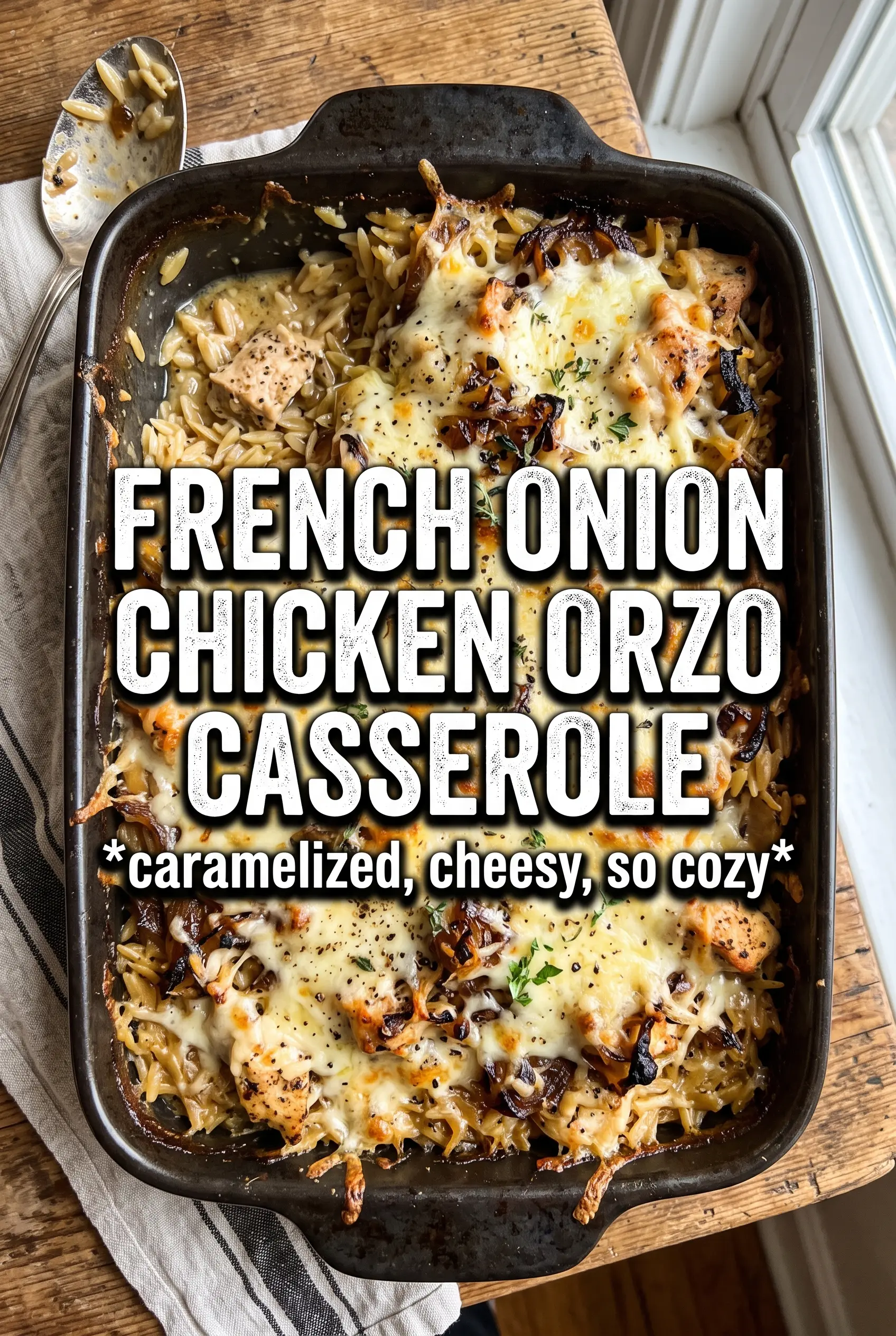
French Onion Chicken Orzo Casserole
Ingredients
Equipment
Method
- Preheat the oven to 375F. Set out a large oven-safe skillet for later baking.
- Melt the butter in a large oven-safe skillet over medium heat, then add the thinly sliced onions. Cook 30-35 minutes, stirring occasionally, until deeply caramelized.
- Add the minced garlic and dried thyme to the skillet. Cook for 2 minutes to fragrant the aromatics.
- Pour in the dry white wine and cook for 2 more minutes, scraping up browned bits. Stir until the mixture looks slightly reduced.
- Add the beef broth, Worcestershire sauce, and uncooked orzo, then stir in the diced chicken. Continue stirring until everything is evenly combined.
- Bring the mixture to a simmer, then reduce as needed to maintain gentle bubbling. Stir in the cubed cream cheese until fully melted.
- Season with salt and pepper to taste, then scatter the shredded Gruyère over the top. Keep the cheese evenly distributed so it browns across the surface.
- Bake for 25-30 minutes at 375F, until the orzo is cooked, the chicken is done, and the cheese is golden. Let it rest briefly so the casserole thickens, then garnish with fresh thyme before serving.