Golden chicken thighs tucked into a glossy apple cider sauce are the kind of dinner that looks special without asking for much more than a good skillet and a little patience. The skin stays crisp at the start, then the sauce wraps around the chicken with sweet cider, sharp Dijon, and soft apples that still hold their shape. It’s cozy in the best way, but the flavors stay clean and bright instead of heavy.
What makes this version work is the order. The chicken gets a hard sear first, which leaves browned bits in the pan for the cider to pick up later. The apples and shallots cook just long enough to soften and caramelize at the edges, and the cream goes in at the end so it thickens the sauce without turning it dull or split. Hard cider gives the most depth, but fresh cider still works if that’s what you have; you just get a slightly sweeter, softer sauce.
Below, I’ve included the little timing details that matter most, plus a few smart swaps if you need to work around what’s in your kitchen.
The sauce thickened up beautifully and the apples stayed tender instead of turning mushy. I used the hard cider, and the whole pan had that great sweet-savory balance with barely any effort.
Love the glossy apple cider sauce and caramelized apples? Save this French Apple Cider Chicken for the night you want a French-style skillet dinner with almost no cleanup.
The Seared Skin Is What Keeps the Sauce from Turning Flat
The biggest mistake with a dish like this is rushing past the sear. If the chicken goes into the sauce pale, the whole pan tastes softer and less layered, even if the seasoning is fine. You want deep golden skin, because that browned surface gives the cider something worth lifting off the pan.
Use medium-high heat and don’t move the thighs too early. They’ll release once the skin is properly browned, and that’s the sign you’ve built the base correctly. If the pan is crowded, the chicken steams instead of searing, so cook in batches if needed. That extra minute of patience pays off in the final sauce.
What Each Ingredient Is Actually Doing in This Dish

- Bone-in, skin-on chicken thighs — These stay juicy through the simmer and give you enough fat and flavor to carry the sauce. Boneless thighs work in a pinch, but they cook faster and won’t give you the same pan juices or crisp skin.
- Hard apple cider or fresh apple cider — Hard cider brings sharper, deeper apple flavor and a little acidity, which keeps the sauce from tasting one-note. Fresh cider makes the dish sweeter and gentler; if you use it, the Dijon and thyme matter even more.
- Shallots — They melt into the sauce faster than onions and give a soft sweetness that fits the apples. Thin slices matter here, because big pieces can stay sharp instead of turning silky.
- Dijon mustard — This is the quiet workhorse. It tightens the sauce, adds a little edge, and keeps the cream from tasting heavy. Yellow mustard won’t give the same depth.
- Heavy cream — It rounds out the cider and turns the pan juices into a proper sauce. Half-and-half can work, but the sauce will be thinner and a little more likely to split if the heat is too high.
- Apples — Use a firm apple that holds its shape, not a mealy one. You want slices that soften at the edges and pick up color without collapsing into applesauce.
How to Build the Sauce So It Stays Glossy
Brown the chicken, then get it out of the way
Season the thighs well and lay them skin-side down in the olive oil and butter. The skin should sizzle immediately and turn deep golden over 6 to 8 minutes. Flip for just 3 minutes, then pull the chicken out; it won’t be cooked through yet, and that’s fine. If the skin sticks, it’s not ready to turn, and forcing it tears the crust you worked for.
Cook the apples and shallots in the fond
Once the chicken is out, add the shallots and apple slices to the same pan. They should soften and pick up color in 4 to 5 minutes, and the bottom of the pan will look dry again as they release and reabsorb the browned bits. Stir in the garlic, thyme, and rosemary for about a minute, just until fragrant. Garlic burns fast here, so keep the heat controlled once it goes in.
Deglaze with cider and finish with cream
Pour in the cider and scrape the bottom of the pan with a wooden spoon until the brown bits dissolve into the liquid. Let it simmer for 2 minutes, then add the broth and Dijon. Return the chicken skin-side up, cover, and simmer gently for about 20 minutes until the thighs are cooked through. Stir in the cream at the end and simmer 5 minutes more; if the heat is too high here, the sauce can separate instead of turning silky.
Three Ways to Adjust the Dish Without Breaking It
Make it dairy-free
Swap the butter for more olive oil and use full-fat coconut cream or an unsweetened dairy-free cooking cream at the end. The sauce won’t taste exactly the same, but it still turns rich and spoonable. Keep the heat low when you add the substitute, since many dairy-free creams split faster than heavy cream.
Use boneless chicken thighs
Boneless thighs cook faster and are easier to eat, but they won’t give you the same dramatic sear or the extra richness from the bones. Start checking them about 8 to 10 minutes earlier in the simmering stage. If you cook them the full time, they can dry out before the sauce finishes.
Go fully alcohol-free
Use fresh apple cider and add a teaspoon of apple cider vinegar or a squeeze of lemon to bring back some of the bite that hard cider would normally give you. That little hit of acid keeps the sauce from tasting flat. Without it, the dish leans sweeter and loses some of its edge.
Make it gluten-free without changing the method
This recipe is naturally gluten-free as written as long as your cider, broth, and Dijon are certified gluten-free. That’s the easiest kind of adaptation because you don’t have to change the texture or the timing. The only real mistake is assuming every broth or mustard is automatically safe.
Storage and Reheating
- Refrigerator: Store leftovers in an airtight container for up to 3 days. The sauce will thicken as it chills, and the chicken skin will soften.
- Freezer: Freeze for up to 2 months, but know the cream sauce may separate slightly after thawing. For the best texture, freeze the chicken and sauce together in a shallow container and thaw overnight in the fridge.
- Reheating: Warm gently on the stove over low heat with a splash of broth or cider. High heat can break the cream sauce and make the chicken dry, especially if it’s already been cooked through once.
Questions I Get Asked About This Recipe
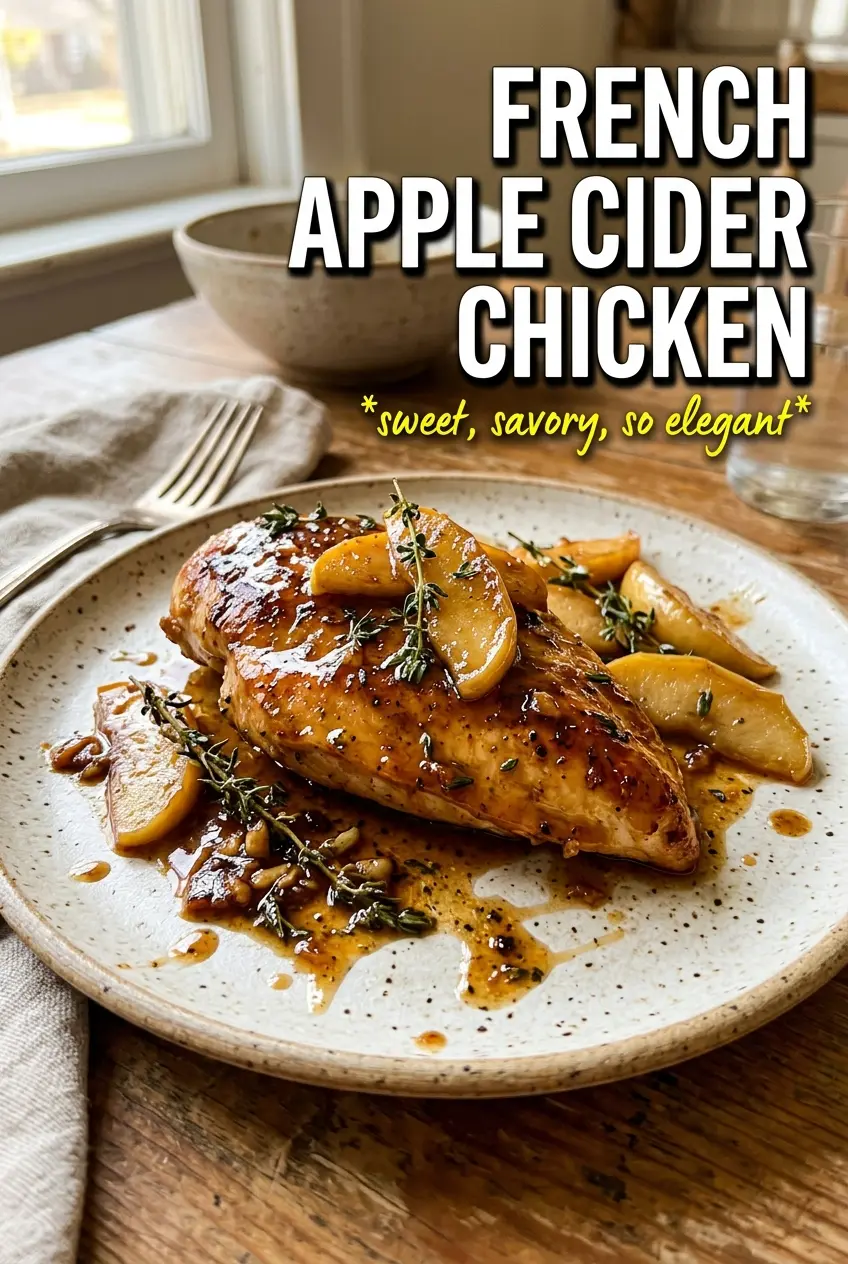
French Apple Cider Chicken
Ingredients
Equipment
Method
- Season chicken well with salt and pepper, then sear skin-side down in olive oil and butter over medium-high heat for 6-8 minutes until the skin is deep golden.
- Flip the chicken and cook for 3 more minutes, then remove the thighs to a plate.
- Sauté shallots and apple slices in the pan over medium heat for 4-5 minutes until golden.
- Add garlic, fresh thyme, and dried rosemary and cook for 1 minute until fragrant.
- Deglaze with hard apple cider (or fresh apple cider) and cook for 2 minutes to reduce slightly.
- Add chicken broth and Dijon mustard, stirring to combine.
- Return chicken skin-side up to the pan, cover, and simmer for 20 minutes until cooked through.
- Stir in heavy cream and simmer for 5 minutes until the sauce turns glossy.
- Taste and season with salt and pepper as needed, then spoon sauce over the chicken.