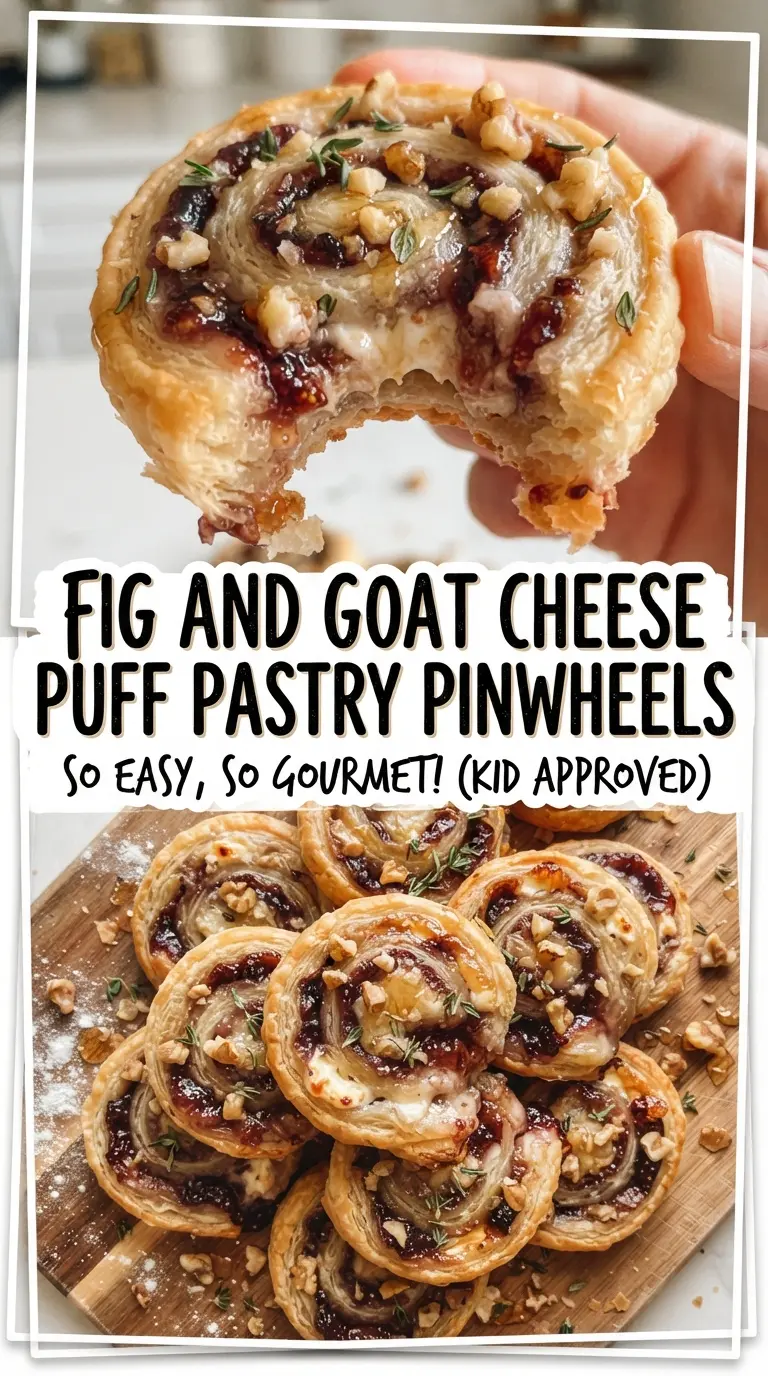
Fig and goat cheese puff pastry pinwheels bake into crisp, buttery spirals with a sweet-salty center that tastes much fancier than the effort it takes to make them. The pastry shatters at the edges, the fig jam turns glossy and concentrated, and the goat cheese stays tangy enough to keep every bite from leaning too sweet. They’re the kind of appetizer people reach for first because they look polished on the tray and disappear even faster than they cool.
The trick is keeping the filling balanced and the pastry cold. Fig jam brings the sweetness and a sticky base that holds the walnuts and thyme in place, while the goat cheese melts just enough to make the spirals creamy without running out. Chilling the rolled log before slicing matters more than it sounds; it keeps the rounds neat and gives you those clean little swirls instead of squashed spirals.
Below, I’ll walk through the part that makes these pinwheels bake up evenly, plus a few smart swaps if you want to change the nuts, the cheese, or the garnish without losing the texture that makes them work.
The pastry came out flaky all around, and the fig jam stayed put instead of oozing everywhere. I chilled the log like you said and every slice held its shape beautifully.
Sweet, tangy, and flaky fig and goat cheese puff pastry pinwheels for the appetizer tray
The reason these pinwheels hold their shape instead of collapsing
Puff pastry needs contrast: cold dough, a spreadable filling, and a hot oven. If the pastry warms up too much before it hits the oven, the butter softens and the spirals slump instead of lifting into those crisp layers. That’s why the quick chill before slicing matters here more than in a lot of appetizer recipes.
The other thing that keeps these tidy is restraint. Fig jam is sticky enough to anchor the cheese and walnuts, but if you pile it on thick, it squeezes out as the log rolls and leaks onto the pan. A thin, even layer reaches the edges without flooding the seams, which gives you cleaner spirals and better browning.
- Puff pastry — Use it thawed but still cool. If it gets soft and stretchy, pop it in the fridge for a few minutes before rolling. That small pause helps the layers rise instead of melting flat.
- Fig jam — This is the sweet, sticky base that keeps the filling in place. A thick preserve works better than a loose jam because it stays put during rolling and baking.
- Goat cheese — The tang cuts through the sweetness and keeps the filling from tasting candy-like. Crumble it cold so it distributes evenly instead of smearing into the jam.
- Walnuts — They add crunch and a little bitterness that balances the figs. Chop them finely enough that the log rolls cleanly and slices without tearing.
- Fresh thyme — Dried thyme gets too dusty here. Fresh leaves stay aromatic and give the pinwheels that Mediterranean edge without overpowering the fruit.
- Egg wash — It gives the pastry an even bronze color and helps the top layers bake crisp. Skip it and you’ll lose some shine and color, especially on the cut sides.
What Each Ingredient Is Actually Doing in This Recipe
- Primary ingredient (the star) — Quality matters most. Choose the best you can find.
- Cooking medium (oil, butter, or broth) — This carries flavors and prevents dryness.
- Seasonings (salt, pepper, spices, herbs) — Layer flavors so nothing overpowers. Build depth gradually.
- Aromatics (garlic, onion, herbs) — Cook with fat to bloom flavors. Become the foundation.
- Supporting ingredients — Complement the main ingredient without overpowering it.
- Sauce or liquid (if applicable) — Brings flavors together. Balance richness with acid.
- Acid (lemon, vinegar, wine, or other) — Brightens and prevents flat-tasting results.
- Final finish (garnish, glaze, or sauce) — Prevents one-dimensional taste and adds visual appeal.
How to roll and slice them without squashing the spirals
Making the rectangle work for you
Roll the pastry into an even 10×12-inch rectangle so the spirals bake at the same rate from end to end. If the corners crack, press them back together with your fingertips; don’t add flour all over the surface, because excess flour can keep the jam from sticking. Spread the fig jam in a thin layer right to the edges, but leave the very far edge barely lighter so the seam seals when you roll.
Building the log
Roll from the long side and keep the log tight without squeezing so hard that the filling bulges out. If the seam won’t stay closed, a dab of egg wash along the final edge acts like glue. Chill the log for 15 minutes before slicing; if you skip that step, the rounds flatten under the knife and lose their shape before they bake.
Baking to a clean golden finish
Place the slices cut-side down on parchment so the swirls stand up and the bottoms brown evenly. Bake until the pastry is deeply golden at the edges and lifted in layers, not just pale and set. If the pinwheels look done but still feel soft in the center, give them another minute or two; puff pastry needs full color to crisp properly once it cools.
Three smart ways to adapt the filling
Dairy-free version
Swap the goat cheese for a plant-based soft cheese that crumbles or spreads cleanly. You’ll lose a little of the sharp tang, so add a tiny pinch of salt to keep the filling from tasting flat. The texture will still bake up flaky and neat as long as the substitute isn’t too wet.
Walnut-free pinwheels
Leave the walnuts out or replace them with very finely chopped pecans or pistachios. You’ll still get crunch, but the flavor shifts a little softer with pecans and a little sweeter and greener with pistachios. Keep the pieces small so the log slices cleanly.
Honey finish with a sharper edge
Brush or drizzle with a little hot honey instead of plain honey if you want a gentle kick at the end. It plays nicely with the figs and goat cheese, but use a light hand so the heat doesn’t drown out the thyme. The result tastes a little more grown-up and works well on a mixed appetizer board.
Make-ahead party prep
Assemble and chill the log up to a day ahead, then slice and bake just before serving. That timing keeps the pastry crisp and saves you from trying to handle a soft log at the last minute. If the cut rounds have sat in the fridge and look a little flattened, reshaping them with your fingers takes seconds.
Storage and Reheating
- Refrigerator: Store leftovers in an airtight container for up to 3 days. The pastry softens a bit in the fridge, but the flavor stays good.
- Freezer: Freeze baked pinwheels on a tray, then transfer to a bag for up to 1 month. Reheat from frozen for the best texture; thawing first can make the pastry soggy.
- Reheating: Warm on a sheet pan in a 350F oven until the edges crisp back up, usually 6-8 minutes. The common mistake is microwaving, which makes the pastry leathery instead of flaky.
Answers to the questions worth asking
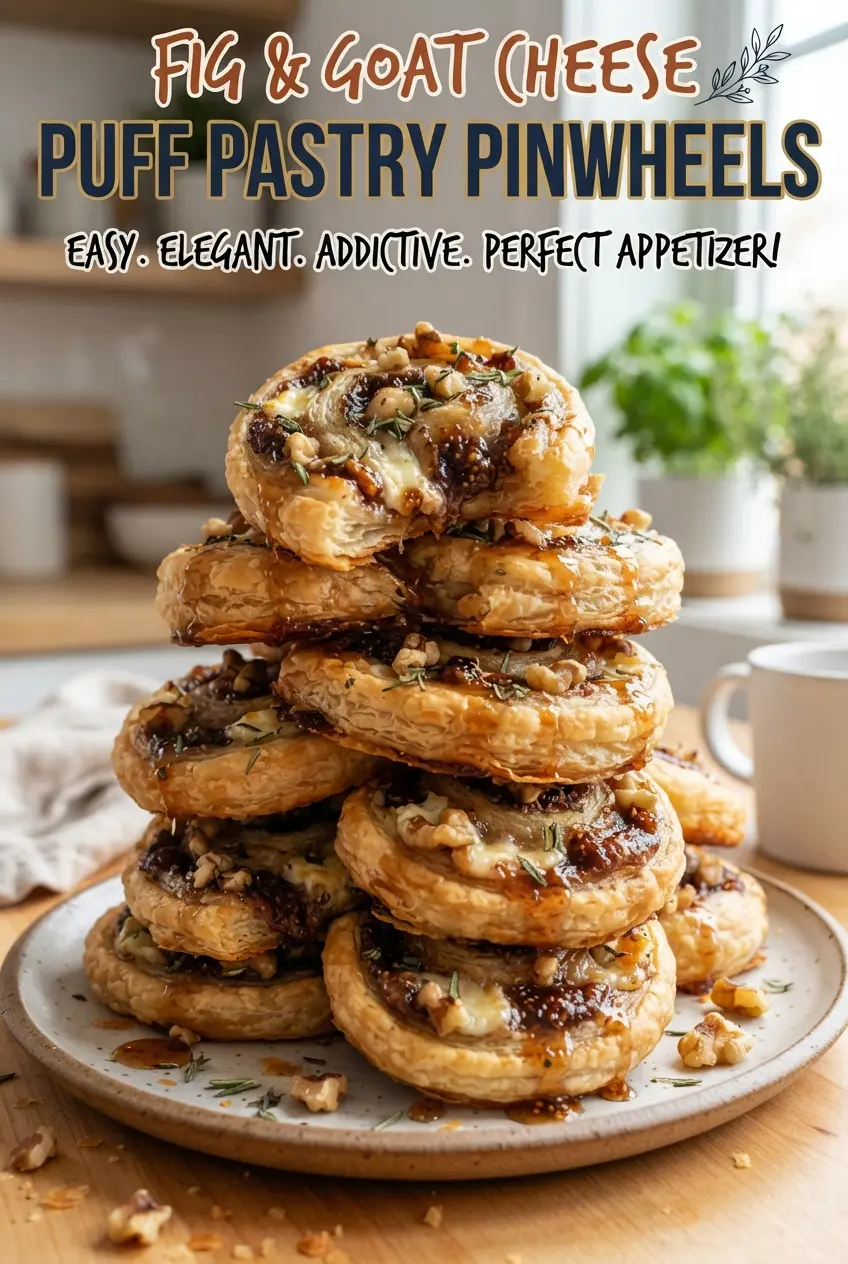
Fig and Goat Cheese Puff Pastry Pinwheels
Ingredients
Equipment
Method
- Preheat oven to 400F and line a baking sheet with parchment for easy release and clean transfer. Keep the oven fully preheated before baking.
- Roll puff pastry into a 10x12-inch rectangle and spread fig jam evenly to the edges for consistent sweetness. Use an even layer so the pinwheels slice neatly.
- Sprinkle goat cheese, walnuts, and thyme over the jam for layered flavor in every bite. Cover the jam area from edge to edge.
- Roll up tightly from the long side to form a tight spiral with no gaps. Press gently along the seam as you roll.
- Chill the log 15 minutes for clean slicing. The roll should feel firm, with less smearing when cut.
- Slice into 20 rounds and arrange on the baking sheet with cut sides facing up. Space them slightly apart so they puff instead of merging.
- Brush the rounds with egg wash for a glossy, browned top. Use a light, even coat over each pinwheel.
- Bake at 400F for 16-18 minutes until puffed and golden for crisp, flaky edges. Look for visible rise and deep golden color.
- Drizzle with honey and serve warm for sweet finishing notes. Add honey right after baking so it stays shiny.