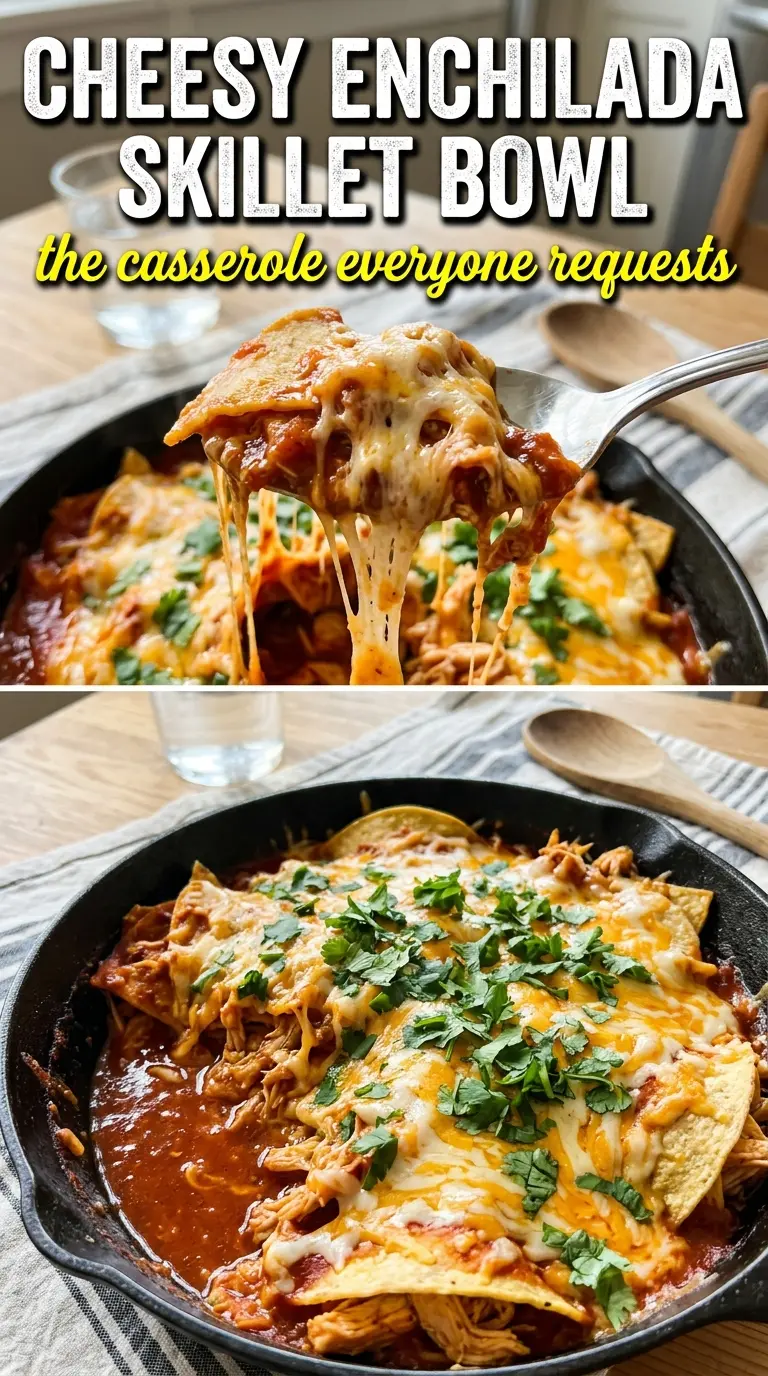
Enchilada skillet has the kind of weeknight payoff that makes it earn a permanent spot in the dinner rotation: saucy, cheesy, and hearty without turning into a pile of separate parts on the plate. Everything cooks together in one pan, so the tortillas soak up the red sauce, the beef stays savory, and the beans and corn stretch the meal without making it feel heavy.
The trick is letting the tortilla strips simmer in the sauce long enough to soften and thicken the pan mixture, but not so long that they disappear completely. A good enchilada sauce does most of the work here, and the final broil matters more than people think — it gives the cheese those browned spots and helps the top feel finished instead of just melted.
Below, you’ll find the little details that keep the skillet from going watery or bland, plus a few smart swaps if you want to make it with what’s already in your kitchen.
The tortillas softened into the sauce without getting mushy, and the broiled cheese on top made it taste like real enchiladas with half the effort. I loved that the skillet stayed thick instead of turning soupy.
Save this enchilada skillet for the nights when you want all the saucy, cheesy comfort of enchiladas without rolling a single tortilla.
The Tortillas Need to Simmer, Not Just Warm Through
The biggest mistake with a skillet enchilada dinner is treating the tortillas like a garnish. They need time in the sauce so they soften, pick up flavor, and help the whole pan thicken. If they go in too late, you get a loose, brothy skillet with chewy tortilla strips floating around instead of that cozy, casserole-like texture.
Use an oven-safe skillet that gives you enough surface area for the sauce to reduce a little. If the pan is crowded, the beef steams instead of browning and the final dish tastes flat. The goal is a thick, scoopable filling that still moves slowly when you stir it.
- Ground beef — An 80/20 blend brings enough flavor to stand up to the sauce. If you use lean beef, keep a little of the fat in the pan or the finished skillet can taste dry.
- Red enchilada sauce — This is the backbone of the dish, so choose one you actually like. A thin, bland sauce makes the whole pan taste thin and bland.
- Corn tortillas — They hold up better than flour here and give you that real enchilada flavor. Cut them into strips so they soften evenly instead of clumping.
- Cheddar and mozzarella — Cheddar brings the sharp flavor; mozzarella gives the top that stretchy melt. If you only have cheddar, use it, but the finish will be less gooey.
- Black beans and corn — These add body and sweetness, and they keep the skillet from feeling one-note. Canned is fine as long as you drain them well.
What Each Ingredient Is Actually Doing in This Recipe
- Primary ingredient (the star) — Quality matters most. Choose the best you can find.
- Cooking medium (oil, butter, or broth) — This carries flavors and prevents dryness.
- Seasonings (salt, pepper, spices, herbs) — Layer flavors so nothing overpowers. Build depth gradually.
- Aromatics (garlic, onion, herbs) — Cook with fat to bloom flavors. Become the foundation.
- Supporting ingredients — Complement the main ingredient without overpowering it.
- Sauce or liquid (if applicable) — Brings flavors together. Balance richness with acid.
- Acid (lemon, vinegar, wine, or other) — Brightens and prevents flat-tasting results.
- Final finish (garnish, glaze, or sauce) — Prevents one-dimensional taste and adds visual appeal.
Build the Sauce Before the Cheese Goes On
Brown the Beef First
Cook the beef in a large oven-safe skillet until it loses its pink color and the browned bits start sticking to the bottom. Drain off the excess fat if there’s a lot in the pan, but leave a little behind for flavor. If the beef is pale and watery at this stage, the finished dish will taste like it never fully got started.
Wake Up the Spices
Add the onion and cook it until it softens and turns a little translucent, then stir in the garlic, cumin, and chili powder for about a minute. You should smell the spices bloom almost immediately. If the garlic starts browning hard, the heat is too high and it will turn bitter in the sauce.
Simmer Until the Tortillas Blur at the Edges
Stir in the beans, corn, enchilada sauce, tomatoes, and tortilla strips, then press the tortillas down so they’re coated. Let the mixture simmer until the tortillas soften and the sauce thickens enough to cling to a spoon, about 8 to 10 minutes. If it still looks loose, give it a few more minutes uncovered; if it gets too tight, splash in a little water to loosen it back up.
Finish Under the Broiler
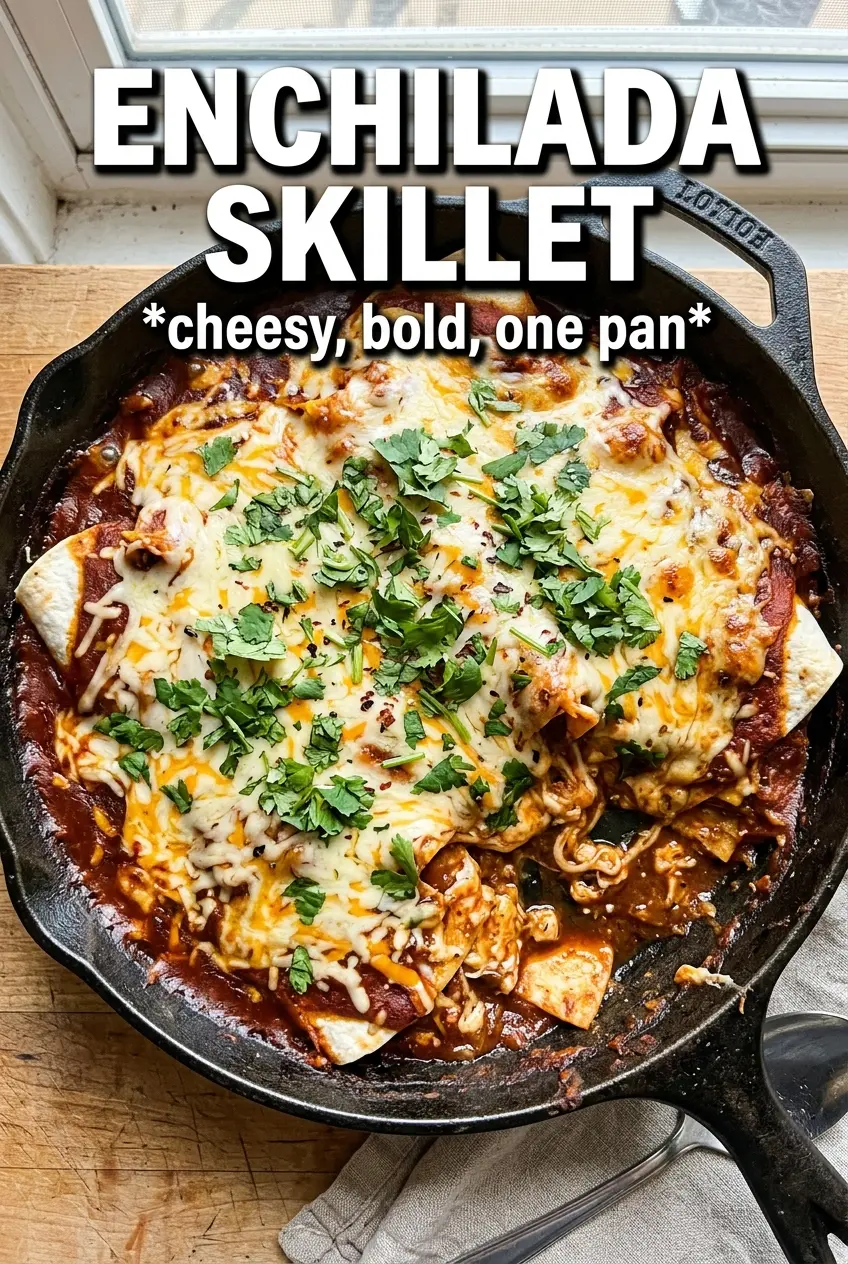
Scatter the cheese over the top and broil just until it bubbles and picks up golden spots. Stay close, because the line between melted and scorched is short under a broiler. Finish with sour cream, avocado, and cilantro after the pan comes out so the toppings stay cool and fresh against the hot skillet.
Three Ways to Make This Skillet Fit What’s in Your Kitchen
Use ground turkey for a lighter pan
Ground turkey works well if you want a leaner version, but it needs help. Add a little extra oil when you brown it and don’t skip the cumin and chili powder, since turkey brings less natural flavor than beef. The result is a little cleaner and lighter, not as rich.
Make it vegetarian with extra beans
Skip the beef and add another can of beans, or use a mix of black beans and pinto beans for more texture. You’ll want to sauté the onion a little longer so the base still tastes built, not dumped together. It won’t have the savory depth of beef, but it becomes a solid meatless main.
Use corn tortillas for the best gluten-free result
This recipe is naturally gluten-free if your enchilada sauce is certified gluten-free. Corn tortillas soften into the sauce and hold up better than most gluten-free substitutes, which can get gummy. Flour tortillas will work in a pinch, but they make the skillet heavier and softer in a less interesting way.
Dial up the heat with green chiles or hot sauce
If you want more punch, stir in a small can of diced green chiles with the beans and corn or finish with hot sauce at the table. That keeps the whole skillet balanced while giving everyone control over the heat. Adding too much heat directly into the sauce can drown out the enchilada flavor, so build it slowly.
Storage and Reheating
- Refrigerator: Store leftovers in an airtight container for up to 4 days. The tortillas will soften more as they sit, but the flavor gets even better by day two.
- Freezer: It freezes well for up to 2 months, though the tortillas will be softer after thawing. Cool it completely, portion it into freezer-safe containers, and thaw overnight in the refrigerator before reheating.
- Reheating: Reheat covered in a skillet over low heat with a splash of water or extra enchilada sauce. The common mistake is blasting it over high heat, which dries out the beef and makes the cheese oily.
Answers to the Questions Worth Asking
Enchilada Skillet
Ingredients
Equipment
Method
- Brown ground beef in a large oven-safe skillet over medium-high heat, then drain the fat.
- Sauté onion for 3 minutes, then add garlic, cumin, and chili powder and cook for 1 minute.
- Add black beans, corn, enchilada sauce, and diced tomatoes, then stir to combine.
- Fold in tortilla strips, press them into the sauce, and simmer for 8-10 minutes until the tortillas soften.
- Scatter shredded cheddar and mozzarella over the top.
- Broil for 3-4 minutes until the cheese is bubbly and golden.
- Serve immediately with sour cream, avocado, and cilantro.