Juicy chicken breasts coated in a tangy cream cheese sauce earn a permanent spot in the dinner rotation fast, especially when the sauce turns glossy and thick enough to cling to every bite. This version leans into that rich, velvety texture without feeling heavy, and the lemon juice and zest keep the whole pan from tasting flat.
The trick is building the sauce in the same skillet after the chicken sears. Those browned bits left behind do more than add flavor; they give the broth something to pick up before the cream cheese goes in, which helps the sauce taste cooked, not just mixed. Softened cream cheese matters here, too. Cold cubes take longer to melt and tempt you into cranking the heat, which is how smooth sauces turn grainy.
Below, I walk through the part that matters most: how to keep the sauce silky, how to tell when the chicken is actually done, and what to change if you need a lighter or lower-carb version without losing that creamy finish.
The sauce came out thick and smooth, and the lemon zest at the end kept it from tasting too rich. I followed the temperature cue on the chicken and it stayed juicy instead of drying out.
Like this creamy skillet chicken? Save Easy Cream Cheese Chicken for a quick dinner with a silky lemon-herb sauce that coats every piece.
The Reason the Sauce Stays Creamy Instead of Breaking
Most cream cheese chicken recipes run into trouble at the same point: the sauce gets too hot after the dairy goes in. Cream cheese is forgiving, but sour cream is pickier. Once it’s added, the sauce needs to stay at a gentle simmer at most. A hard boil can make the texture grainy or thin it out in a strange way that never quite comes back together.
The other thing that matters is the order. The broth loosens the pan first, and that gives you a base that can absorb the cream cheese gradually. If you dump cold dairy straight into a dry skillet, you’ll fight lumps. This recipe avoids that by using the broth and browned bits as the bridge between the sear and the sauce.
- Don’t rush the sear — the chicken needs real color before it comes out of the pan. Pale chicken leaves pale sauce.
- Use medium-low heat for the dairy — that’s the difference between silky and split.
- Softened cream cheese melts cleaner — cold cubes can work, but they take longer and encourage overheating.
- Scrape the pan well — those browned bits give the sauce depth and keep it from tasting one-note.
What Each Ingredient Is Actually Doing in the Pan
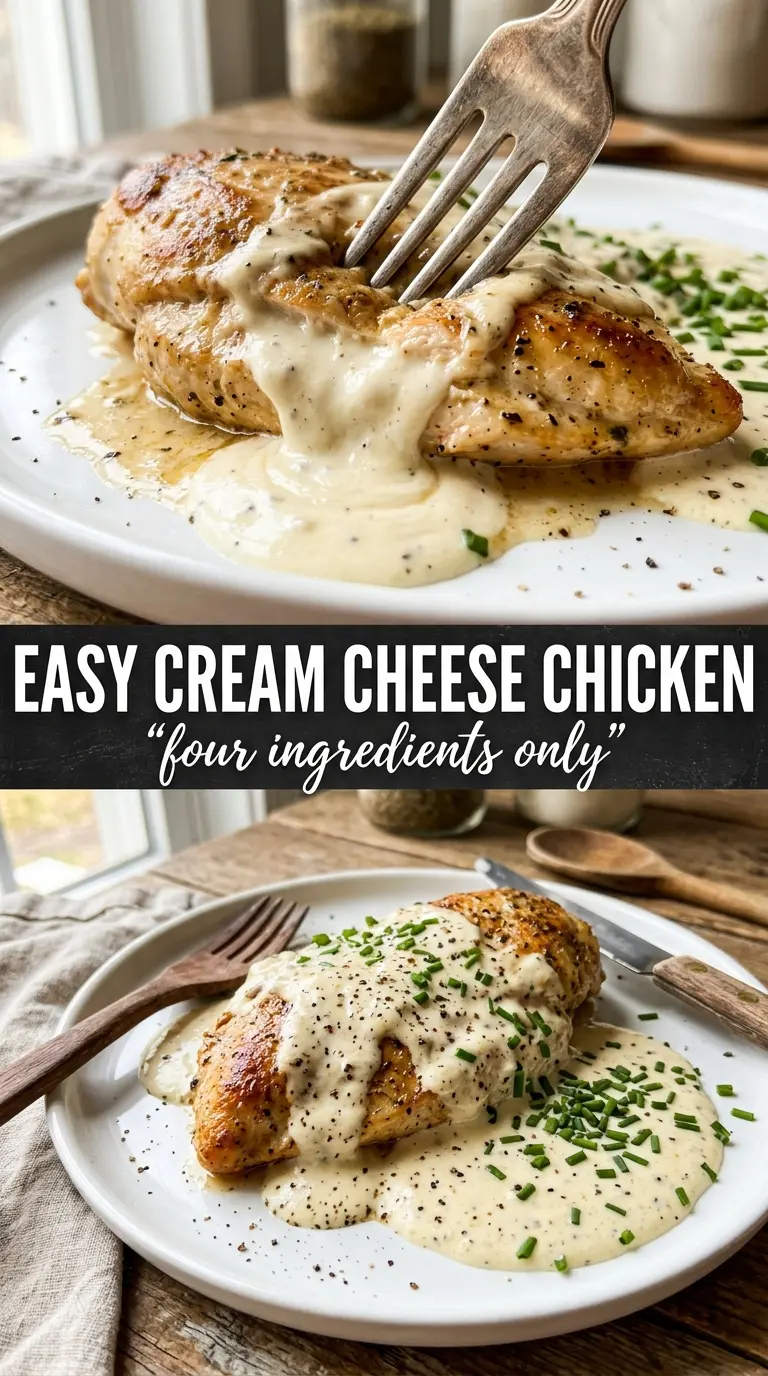
- Chicken breasts — boneless, skinless breasts keep the cook time short and make the dish feel substantial. Pound them to even thickness if one end is much thicker; that helps them finish at the same time without drying out the thin side.
- Cream cheese — this is the body of the sauce, and full-fat cream cheese gives the smoothest result. Low-fat versions can work, but the sauce won’t be quite as lush and is a little more likely to look loose.
- Sour cream — it brings tang and loosens the cream cheese into something spoonable. Greek yogurt can stand in if that’s what you have, but add it off the heat and expect a slightly sharper flavor.
- Chicken broth — it deglazes the skillet and keeps the sauce from feeling too thick or heavy. Use a broth you’d actually drink; weak broth makes the finished sauce taste flat.
- Lemon juice and zest — the juice brightens the sauce, and the zest gives you a fresher citrus note at the end. Skip one and the sauce still works, but both together keep the richness in check.
- Fresh chives — they’re not just garnish here. The mild onion flavor cuts through the creaminess and makes the bowl taste finished.
Getting the Chicken Seared Before the Sauce Goes In
Building the Golden Crust
Season the chicken well before it ever hits the pan. Salt, pepper, garlic powder, and onion powder all belong on the surface, not floating in the sauce where they can’t do their job. Heat the oil until it shimmers, then lay the chicken in and leave it alone long enough to form a real crust. If you try to move it too soon, it sticks and tears instead of browning cleanly.
Cooking the Chicken Through Without Drying It Out
Five to six minutes per side is the right starting point for average-sized breasts, but temperature wins over the clock every time. Pull them when the thickest part reaches 165°F and the juices run clear. If the pan is smoking hard, the outside is getting ahead of the middle; lower the heat a touch so the chicken can cook through without becoming tough.
Turning the Pan Drippings Into Sauce
Once the chicken comes out, the garlic only needs about 30 seconds in the oil. Longer than that and it can turn bitter fast. Pour in the broth and scrape the skillet until the bottom looks clean; that’s where the flavor lives. Then add the cream cheese and stir patiently over medium-low heat until the sauce looks smooth before you add the sour cream and lemon juice.
Finishing the Sauce and Bringing the Chicken Back
Stir in the sour cream, lemon juice, and Italian seasoning once the cream cheese has fully melted. Don’t let the pan boil after that. High heat can make the sauce separate, and once that happens, the texture gets loose instead of velvety. Return the chicken to the pan, spoon sauce over the top, and let it warm through for a minute or two so the flavors settle together.
How to Change This for What You’ve Got on Hand
Make It a Little Lighter
Use Greek yogurt instead of sour cream and cut the cream cheese to 6 ounces. The sauce will be a little brighter and less rich, but it still clings well if you keep the heat low and stir gently.
Need a Gluten-Free Dinner
This recipe is naturally gluten-free as written, as long as your chicken broth is certified gluten-free. That’s the only place hidden wheat tends to sneak in.
Turn It Into Thighs Instead of Breasts
Boneless skinless thighs work well here and bring a juicier, slightly richer result. They usually need a few extra minutes in the pan, so cook to temperature instead of relying on the clock.
Storage and Reheating
- Refrigerator: Store leftovers in an airtight container for up to 3 days. The sauce thickens as it chills.
- Freezer: It freezes, but the sauce may separate a bit after thawing. Freeze only if you’re okay with a slightly less silky texture.
- Reheating: Warm it gently on the stove over low heat with a splash of broth or water. Microwaving on high is the fastest way to push the dairy past the point where it stays smooth.
Questions I Get Asked About This Recipe

Easy Cream Cheese Chicken
Ingredients
Equipment
Method
- Season the chicken breasts with salt, pepper, garlic powder, and onion powder to taste. Heat olive oil in a large skillet over medium-high heat and sear until deep golden, 5-6 minutes per side, until internal temperature reaches 165°F, then remove the chicken.
- In the same pan, cook minced garlic for 30 seconds over medium heat until fragrant. Pour in chicken broth and scrape up the browned bits from the bottom of the skillet.
- Add cubed, softened cream cheese and stir over medium-low heat until fully melted and smooth. Stir frequently so the sauce stays velvety without scorching.
- Add sour cream, lemon juice, and Italian seasoning, stirring until the sauce is creamy and well combined. Do not boil after adding sour cream.
- Return the chicken breasts to the pan and spoon the sauce over each piece so they’re well coated. Simmer gently just to rewarm the chicken, then turn off the heat.
- Garnish with fresh chives and lemon zest right before serving for a bright, fresh finish. Serve while the sauce is thick and glossy.