Golden zucchini fritters with a crackly crust and a tender, savory center earn their place fast once they hit the table. The edges turn crisp in the skillet, the middle stays light instead of heavy, and the parmesan pulls the whole thing into something that tastes far more intentional than the short ingredient list suggests.
The part that matters most is moisture control. Zucchini carries a lot of water, and if you skip the salt-and-squeeze step, the batter loosens in the pan and the fritters steam instead of brown. A modest amount of flour holds them together, while the eggs and parmesan add enough structure and richness to keep them from tasting flat.
Below, you’ll find the small details that keep the fritters from falling apart, plus a dill cream that gives each bite a cool, sharp contrast. The method is simple, but the order matters.
I squeezed the zucchini until it looked almost dry and the fritters held together perfectly. The edges got crisp fast and the dill sour cream was the best part with the salty parmesan.
Crispy zucchini fritters with dill cream are worth pinning for an easy side that turns a pile of zucchini into something crisp, salty, and worth repeating.
The Reason Zucchini Fritters Go Soft in the Pan
The common failure here isn’t the batter. It’s the zucchini. Freshly grated zucchini looks harmless, but it can dump enough water into the mix to keep the fritters pale and mushy no matter how hot the skillet is. Salting the shreds first pulls that moisture out, and squeezing them hard is what gives you a mixture that fries instead of collapses.
The other trap is loading in too much flour to fix a wet batter. That only makes the fritters dense and bready. You want just enough flour to bind the eggs, cheese, and zucchini into patties that hold their shape, then enough heat in the pan to brown the outside before the center overcooks.
What Each Ingredient Is Actually Doing in These Fritters
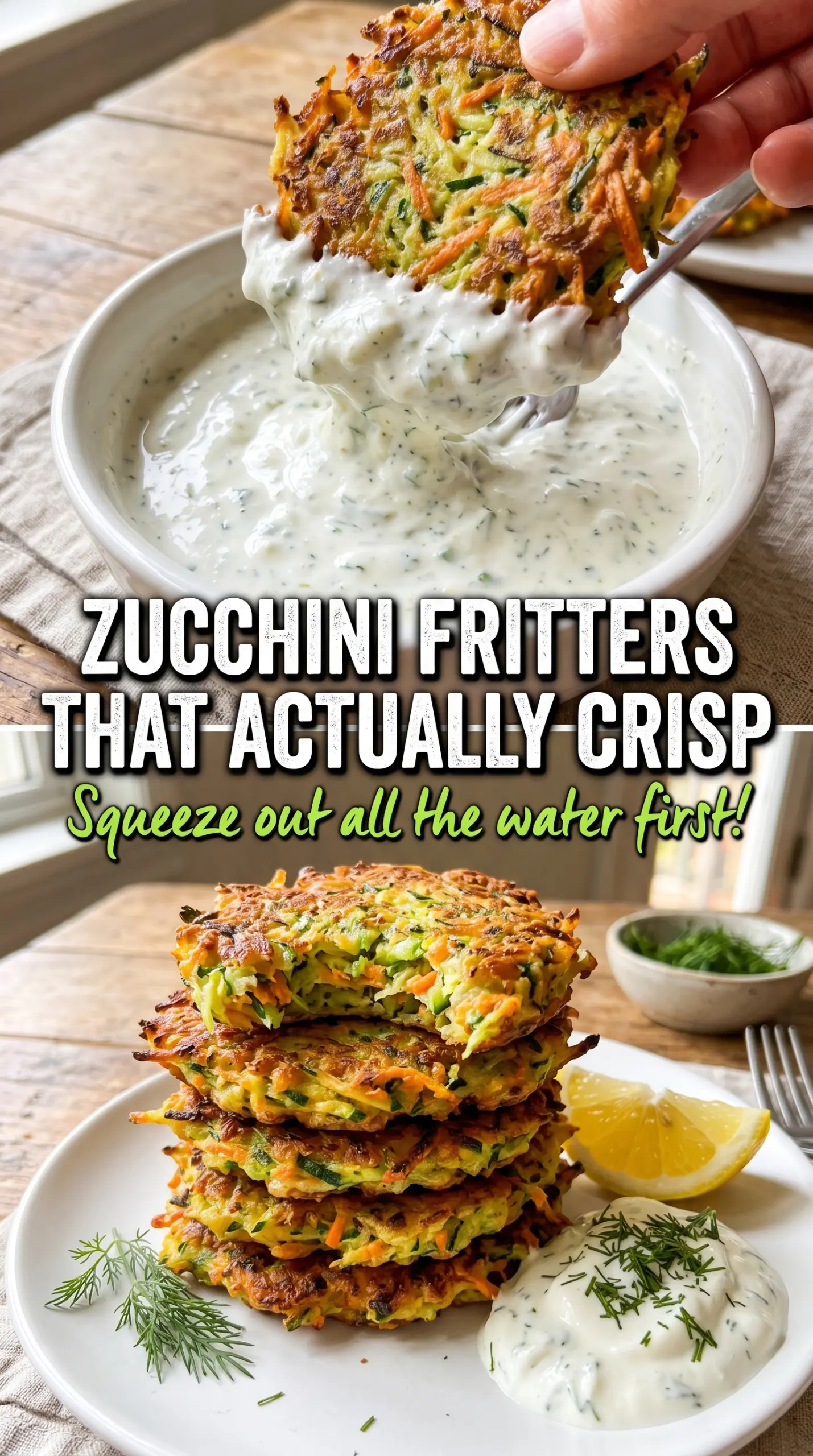
- Zucchini — This is the base and the texture you’re building around. Medium zucchini tend to have fewer big seeds and a better moisture-to-flesh balance than oversized ones, which can be watery and spongy. If yours are huge, trim away the seedy center before grating.
- Salt — This is not seasoning alone; it’s the moisture management step. Ten minutes is enough to draw out a lot of water without turning the zucchini limp, and the squeeze matters just as much as the rest time. Skipping it is the fastest way to get soft fritters.
- Parmesan — Parmesan gives salt, nutty depth, and a little extra structure as it warms. Freshly grated melts into the batter better than pre-shredded cheese, which can be drier and less cohesive. If you need a swap, pecorino works, but it will taste sharper.
- Flour — This helps the fritters hold together and fry into a tender interior instead of a loose scramble. All-purpose flour is the easiest choice here, but a 1:1 gluten-free blend can work if you stop at the same spoonable, not runny, consistency.
- Eggs — The eggs bind the zucchini and cheese together and help the patties set in the pan. If you cut the recipe in half, don’t halve the egg with a whole raw egg in the mix unless you want extra moisture; beat it first and add just what you need.
- Chives or dill — These keep the fritters from tasting heavy. Chives are a little gentler, while dill gives a brighter, more classic vegetable-fritter note. Both work with the sour cream, so use whichever herb you have fresher.
- Sour cream and lemon juice — The dill cream needs the tang. Plain Greek yogurt can step in if that’s what’s in the fridge, but sour cream gives a rounder finish and a smoother texture. Lemon juice sharpens everything and keeps the sauce from feeling flat against the fried fritters.
Getting the Batter Tight Enough to Fry Cleanly
Drawing Out the Zucchini
Grate the zucchini, toss it with salt, and let it sit long enough for the shreds to look glossy and slightly wilted. Then wring it out in a clean kitchen towel until you can squeeze and still feel that it’s no longer dripping. If you stop too soon, the batter will look fine in the bowl and fall apart the second it hits the oil.
Mixing Without Overworking
Combine the drained zucchini with the eggs, parmesan, flour, garlic, herbs, and pepper just until everything is evenly coated. The mixture should look shaggy but cohesive, not wet and soupy. If it seems loose, add a spoonful of flour at a time; if it looks dry and crumbly, the zucchini was squeezed a little too hard, so work in a small splash of beaten egg instead of piling on more flour.
Frying to a Deep Golden Edge
Use a medium-high skillet and enough olive oil to coat the pan with a thin shimmer. Drop the batter in 1/4-cup portions and flatten them right away so the centers cook through before the undersides burn. Don’t rush the flip; wait for the first side to turn deeply golden and release cleanly. If the fritters stick, the pan wasn’t hot enough or you moved them too early.
Finishing with the Dill Cream
Stir the sour cream, dill, lemon juice, and salt together while the fritters cook. The sauce should taste bright and cool, with enough salt to stand up to the parmesan. Serve it on the side while the fritters are still hot and crisp, because they lose that contrast once they sit too long.
Three Ways to Work These Fritters Into Your Week
Make Them Gluten-Free
Swap the all-purpose flour for a 1:1 gluten-free baking blend. The texture stays close, though the fritters may be a touch more delicate when you flip them, so let the first side set fully before moving them. Don’t use almond flour here; it adds grit and doesn’t give the same binding.
Skip the Dairy in the Sauce
The fritters themselves need the parmesan, but you can keep the topping dairy-free by replacing the sour cream with unsweetened thick coconut yogurt or a plain dairy-free yogurt. Stir in the dill and lemon the same way. The flavor stays bright, though the sauce will taste slightly less tangy than sour cream.
Turn Them Into a Lighter Lunch
Serve the fritters over greens with a spoonful of dill cream and a few sliced tomatoes. That turns them from a side dish into something that eats like a light meal without changing the batter. They’re best warm, so assemble right before serving and don’t stack them too tightly or they’ll lose their crisp edges.
Storage and Reheating
- Refrigerator: Store cooked fritters in an airtight container for up to 3 days. They soften as they sit, but the flavor stays good.
- Freezer: Freeze in a single layer until firm, then transfer to a freezer bag for up to 2 months. Reheat from frozen for the best texture instead of thawing first.
- Reheating: Use a skillet or oven at 375°F until the outside crisps again. The common mistake is microwaving them, which makes the crust go limp and the center rubbery.
Answers to the Questions Worth Asking
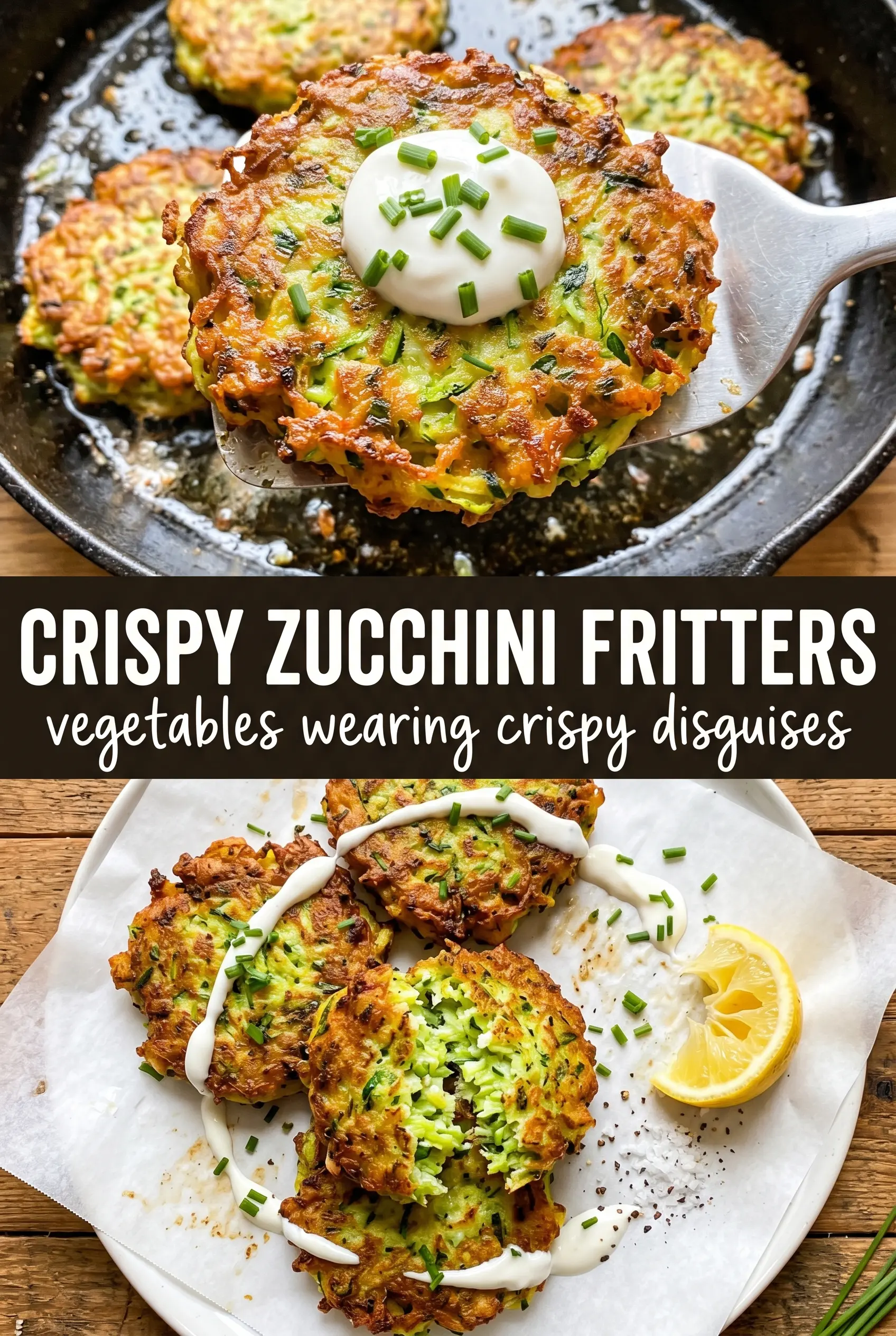
Crispy Zucchini Fritters
Ingredients
Equipment
Method
- Grate the zucchini and toss it with 1 teaspoon salt, then let sit for 10 minutes.
- Transfer the zucchini to a clean kitchen towel and squeeze out as much moisture as possible.
- Mix the drained zucchini with the eggs, parmesan, flour, minced garlic, chives or dill, and black pepper until evenly combined.
- Heat 2–3 tablespoons olive oil in a large skillet over medium-high heat until shimmering.
- Drop 1/4-cup portions into the skillet and flatten into patties, cooking for 3–4 minutes per side until deeply golden and crispy.
- Work in batches, adding more oil as needed between batches.
- Stir sour cream, fresh dill, lemon juice, and salt (to taste) until smooth.
- Serve the hot fritters alongside the dill cream.