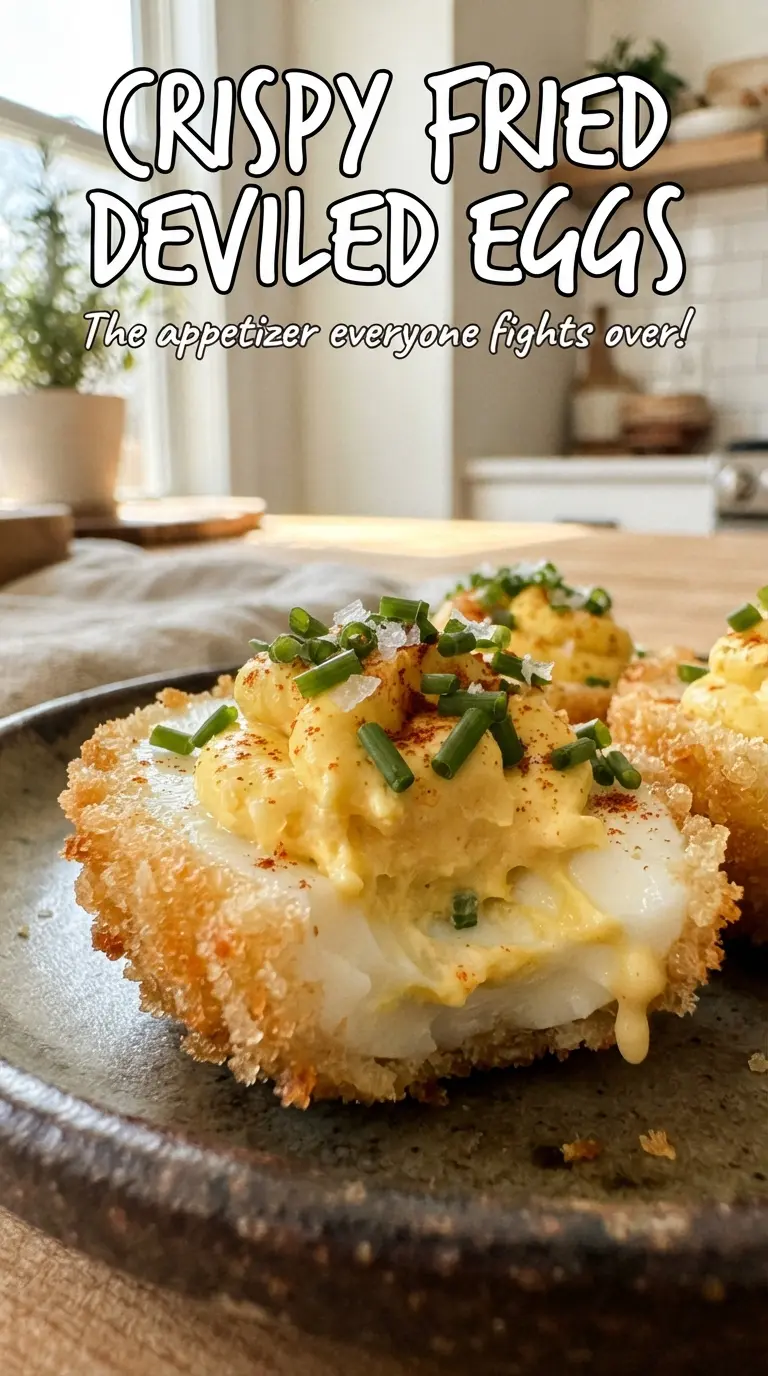
Crispy fried deviled eggs hit that perfect middle ground between nostalgic and just plain fun: crunchy, salty egg white halves with a cool, creamy yolk filling tucked inside. The panko shell gives each bite a clean crackle, then the filling lands with the familiar tang of relish and Dijon. They disappear fast because they eat like a passed appetizer, not a side dish sitting politely on a tray.
The trick is keeping the egg whites dry enough to bread well and the oil hot enough to brown the coating before the whites overcook. A short chill after mixing the filling helps it pipe neatly and keeps the whole thing from sliding around once the eggs are assembled. Use panko, not regular breadcrumbs, because the bigger crumbs make the crust stay light instead of turning dusty.
If you’ve only ever served deviled eggs cold, this version is worth a look. The contrast between the warm, crisp exterior and the chilled filling is what makes them stand out.
The panko stayed crisp even after I piped the yolk filling, and the little hit of sweet relish kept the centers tasting like classic deviled eggs. I served them for a family gathering and the whole plate was gone before the main dish hit the table.
Save these crispy fried deviled eggs for the appetizer table — the crunchy panko shell and creamy yolk filling make them a standout bite.
The Crisp Coat Is What Keeps These Deviled Eggs From Turning Soggy
Most fried egg appetizers fail in the same place: the coating goes soft before the filling ever makes it to the plate. Here, the whites are chilled after boiling, which helps them dry out enough to hold flour and breadcrumbs without slipping. The fry is short on purpose. You’re not cooking the eggs through again; you’re just setting a deep golden crust around already-cooked whites.
- Cold, peeled egg whites — Dry them well before breading. Any surface moisture turns the flour into paste and makes the panko fall off in the oil.
- Panko breadcrumbs — Regular crumbs get dense here. Panko gives you that audible crunch and stays lighter after frying.
- Oil at 350°F — If the oil runs cool, the coating drinks it up and turns greasy. Too hot, and the crumbs darken before the whites crisp.
What Each Ingredient Is Actually Doing in the Filling and the Crust
- Mayonnaise — This is what makes the yolk filling pipeable and smooth. Full-fat mayo gives the best body; light versions can turn loose and a little flat.
- Sweet pickle relish — The little bits of pickle add texture and that classic deviled egg tang. If you use finely chopped pickles instead, drain them well so the filling doesn’t get watery.
- Dijon mustard — It sharpens the yolks without making them taste mustardy. Yellow mustard works in a pinch, but Dijon gives a cleaner bite.
- Flour, egg, and panko — That three-step breading is what locks the crust on. The flour gives the egg something to grip, the beaten egg acts as glue, and the panko builds the crunch.
- Garlic powder — This adds a quiet savory note to the crust so the coating tastes seasoned all the way through, not just on top.
Frying and Filling Without Losing the Crunch
Drying the Whites Before Breading
Once the eggs are peeled and halved, blot the whites with paper towels until the cut side feels dry, not slick. That surface dryness matters because any leftover moisture keeps the flour layer from sticking evenly. If the flour looks patchy, the coating will patchy-fry too. Work one half at a time so the cut surfaces don’t sit out long enough to bead up again.
Building the Coating
Press each white half first into flour, then beaten egg, then panko mixed with garlic powder. Use your fingers to nudge the crumbs into the curved edges, especially around the yolk cavity where the shape is uneven. A light touch works better than burying the egg in crumbs; too much pressure packs the crust and keeps it from crisping. Set the breaded halves on a plate for a minute before frying so the coating hydrates and clings.
Frying Just Until Golden
Fry in about 1 inch of oil at 350°F in small batches. You want the coating deep golden and crisp, usually in 1 to 2 minutes, with no need to turn them more than once unless one side is touching the pan more than the other. If they brown too fast, the oil is too hot. If they sit pale and greasy, the oil needs to come back up before the next batch goes in.
Piping the Filling at the End
Let the fried whites cool for about 5 minutes before filling them. If you pipe the yolks in while the crust is still piping hot, steam softens the bottom layer and you lose that crackly edge. Use a piping bag for the cleanest look, or spoon the filling in if that’s easier. Finish with paprika and chives right before serving so the garnish stays bright.
How to Adapt These Fried Deviled Eggs for a Crowd or Different Diets
Gluten-Free Version
Swap the all-purpose flour for a 1:1 gluten-free flour blend and use gluten-free panko. The texture stays crisp, though the crust can brown a little faster, so keep the oil at the lower end of 350°F and fry in smaller batches.
No Relish, More Tang
If you don’t keep sweet pickle relish on hand, use finely minced dill pickles instead. Drain them well and add a pinch of sugar if you want to keep the filling balanced, since dill pickles bring more sharpness and less sweetness than relish.
Make-Ahead Strategy for Parties
Boil, peel, split, and mix the yolk filling up to a day ahead, then store the whites and filling separately in the fridge. Bread and fry the whites close to serving time, because the crust loses its crunch as it sits. That last-minute fry is what keeps the appetizer from turning soft on the tray.
Storage and Reheating
- Refrigerator: Store the fried whites and yolk filling separately for up to 2 days. Once assembled, the coating softens fast.
- Freezer: Don’t freeze assembled fried deviled eggs. The whites turn rubbery and the filling separates after thawing.
- Reheating: Re-crisp the fried whites in a 375°F oven for a few minutes if needed, then fill after they cool slightly. Don’t microwave them or the crust will go limp almost immediately.
Answers to the Questions Worth Asking

Crispy Fried Deviled Eggs
Ingredients
Equipment
Method
- Place 12 large eggs in a pot, cover with cold water, and bring to a boil. Cover, remove from heat, and let stand 12 minutes.
- Chill the eggs completely, then peel and halve them lengthwise. Separate the egg whites from the yolks so you can fill later.
- Mash the yolks with mayonnaise, sweet pickle relish, Dijon mustard, and salt until smooth. Transfer the mixture to a piping bag and chill to firm up.
- Coat each egg white half in all-purpose flour, then dip in the beaten eggs. Finish by rolling in panko mixed with garlic powder so every surface is covered.
- Heat 1 inch of vegetable oil to 350F in a suitable pot. Fry the whites in batches for 1-2 minutes until golden, then drain on paper towels.
- Cool the fried egg whites for 5 minutes, so the crust stays crisp. Pipe the yolk filling into the centers of the crispy whites.
- Dust with paprika and chives for garnish. Serve right away for maximum crunch.