Golden-seared chicken breasts tucked into a silky sun-dried tomato cream sauce earn their place in the dinner rotation fast. The chicken stays juicy, the sauce turns glossy and spoon-coating, and the spinach softens just enough to melt into the Parmesan without disappearing completely. It tastes like something you’d get at a good restaurant, but it comes together in one skillet with a very short ingredient list.
What makes this version work is the order. The chicken gets real color first, which gives you the savory base that cream sauces need. Then the garlic and sun-dried tomatoes go into the same pan, so every browned bit gets pulled into the sauce instead of washed down the drain. I also keep the heat low once the cream and Parmesan go in; that’s the difference between a smooth sauce and one that turns grainy or oily at the edges.
Below, I’ve laid out the parts that matter most: how to keep the chicken tender, how to stop the sauce from splitting, and the small ingredient choices that make this skillet taste rich without feeling heavy.
The sauce thickened up beautifully and clung to the chicken instead of running all over the plate. I used the sun-dried tomato oil from the jar like you suggested and the flavor came out deeper than any version I’ve made before.
Creamy Tuscan Chicken with a silky sauce and golden seared chicken breasts is worth keeping on hand for busy nights.
The Chicken Has to Brown Before the Cream Goes In
The sauce in this skillet only tastes rich because the chicken builds the base first. If you rush past the sear, the whole dish tastes flatter, even if you use the same ingredients. A proper golden crust leaves browned bits in the pan, and those bits dissolve into the broth and cream to give the sauce depth.
Don’t crowd the skillet. If the chicken steams instead of browns, the outside stays pale and the sauce never gets that savory backbone. The chicken also needs to come out before the sauce starts so it doesn’t overcook while the cream reduces. Pull it once it reaches 165°F, then let the sauce finish the job.
What the Sun-Dried Tomatoes and Parmesan Are Doing Here
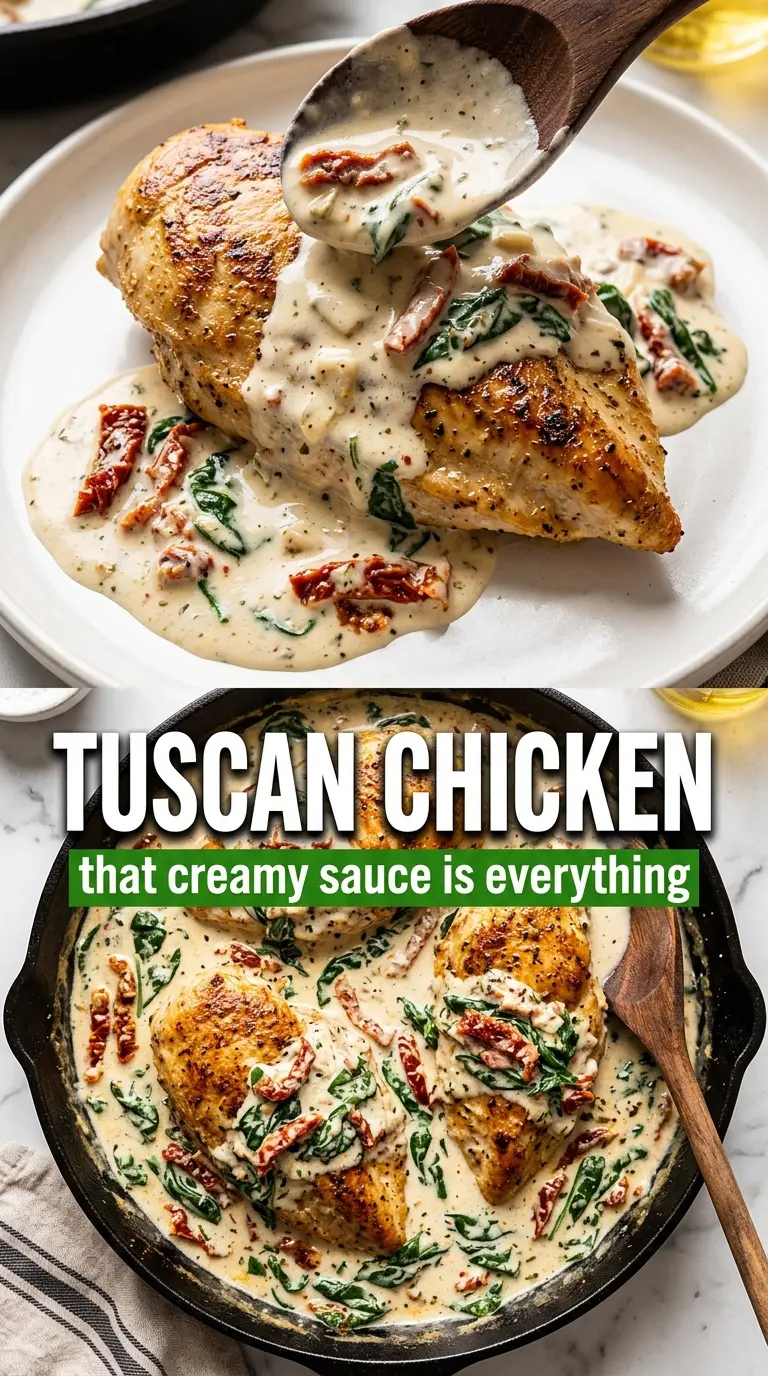
- Chicken breasts — Boneless, skinless breasts keep this fast and lean, but they dry out if you overcook them. If you want a little more margin for error, pound them to an even thickness so they finish at the same time.
- Sun-dried tomatoes in oil — These do more than add color. They bring concentrated tomato flavor and a little fat from the oil, which helps the sauce taste round instead of thin. Drain them, but don’t rinse them.
- Heavy cream — This is what gives you the silky sauce that clings to the chicken. Half-and-half can work in a pinch, but it won’t reduce as smoothly and it’s more likely to look loose.
- Parmesan — Freshly grated Parmesan melts into the sauce much better than the bagged kind. Pre-grated cheese often has anti-caking starches that can make the sauce slightly grainy.
- Spinach — Baby spinach is the right choice because it wilts quickly and folds into the sauce without turning stringy. Add it at the end so it stays bright and tender.
Building the Sauce Without Breaking It
Seasoning and Searing the Chicken
Coat the chicken generously with salt, pepper, garlic powder, Italian seasoning, and smoked paprika, then sear it in hot olive oil until the surface is deeply golden. You want the chicken to release naturally from the pan before flipping; if it sticks hard, it isn’t ready yet. Keep the heat at medium-high so the crust forms before the inside dries out, and pull the chicken when it hits 165°F in the thickest part.
Pulling the Flavor Off the Pan
Add the garlic to the same skillet and stir for just 30 seconds, enough for it to smell fragrant but not darken. Then add the sun-dried tomatoes and let them cook for a minute so they soften and start giving up their flavor. If the garlic browns hard at this stage, the sauce will taste bitter, so keep it moving and don’t walk away.
Reducing the Cream to a Spoon-Coating Sauce
Pour in the chicken broth and scrape up every browned bit from the pan, then stir in the cream, Parmesan, Italian seasoning, and red pepper flakes. Let the sauce simmer gently until it thickens enough to leave a trail on the spoon. High heat is the fastest way to break it, so keep it at a low simmer and stir often as the cheese melts.
Finishing with Spinach and Basil
Stir in the spinach and watch it collapse into the sauce in less than a minute. Return the chicken to the skillet and spoon the sauce over the top so it warms through without overcooking. Fresh basil goes on at the end for a clean, bright finish that cuts through the cream.
Three Useful Ways to Bend This Skillet to Your Pantry
Make It Dairy-Free Without Losing the Silk
Use full-fat canned coconut milk in place of the cream and skip the Parmesan, then add a little extra salt and a squeeze of lemon at the end to wake it up. The sauce will be a touch less savory and a little sweeter than the original, but it still turns creamy and coats the chicken well.
Use Thighs for a Richer, More Forgiving Result
Boneless chicken thighs work beautifully here and stay juicier if you tend to cook chicken a little past the mark. They need a few extra minutes in the skillet, but the payoff is more flavor and a softer bite that holds up well in the sauce.
Make It Gluten-Free Without Changing the Technique
This recipe is naturally gluten-free as written, so the main job is checking that your broth and Parmesan are labeled gluten-free if you’re cooking for someone with a sensitivity. The sauce thickens from reduction and cheese, not flour, which keeps the texture smooth and light.
Stretch It for More Servings
Add a few handfuls of extra spinach and an extra splash of broth if you want a little more sauce for serving over pasta or mashed potatoes. The flavor stays concentrated, but the sauce will be looser, so let it simmer a minute longer before adding the chicken back in.
Storage and Reheating
- Refrigerator: Store leftovers in an airtight container for up to 3 days. The sauce thickens in the fridge, and the chicken will soak up more of it.
- Freezer: It freezes, but the cream sauce may separate a little after thawing. If you freeze it, cool it completely first and thaw it slowly in the fridge.
- Reheating: Rewarm gently on the stovetop over low heat with a splash of broth or cream. Don’t blast it in the microwave or the sauce can split and the chicken can turn rubbery.
Answers to the Questions Worth Asking
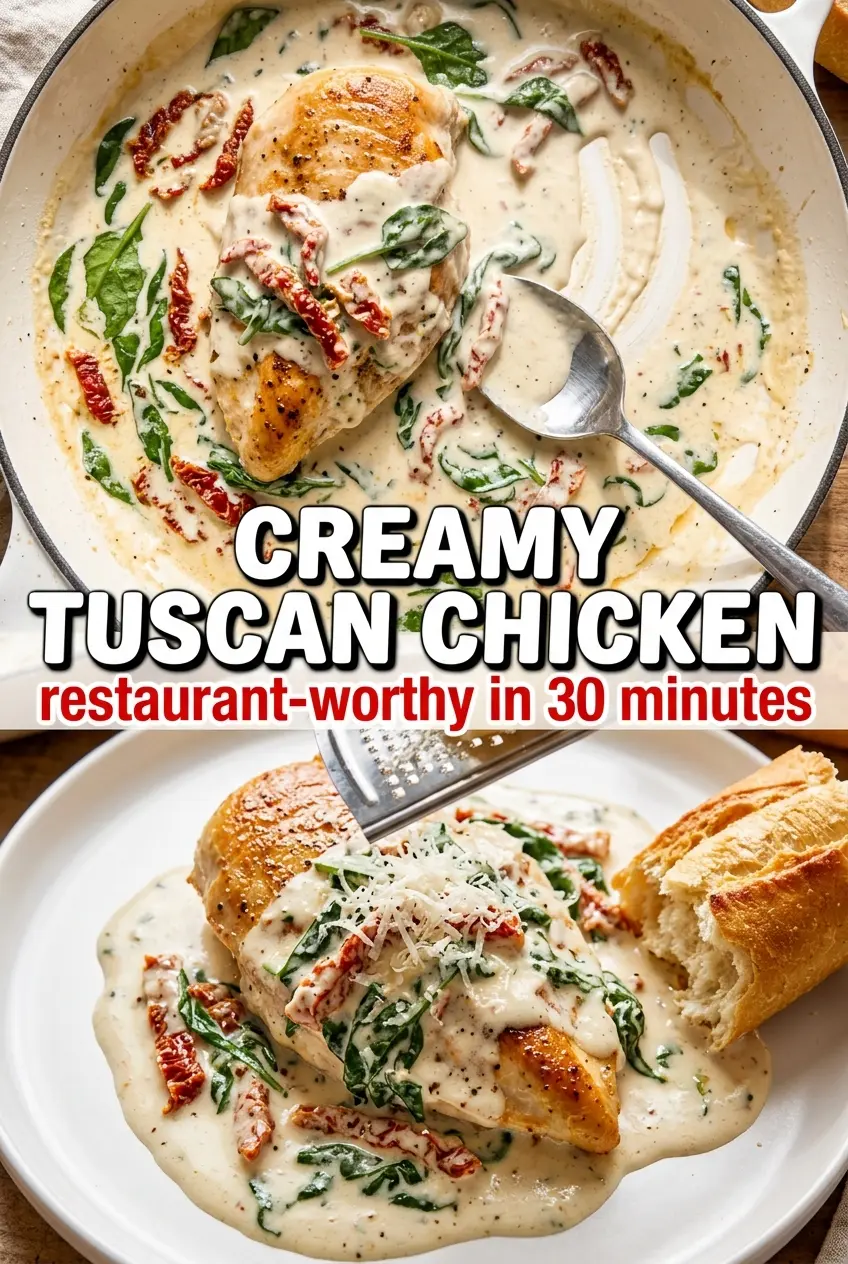
Creamy Tuscan Chicken
Ingredients
Equipment
Method
- Season the chicken breasts generously with salt, pepper, garlic powder, Italian seasoning, and smoked paprika. Sear in olive oil in a large skillet over medium-high heat for 5-6 minutes per side until golden, reaching an internal temperature of 165°F, then remove the chicken.
- Cook the minced garlic in the same pan for 30 seconds, stirring so it doesn’t brown. Add the sliced sun-dried tomatoes and cook 1 minute.
- Pour in the chicken broth and deglaze, scraping up the browned bits from the pan. Stir in the heavy cream, grated Parmesan, Italian seasoning, and red pepper flakes, then simmer 4-5 minutes until the sauce thickens enough to coat the back of a spoon.
- Stir in the fresh baby spinach and cook until wilted. Return the chicken breasts to the pan and spoon the sauce over each piece.
- Garnish with fresh basil and serve immediately while the sauce is glossy.