Golden seared chicken breasts covered in a silky lemon Parmesan cream sauce earn a permanent place in the weeknight rotation because they hit all the right notes at once: crisp edges, tender chicken, and a sauce that tastes bright without turning sharp. The lemon keeps the richness in check, while the Parmesan adds enough body to make the whole skillet feel like more than the sum of its parts.
What makes this version work is the order. The chicken gets a real sear before anything else, which builds flavor in the pan, and the sauce is finished gently so the cream stays smooth instead of splitting. Freshly grated Parmesan matters here because pre-shredded cheese can make the sauce grainy, and the lemon goes in near the end so it tastes fresh instead of cooked down.
Below, I’ve included the small details that keep the sauce glossy, plus a few easy ways to adjust the dish if you need a substitution or want to stretch it for a bigger table.
The sauce thickened up beautifully and stayed smooth, and the lemon at the end kept it from tasting heavy. I served it with rice and my husband asked if I could make the same chicken again the next night.
Save this creamy Parmesan lemon chicken for the nights when you want a glossy skillet sauce and dinner on the table fast.
The Pan Sauce Breaks If You Rush This Part
The sauce only stays silky if the heat comes down after the chicken comes out. If you pour cream into a pan that is still ripping hot, the Parmesan can turn grainy before it melts properly, and the lemon can taste harsh instead of bright. Let the garlic cook just long enough to lose its raw edge, then deglaze with the wine or broth so the browned bits dissolve into the sauce instead of staying stuck to the pan.
The other thing that trips people up is timing the lemon. Add it after the cream and cheese have started to thicken, not at the beginning. That keeps the sauce from tasting thin and acidic, and it gives you a cleaner, rounder finish around the chicken.
What the Chicken, Cream, and Parmesan Each Bring to the Skillet

- Chicken breasts — Boneless, skinless breasts give you a lean base that soaks up the sauce well. If yours are thick on one end and thin on the other, pound them to an even thickness so they cook at the same rate and don’t dry out before the center reaches temperature.
- Heavy cream — This is what makes the sauce stable and lush. Half-and-half will work in a pinch, but it won’t coat the chicken the same way and it has a higher chance of curdling once the lemon goes in.
- Freshly grated Parmesan — This is not the place for the shelf-stable shaker. Freshly grated Parmesan melts into the cream and helps thicken it; pre-grated cheese often has anti-caking agents that keep the sauce from turning smooth.
- Dry white wine or chicken broth — The liquid you use to deglaze lifts the browned fond from the pan and adds depth. Wine gives the sauce a little more sharpness and complexity, while broth keeps it a little softer and more kid-friendly.
- Lemon juice and zest — Use both. The zest carries the fragrant lemon oil, and the juice gives the sauce its brightness. If you only use juice, the sauce tastes flatter; if you add too much too early, it can taste aggressively tart.
Building the Sear Before the Cream Goes In
Seasoning the Chicken Evenly
Season both sides of the chicken generously with salt, pepper, garlic powder, and Italian seasoning before the pan heats up. That first layer of seasoning gives the chicken its own flavor, not just the sauce’s. If the breasts are very thick, press them a little flatter or slice them into cutlets so the outside doesn’t overcook while the center catches up.
Getting the Golden Crust
Heat the olive oil over medium-high and lay the chicken in the pan without crowding it. You want an active sizzle right away and enough space for moisture to evaporate, which is what lets the surface brown instead of steam. Don’t move the chicken too soon; if it sticks, it usually needs another minute before it releases cleanly.
Turning the Fond Into Sauce
Once the chicken is cooked through, pull it onto a plate and use the same skillet for the sauce. The browned residue on the bottom is the base of the whole dish. Add the garlic for only about 30 seconds, then pour in the wine or broth and scrape the pan so the good bits melt into the liquid before the cream goes in.
Finishing With Parmesan and Lemon
Stir in the cream, Parmesan, lemon juice, and lemon zest over lowered heat and let the sauce bubble gently until it thickens enough to coat a spoon. If it looks loose, give it another minute instead of cranking the heat; high heat is what makes a cream sauce go from glossy to broken. Finish with butter for shine, then return the chicken and spoon the sauce over the top so every piece gets coated.
How to Adjust the Skillet Without Losing the Creamy Lemon Balance
Make it gluten-free without changing the method
This recipe is naturally gluten-free as written, so the main job is checking that your broth is certified gluten-free if you use broth instead of wine. The sauce thickens from the cream and Parmesan, not from flour, which keeps the texture clean and smooth.
Use chicken thighs for a richer, juicier result
Boneless skinless thighs work well if you want darker meat and more forgiveness on the stove. They take a few extra minutes, but they stay tender even if you let the sauce simmer a bit longer.
Swap the wine for broth if you want a milder sauce
Chicken broth gives you a softer, less sharp sauce, and it’s the better choice if you don’t cook with wine. You lose a little of the deep acidity that wine brings, so the lemon does a bit more of the balancing work at the end.
Storage and Reheating
- Refrigerator: Store leftovers in an airtight container for up to 3 days. The sauce may thicken as it chills, but it loosens again when warmed.
- Freezer: I don’t recommend freezing this one. Cream sauces with Parmesan can separate after thawing, and the texture won’t be as smooth.
- Reheating: Warm it slowly in a skillet over low heat with a splash of broth or cream. Don’t blast it in the microwave on high, or the sauce can break and the chicken can turn rubbery.
Answers to the Questions Worth Asking
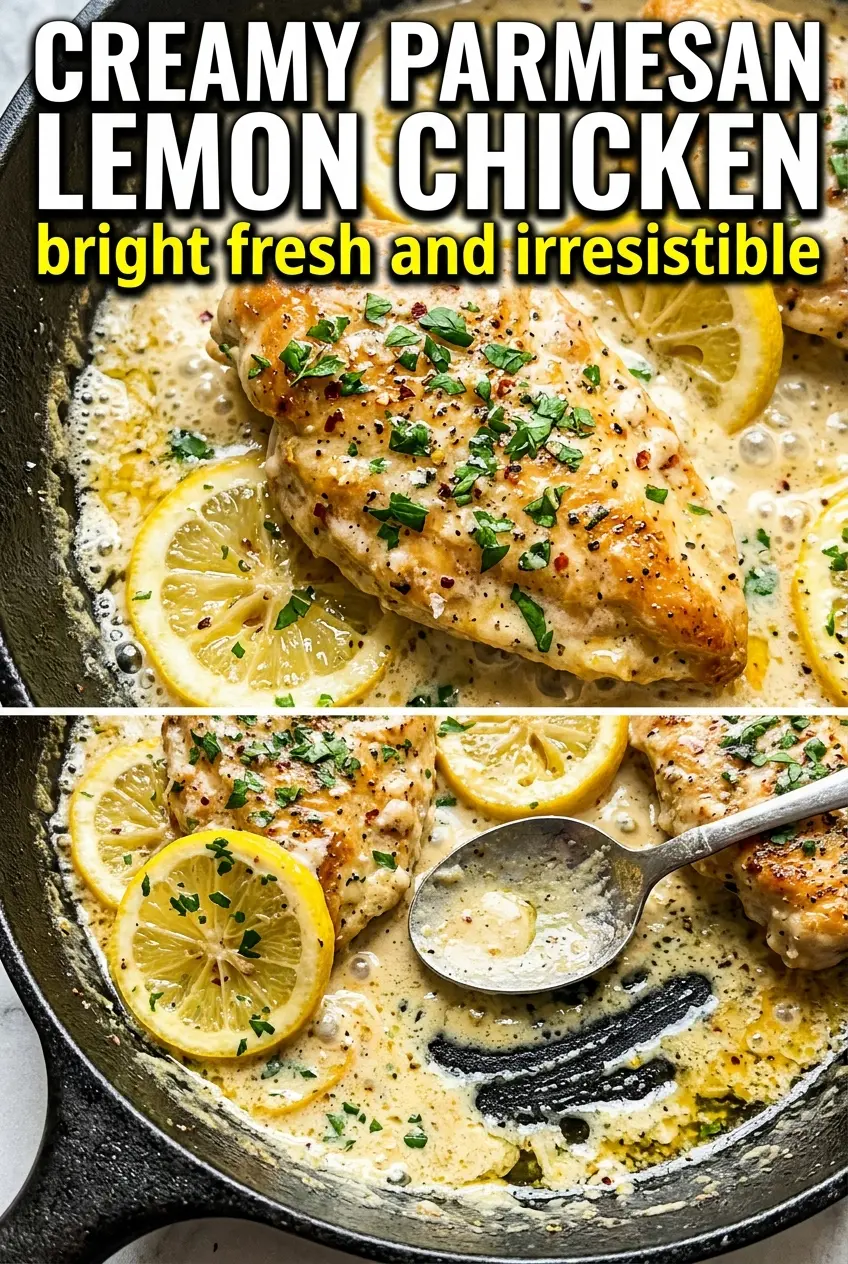
Creamy Parmesan Lemon Chicken
Ingredients
Equipment
Method
- Season boneless skinless chicken breasts generously with salt, pepper, garlic powder, and Italian seasoning on both sides.
- Heat olive oil in a large skillet over medium-high heat and sear chicken for 5-6 minutes per side until golden, reaching 165°F in the thickest part.
- Remove the chicken from the skillet and set aside while you make the sauce.
- Add minced garlic to the skillet and cook for 30 seconds until fragrant.
- Pour in dry white wine or chicken broth to deglaze, scraping up browned bits, then simmer for 2 minutes.
- Stir in heavy cream, Parmesan cheese, fresh lemon juice, and lemon zest, then simmer for 4-5 minutes until the sauce thickens.
- Swirl in butter until melted and glossy.
- Return chicken to the skillet, spoon sauce over each breast, and heat briefly until warmed through.
- Garnish with fresh parsley and lemon slices before serving.