Silky, rich, and layered with garlic two ways, this creamy garlic potato soup lands somewhere between cozy dinner and something you’d happily eat straight from the pot. The roasted garlic gives it sweetness and depth, while the raw garlic in the base keeps the flavor lively instead of flat. Yukon gold potatoes give the soup body without turning gluey, and the finish stays smooth and velvety instead of heavy.
The trick is using one head of garlic for the base and one to roast until it turns soft and almost sweet. That balance keeps the soup from tasting harsh or one-note. I also like blending the potatoes completely before the cream goes in, because once the soup is smooth, the cream can settle in without fighting the starch.
Below you’ll find the small details that matter most: how to roast the garlic so it mashes right into the soup, how to keep the texture silky, and what to change if you need a dairy-free version.
The roasted garlic made the soup taste deep and mellow, and blending it after the potatoes cooked gave it the smoothest texture. I used extra chives on top and my kids kept going back for seconds.
Save this creamy garlic potato soup for the nights when you want a smooth, garlicky bowl with roasted depth and fresh chive finish.
The Garlic Mistake That Makes Potato Soup Taste Flat
A lot of potato soups lean on one garlic note and end up tasting one-dimensional. Raw garlic alone can turn sharp after simmering, while roasted garlic alone can taste soft but muted. Using both gives you a backbone and a finish, which is why this soup tastes fuller without needing extra ingredients or a bunch of dairy to carry it.
Yukon gold potatoes matter here because they break down into a naturally creamy texture. Russets will work, but they can make the soup looser and a little starchier if you blend too aggressively. The broth keeps the soup from feeling heavy, and the cream goes in after blending so it rounds everything out instead of getting cooked down.
- Yukon gold potatoes — These hold their shape while simmering, then blend into a smooth, buttery soup. If you swap in russets, keep an eye on the simmer and blend only until smooth so the texture doesn’t turn gummy.
- Two heads of garlic — One is roasted for sweetness, one is sautéed for a sharper garlic base. Skipping either one changes the balance; the soup still works, but it loses that layered garlic flavor.
- Heavy cream — This is what gives the soup its plush finish. Half-and-half can work in a pinch, but the soup will be thinner and less velvety.
- White pepper and nutmeg — White pepper adds gentle heat without black flecks, and nutmeg quietly lifts the cream. You don’t taste nutmeg as a separate flavor; you notice when it’s missing.
What Each Ingredient Is Actually Doing in This Recipe

- Primary ingredient (the star) — Quality matters most. Choose the best you can find.
- Cooking medium (oil, butter, or broth) — This carries flavors and prevents dryness.
- Seasonings (salt, pepper, spices, herbs) — Layer flavors so nothing overpowers. Build depth gradually.
- Aromatics (garlic, onion, herbs) — Cook with fat to bloom flavors. Become the foundation.
- Supporting ingredients — Complement the main ingredient without overpowering it.
- Sauce or liquid (if applicable) — Brings flavors together. Balance richness with acid.
- Acid (lemon, vinegar, wine, or other) — Brightens and prevents flat-tasting results.
- Final finish (garnish, glaze, or sauce) — Prevents one-dimensional taste and adds visual appeal.
Building the Soup So It Stays Smooth
Roasting the First Head of Garlic
Trim the top off the garlic head, drizzle it with oil, wrap it tightly in foil, and roast it until the cloves are soft enough to squeeze with almost no resistance. If the garlic is still pale and firm, it will taste raw and stubborn in the finished soup. Once it’s cool enough to handle, press the cloves out and set them aside; they should look golden and spreadable, not dry.
Cooking the Onion and Raw Garlic Base
Melt the butter in a large pot, then cook the onion until it turns translucent and soft at the edges. Add the minced raw garlic and keep it moving for about a minute so it perfumes the butter without browning. If the garlic starts to color, the soup can pick up a bitter edge, so keep the heat moderate and stop as soon as it smells fragrant.
Simmering the Potatoes Until They Collapse
Add the broth and potatoes, then simmer until the cubes are completely tender and break apart when pressed against the side of the pot. Under-cooked potatoes leave little grainy bits behind when blended, and that texture doesn’t disappear later. You want the potatoes soft enough that the spoon practically slides through them.
Blending and Finishing the Cream
Blend the soup until it is fully smooth, then add the roasted garlic and blend again so it disappears into the base. Stir in the cream at the end and keep the heat low; boiling cream can make the soup taste cooked and slightly dull. Taste after the cream goes in, then adjust salt, white pepper, and nutmeg so the garlic still comes through cleanly.
How to Adapt This Soup Without Losing the Texture
Dairy-Free Version
Swap the butter for olive oil and the heavy cream for full-fat coconut milk or an unsweetened oat cream. Coconut milk gives the soup a faint coconut note, while oat cream stays more neutral but can be a little lighter. Keep the heat low after the swap so the soup stays silky.
Vegetarian Swap
Use vegetable broth instead of chicken broth. Choose a broth with a clean, savory taste rather than one that leans sweet, or it can muddle the roasted garlic. The soup will still be rich and satisfying because the potatoes and cream carry most of the body.
Thicker, Spoon-Standing Soup
Reduce the broth by 1/2 cup if you want a thicker bowl that sits more like a chowder. This works best when you want the croutons to stay on top instead of sinking right away. Don’t overblend after thickening, or the starch can make the soup feel slightly gluey.
Make-Ahead and Leftovers
This soup keeps well and tastes even deeper the next day. The starch will thicken it in the fridge, so loosen it with a splash of broth or milk when reheating. Add the croutons and chives only at the end so they stay crisp and fresh.
Questions I Get Asked About This Recipe
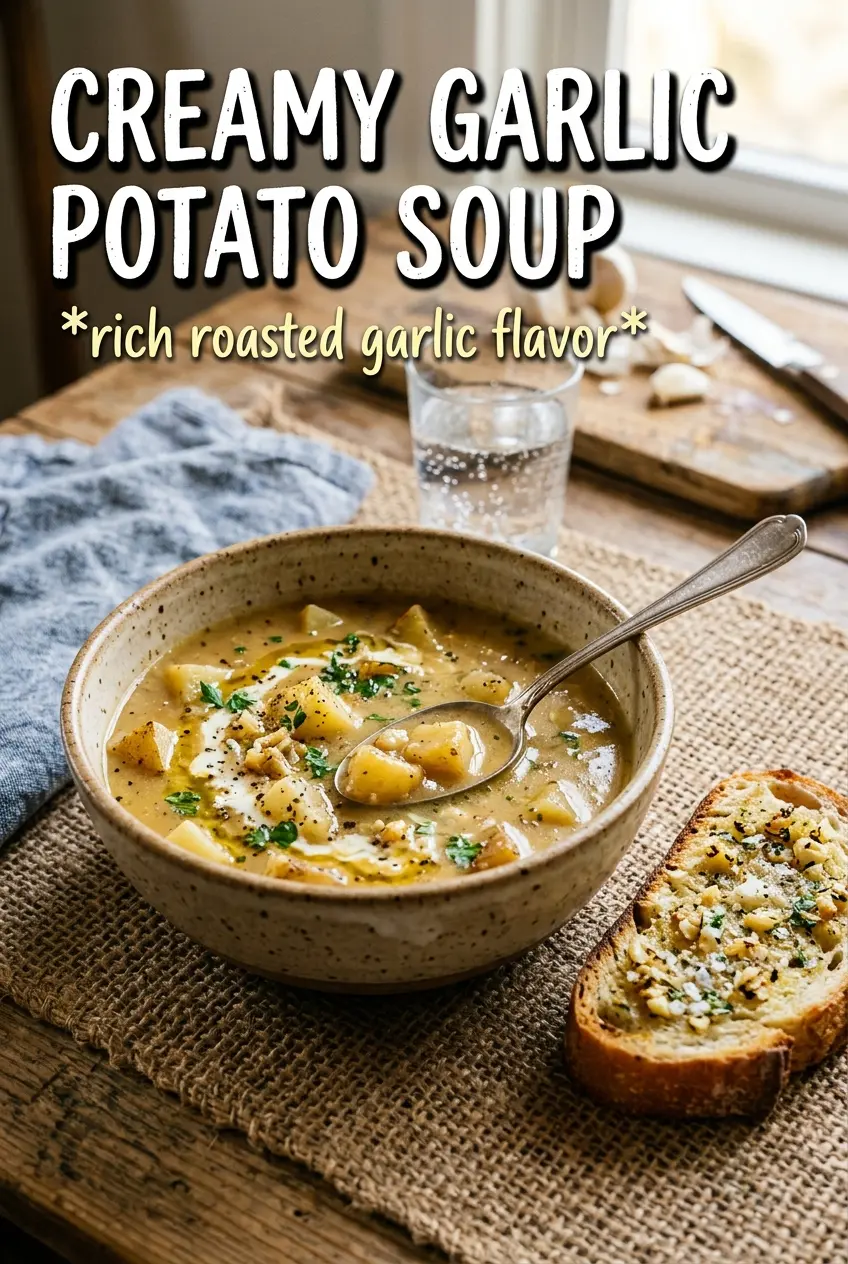
Creamy Garlic Potato Soup
Ingredients
Equipment
Method
- Cut the top off one garlic head, drizzle it with olive oil, wrap in foil, and roast at 400F for 40 minutes until softened and fragrant.
- Cool the roasted garlic slightly, then squeeze the cloves out of the skin into a small bowl.
- Mince the raw cloves from the second garlic head and set them aside.
- Melt the unsalted butter in a large pot over medium heat, then sauté the onion and raw garlic for 5 minutes until softened and fragrant.
- Add the chicken broth and cubed Yukon gold potatoes, then simmer for 20-25 minutes until very tender.
- Blend the soup completely smooth with an immersion blender.
- Squeeze the roasted garlic into the soup and blend again, then stir in the heavy cream.
- Season with salt, white pepper, and nutmeg, then serve with croutons and chives on top.