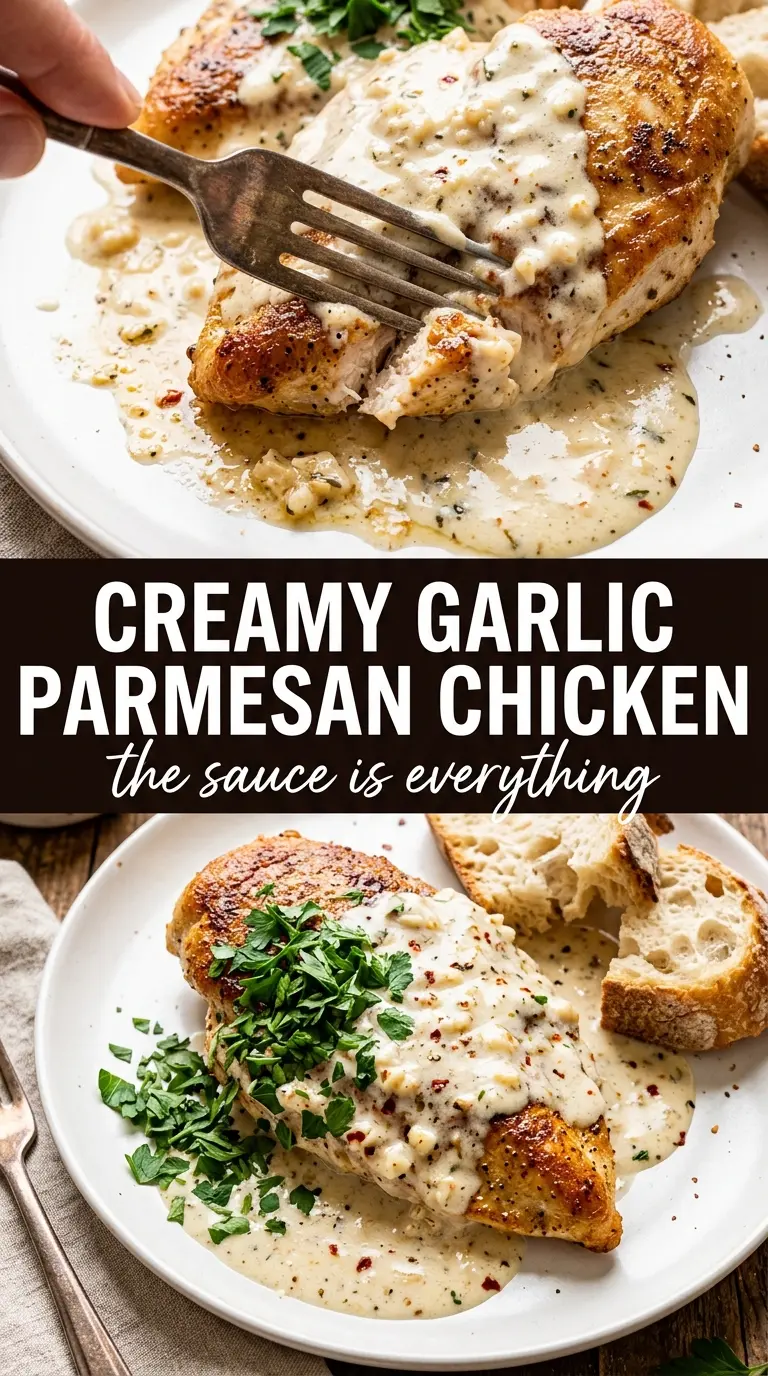
Golden-seared chicken breasts in a garlic Parmesan cream sauce are the kind of skillet dinner that earns repeat status fast. The chicken stays juicy under a sauce that turns velvety and glossy in the pan, with enough garlic to give it backbone and enough Parmesan to make every spoonful cling. It looks like the sort of meal that took more effort than it did.
What makes this version work is the order. The chicken gets a real sear first, which builds flavor in the pan before the sauce ever starts. Then the garlic cooks briefly in butter, the wine or broth loosens the browned bits, and the cream and Parmesan go in at a low simmer so the sauce thickens instead of separating. Freshly grated Parmesan matters here because pre-shredded cheese can leave the sauce grainy and slow to melt.
If you’ve had cream sauces break or turn thin on you before, the notes below will help you avoid both problems. The ingredient section explains which swaps hold up and which ones don’t, and the process section walks through the exact cues to watch for at each stage.
The sauce thickened up beautifully and coated the chicken instead of pooling in the pan. I used broth instead of wine and it still tasted rich, not flat.
Save this creamy garlic Parmesan chicken for the night you want a glossy skillet sauce and tender chicken with almost no cleanup.
The Sear Is What Keeps the Sauce from Tasting Flat
People often rush straight into the cream and wonder why the finished dish tastes one-note. The browning on the chicken is doing real work here. It leaves behind browned bits in the pan, and those bits dissolve into the sauce once the wine or broth goes in. That gives the cream something deeper than just dairy and garlic.
The second place this recipe can go sideways is heat. If the pan is too hot when the cream and Parmesan go in, the sauce can split or turn oily around the edges. Keep the simmer gentle. You want small bubbles, not a rolling boil, so the cheese melts smoothly and the sauce tightens around the chicken instead of turning grainy.
What Each Ingredient Is Actually Doing in This Skillet
- Chicken breasts — Boneless, skinless breasts keep the cook time short and let the sauce shine, but they need even thickness. If one end is much thicker, pound it lightly so the chicken finishes at the same time instead of drying out at the edges.
- Heavy cream — This is what gives the sauce its body and that spoon-coating texture. Half-and-half won’t behave the same way and is more likely to stay thin unless you reduce it much longer.
- Freshly grated Parmesan — This melts into the sauce and thickens it without turning pasty. Pre-grated cheese often has anti-caking agents, which can make the sauce gritty instead of silky.
- Dry white wine or chicken broth — Wine adds brightness and helps lift the browned bits from the pan, but broth works well if you want to skip alcohol. Either way, use the liquid to deglaze the pan before the cream goes in.
- Garlic, butter, and Italian seasoning — The butter softens the garlic and carries the seasoning through the sauce. Garlic burns fast, so it only needs about a minute before the liquid goes in.
Building the Sauce Around the Pan Drippings
Season and Sear the Chicken
Pat the chicken dry, season it generously, and lay it into the hot oil without crowding the pan. You’re looking for a deep golden crust, not pale chicken that steams in its own moisture. If the chicken sticks when you try to move it, leave it alone for another minute; once the crust forms, it releases more cleanly.
Wake Up the Garlic Without Burning It
After the chicken comes out, add the butter and garlic to the same pan. Stir just until fragrant, about a minute, because garlic goes bitter fast once it starts taking on color. If the pan looks too dark, the wine or broth will loosen everything up and pull that flavor into the sauce.
Let the Cream and Parmesan Thicken Slowly
Pour in the cream and broth, then add the Parmesan and Italian seasoning while the heat stays low enough for a gentle simmer. Stir often and watch for the sauce to go from thin and slightly foamy to glossy and nappe-like, meaning it coats the back of a spoon. If the sauce looks oily, the heat is too high; pull the pan off the burner for a minute and whisk it back together before returning it to low heat.
Finish the Chicken in the Sauce
Slide the chicken back into the skillet and spoon sauce over the top so the surface stays moist while it finishes. The chicken is done at 165°F, but the sauce should already be thick enough by then to cling to the meat. Fresh thyme and parsley go on at the end for a clean finish that cuts through the richness.
How to Adapt This Without Losing the Creamy Texture
Make It With Chicken Thighs
Boneless thighs give you a juicier, richer result and are harder to overcook. They need a little extra time in the pan, but the sauce works the same way and clings just as well.
Use Broth Instead of Wine
Chicken broth keeps the sauce savory and family-friendly if you don’t cook with wine. You’ll lose a little brightness, so let the garlic and Parmesan do the heavy lifting and don’t skip the deglazing step.
Gluten-Free and Naturally Thick
This recipe is already gluten-free as written, as long as your broth is certified gluten-free. The sauce thickens from reduction and Parmesan, not flour, so you don’t need a separate roux.
Lighter Cream Sauce
You can use half-and-half, but the sauce won’t get quite as plush and it needs a little more simmer time. Keep the heat low and watch it closely, because lighter dairy is less forgiving than heavy cream.
Storage and Reheating
- Refrigerator: Store leftovers in an airtight container for up to 3 days. The sauce will thicken as it sits.
- Freezer: I don’t recommend freezing this one. Cream sauces can separate after thawing, and the texture won’t come back fully.
- Reheating: Warm it gently in a skillet over low heat with a splash of broth or cream. High heat can make the sauce break, and the chicken will dry out before the center is hot.
Answers to the Questions Worth Asking

Creamy Garlic Parmesan Chicken
Ingredients
Equipment
Method
- Season the boneless skinless chicken breasts generously on both sides with salt, pepper, garlic powder, and smoked paprika. Press seasoning in so it adheres for a better sear.
- Heat 2 tablespoons olive oil in a large skillet over medium-high heat, then sear the chicken for 5-6 minutes per side until golden and crisp. Cook until the internal temperature reaches 165°F, then remove the chicken to a plate.
- Add 1 tablespoon butter and the minced garlic cloves to the same pan and cook for 1 minute until fragrant. Scrape up any browned bits so they dissolve into the sauce.
- Deglaze with 1/2 cup dry white wine or chicken broth and cook for 2 minutes. Keep simmering until the liquid reduces slightly.
- Stir in 1 cup heavy cream, 1/2 cup chicken broth, Parmesan cheese, and Italian seasoning, then simmer for 4-5 minutes until the sauce is thick and glossy. Stir occasionally so the Parmesan melts smoothly without clumping.
- Return the chicken breasts to the pan and spoon the sauce over each breast. Let them sit briefly so the exterior stays coated and warm.
- Garnish with fresh thyme and fresh parsley and serve. Keep the sauce visibly glossy for the best texture.