Bold, creamy Cajun sausage pasta has the kind of sauce that clings to every ridge of penne and settles into a glossy coating instead of pooling at the bottom of the bowl. The sausage brings smoky depth, the peppers add sweetness, and the parmesan finishes everything with a salty edge that keeps each bite from feeling heavy. It’s the sort of pan dinner that disappears fast because it tastes like you worked on it longer than you did.
The trick is building the sauce in layers. Browning the sausage first leaves seasoned bits in the pan, and those bits do a lot of the work once the broth and cream go in. A little pasta water helps the sauce tighten up and stay silky, while the parmesan goes in at the end so it melts smoothly instead of turning grainy. The result is rich without being clumpy, and punchy enough that you don’t need a lot of extras on the side.
Below, I’ll walk through the part that matters most: how to keep the sauce creamy, how to avoid over-reducing it, and what to change if you want to make it milder, lighter, or gluten-free.
The sauce thickened up beautifully once I added the pasta water, and the sausage stayed juicy instead of getting lost in the cream. My husband went back for seconds before I even sat down.
Save this creamy Cajun sausage pasta for the nights when you want a smoky, spicy skillet dinner with a sauce that coats every bite.
The Trick to Keeping Cajun Cream Sauce from Turning Heavy
The biggest mistake with a dish like this is letting the cream cook too hard after the pasta goes in. Once cream boils aggressively, it loses that smooth, velvety texture and starts to feel greasy or tight. Keep the heat at a gentle simmer, and use the starchy pasta water to loosen the sauce only as needed; that starch helps the sauce cling instead of sliding off the noodles.
Another thing that matters here is timing. The sausage goes back into the pan near the end so it stays meaty and browned, not boiled and soft. If your sauce looks a little thin when the pasta first goes in, give it a minute or two before adding more liquid. It thickens as the parmesan melts and the noodles finish absorbing some of the sauce.
What Each Ingredient Is Actually Doing in This Dish
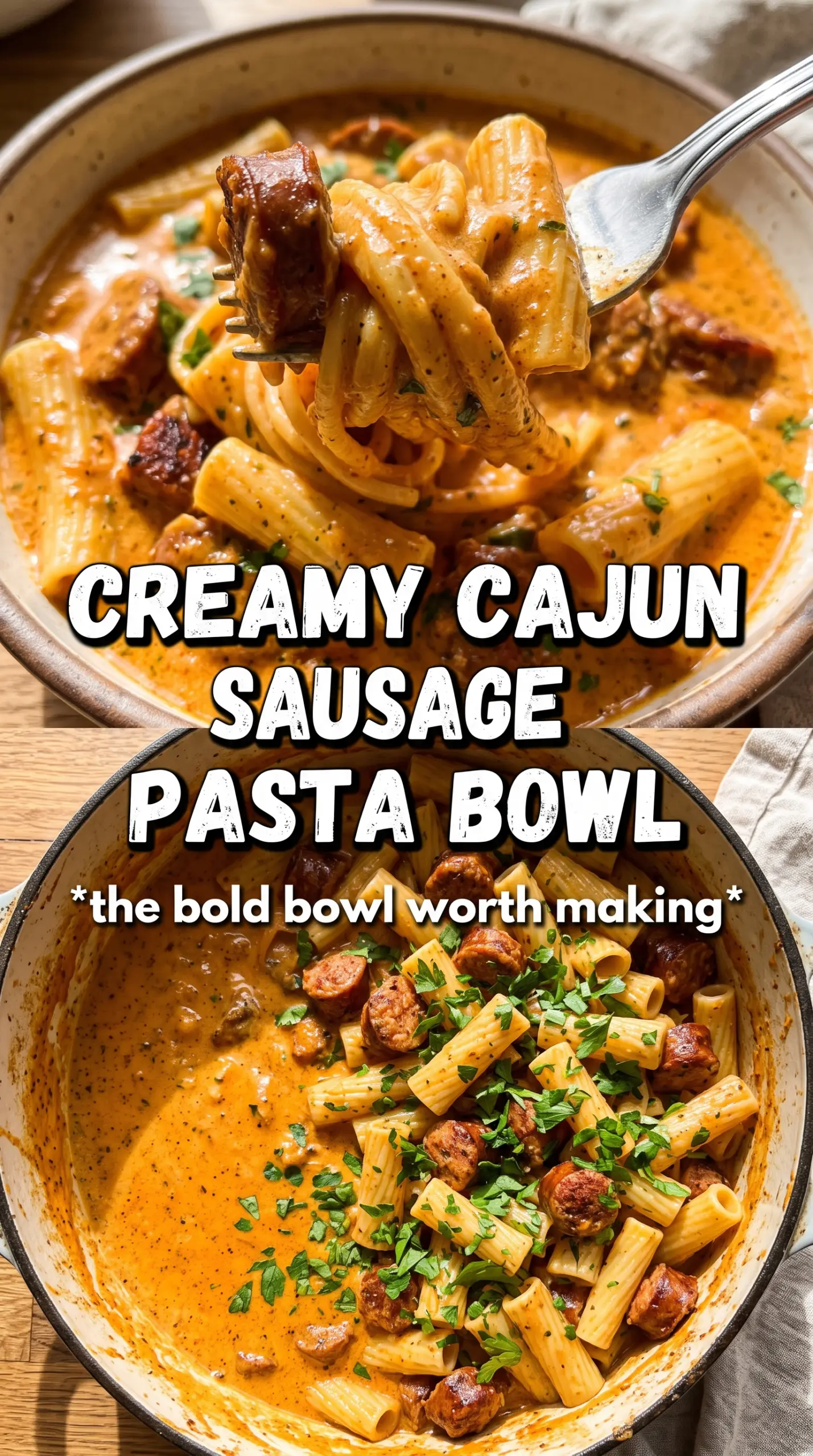
- Andouille or smoked sausage — This is the backbone of the dish. Andouille gives you the most Cajun-style heat and smoke, but any good smoked sausage works if you want a milder pan. Slice it thick enough that it browns on the outside before it softens through.
- Cajun seasoning — This is where most of the flavor comes from, so use one you actually like. Some blends are saltier than others, which is why the recipe waits until the end for final seasoning. If yours is very salty, start a little lighter and build from there.
- Heavy cream — This gives the sauce its body and keeps it from tasting sharp. Half-and-half will work in a pinch, but the sauce won’t be quite as lush and it’s easier to overcook. Heavy cream holds up best once the broth and pasta water are stirred in.
- Parmesan — Freshly grated parmesan melts into the sauce much more cleanly than the shelf-stable stuff in the shaker. It also helps thicken the finish without making the sauce gluey. Grate it fine so it disappears into the cream instead of clumping on the noodles.
- Pasta water — Don’t skip this. It helps emulsify the sauce and gives you control over the final texture. If the pan looks dry before the pasta is coated, add it a splash at a time until the sauce turns silky again.
Building the Pan Dinner in the Right Order
Brown the Sausage First
Start with the sausage in butter and let it sit long enough to get color. You want browned edges and a little fond stuck to the bottom of the skillet, because that’s what gives the sauce its savory base. If you crowd the pan or stir too much, the sausage steams instead of browns, and the whole dish tastes flatter.
Soften the Vegetables Without Losing Their Bite
Cook the onion and bell peppers until the onion turns translucent and the peppers lose their raw crunch but still hold their shape. That usually takes just a few minutes. Add the garlic and Cajun seasoning at the end of this stage so the spices bloom in the fat without burning; if the garlic goes in too early, it can turn bitter before the broth is added.
Let the Sauce Reduce Gently
Pour in the broth and cream and keep the heat at a steady simmer, not a hard boil. You’re looking for the sauce to thicken enough to coat a spoon lightly. If it reduces too far, the pasta will drink up the rest and the skillet will feel dry, so pull it off the heat once it looks just a touch looser than the final result you want.
Finish with Pasta Water and Parmesan
Add the cooked penne and toss it through the sauce with a splash of reserved pasta water. The starch helps everything turn glossy and connected. Stir in the parmesan off the hottest part of the burner so it melts smoothly; if you dump cheese into a violently bubbling pan, it can seize and turn grainy.
How to Adapt This for a Milder, Lighter, or Gluten-Free Pan
Milder Sausage Pasta
Use smoked sausage instead of andouille and cut the Cajun seasoning back by about a teaspoon. You’ll still get the warm paprika and garlic notes, but the finished dish will lean more savory than spicy. If you want to keep the same depth, add a pinch of extra black pepper instead of loading it up with more seasoning.
Gluten-Free Version
Swap in your favorite gluten-free penne and keep a close eye on the cooking time, since those pastas can go soft fast. Reserve the pasta water just the same, because it still helps the sauce cling. Check your Cajun seasoning and sausage label too; some blends and brands sneak in wheat-based fillers.
Lighter Cream Sauce
You can swap half the heavy cream for evaporated milk if you want something a little lighter. The sauce won’t be quite as rich, but it still turns creamy once the parmesan and pasta water go in. Don’t use plain milk here unless you’re ready for a thinner sauce that needs extra reduction time.
Vegetable-Heavy Version
Add sliced mushrooms or a handful of spinach if you want more vegetables in the skillet. Mushrooms should go in with the peppers so they can release their moisture and brown; spinach should go in at the end and wilt in the residual heat. This keeps the vegetables from watering down the sauce.
Storage and Reheating
- Refrigerator: Store leftovers in an airtight container for up to 4 days. The pasta will absorb some sauce as it sits, so expect it to thicken.
- Freezer: It freezes, but the cream sauce can turn a little grainy after thawing. If you do freeze it, cool it completely first and reheat gently.
- Reheating: Warm it slowly in a skillet over low heat with a splash of broth, milk, or water. The biggest mistake is blasting it in the microwave until the sauce splits; gentle heat brings the cream back together.
Questions I Get Asked About This Recipe
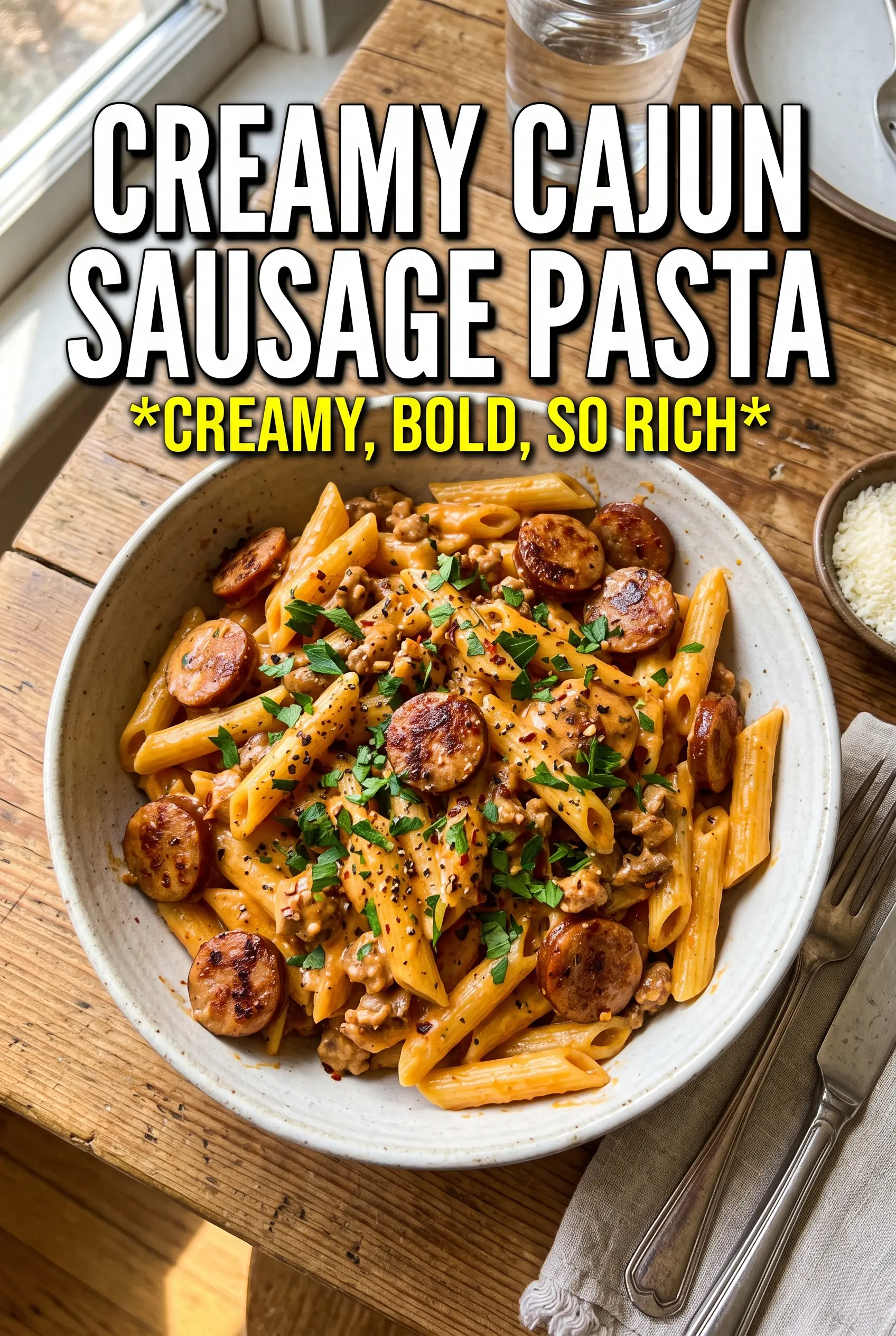
Creamy Cajun Sausage Pasta
Ingredients
Equipment
Method
- Bring a large pot of salted water to a boil and cook the penne until tender, then reserve 1/2 cup of the pasta cooking water.
- Drain the penne and set it aside while you make the sauce.
- In a large skillet over medium-high heat, melt the butter and brown the sliced andouille in the butter until lightly crisp, then remove and set aside.
- In the same skillet, sauté the diced onion and bell peppers for 4-5 minutes, stirring until softened.
- Add the minced garlic and Cajun seasoning and cook for 2 minutes, until fragrant and coats the vegetables.
- Pour in the chicken broth and heavy cream, then simmer for 5 minutes until slightly thickened.
- Add the cooked penne and reserved pasta water to the skillet and toss until the pasta is evenly coated.
- Stir in the grated parmesan until melted and the sauce looks smooth and creamy.
- Return the browned sausage to the skillet, toss to coat, and season with salt to taste.
- Top with green onions and parsley before serving.