Silky butternut squash sauce, pillowy gnocchi, and crumbled sausage turn into the kind of skillet dinner that disappears fast and leaves behind nothing but a few parmesan flecks. The sauce coats every ridge instead of pooling at the bottom, and the fried sage gives each bite a crisp, woodsy finish that keeps the dish from feeling heavy.
The trick here is building flavor in layers. Browning the sausage first gives you a savory base, and frying the sage in the butter before the garlic goes in perfumes the whole pan without burning the herbs. The squash puree and cream need only a short simmer to come together; push it too hard and the dairy can take on a grainy texture. Keep the heat modest and the sauce stays smooth.
Below, I’ve included the small details that matter: how to keep the sauce glossy, which substitutions still hold up, and what to do if your gnocchi cooks faster than your sauce is ready.
The sauce turned out velvety and clung to the gnocchi instead of getting watery. I loved that the fried sage stayed crisp on top, and the sausage gave it enough backbone to feel like a full meal.
Save this creamy butternut squash gnocchi with sausage and sage for the nights when you want a rich skillet dinner with crisp sage and a smooth parmesan finish.
The Trick to Keeping the Squash Sauce Smooth Instead of Grainy
Butternut squash puree can go from silky to dull fast if the pan is too hot or the cream is added before the garlic has softened. The goal is a low, steady simmer that lets the squash and cream merge without boiling hard enough to separate the dairy. That’s especially important once the parmesan goes in, because cheese wants gentle heat and constant stirring, not a rolling bubble.
The other place this recipe can go sideways is with the gnocchi. If you cook them too long before they hit the sauce, they get soft and start falling apart as you toss. Pull them as soon as they float and move them straight into the skillet so they finish in the sauce and pick up flavor instead of water.
What Each Ingredient Is Doing in the Skillet
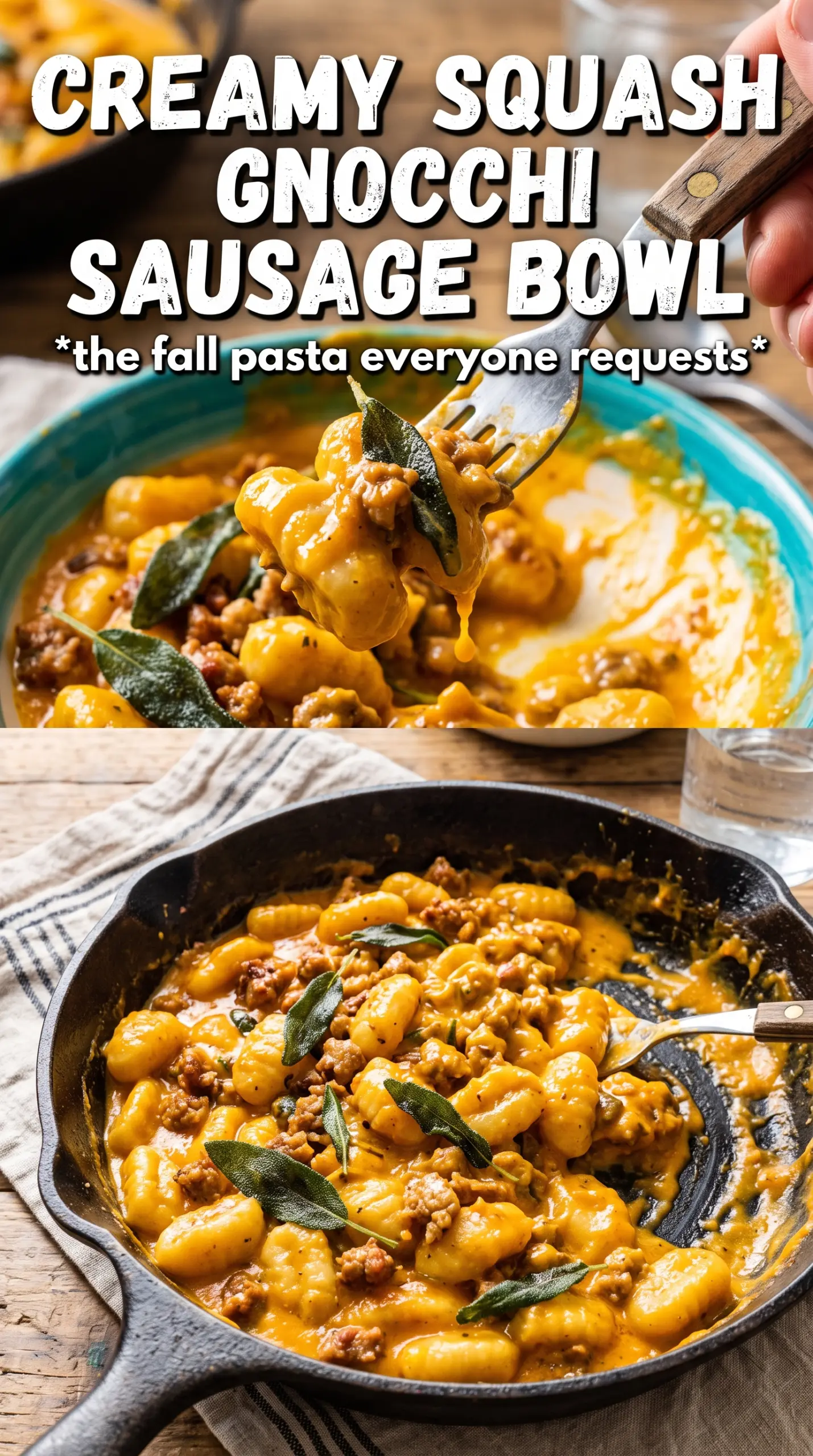
- Potato gnocchi — These give you the soft, tender bite that makes the dish feel plush. Shelf-stable gnocchi works well here because it cooks quickly and holds its shape in the sauce better than freshly made gnocchi, which can turn fragile.
- Italian sausage — This is the savory anchor. Mild sausage keeps the squash front and center, while hot sausage adds more bite; either way, browning it hard enough to get some color gives the sauce more depth than simmering ground meat ever would.
- Butternut squash puree — Use a puree that’s thick, not watery. If yours seems loose, simmer it a minute or two longer before adding the cream so the sauce doesn’t end up thin.
- Heavy cream — This softens the squash and gives the sauce its glossy finish. Half-and-half will work in a pinch, but the sauce will be lighter and less stable, especially once the parmesan melts in.
- Parmesan — Freshly grated parmesan melts cleaner than the pre-shredded stuff, which can turn sandy. If you only have pre-grated parmesan, add it off the heat and stir slowly so it has the best chance of melting in smoothly.
- Fresh sage leaves — Frying the leaves in butter crisps them and seasons the fat at the same time. Don’t skip this step; dried sage won’t give you the same texture or the same clean herbal finish.
- Nutmeg and red pepper flakes — Nutmeg makes the squash taste warmer and more rounded, and the pepper flakes cut through the richness just enough. You don’t need much of either, but leaving them out makes the dish taste flatter.
Building the Sauce Before the Gnocchi Goes In
Browning the Sausage
Start with the sausage in a large skillet over medium-high heat and break it into crumbles as it cooks. You want browned edges and no pink left, because that color is where the flavor lives. If the pan starts to collect too much fat, drain off the excess, but leave enough behind to carry the sage and garlic.
Frying the Sage in Butter
Add the butter and sage leaves once the sausage is out. The leaves should sizzle immediately and turn darker green before going crisp, which takes only a minute or so. Pull them out the moment they stop looking soft; if they stay in the butter too long, they’ll taste bitter instead of nutty and fragrant.
Building the Sauce Base
Use the same skillet for the garlic, then stir in the squash puree and cream. That leftover butter and sausage flavor is part of the dish, so don’t clean the pan. Keep the heat at medium or lower and stir until the mixture looks smooth and glossy, with no streaks of cream left at the edges.
Finishing the Gnocchi in the Sauce
Cook the gnocchi in salted water just until they float, then lift them straight into the sauce with a spider or slotted spoon. Toss gently so they don’t tear, then return the sausage and let everything simmer together for a minute or two. Add the parmesan last and keep stirring until it melts into the sauce; if the heat is too high here, the cheese can turn grainy instead of silky.
How to Adapt It When You Need a Different Pantry, or a Lighter Bowl
Make It Meatless
Swap the sausage for browned mushrooms or a plant-based Italian sausage. Mushrooms give you a deep savory note and keep the dish hearty, while plant-based sausage brings back some of that classic seasoning and texture. Either way, you’ll want to brown the replacement well so the sauce still has a strong base.
Dairy-Free Version
Use full-fat coconut cream instead of heavy cream and a dairy-free parmesan-style alternative if you have one that melts well. The sauce will be a little less sharp and a touch richer in a different way, but the squash still carries the dish. Keep the heat low so the coconut doesn’t take on a cooked flavor.
Gluten-Free Check
Use certified gluten-free gnocchi, since some store-bought versions include wheat flour in the dough. The sauce itself is naturally gluten-free as written, so the main thing to watch is the package label on the gnocchi and the sausage.
Storage and Reheating
- Refrigerator: Store leftovers in an airtight container for up to 3 days. The sauce thickens as it chills, and the gnocchi will soften a bit, but the flavor holds up well.
- Freezer: I don’t recommend freezing the finished dish. Cream sauces can separate and gnocchi turns mealy after thawing.
- Reheating: Warm it gently on the stove over low heat with a splash of cream or milk to loosen the sauce. High heat is the quickest way to break the sauce and make the gnocchi tough on the outside.
Answers to the Questions Worth Asking
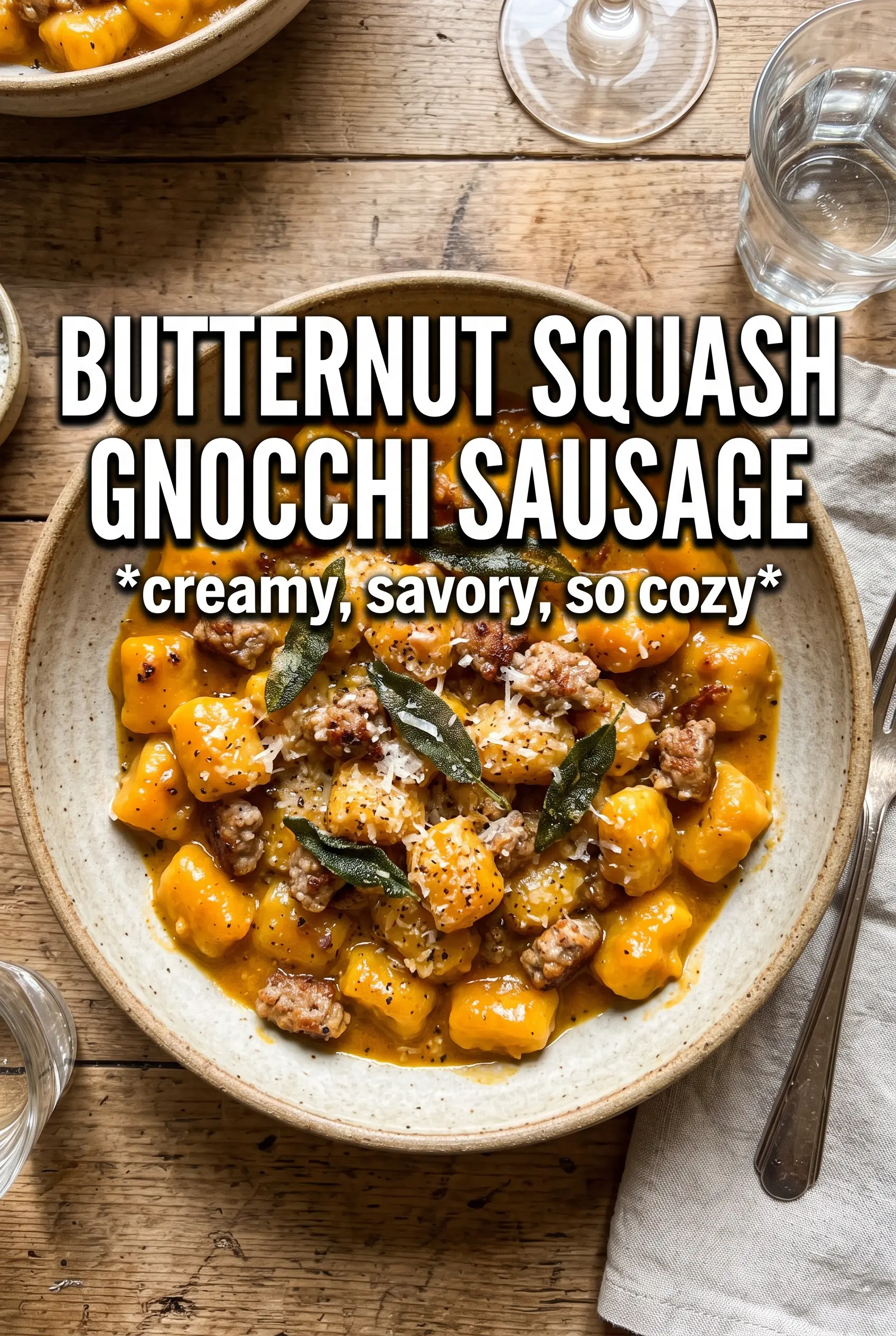
Creamy Butternut Squash Gnocchi With Sausage And Sage
Ingredients
Equipment
Method
- Heat a large skillet over medium-high heat and add the Italian sausage. Cook until browned, then drain excess fat and set the sausage aside.
- In the same skillet, melt the unsalted butter over medium heat and add the fresh sage leaves. Fry until crisp and edges look dark green, about 1 to 2 minutes, then remove to a plate.
- Add the minced garlic to the butter and stir for 1 minute, keeping it fragrant but not browned. Pour in the butternut squash puree and heavy cream, then stir to combine.
- Stir in the grated parmesan, nutmeg, and red pepper flakes. Simmer over medium-low heat for 5 minutes, stirring often, until the sauce turns smooth and glossy.
- Add the potato gnocchi directly to the simmering sauce and cook according to package instructions. Stir gently until the gnocchi are hot and tender.
- Return the browned sausage to the skillet and toss everything together until evenly coated. Season with salt and black pepper to taste.
- Spoon the gnocchi into bowls and top with crispy sage leaves and extra parmesan. Serve immediately for the best texture.