Golden roast chicken with cranberry-maple glaze earns its place at the center of the table because it gives you crisp skin, juicy meat, and a pan sauce that tastes like it took all day. The maple turns sticky and lacquered in the oven, while the cranberries burst just enough to cut through the richness. Every slice gets that sweet-savory balance, plus a little rosemary and orange in the background.
The trick here is starting hot enough to brown the skin before the glaze goes on. Butter rubbed under and over the skin keeps the chicken tender, and the rosemary perfumes the meat instead of just sitting on the surface. The second round of roasting does the heavy lifting for the glaze, but it only works if you wait until the chicken has already taken on some color.
Below, I’ve laid out the timing that keeps the glaze from burning, how to judge the pan sauce, and what to change if you’re roasting for a smaller crowd or need a swap for the broth.
The chicken skin came out lacquered and the cranberries broke down into the pan sauce just enough without turning to mush. I brushed the glaze on in the last half hour like you said, and it stayed glossy instead of burning.
Save this Cranberry Maple Roast Chicken for a glossy holiday-style roast with bursting cranberries and a pan sauce that tastes restaurant-worthy.
The One Timing Mistake That Keeps Roast Chicken Pale
Glazed roast chicken falls flat when the sweet coating goes on too early. Maple syrup can scorch before the bird is cooked through, and once that happens you get dark, sticky spots instead of a burnished finish. The two-stage roast in this recipe fixes that problem: first you build color on the skin, then you brush on the glaze when the chicken is already halfway there and able to take on the shine without burning.
The other detail that matters is the rest. If you carve straight from the oven, the juices run into the cutting board and the meat eats drier than it should. Fifteen minutes gives the juices time to settle back into the chicken, and it also lets the cranberry pan sauce thicken just enough to spoon cleanly over each serving.
- High heat first — 425F gives the skin a head start on browning before the maple hits it.
- Late glaze — brushing on half the maple-Dijon mixture after 50 minutes keeps the sugars from burning.
- Resting time — the carryover heat finishes the bird gently while the juices redistribute.
- Pan liquid — the broth keeps the cranberries from scorching and turns the drippings into sauce.
What the Butter, Maple, and Cranberries Each Bring to the Pan
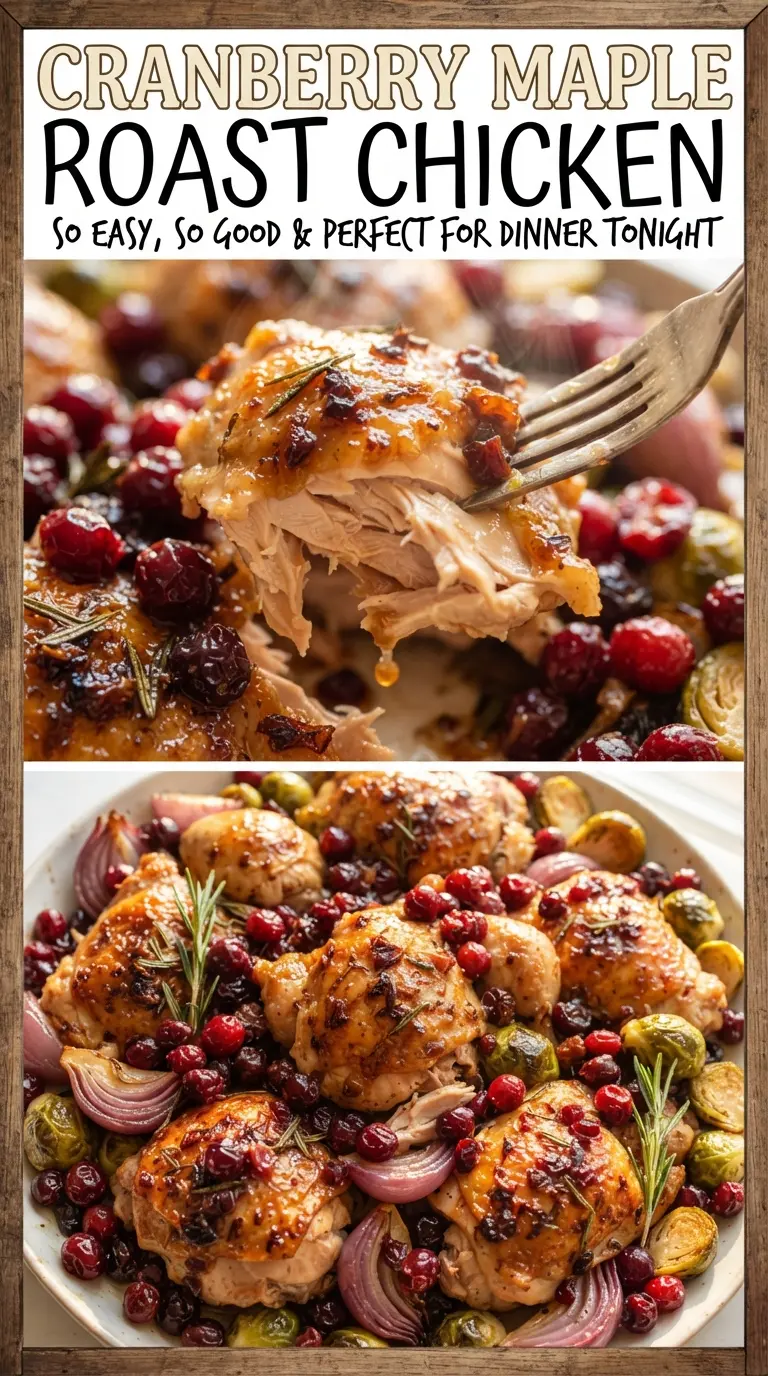
- Whole chicken — a 5-pound bird cooks evenly in the time listed and gives you both breast and thigh meat. Smaller chickens roast faster, so start checking the temperature early if yours runs under 5 pounds.
- Butter and rosemary — softened butter helps the rosemary cling and melts under the skin, which is what keeps the breast meat moist. Fresh rosemary matters here; dried rosemary tastes woody and won’t perfume the bird the same way.
- Orange and garlic — these go inside the cavity to scent the steam from the inside out. The orange also softens the sharp edge of the cranberries and maple.
- Maple syrup and Dijon — maple gives the gloss, Dijon keeps the glaze from tasting one-note sweet, and it helps the sauce cling to the skin. Don’t swap in pancake syrup; it won’t caramelize the same way and it tastes flat.
- Cranberries and broth — fresh cranberries hold their shape at first, then burst into a tart sauce as they roast. Broth gives you enough liquid for the pan sauce without diluting the glaze.
Building the Roast So the Skin Stays Crisp and the Glaze Stays Glossy
Season Under the Skin First
Pat the chicken dry before anything else. Wet skin steams, and steamed skin never crisps the way you want it to. Season the cavity and the outside with salt and pepper, then work the softened butter mixed with rosemary under and over the skin so the seasoning sits close to the meat instead of just on the surface. If the butter is too cold, it tears the skin; let it soften until it spreads easily.
Roast Before the Sugar Goes On
Set the chicken in the pan with the onion around it and roast it for the first 50 minutes without the glaze. That’s the stretch where the skin starts turning golden and the fat renders out. If the chicken is pale at this point, give it a few extra minutes before adding the maple mixture, because the glaze needs a browned surface to cling to.
Glaze, Add the Cranberries, Then Finish
Whisk the maple syrup with Dijon and brush on half of it, then add the cranberries and broth to the pan. Roast 25 to 30 minutes more, brushing with the remaining glaze partway through. You’re looking for deep golden skin, syrupy pan juices, and a thigh that reads 165F at the thickest point. If the top starts darkening too quickly, tent it loosely with foil for the last part of the roast.
Rest Before You Carve
Move the chicken to a board and let it sit for 15 minutes. That pause matters because the juices thicken back into the meat and the pan sauce settles into a spoonable consistency. Carve too soon and the meat sheds moisture onto the board instead of onto the plate.
Three Ways to Change the Roast Without Losing the Point
Dairy-Free Roast Chicken
Swap the butter for olive oil or a plant-based butter that can handle roasting heat. You’ll lose a little of the rich dairy note, but the skin still browns well and the rosemary still clings to the fat. Use the same amount and work it under the skin the same way.
Smaller Bird, Same Glaze
A chicken closer to 4 pounds will finish sooner, so start checking the thigh temperature after the first roast phase. Keep the glaze timing the same, but shorten the final roast as needed so the maple doesn’t over-darken. The flavor stays the same; the only real difference is a little less pan sauce.
No Fresh Cranberries
Frozen cranberries work straight from the freezer, no thawing needed. They may release a bit more liquid, so the sauce can look looser at first, but it tightens as it roasts and rests. Dried cranberries won’t give you the same tart burst or pan sauce, so they’re not a true substitute here.
What to Do If You Need a Gluten-Free Dinner
This recipe is naturally gluten-free as written, as long as your chicken broth is certified gluten-free. The glaze thickens from the maple and pan juices, not flour, so nothing extra needs to be added. That’s one less thing to worry about on a holiday table.
Storage and Reheating
- Refrigerator: Store leftovers in an airtight container for up to 4 days. The skin softens, but the meat stays flavorful and the cranberry sauce gets even deeper.
- Freezer: Freeze carved chicken and pan sauce separately for up to 2 months. The sauce freezes well; the skin won’t stay crisp after thawing, so don’t freeze expecting the same texture.
- Reheating: Reheat covered in a 300F oven with a splash of broth or extra pan juices until warmed through. High heat dries out roast chicken fast, and the glaze can turn sticky in the wrong way if you blast it.
Answers to the Questions Worth Asking
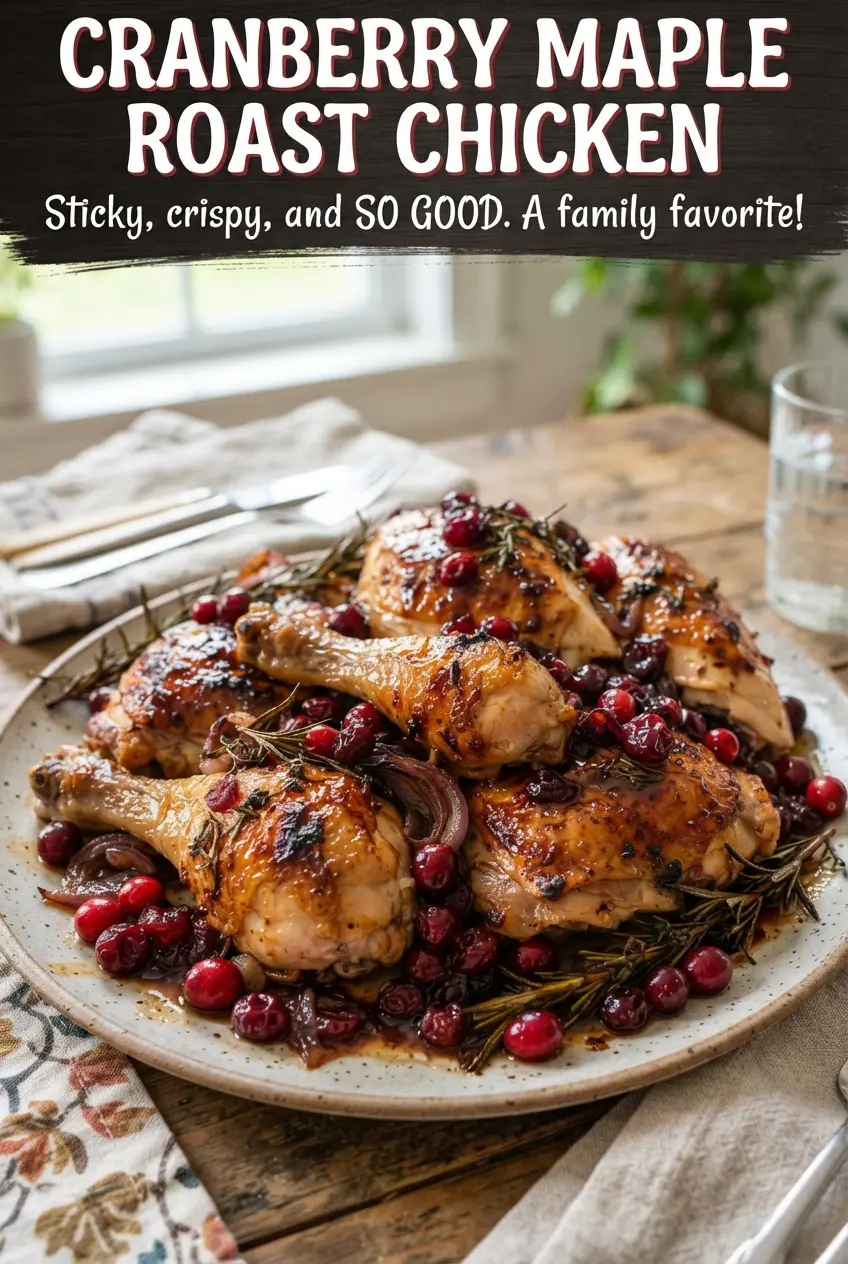
Cranberry Maple Roast Chicken
Ingredients
Equipment
Method
- Preheat oven to 425F. Place a roasting pan in the oven while it heats.
- Season the chicken inside and out with salt and pepper. Press the seasoning evenly so it adheres to the skin.
- Rub the softened butter mixed with rosemary under and over the skin. Tuck the rosemary-butter into any visible gaps under the skin for better coverage.
- Stuff the cavity with the orange halves and garlic. Set the chicken in the roasting pan and arrange the onion wedges around it.
- Roast the chicken for 50 minutes at 425F. Look for deepening color and bubbling drippings around the onion.
- Whisk maple syrup and Dijon mustard together. Brush half of the glaze over the chicken before adding the pan ingredients.
- Add the cranberries and chicken broth to the roasting pan. Spread cranberries around the chicken so they cook and burst in the juices.
- Roast 25-30 minutes more at 425F, brushing with the remaining glaze. Cook until the thigh reaches 165F and the skin looks lacquered and golden.
- Rest the chicken for 15 minutes. This lets the juices redistribute so slices stay moist.
- Carve the chicken and spoon the cranberry pan sauce over the top. Serve immediately while the sauce is hot and glossy.