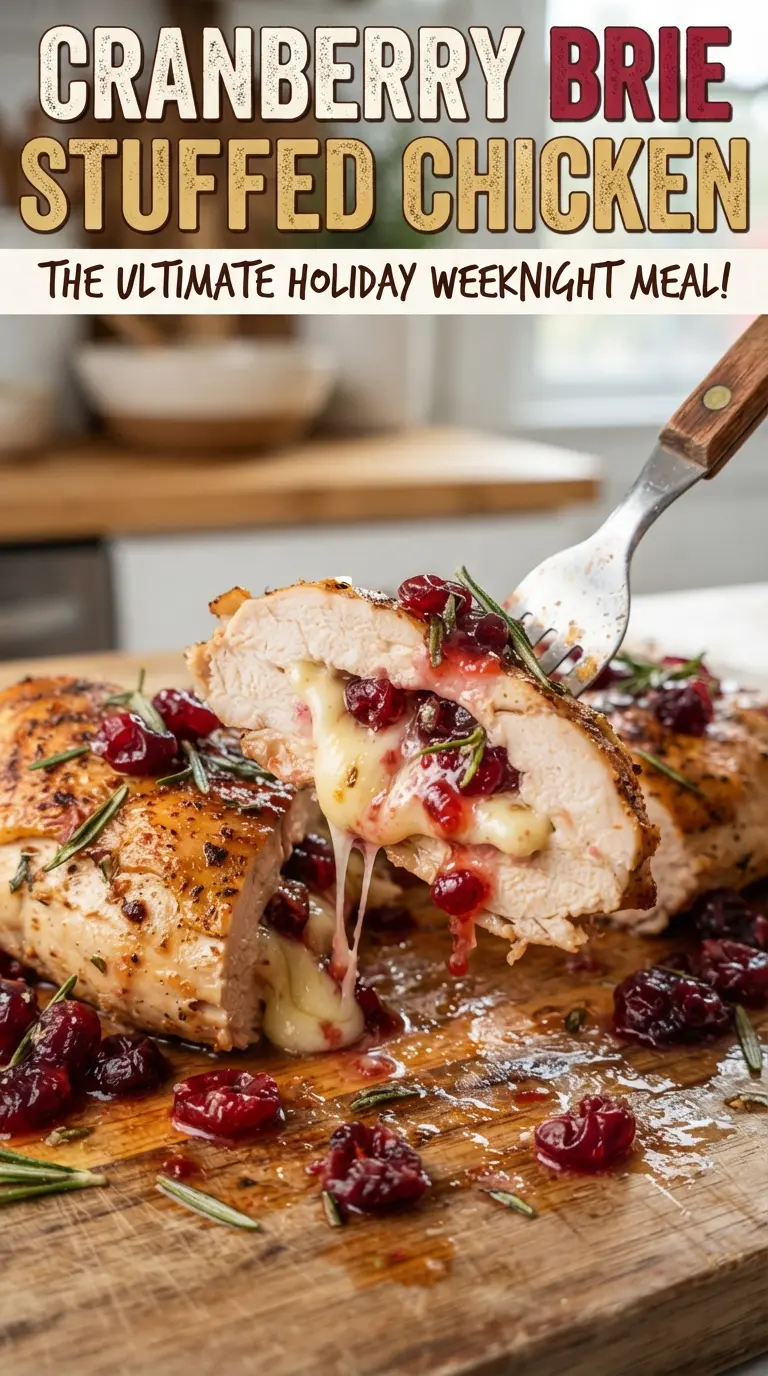
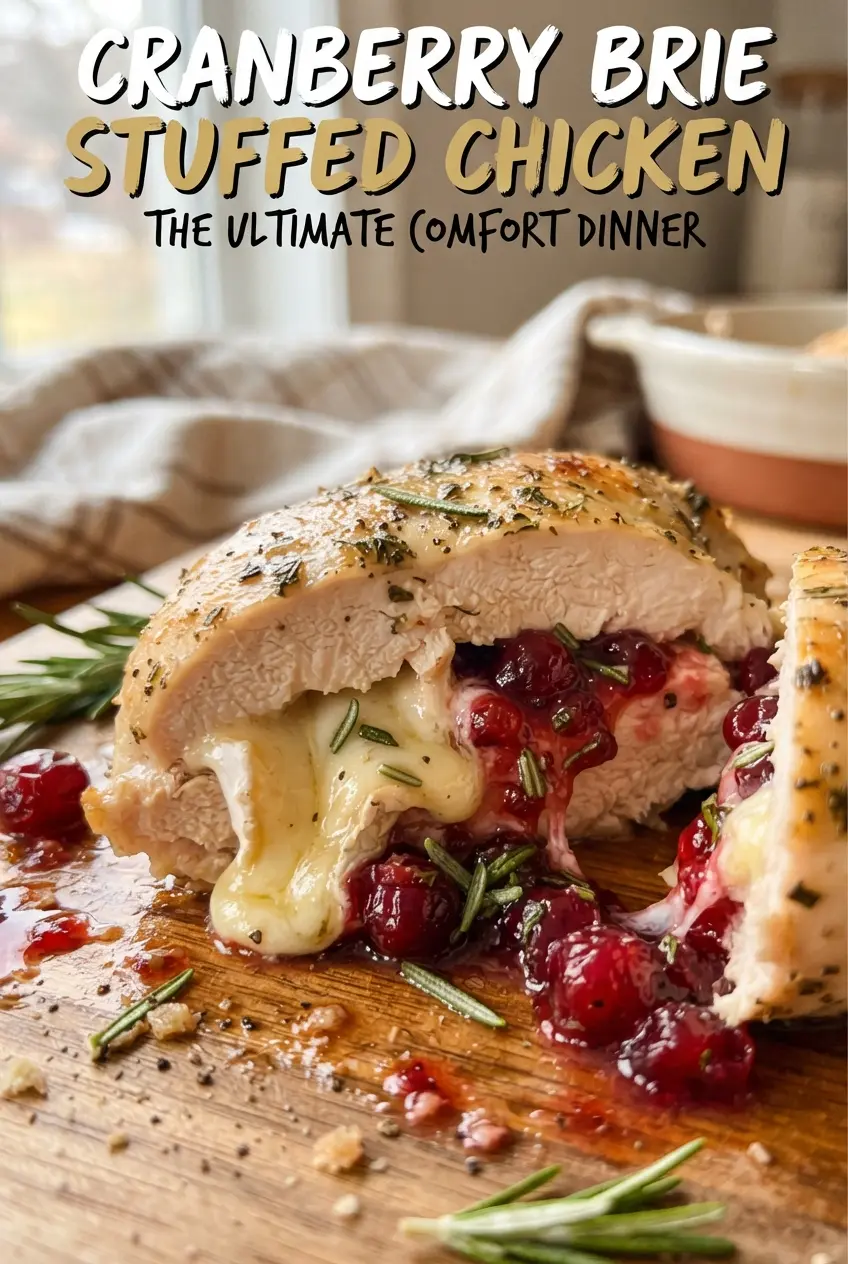
Cranberry brie stuffed chicken turns an ordinary chicken breast into something that slices open with a little drama: crisp golden skinless chicken, melted brie, and a sweet-tart cranberry center that runs into the pan sauce. The spinach keeps the filling from feeling heavy, and the balsamic-honey finish pulls the whole dish into balance instead of letting it lean too sweet.
The trick is giving the chicken a deep enough pocket to hold the filling without cutting through the other side, then searing it before it goes into the oven. That first blast of heat sets the outside so the brie has time to soften without escaping everywhere. The cranberry sauce gets split between the filling and the pan sauce, which gives you pockets of brightness inside the chicken and a glossy spoonable sauce on top.
Below, I’ll walk through the part that matters most: how to keep the cheese inside, how to know when the chicken is actually done, and what to change if you want to make it ahead or swap the brie for something else.
The chicken stayed juicy, and the brie melted into the cranberry sauce instead of leaking out. I used toothpicks like you said and the skillet sauce thickened up enough to spoon over mashed potatoes.
Cranberry brie stuffed chicken is the kind of dinner that looks restaurant-worthy and slices cleanly when the filling stays tucked inside.
The Pocket Matters More Than the Filling
Stuffed chicken fails most often when the pocket is too shallow or the breast gets sliced clean through. You need a deep side pocket that opens like a little envelope, not a tunnel. That keeps the brie and cranberry sauce tucked in long enough to melt instead of spilling out into the skillet.
The other part that matters is heat. A good sear gives you color and a bit of structure before the chicken goes into the oven, which helps the filling stay put. If the pan goes in too early or the heat is too low during searing, the chicken can turn pale and leak before the cheese has a chance to soften.
- Chicken breasts — Pick even-sized breasts if you can. Thick ones hold the pocket better and cook more evenly, which matters more here than exact weight.
- Brie — Brie gives you the creamy melt that makes the filling feel luxurious. A soft rind is fine; just slice it thin so it melts before the chicken overcooks.
- Whole berry cranberry sauce — The whole berries bring texture and keep the filling from turning into a sweet paste. Jellied cranberry sauce works in a pinch, but the finished filling will be smoother and a little less interesting.
- Baby spinach — This is more than a token green. It adds a little structure under the cheese and helps soak up some of the cranberry so the filling doesn’t slide out in one burst.
- Balsamic vinegar and honey — Together they build the pan sauce into something glossy and balanced. If your cranberry sauce is already very sweet, use a little less honey and taste before serving.
What Each Ingredient Is Actually Doing in This Recipe
- Primary ingredient (the star) — Quality matters most. Choose the best you can find.
- Cooking medium (oil, butter, or broth) — This carries flavors and prevents dryness.
- Seasonings (salt, pepper, spices, herbs) — Layer flavors so nothing overpowers. Build depth gradually.
- Aromatics (garlic, onion, herbs) — Cook with fat to bloom flavors. Become the foundation.
- Supporting ingredients — Complement the main ingredient without overpowering it.
- Sauce or liquid (if applicable) — Brings flavors together. Balance richness with acid.
- Acid (lemon, vinegar, wine, or other) — Brightens and prevents flat-tasting results.
- Final finish (garnish, glaze, or sauce) — Prevents one-dimensional taste and adds visual appeal.
Getting the Chicken Golden Before the Oven Does the Rest
Cutting and stuffing without tearing the breast
Slide a sharp knife into the thick side of each chicken breast and cut a pocket almost to the far edge, stopping before you break through. Season the outside well before stuffing, because once the pocket is full, you won’t season the inside in any meaningful way. Pack in the spinach first, then the brie, then the cranberry sauce so the berries sit closest to the center and don’t ooze out as fast. Toothpicks matter here; if the opening looks loose, close it with two rather than one.
Searing for color, not full doneness
Heat the oil until it shimmers before the chicken touches the pan. You want a deep golden crust after 3 to 4 minutes per side, but don’t wait for it to cook through on the stove or the filling will overheat and leak. If the chicken sticks, it’s not ready to turn yet. Let it release on its own, then move it to the oven-safe skillet as soon as both sides are browned.
Finishing in the oven and making the sauce
Bake until the thickest part of the chicken reaches 165F, and check near the seam where the pocket is thickest. Pull it out and let the skillet stay hot on the stove for the sauce; those browned bits are what give it depth. Add the broth, remaining cranberry sauce, honey, balsamic, and rosemary, then simmer just until it looks slightly glossy and lightly thickened. If you boil it hard, the sauce can tighten too much before it hits the plate.
How to Tweak This for a Different Table
Dairy-Free Version
Swap the brie for a dairy-free soft cheese that melts well, or use a thick cashew-based spread. You won’t get the same buttery richness, but you’ll still have a creamy center that works with the cranberry. Keep the filling modest so the substitute doesn’t liquefy and escape during baking.
No Whole Berry Cranberry Sauce
Jellied cranberry sauce works, but the texture becomes smoother and a little sweeter. If you use it, chop it up with a spoon before stuffing the chicken and cut back slightly on the honey in the pan sauce. You’ll still get the tart-sweet contrast, just with less berry texture inside the chicken.
Make-Ahead for a Busy Night
You can stuff and season the chicken up to a day ahead, then keep it covered in the refrigerator until dinner. Sear and bake it right before serving so the brie melts inside the chicken instead of setting up cold in the fridge. The sauce is best made fresh from the skillet, since it only takes a few minutes and tastes better with the browned bits from cooking.
Storage and Reheating
- Refrigerator: Store leftovers for up to 3 days. The brie will firm up as it chills, but the flavor stays good.
- Freezer: Freeze cooked chicken for up to 2 months, wrapped well. The texture of the brie changes a bit after thawing, but it still works for a later dinner.
- Reheating: Warm covered in a 325F oven with a splash of broth until heated through. The common mistake is blasting it in the microwave, which makes the chicken tough and pushes the cheese out of the pocket.
Answers to the Questions Worth Asking
Cranberry Brie Stuffed Chicken
Ingredients
Equipment
Method
- Preheat oven to 400F. Adjust a rack to the middle position so the skillet bakes evenly.
- Cut a deep pocket into the side of each chicken breast, then season the outside with salt, black pepper, garlic powder, and dried thyme. Press seasoning into the surface so it adheres.
- Stuff each pocket with baby spinach, brie, and 1 tablespoon cranberry sauce, then secure with toothpicks. The filling should sit snugly without spilling.
- Heat olive oil in a hot oven-safe skillet over high heat, then sear chicken for 3-4 minutes per side until golden. Look for deep brown edges and a quick sizzle when the chicken hits the pan.
- Transfer the skillet to the oven and bake 15-18 minutes, until the chicken reaches 165F. The chicken should spring back and the juices should run clear.
- Remove chicken to a plate, then add chicken broth, remaining cranberry sauce, honey, balsamic vinegar, and fresh rosemary to the skillet and simmer 3 minutes. Stir as the sauce thickens slightly and turns glossy.
- Spoon the sauce over the chicken and serve. Cut into one breast to confirm the brie is molten and the cranberry sauce is visible.