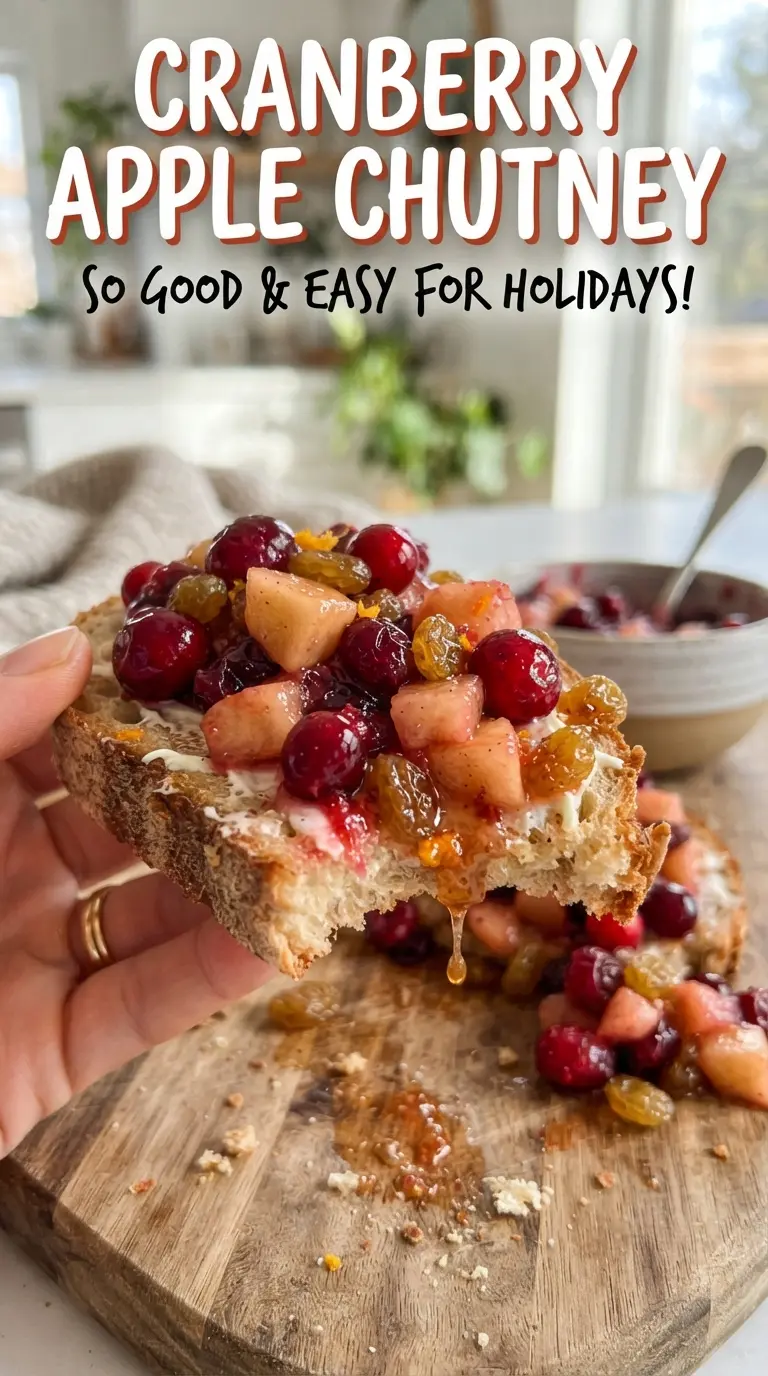
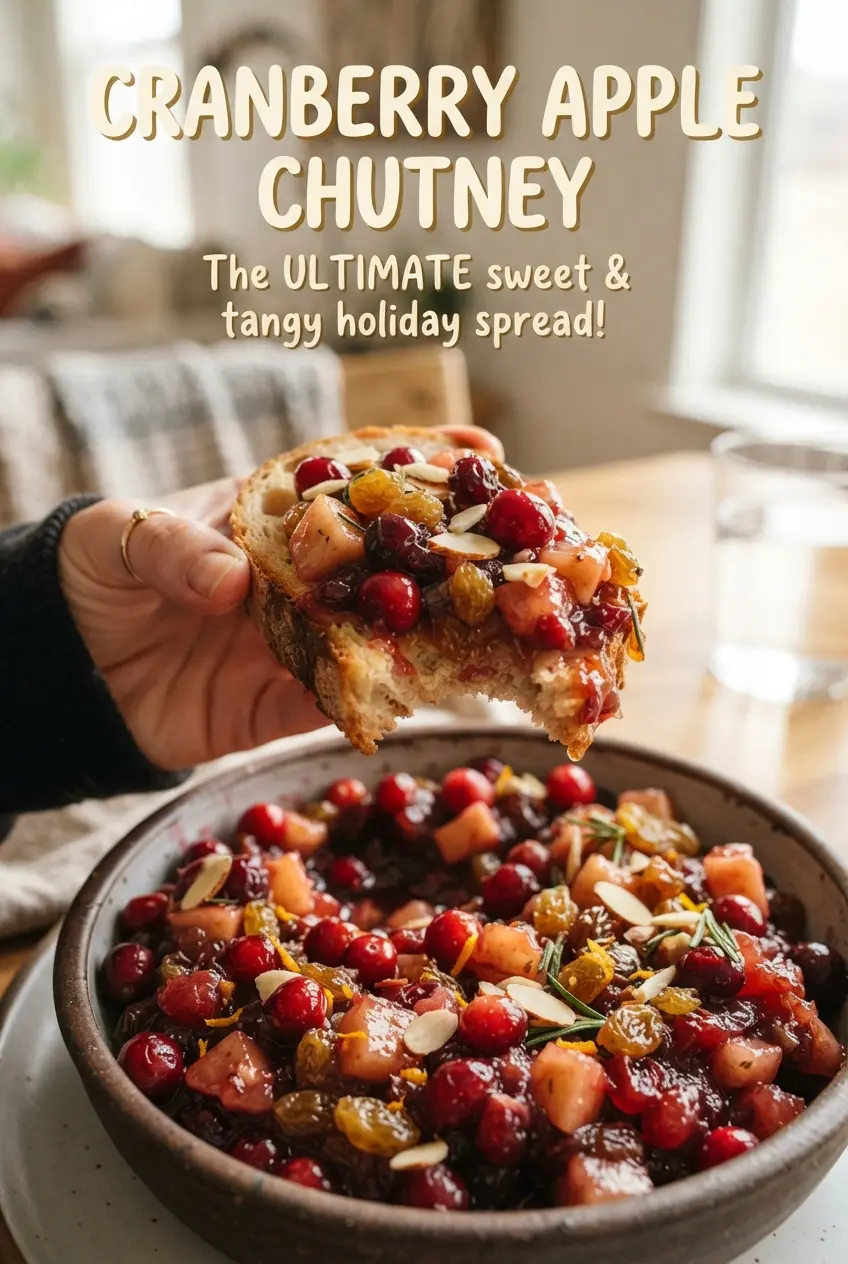
Cranberry apple chutney lands right in that sweet-tart, glossy middle ground where it can hold its own next to roast turkey, pork, or a sharp cheese board. The cranberries pop as they cook, the apples soften without disappearing, and the raisins round out the edges just enough to keep the whole thing from tasting sharp. It ends up thick enough to spoon, chunky enough to look homemade, and bright enough to cut through rich food.
The part that makes this version work is the order. The sugar, vinegar, and water get heated first so the base starts dissolving and reducing before the fruit goes in, which helps the chutney cook down without turning watery. The spices simmer briefly in that base, so the cinnamon, cloves, ginger, and red pepper flakes bloom instead of tasting dusty. By the time the cranberries burst and the apples soften, everything has had a chance to settle into the same jammy texture.
You’ll find the exact timing below, plus the small detail that keeps the chutney from becoming loose once it cools. I’ve also included a few practical swaps and storage notes, because this is the kind of recipe that’s even better when you can make it ahead.
The chutney thickened up beautifully after cooling, and the apples stayed chunky instead of turning to mush. I served it with leftover turkey sandwiches and ended up eating it straight from the spoon.
Save this cranberry apple chutney for turkey platters, pork dinners, and cheese boards that need a bright, chunky sweet-tart finish.
The Part That Keeps Cranberries From Turning the Chutney Thin
The mistake with cranberry chutney is rushing the simmer and expecting the liquid to behave like it will once it cools. It won’t. While the pan is hot, the mixture looks looser than the finished result, and if you stop too early, the cranberries keep their bite but the syrup never gets the body it needs. The goal is a thick, spoonable mixture that briefly leaves a trail in the pan before settling back together.
The apples matter here because they soften into the sauce without dissolving completely, which gives the chutney structure. The cranberries do their part by bursting and releasing pectin, which is why the mixture naturally tightens as it reduces. If you want a chutney that sits neatly on a plate instead of spreading like sauce, cook until most of the liquid has evaporated and the fruit looks glossy, not soupy.
- Cranberries — Fresh cranberries give the sharp pop and natural thickening you want. Frozen cranberries also work; add them straight from frozen and expect a minute or two of extra simmer time.
- Apples — Use a firm apple that keeps some shape, like Granny Smith, Honeycrisp, or Pink Lady. A soft baking apple will disappear faster and make the chutney mushier.
- Apple cider vinegar — This is what keeps the chutney bright. White vinegar works in a pinch, but it tastes harsher and flattens the fruit less gracefully.
- Golden raisins — They soften into little sweet spots and help round out the tart cranberries. Regular raisins can stand in, but they’ll darken the chutney and taste a little heavier.
What Each Ingredient Is Actually Doing in This Recipe
- Primary ingredient (the star) — Quality matters most. Choose the best you can find.
- Cooking medium (oil, butter, or broth) — This carries flavors and prevents dryness.
- Seasonings (salt, pepper, spices, herbs) — Layer flavors so nothing overpowers. Build depth gradually.
- Aromatics (garlic, onion, herbs) — Cook with fat to bloom flavors. Become the foundation.
- Supporting ingredients — Complement the main ingredient without overpowering it.
- Sauce or liquid (if applicable) — Brings flavors together. Balance richness with acid.
- Acid (lemon, vinegar, wine, or other) — Brightens and prevents flat-tasting results.
- Final finish (garnish, glaze, or sauce) — Prevents one-dimensional taste and adds visual appeal.
Building the Chutney So the Fruit Stays Chunky
Starting with the Syrup Base
Bring the brown sugar, vinegar, and water to a full boil before anything else goes in. That first boil dissolves the sugar cleanly and starts the reduction early, which gives you a more polished finish later. If the sugar goes in with the fruit, the mixture tends to sit around too long before it thickens.
Blooming the Spices and Onion
Add the onion, ginger, cinnamon, cloves, red pepper flakes, and salt to the bubbling liquid and let them simmer for five minutes. This softens the onion and wakes up the spices so they taste woven in instead of floating on top. You’re looking for the onion to turn translucent and the liquid to smell warm and sharp at the same time.
Cooking the Fruit to the Right Texture
Stir in the cranberries, apples, and raisins, then keep the mixture at a steady simmer for 20 to 25 minutes, stirring often. The cranberries should burst, the apples should soften at the edges, and the liquid should reduce to a thick glaze that clings to the fruit. If the heat is too high, the bottom can scorch before the center has time to thicken, so keep the bubbles gentle and active, not aggressive.
Cooling Into the Final Set
Take the pan off the heat when the chutney looks a touch looser than you want. It thickens a lot as it cools, and that carryover set is part of what makes it slice cleanly beside meats and cheese. Let it cool completely before refrigerating, or the trapped steam will water it down and blur the texture you just worked for.
Make It Brighter or Sweeter
Add an extra tablespoon of vinegar for a sharper, more savory chutney, or stir in another tablespoon of brown sugar if you want it closer to a sweet relish. The vinegar change makes it better with rich meats, while the sugar pushes it toward a holiday side dish feel.
Use Pears Instead of Apples
Firm pears can replace the apples, but they break down faster and give you a softer, more perfumed chutney. Stick with just-ripe pears, not fully soft ones, or the mixture can turn jammy in a muddier way than apples do.
Make It Gluten-Free and Dairy-Free Without Changing a Thing
This chutney is naturally gluten-free and dairy-free as written, which is part of why it works for such a wide range of meals. The only thing to watch is the way you serve it — pair it with gluten-free crackers or bread if you’re putting it on a board.
Scaling It for a Bigger Batch
This recipe doubles cleanly, but use a wider pot so the liquid can reduce instead of steaming the fruit. A deep, crowded pot slows evaporation and leaves you with loose chutney that takes much longer to set.
Storage and Reheating
- Refrigerator: Store in a covered jar or container for up to 2 weeks. It gets thicker after a day in the fridge and the flavors settle in.
- Freezer: It freezes well for up to 3 months. Leave a little headspace in the container because the fruit mixture will expand slightly as it freezes.
- Reheating: Serve it cold or let it sit at room temperature. If you want it warm, heat it gently over low heat just until loosened; boiling it again can make the apples go soft and the texture lose its chunky edge.
Questions I Get Asked About This Recipe
Cranberry Apple Chutney
Ingredients
Equipment
Method
- Combine brown sugar, apple cider vinegar, and water in a saucepan and bring to a boil.
- Add red onion, fresh ginger, ground cinnamon, ground cloves, red pepper flakes, and salt, then simmer for 5 minutes.
- Stir in fresh cranberries, apples, and golden raisins.
- Simmer for 20-25 minutes, stirring often, until the chutney is thick and jammy.
- Cool the cranberry apple chutney completely, then refrigerate until ready to serve.
- Serve with turkey, pork, or alongside a cheese board.