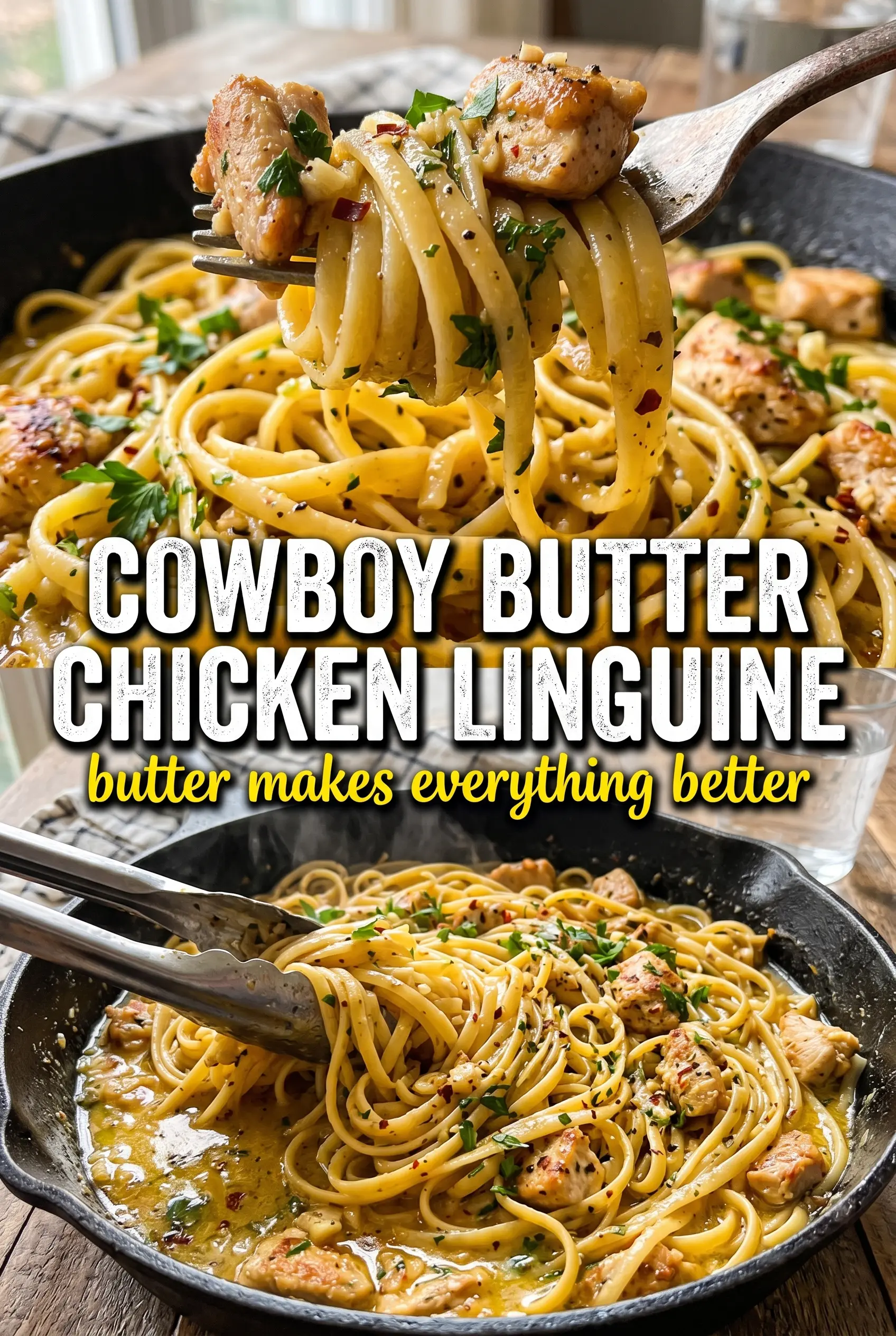
Linguine coated in cowboy butter sauce lands with the kind of bold, buttery heat that keeps a pasta bowl from ever feeling boring. The chicken stays juicy because it’s seared fast over high heat, then folded into a sauce that clings instead of pooling at the bottom of the pan. The lemon and herbs cut through the richness just enough to keep every bite bright.
What makes this version work is balance. The butter carries the garlic, smoked paprika, Dijon, and red pepper flakes, while a splash of pasta water turns everything glossy and helps the sauce grab onto the noodles. If you’ve ever had a butter-based pasta separate or taste flat, it usually means the heat was too high or the seasoning was added too late. Here, the sauce gets built in layers, and each one has a job.
Below, I’m walking through the part that matters most: how to keep the chicken browned, the sauce smooth, and the linguine coated instead of greasy. I’ve also included a few smart swaps and the questions that come up when people make this for the first time.
The chicken stayed juicy and the sauce coated every strand of linguine without getting greasy. I added a splash of pasta water and it turned silky in seconds.
Save this Cowboy Butter Chicken Linguine for the nights when you want a spicy, glossy pasta that comes together fast and eats like a restaurant dish.
The Part That Keeps the Cowboy Butter Sauce from Turning Oily
Cowboy butter sounds indulgent, but the difference between a glossy sauce and a slick pan of broken butter comes down to timing. The garlic needs a brief stay in the butter, not a long one, because once it browns too far it turns bitter and makes the whole sauce taste harsh. The Dijon goes in early enough to help the sauce emulsify, and the pasta water gives the butter something to cling to instead of letting it slide right off the noodles.
High heat is useful for the chicken, not the sauce. Once the chicken comes out, drop the heat to medium and keep the butter moving gently. That’s the sweet spot where the paprika blooms, the lemon stays fresh, and the sauce thickens just enough to coat linguine without pooling in the bowl.
What Each Ingredient Is Actually Doing in This Bowl
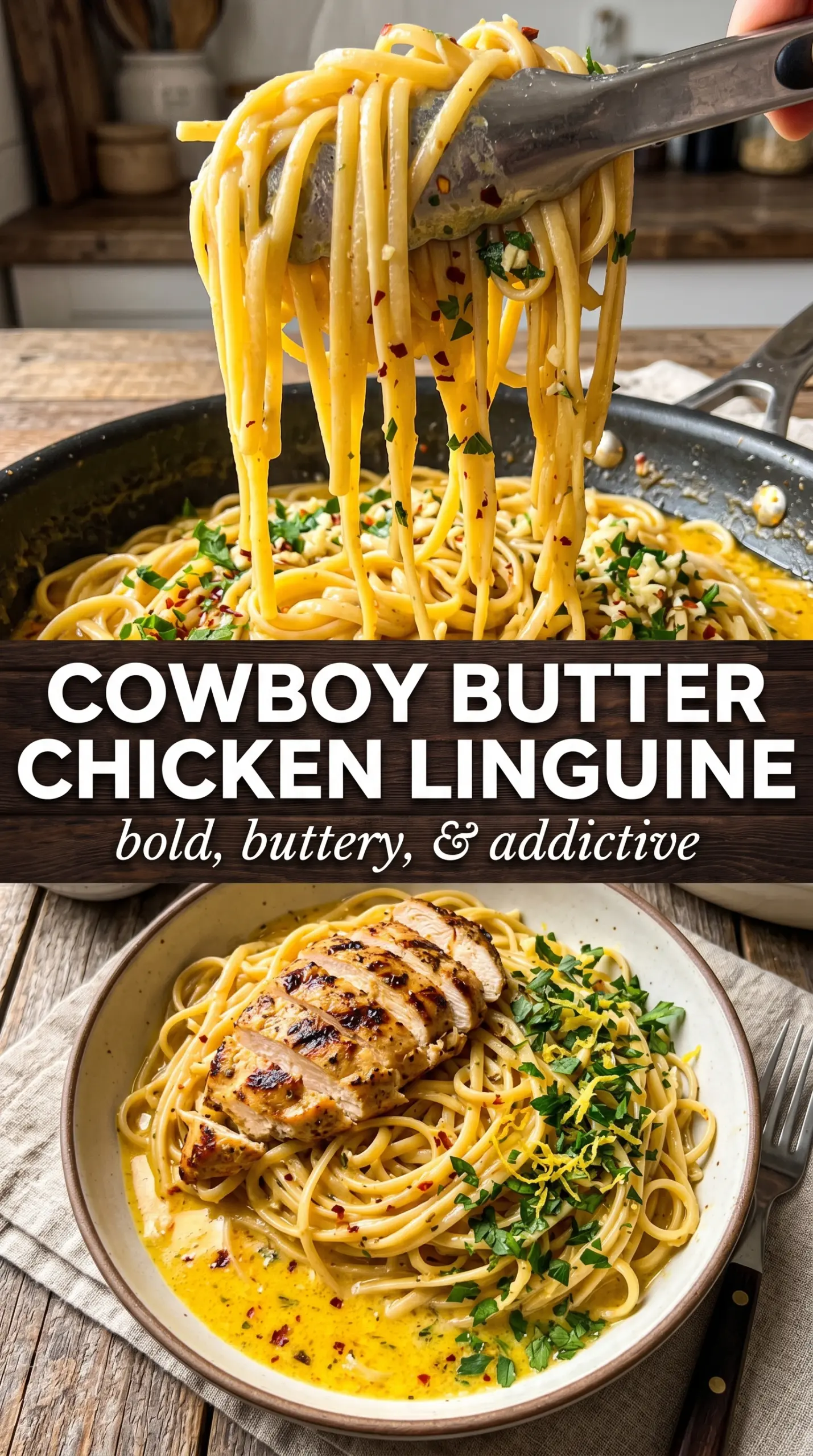
- Chicken breasts — Cutting them into strips helps them cook quickly and stay tender. If the pieces are uneven, the thin ends will dry out before the thicker pieces are done, so trim for even thickness before seasoning.
- Cajun seasoning — This does more than add heat. It seasons the chicken with salt, smoke, and spice at the same time, which gives you a better crust than salt alone.
- Butter — Use real butter here; it’s the backbone of the sauce. You can swap in plant butter in a pinch, but the flavor will be flatter and the sauce won’t have quite the same round finish.
- Dijon mustard — This is the quiet stabilizer in the sauce. It helps bind the butter and pasta water together, and without it the sauce can feel greasy instead of silky.
- Smoked paprika, red pepper flakes, and cayenne — These build the cowboy butter personality. The paprika gives depth, the flakes bring steady heat, and the cayenne sharpens the finish; if you want less heat, cut the cayenne first instead of dropping all three.
- Lemon juice, parsley, and chives — Add these at the end so they stay bright. If they go in too early, the herbs wilt and the lemon loses the lift that keeps the dish from tasting heavy.
- Linguine and pasta water — Linguine gives the sauce enough surface area to cling to, and the starchy water is what turns the butter into a coating. Don’t skip reserving a full cup; a few spoonfuls can rescue a sauce that feels too tight.
Building the Chicken, Then Coating the Pasta Without Missing the Window
Searing the Chicken Fast and Leaving It Alone
Heat the olive oil until it shimmers, then add the seasoned chicken in a single layer. If the pan is crowded, the chicken steams and loses the dark edges that give this dish its backbone, so cook it in batches if needed. Leave it alone for a few minutes before turning; if it sticks, it usually just needs another moment. Pull it once it’s cooked through and nicely charred at the edges.
Working the Cowboy Butter in the Same Pan
Use the same skillet and keep every browned bit in there. Melt the butter over medium heat, add the garlic, and stir for about a minute until fragrant, not browned. Then stir in the Dijon, paprika, red pepper flakes, and cayenne so the spices bloom in the fat. If the pan is too hot at this stage, the garlic scorches and the sauce turns bitter fast.
Turning the Sauce into a Coating
Add the lemon juice, parsley, and chives, then toss in the linguine with a splash of pasta water. The noodles should look glossy, not soupy, and the sauce should cling to each strand in a thin sheen. Add pasta water a little at a time until the sauce loosens enough to coat the pasta cleanly. Put the chicken back on top at the end so it stays juicy and doesn’t overcook while you toss.
How to Adapt This Cowboy Butter Pasta Without Losing What Makes It Work
Make It Dairy-Free
Use a good plant-based butter with a neutral flavor and keep the heat moderate so it doesn’t split. The result will still be glossy and spicy, but the sauce will taste a little less rich and rounded than the butter version.
Use Chicken Thighs for a Richer Bite
Boneless thighs give you a juicier, slightly richer result and forgive a little extra heat. They need a couple more minutes in the skillet, but they hold up beautifully in this sauce.
Make It Milder
Cut the cayenne in half and start with less red pepper flakes. You’ll still get the smoky, garlicky cowboy butter character, but the finish won’t linger with as much heat.
Swap the Pasta Shape
Fettuccine, spaghetti, or even rotini will work. Just know that thinner strands feel silkier, while ridged shapes trap more of the herbs and spice bits in every bite.
Storage and Reheating
- Refrigerator: Store leftovers in an airtight container for up to 3 days. The pasta will absorb some of the sauce as it sits, so it gets a little less glossy.
- Freezer: I don’t recommend freezing this one. Butter sauces and cooked pasta both change texture after thawing, and the noodles can turn soft and uneven.
- Reheating: Warm it gently in a skillet over low heat with a splash of water or broth. High heat is the mistake here — it tightens the chicken and can make the sauce look broken before it loosens back up.