Country fried chicken lands on the plate with a crust that crackles at the first bite and a gravy that clings instead of sliding off. The coating turns deeply golden and rough in all the right places, which gives the chicken a sturdy shell that stays crisp long enough to carry the peppery gravy. That contrast is what keeps this dish worth making again and again.
The buttermilk soak does more than add flavor. It seasons the chicken from the inside and helps the flour mixture grab onto every ridge and corner, which is what gives you that shaggy, craggy crust instead of a smooth, even shell. Cornstarch in the dredge lightens the coating a little, while smoked paprika and cayenne bring warmth without making it taste spicy-hot.
Below, I’m walking through the part that matters most: how to keep the crust from slipping off, how to fry at a steady temperature, and how to build gravy from the pan drippings so nothing goes to waste.
The coating stayed craggy and crisp even after the gravy went on, and the chicken was juicy all the way to the bone. I also liked that the dredge didn’t turn gummy in the pan.
Save this country fried chicken recipe for the nights when you want a shatteringly crisp crust and plenty of pepper gravy.
The Trick to Keeping the Crust Craggy, Not Slick
The biggest mistake with fried chicken is rushing the dredge. If the chicken goes straight from the buttermilk into the flour and then straight into hot oil, the coating can look thick at first and then slide right off. Pressing the flour mixture onto the chicken and giving it a brief rest before frying helps the coating hydrate and cling, which is how you get those rough, crispy edges that catch the gravy instead of dissolving into it.
Oil temperature matters just as much. Too hot and the crust burns before the chicken cooks through; too cool and the flour soaks up oil, turning heavy and greasy. Around 325°F gives you time for the inside to cook while the outside turns a deep, even gold.
What Each Part of the Chicken Is Doing Here

- Bone-in chicken pieces — The bone helps the meat stay juicy during frying and gives you more forgiving cooking time than boneless cuts. Mixed pieces work best here because smaller pieces finish faster while thighs and drumsticks stay tender.
- Buttermilk — This is the marinade that tenderizes and seasons at the same time. If you don’t have buttermilk, mix milk with a little lemon juice or vinegar, but expect a thinner coating and a slightly less tangy finish.
- Cornstarch — A little cornstarch makes the crust lighter and crunchier. Flour alone can work, but it tends to fry up a little denser and less shattery.
- Smoked paprika and cayenne — These give the crust depth, not heat for the sake of heat. If you want a milder version, cut the cayenne in half and keep the paprika in place so the coating still tastes seasoned.
- Whole milk and chicken broth for the gravy — Milk gives the gravy body, while broth adds savory depth that plain milk can’t match. Skim milk works in a pinch, but the gravy will be thinner and less plush.
Frying the Chicken and Building the Gravy in the Same Rhythm
Marinating for Grip and Tenderness
Coat the chicken in the buttermilk mixture and let it sit for at least an hour, or overnight if you’ve got the time. That soak seasons the meat and softens the surface just enough for the flour to stick well. If you skip the rest time, the crust won’t grab as cleanly and you’ll lose some of that rustic, craggy texture.
Pressing on the Dredge
Whisk the flour, cornstarch, and spices in a shallow bowl, then lift the chicken out of the marinade and let the excess drip off for a few seconds. Dredge each piece firmly, pressing so the flour mixture gets into the nooks and ridges. A light dusting is not enough here; the pressure is what builds the thicker, rougher crust.
Frying Low and Steady
Set the oil in a cast-iron skillet and keep the heat around 325°F. Fry the chicken in batches so the temperature doesn’t plunge, and turn the pieces when the first side is a deep golden brown and releases easily from the pan. If the crust is dark before the center hits 165°F, the heat is too high and the outside is moving faster than the inside.
Whisking the Gravy from the Pan
Pour off the excess oil, leaving a thin film and the browned bits behind. Melt the butter, whisk in the flour, and cook it for a minute or two until it smells nutty and looks paste-like, then add the milk and broth slowly while whisking. If the gravy turns lumpy, it usually means the liquid went in too fast or the roux wasn’t loosened evenly; keep whisking over moderate heat and it will smooth out.
Ways to Work This Recipe Around Your Kitchen
Make It Dairy-Free
Use an unsweetened, plain dairy-free milk with a splash of vinegar for the marinade, and swap in plant-based butter for the gravy. The crust still gets crisp, but the gravy will be a little less rich and a touch thinner than the classic version.
Gluten-Free Dredge
Replace the all-purpose flour with a gluten-free 1:1 blend and keep the cornstarch. The crust won’t have exactly the same chew, but the cornstarch still helps it fry up crisp instead of sandy.
Boneless Chicken Instead of Bone-In
Boneless thighs will cook faster and stay juicy, but they won’t have the same old-school look or the same deep chicken flavor from the bone. Cut the frying time down and watch the internal temperature closely so the coating doesn’t overbrown before the meat is done.
Storage and Reheating
- Refrigerator: Store leftovers for up to 3 days. The crust softens in the fridge, but the chicken stays flavorful.
- Freezer: Freeze the fried chicken without gravy for up to 2 months. Wrap pieces well so the coating doesn’t pick up freezer burn, and make a fresh batch of gravy when serving.
- Reheating: Reheat on a wire rack in a 375°F oven until hot and crisp again. The common mistake is microwaving it, which turns the crust soggy and steamy.
Answers to the Questions Worth Asking
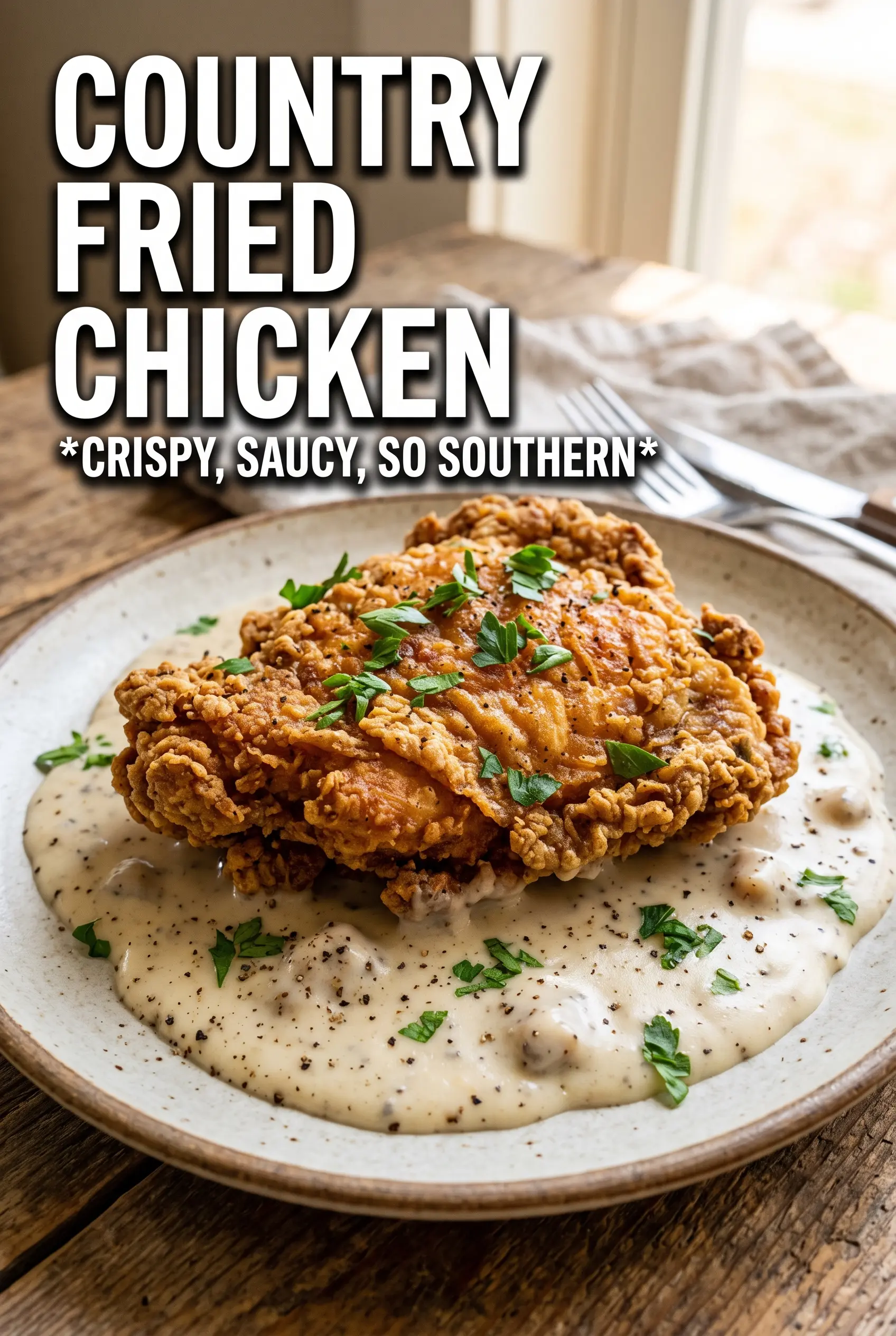
Country Fried Chicken
Ingredients
Equipment
Method
- Mix buttermilk, hot sauce, salt, and black pepper, then submerge the bone-in chicken pieces in the buttermilk mixture. Refrigerate for 1 hour up to overnight.
- Whisk all dredge ingredients—flour, cornstarch, garlic powder, onion powder, smoked paprika, cayenne, salt, and black pepper—in a shallow bowl until evenly combined. Keep it ready for dredging right after marinating.
- Remove chicken from the marinade, letting excess drip off each piece, then dredge in the flour mixture. Press to help the coating adhere firmly.
- Heat vegetable oil to 325F in a large cast-iron skillet. Fry the chicken 12-15 minutes per side until deeply golden and cooked through to 165F internal.
- Melt butter, then whisk in flour and cook for 1-2 minutes to remove the raw flour taste. Gradually whisk in the whole milk and chicken broth until smooth.
- Cook the gravy until thick, whisking as needed, then season with plenty of salt and black pepper. Keep warm while the chicken finishes cooking.
- Serve the country fried chicken smothered in country gravy and finish with cracked black pepper for serving.