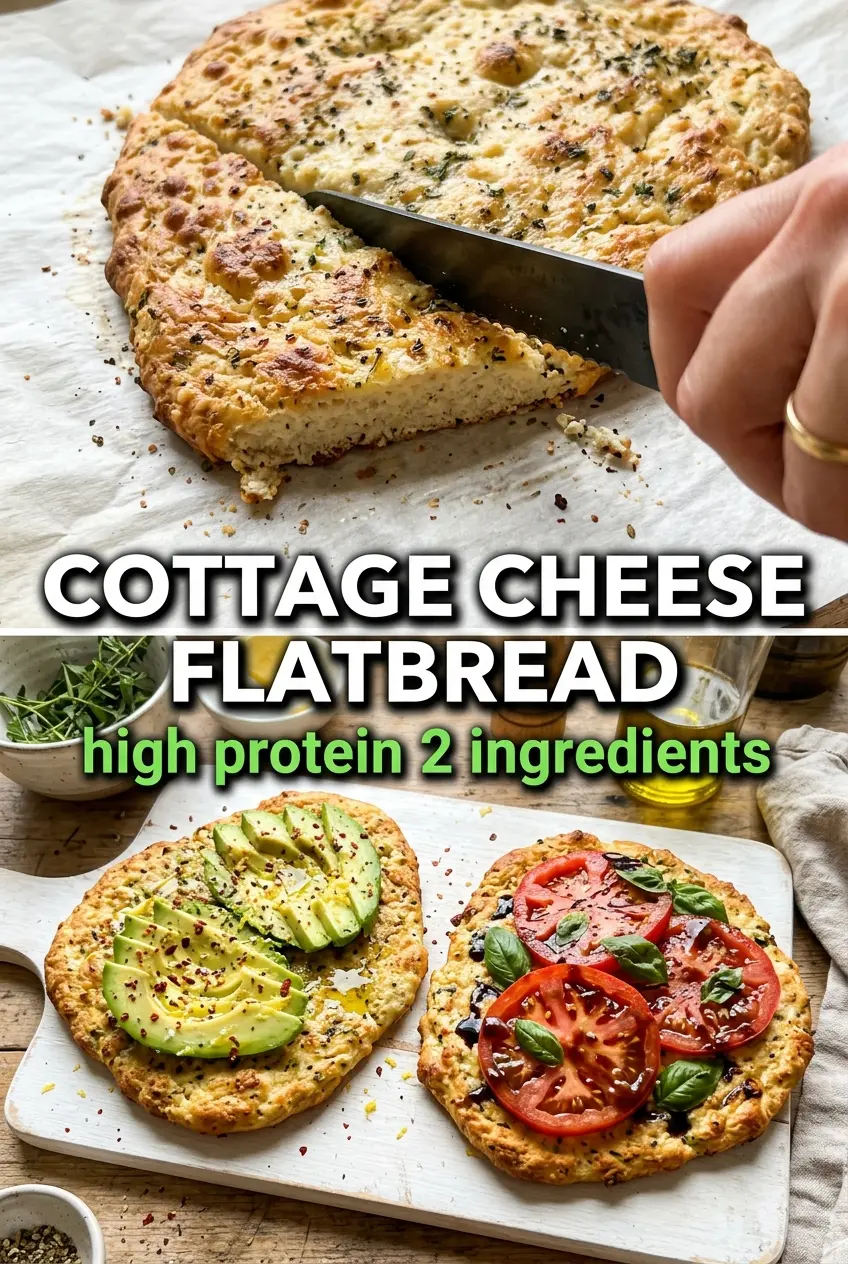
Cottage cheese flatbread comes out crisp at the edges, tender in the middle, and sturdy enough to cut into strips without falling apart. That texture is the whole reason it works as a snack or breakfast base: it feels like something you meant to make, not a backup plan. The top gets a little golden and toasty while the inside stays soft and savory, which gives you the contrast that keeps each bite interesting.
The trick is blending the cottage cheese until it’s completely smooth and spreading the batter thinly and evenly. If the batter stays lumpy, the flatbread bakes up unevenly and the center can turn wet before the edges brown. A full-fat cottage cheese also helps here because it bakes into a richer, more cohesive sheet with better flavor and less rubbery texture.
Below, I’ve included the little things that matter most: how thin to spread it, what to watch for in the oven, and which toppings keep the texture crisp instead of soggy.
I was skeptical that cottage cheese and eggs would hold together like bread, but it baked up golden and sliced cleanly after the five-minute rest. The everything bagel topping made it taste like something from a cafe, and the edges stayed crisp even with avocado on top.
Crispy cottage cheese flatbread is worth saving for the days when you want a high-protein snack that still feels like something you can dip, top, and share.
The Mistake That Makes Cottage Cheese Flatbread Soggy
The biggest problem with cottage cheese flatbread is moisture. Cottage cheese holds a lot of liquid, and if you rush the batter or pile it too thick, the center steams instead of baking into a proper flatbread. Blending helps break down the curds so the eggs can bind everything into a smooth batter, which gives you a cleaner slice and a better bite.
The other issue is thickness. Too thick and the middle stays soft while the edges dry out; too thin and it can turn brittle. Aim for a thin rectangle about a quarter inch thick, and don’t pull it from the oven until the center no longer jiggles when you nudge the pan.
What the Cottage Cheese and Eggs Are Doing Here

- Full-fat cottage cheese — This is the main source of structure and flavor. Full-fat blends more smoothly and bakes into a richer flatbread with less rubbery texture than low-fat versions. If you only have low-fat, use it, but expect a drier result.
- Eggs — They bind the batter and help it set into a sliceable sheet. There isn’t a clean substitute here if you want the same structure, because the eggs are what keep the flatbread from turning crumbly.
- Garlic powder — A small amount rounds out the dairy flavor without overpowering it. Fresh garlic can scorch or taste sharp here, so the powder is the better call.
- Everything bagel seasoning or herbs — This is more than garnish. It gives the top crunch, salt, and a savory finish that makes the flatbread feel finished instead of plain.
Blending, Spreading, and Baking Until the Center Sets
Blending the Batter Smooth
Add the cottage cheese, eggs, garlic powder, salt, and pepper to a blender and run it until the mixture looks completely smooth and loose, with no visible curds. If you stop too soon, the curds stay intact and the baked flatbread can look bumpy and cook unevenly. You’re aiming for a pourable batter, not a thick paste.
Spreading It Thin Enough
Pour the batter onto parchment-lined pan and spread it into a thin, even rectangle about 1/4 inch thick. Uneven spots bake at different speeds, so the edges can dry out before the center is set. A thin spatula works best here because it lets you smooth the surface without dragging too much batter around.
Baking for Color and Structure
Bake until the edges are golden and the center is set with no wobble when you gently shake the pan. If the middle still jiggles, give it a few more minutes; pulling it early is the fastest way to end up with a soft, fragile center. Let it cool for 5 minutes before slicing so the structure finishes setting and the strips cut cleanly.
How to Change Cottage Cheese Flatbread Without Losing the Good Texture
Make it dairy-free with a different base
This recipe depends on cottage cheese for body, so a true dairy-free swap changes the result. The closest path is using a thick dairy-free yogurt plus extra egg, but the flatbread will be softer and a little less structured. It still works as a snack base, just not as crisply as the original.
Keep it low carb without changing a thing
As written, this is already naturally low carb. That makes it a good base for avocado, eggs, smoked salmon, or a scoop of chicken salad without needing any flour or starch to hold it together.
Switch the topping based on how you plan to serve it
Everything bagel seasoning gives the boldest savory finish, while Italian herbs make it milder and more flexible for sandwich-style fillings. If you want the crispest top, add the seasoning before baking, not after, so it toasts into the surface instead of sitting loose on top.
Storage and Reheating
- Refrigerator: Store for up to 3 days in an airtight container. The edges soften a bit, but the flavor stays good.
- Freezer: It freezes fairly well if you separate slices with parchment and wrap them tightly. Thaw in the refrigerator before reheating so the center doesn’t turn wet.
- Reheating: Reheat in a dry skillet or toaster oven at medium heat until the edges crisp back up. The common mistake is microwaving it, which makes the flatbread soft and a little rubbery.
Questions I Get Asked About This Recipe
Cottage Cheese Flatbread
Ingredients
Equipment
Method
- Preheat oven to 350°F and line a sheet pan with parchment paper; spray the parchment lightly with cooking spray for easy release.
- Blend full-fat cottage cheese and large eggs with garlic powder, salt, and black pepper until smooth to create a pourable batter.
- Pour the batter onto the prepared sheet pan and spread into a thin, even rectangle about 1/4 inch thick for even crisping.
- Sprinkle everything bagel seasoning or Italian herbs over the top so the surface bakes up speckled and fragrant.
- Bake for 27–30 minutes at 350°F until the edges are golden and the center is set and no longer jiggly, watching the last few minutes closely.
- Cool the flatbread for 5 minutes so it firms up for cleaner slicing.
- Slice into strips and serve with your choice of toppings such as avocado, sour cream, salsa, or similar.