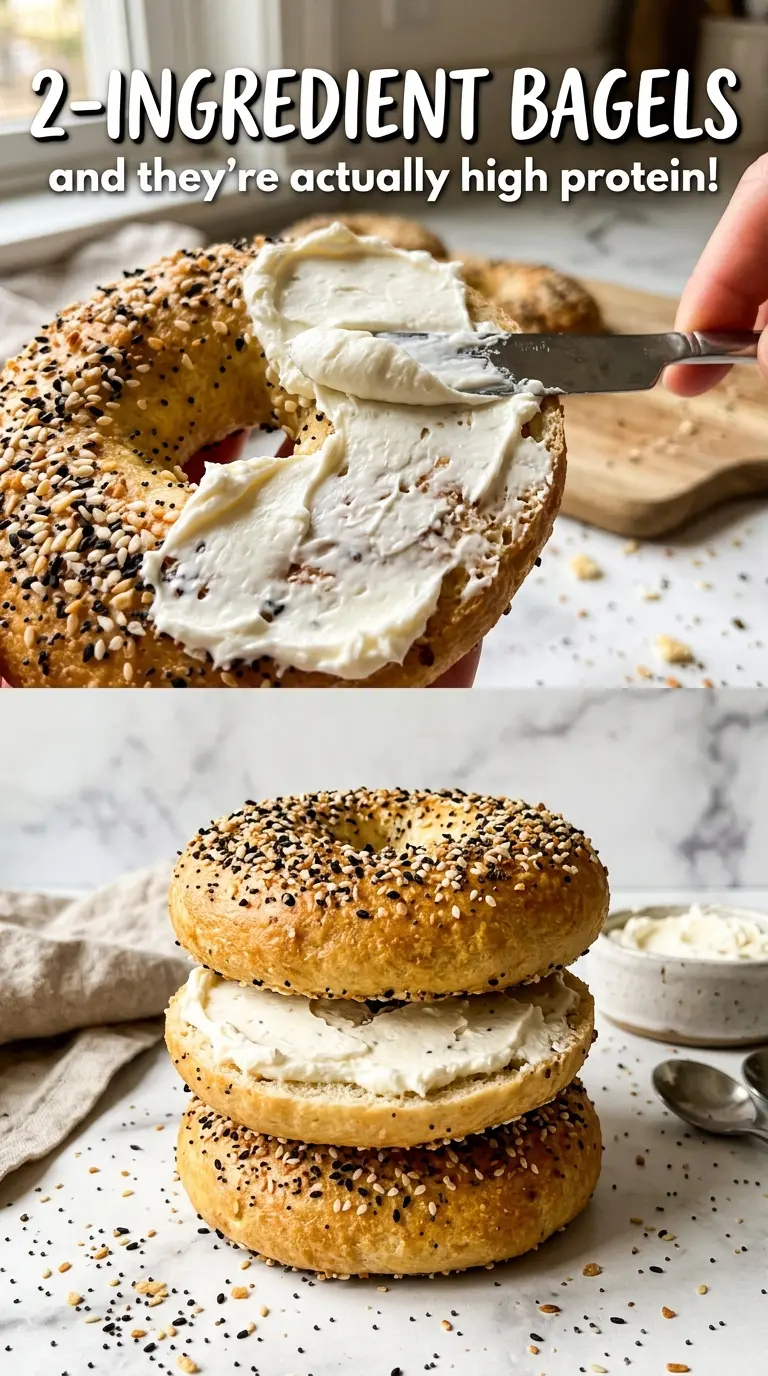
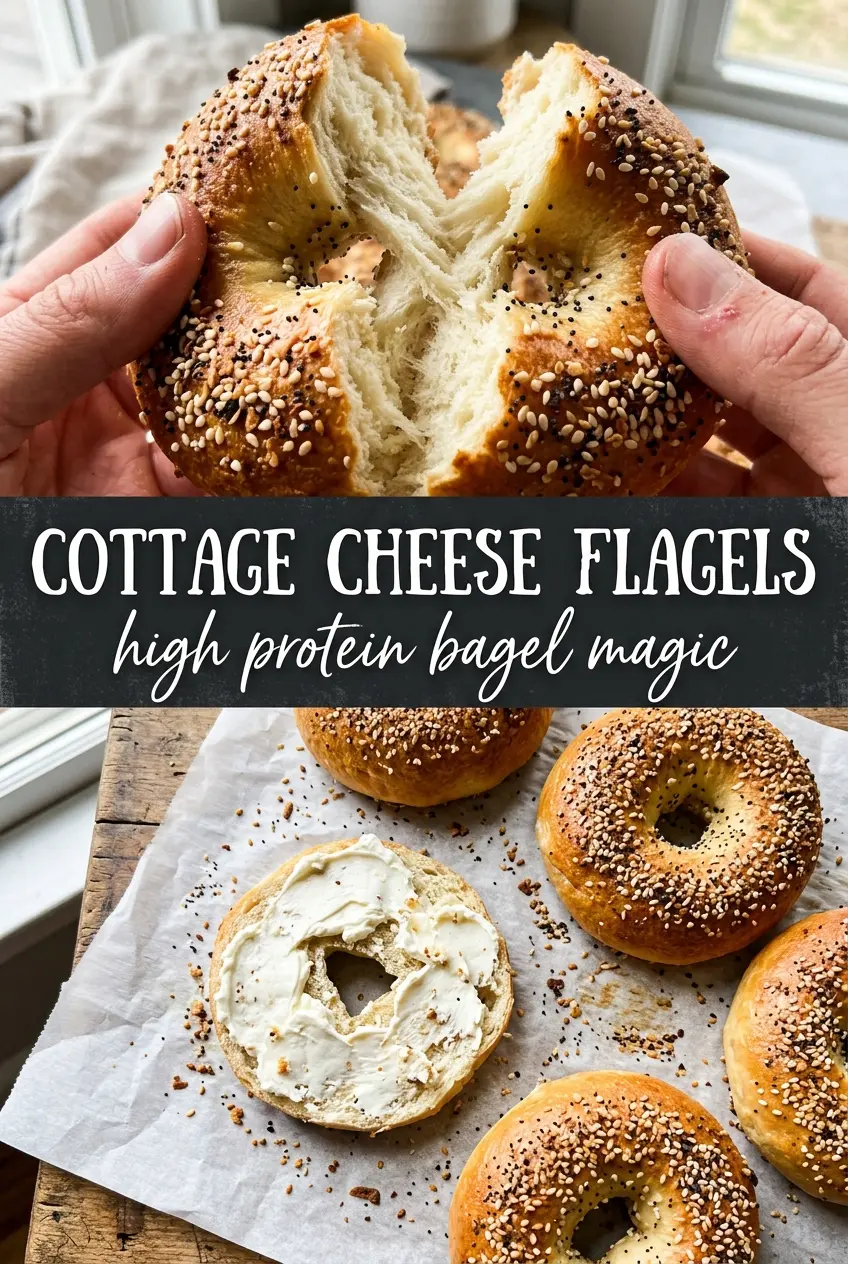
Golden, slightly domed cottage cheese flagels give you the bagel mood without the long rise, boiling water, or all-day commitment. The outside bakes up with a light chew, the center stays dense and satisfying, and the flat shape means every bite gets a little more crust. They’re the kind of breakfast I keep coming back to when I want something homemade that still fits into a busy morning.
The trick here is using cottage cheese for moisture and protein while keeping the dough just barely mixed. Overworking it makes the flagels tougher than they should be, and too much extra flour can turn them dry. Self-rising flour does the heavy lifting, but if you use all-purpose flour with baking powder, the texture stays dependable as long as you measure carefully and keep the dough slightly tacky.
Below, I’m walking through the small details that matter most: how sticky the dough should feel, why flattening them before baking matters, and what to change if you want a different topping or need a flour swap.
The dough came together fast and baked into the best chewy centers with crisp edges. I used everything bagel seasoning and they tasted like a bakery breakfast, only easier.
Cottage cheese flagels bake up chewy, golden, and breakfast-ready in under 30 minutes.
The Trick to Getting a Chewy Flagel Without Boiling It
Flagels work because they skip the part of bagel-making that usually scares people off: the boil. Flattening the dough before baking changes the crust-to-center ratio, so you still get that satisfying bite, but the process stays simple and weeknight-friendly. The real mistake is treating the dough like sandwich bread and kneading it until smooth. That extra mixing tightens the crumb and makes the flagels dense in the wrong way.
The dough should look a little rough when it comes together, and it should feel soft, not dry. If it sticks lightly to your hands, that’s fine. If it’s loose enough to spread across the counter, add flour a tablespoon at a time. If it feels stiff before baking, the finished flagels will bake up more like biscuits than bagels.
What Each Ingredient Is Doing in These Flagels
- Full-fat cottage cheese — This is what keeps the crumb moist and gives the flagels their tender chew. Full-fat cottage cheese blends into a richer dough and tastes cleaner than low-fat versions, which can bake up a little chalky. If yours is very wet, drain off excess liquid first so the dough doesn’t turn sticky and slack.
- Self-rising flour — This handles both structure and lift, which is why the recipe stays fast. If you swap in all-purpose flour, use the baking powder and salt listed in the notes; don’t just replace it cup for cup or the flagels will stay flat and heavy. Measure the flour lightly so you don’t accidentally dry out the dough.
- Egg wash — The beaten egg gives the tops color and helps the seasoning cling. You can skip it, but the flagels will look paler and the topping won’t adhere as well. Brush it on in a thin layer; too much pools around the edges and can make the bottoms gummy.
- Everything bagel seasoning or sesame seeds — This is where the bagel feeling really shows up. Everything seasoning brings salt, crunch, and garlic-onion notes, while sesame seeds keep things simpler and nuttier. Press the topping in gently so it stays put in the oven.
The Short Bake Window That Gives You the Right Texture
Mixing the Dough Just Until It Holds
Stir the cottage cheese and flour together until you see a shaggy dough and no dry flour remains. It will look a little uneven, and that’s what you want. If you keep stirring after it comes together, the dough tightens and the baked flagels lose that soft chew. A spoon works fine at first, then switch to your hands only long enough to bring the dough into one piece.
Shaping Flat Discs for Even Browning
Divide the dough into four equal portions and press each one into a disc about 1/2 inch thick. That thickness matters because it gives you a dense center without turning the outside too dark before the middle is set. Keep the tops fairly smooth so the egg wash and seasoning spread evenly. If the edges crack badly, the dough is a touch dry; wet your fingertips and smooth them back together.
Baking Until the Edges Set and the Tops Turn Deep Gold
Slide the tray into a fully preheated 400°F oven and bake until the tops are deeply golden and the centers spring back when pressed. The flagels should feel set all the way through, not doughy in the middle. If the bottoms brown too fast, your pan is too close to the heat source or the oven runs hot, so move the rack to the center. Let them rest a few minutes before slicing so the crumb finishes setting instead of tearing.
How to Make These Flagels Work for Different Mornings
Everything Bagel Version
Use everything bagel seasoning generously on top of the egg wash. It gives you the most classic bagel-shop flavor and a more savory crust. If your blend is salt-heavy, keep the topping lighter so the finished flagels don’t taste over-seasoned.
Sesame Seed Breakfast Flagels
Use sesame seeds alone for a milder, nuttier finish that works especially well with cream cheese or smoked salmon. You’ll lose the onion-garlic bite, but the flavor stays clean and toasty. Press the seeds in after brushing with egg so they don’t fall off during baking.
Gluten-Free Adaptation
A cup-for-cup gluten-free flour blend with added binder can work, but expect a softer, less chewy crumb. The dough may need a little more time to hydrate before shaping, and the flagels won’t brown quite the same way. Bake until the centers are fully set, not just golden, because gluten-free doughs can look done before they’re truly baked through.
Storage and Reheating
- Refrigerator: Store in an airtight container for up to 4 days. The crust softens a little, but the centers stay pleasantly chewy.
- Freezer: Freeze baked flagels tightly wrapped for up to 2 months. Split them first if you know you’ll want quick breakfasts, because frozen halves toast more evenly.
- Reheating: Toast from chilled or frozen until the edges crisp and the center is warmed through. The common mistake is microwaving them, which makes the crumb rubbery instead of chewy.
Answers to the Questions Worth Asking
Cottage Cheese Flagels (2-Ingredient Bagels)
Ingredients
Equipment
Method
- Preheat the oven to 400°F and line a sheet pan with parchment paper for easy release.
- Mix full-fat cottage cheese with self-rising flour until a dough forms; it will be slightly sticky.
- Divide the dough into 4 equal pieces and shape each into a flat disc about 1/2 inch thick.
- Place the discs on the prepared sheet pan, leaving space between them.
- Brush each disc with the beaten egg to coat the surface evenly.
- Sprinkle generously with Everything bagel seasoning or sesame seeds so the tops look speckled.
- Bake at 400°F for 22–25 minutes until golden and cooked through.
- Let the flagels cool briefly, then slice and serve with cream cheese, smoked salmon, or your favorite toppings.