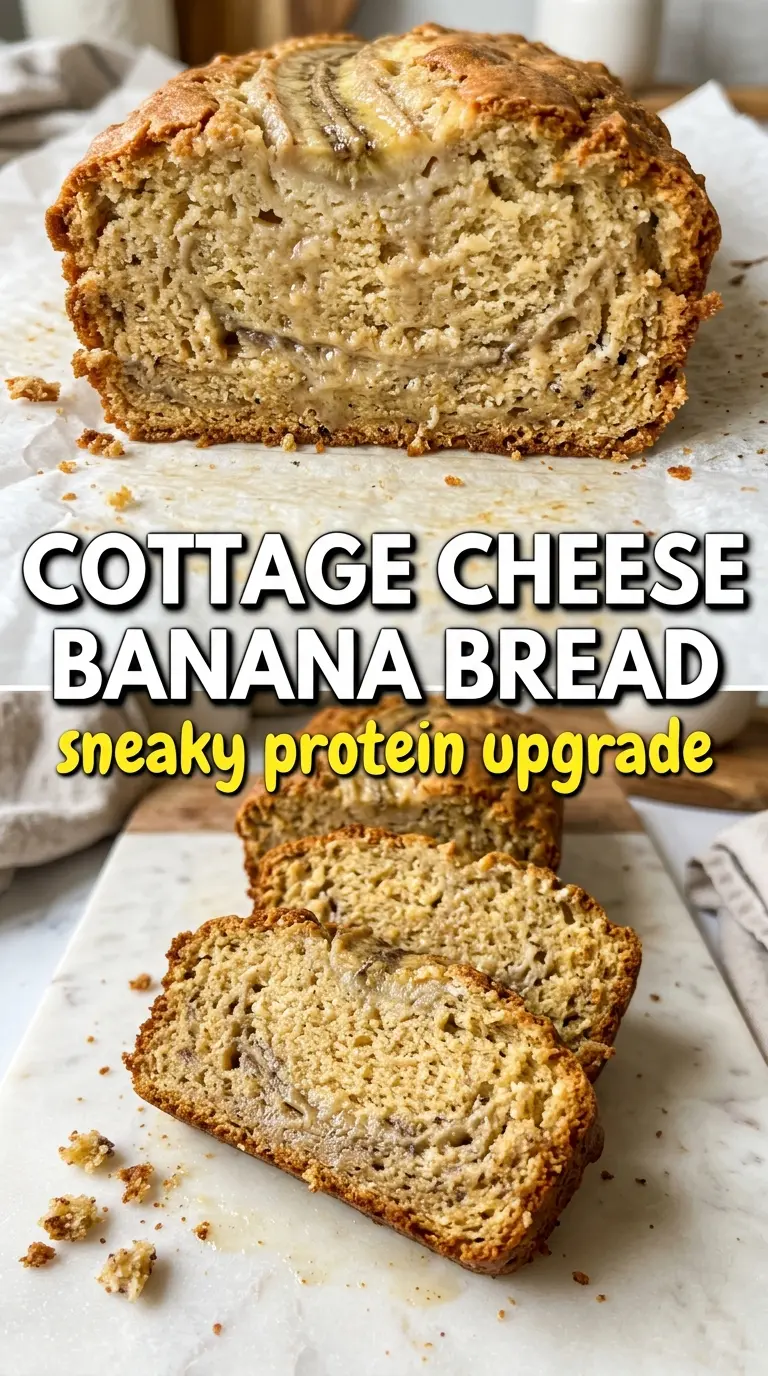
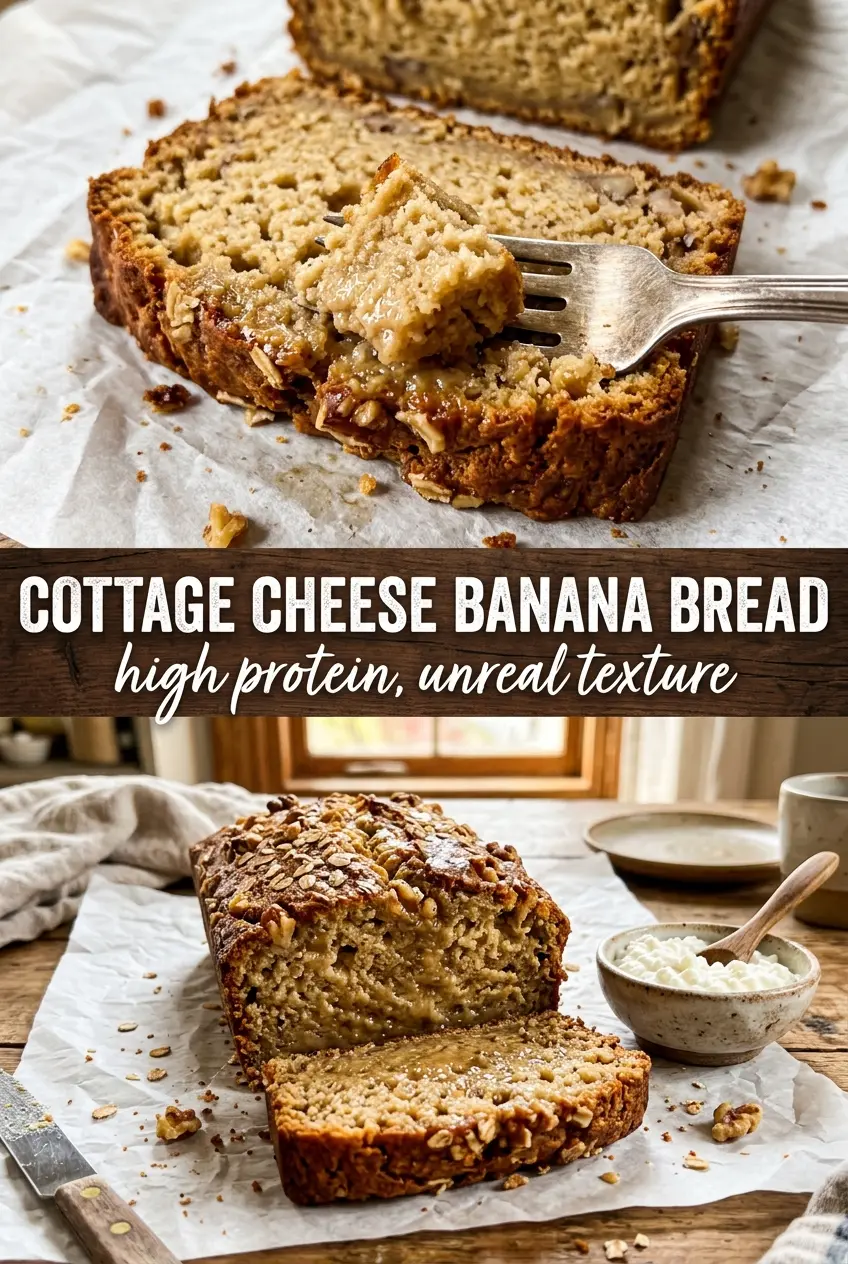
Cottage cheese banana bread bakes up with a moist, tender crumb and a little extra structure, which is exactly what makes it stand out from the usual banana loaf. The bananas bring sweetness and softness, while the blended cottage cheese disappears into the batter and keeps the inside rich without turning heavy.
The trick is getting the cottage cheese smooth before it goes in. Once it’s blended, it behaves more like a creamy dairy base than a curdled ingredient, and that’s what keeps the texture even. A little baking soda works with the bananas for lift, while the small amount of baking powder gives the loaf enough support to rise without doming into a dry, crumbly top.
Below you’ll find the timing details that matter, the best way to keep the center from baking up gummy, and a few simple swaps if you want to adjust the sweetness or make it fit what’s already in your kitchen.
The loaf came out unbelievably moist, and blending the cottage cheese made the texture even all the way through. I was worried it would taste tangy, but it just gave the bread a richer crumb and kept it soft for days.
Like this cottage cheese banana bread? Save it to Pinterest for the days when you want a moist, high-protein loaf with a tender crumb.
The Step That Keeps This Loaf From Turning Dense and Heavy
The most common problem with banana bread made with cottage cheese is a batter that looks fine but bakes up tight and slightly wet in the middle. That usually happens when the cottage cheese stays lumpy or the bananas are so soft they push the batter past the point of balance. Blending the cottage cheese first gives you a smoother base, and using ripe bananas with plenty of brown spots gives you sweetness without needing a ton of added sugar.
This loaf also needs a gentle hand once the flour goes in. Overmixing develops too much gluten, and that’s what turns a tender banana bread into something chewy and bready in the wrong way. Stir until the flour disappears and stop there. The batter should look thick, soft, and a little rustic, not glossy and overworked.
- Ripe bananas — The browner they are, the better the loaf tastes and the softer it bakes. If yours are only lightly speckled, the bread will still work, but it won’t have the same deep banana flavor.
- Cottage cheese — Full-fat cottage cheese gives the richest texture and the most tender crumb. Low-fat works in a pinch, but the loaf won’t taste as plush.
- Honey or maple syrup — This adds sweetness and helps the bread stay moist. Honey gives a rounder flavor; maple leans a little warmer and softer.
- Flour — All-purpose flour keeps the loaf sturdy enough to slice cleanly. If you swap in whole wheat, use half and half or the bread gets much heavier.
- Baking soda and baking powder — The soda reacts with the bananas, while the powder gives the loaf a little extra lift. You need both here because the batter is denser than classic banana bread.
What Each Ingredient Is Actually Doing in This Bread
- Flour (the structure) — All-purpose or bread flour provides the base. Protein content affects texture.
- Leavening (baking powder, baking soda, or yeast) — This creates rise. For quick breads, chemical leavening works. Yeast requires time.
- Wet ingredients (milk, eggs, oil, or applesauce) — These hydrate flour and add richness. Balance moisture so bread isn’t gummy.
- Sugar (sweetness and structure) — Sugar tenderizes and adds flavor. Too much makes dense, gummy bread.
- Salt (the flavor enhancer) — Salt brings out natural flavors and prevents flatness.
- Flavorings (vanilla, spices, or zest) — These define the bread personality. Use quality extracts.
- Mix-ins (nuts, chocolate, fruit) — These add texture and prevent one-dimensional taste. Toast nuts first for better flavor.
- Proper baking temperature (350-375°F) — Moderate heat bakes bread evenly. Higher temps create dark crust before inside bakes.
Building the Batter So It Bakes Up Tender, Not Gummy
Blend the cottage cheese until it disappears
Start by smoothing the cottage cheese until it looks creamy, with no visible curds left. That step matters because whole curds can bake into little wet pockets inside the loaf. Once it’s blended, whisk it with the mashed bananas, eggs, honey, melted butter, and vanilla until the mixture looks evenly speckled and loose. If the butter is too hot, it can start cooking the eggs, so let it cool for a minute or two before mixing.
Fold in the dry ingredients lightly
Add the flour, baking soda, baking powder, cinnamon, and salt, then fold just until you stop seeing dry streaks. The batter will be thick, and that’s exactly what you want. If you keep stirring after the flour is incorporated, the loaf turns dense instead of tender. A few small lumps are fine. Those disappear in the oven.
Bake until the center is set, not wet-looking
Pour the batter into a greased 9×5 loaf pan and smooth the top so it bakes evenly. Slide it into a 350°F oven and bake until the top is deeply golden and a toothpick comes out clean from the center, usually 60 to 70 minutes. If the top browns before the middle is done, lay a loose piece of foil over it for the last part of baking. Pulling it too early leaves the center gummy, especially with the extra moisture from the cottage cheese.
Cool before slicing
Let the loaf rest in the pan for 15 minutes, then turn it out and cool it fully before slicing. That cooling time lets the crumb set, which is the difference between neat slices and a loaf that squishes under the knife. If you cut it while it’s hot, it will seem underbaked even when it’s not.
How to Adjust This Loaf Without Losing the Moist Crumb
Make it a little sweeter
Use maple syrup for a softer, deeper sweetness, or add another tablespoon if your bananas aren’t very ripe. Too much sweetener makes the loaf feel heavier, so don’t push it far past the recipe unless you’re also increasing the flour slightly.
Swap in whole wheat for a heartier slice
Replace up to half the all-purpose flour with whole wheat flour if you want a nuttier loaf with a little more fiber. Go all the way to 100% whole wheat and you’ll lose some tenderness, and the bread will bake up noticeably tighter.
Dairy-free version
Use a thick dairy-free yogurt in place of the cottage cheese, but expect a softer, less protein-rich crumb. The texture will still be moist, though it won’t have quite the same structure or subtle richness that cottage cheese brings.
Storage and Reheating
- Refrigerator: Store slices in an airtight container for up to 5 days. The loaf stays moist, though the crumb firms up a little when chilled.
- Freezer: This freezes well. Wrap the cooled loaf or individual slices tightly and freeze for up to 3 months.
- Reheating: Thaw slices overnight in the fridge or at room temperature, then warm them briefly in the microwave or toaster oven. Don’t blast it for too long or the bread turns tough at the edges.
Questions I Get Asked About This Recipe
Cottage Cheese Banana Bread
Ingredients
Equipment
Method
- Preheat the oven to 350°F and grease a 9x5 loaf pan so the batter releases cleanly.
- Blend the cottage cheese until smooth, then whisk it with mashed bananas, eggs, honey, melted butter, and vanilla until uniform.
- Fold in the all-purpose flour, baking soda, baking powder, cinnamon, and salt until just combined, keeping the batter thick.
- Pour the batter into the prepared pan and smooth the top so it bakes evenly.
- Bake for 60–70 minutes at 350°F until deeply golden and a toothpick inserted in the center comes out clean.
- Cool in the pan for 15 minutes, then turn out and cool fully before slicing for the best texture.