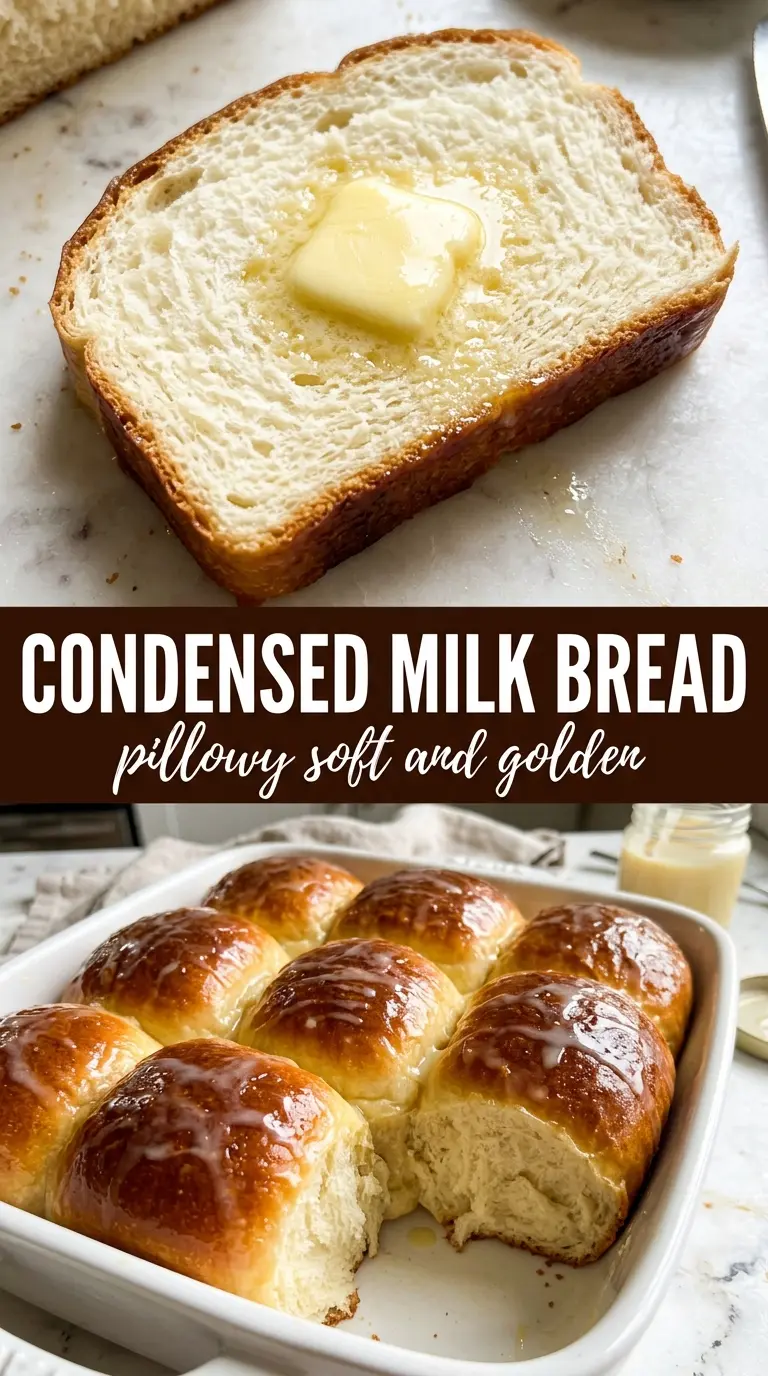
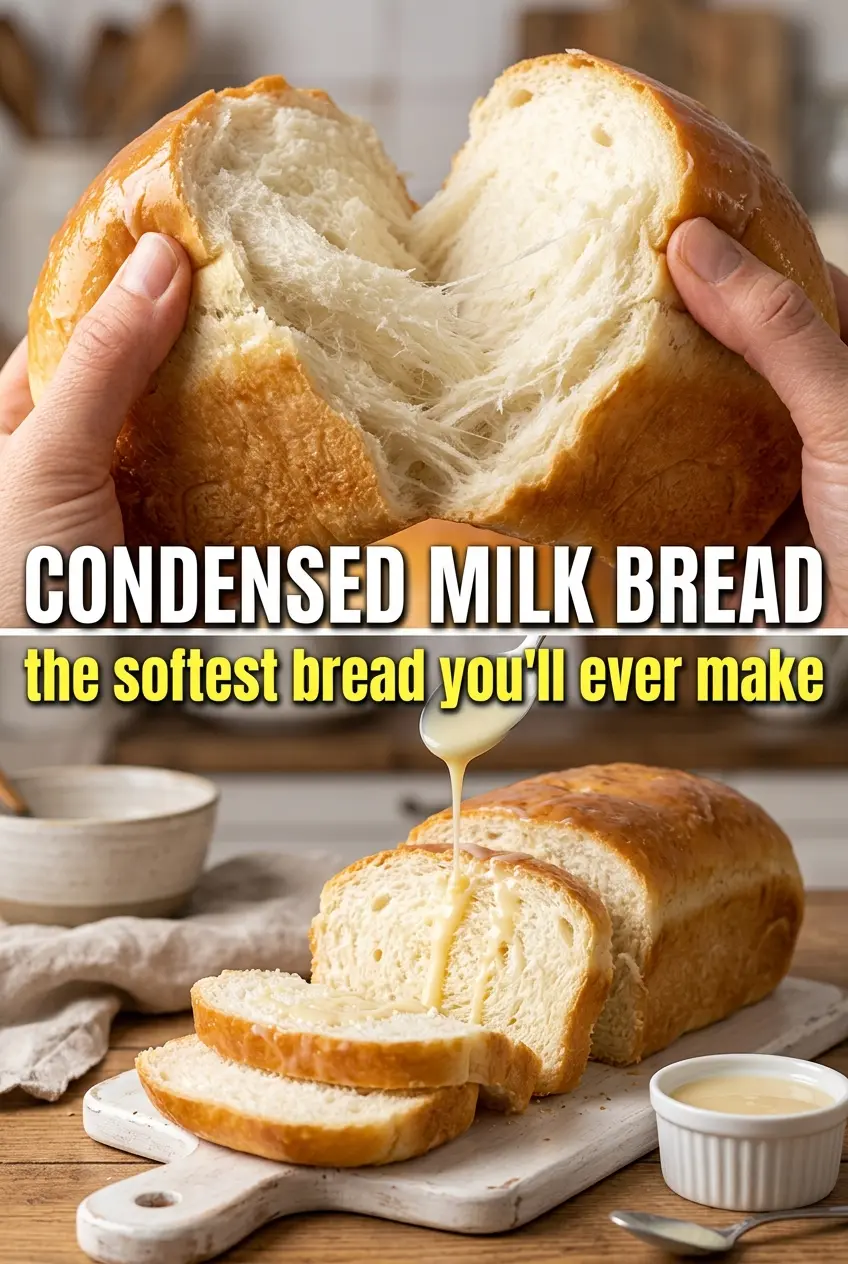
Condensed milk bread bakes up with a soft, feathery crumb and a glossy top that pulls apart in warm, pillowy layers. The sweetness is gentle, not cloying, and the texture lands somewhere between a tender dinner roll and the kind of milk bread you’d reach for at a bakery case. It’s the kind of loaf that disappears fast because every piece tears cleanly and stays soft even after it cools.
What makes this version work is the balance of enriched dough and patient kneading. The condensed milk adds flavor and tenderness, while the warm milk and water keep the dough supple enough to rise into a light, airy loaf. The butter goes in after the dough starts to come together, which keeps the gluten strong enough to hold that fluffy structure instead of turning heavy or greasy.
Below you’ll find the exact cues I watch for so the dough stays soft, the loaf bakes evenly, and the topping melts into a shiny finish without soaking the bread. If you’ve ever wanted that cotton-soft bakery texture at home, this is the recipe worth keeping close.
The crumb came out unbelievably soft, and the condensed milk glaze brushed on hot gave the top that bakery-style shine without making it sticky.
Save this condensed milk bread for the mornings when you want a soft pull-apart loaf with a glossy, bakery-style top.
The Dough Needs More Kneading Than You Think
Enriched dough looks smooth long before it’s actually ready. If you stop too early, the loaf bakes up dense and tears unevenly instead of pulling into those soft layers. The first mix just brings everything together; the real structure comes after the butter goes in and the dough is worked until it feels elastic and slightly tacky, not sticky and slack.
The most common mistake here is adding extra flour too soon. This dough should clear the bowl and still feel soft to the touch. If it’s loaded with flour to make it easier to handle, the finished bread loses that tender, feathery crumb that makes condensed milk bread worth baking in the first place.
- Bread flour gives the loaf enough strength to rise tall and hold its pull-apart structure. All-purpose flour works in a pinch, but the crumb won’t have the same spring.
- Instant yeast moves quickly and fits the short rise times here. Active dry yeast can work if you dissolve it first in part of the warm liquid and give the dough a few extra minutes to rise.
- Sweetened condensed milk is doing two jobs: flavor and softness. There isn’t a true substitute for its texture, but in a pinch you can use a mix of sugar and extra milk, though the bread will taste less rich.
- Warm whole milk helps the dough stay plush. Lower-fat milk works, but the crumb loses a little of its tenderness.
- Butter goes in after the flour has started developing gluten, which keeps the dough smooth instead of greasy. Softened butter works best because it blends in without tearing the dough.
What Each Ingredient Is Actually Doing in This Recipe
- Primary ingredient (the star) — Quality matters most. Choose the best you can find.
- Cooking medium (oil, butter, or broth) — This carries flavors and prevents dryness.
- Seasonings (salt, pepper, spices, herbs) — Layer flavors so nothing overpowers. Build depth gradually.
- Aromatics (garlic, onion, herbs) — Cook with fat to bloom flavors. Become the foundation.
- Supporting ingredients — Complement the main ingredient without overpowering it.
- Sauce or liquid (if applicable) — Brings flavors together. Balance richness with acid.
- Acid (lemon, vinegar, wine, or other) — Brightens and prevents flat-tasting results.
- Final finish (garnish, glaze, or sauce) — Prevents one-dimensional taste and adds visual appeal.
Shaping the Rolls So They Bake Into One Soft Loaf
Once the dough has risen, divide it into equal pieces so they bake at the same rate. Each piece should be tucked into a tight ball with a smooth surface on top; loose shaping gives you lumpy rolls that dry out in the oven. Arrange them snugly in the pan so they rise upward instead of spreading outward.
The second rise matters more than it looks. The dough should look puffy and slightly touching before it goes into the oven. If it still looks tight and small, give it a few more minutes — underproofed rolls split unevenly and don’t get that soft, connected pull-apart finish.
Mixing the Base
Stir the flour, yeast, and salt first so the yeast distributes evenly and the salt doesn’t sit in one spot. Add the condensed milk, warm water, warm milk, and one egg, then knead until the dough comes together into a rough but cohesive ball. It should look messy at first, then smoother as the gluten develops.
Working in the Butter
Add the softened butter after the dough has formed, not at the beginning. This keeps the flour from getting coated too early, which would slow gluten development and make the bread less airy. Knead until the dough turns silky, stretches without tearing quickly, and feels elastic under your hands. If it smears instead of stretching, it needs more time.
Proofing and Panning
Let the dough rise until doubled, then divide it into 10 equal pieces and shape each one into a tight round. Place them in a greased loaf pan with just enough room to expand. After the second rise, the dough should look full and soft, with the tops brushing each other. If they’re too far apart, the loaf won’t tear into those neat connected sections.
Baking and Glazing
Brush the loaf with egg wash for color, then bake at 350°F until the top is deep golden and the center is set. The bread should sound hollow when gently tapped and smell buttery and sweet. As soon as it comes out of the oven, brush the hot loaf with the condensed milk topping. That heat helps the glaze soak into the surface just enough to shine without turning the crust soggy.
Three Ways to Make This Loaf Fit Your Kitchen
Dairy-Free Version
Swap the whole milk for unsweetened oat milk and use a plant-based butter with a neutral flavor. You’ll lose a little of the rich dairy note, but the loaf still bakes up soft if you keep the dough texture supple and don’t add extra flour.
Less Sweet, More Bread-Like
Cut the condensed milk in the dough to 3 tablespoons and skip the topping, or brush the top with plain melted butter after baking. The loaf will still be soft, but the flavor shifts toward a classic milk bread instead of a dessert-style breakfast bread.
Make It a Gluten-Free Project
This recipe doesn’t convert cleanly with a one-for-one swap, because the dough depends on strong gluten for its structure. If you want a gluten-free version, use a bread formula built for that purpose rather than trying to force this dough to behave like one. You’ll get a better crumb and a better rise.
Shaping as Individual Rolls
Bake the dough in a square or round pan as 10 separate rolls instead of a loaf if you want more crust. They’ll bake a little faster and the edges will be more golden, but you’ll trade the dramatic pull-apart center for a more open, dinner-roll style finish.
Storage and Reheating
- Refrigerator: Store in an airtight container for up to 4 days. The bread softens a little in the fridge, but it stays moist.
- Freezer: Freeze the fully cooled loaf or individual pieces wrapped tightly for up to 2 months. Thaw at room temperature before reheating so the crumb doesn’t turn gummy.
- Reheating: Warm in a 300°F oven for 8 to 10 minutes, covered loosely with foil if the top is browning too fast. Microwaving works for one piece at a time, but too long will make the bread rubbery.
Answers to the Questions Worth Asking
Condensed Milk Bread
Ingredients
Equipment
Method
- In a large bowl, mix bread flour, instant yeast, and salt. Make sure the yeast and salt are evenly distributed before adding the liquids.
- Add sweetened condensed milk, warm water, warm whole milk, and 1 egg to the flour mixture. Stir until a shaggy dough forms.
- Knead until the dough is smooth. Continue kneading until you no longer see dry flour streaks.
- Add softened butter and knead for 8 more minutes, until the dough is silky and elastic. Pull the dough to check stretch— it should feel smooth rather than sticky.
- Cover and rise for 1 hour. Let it puff until noticeably bigger and airy.
- Divide the dough into 10 equal balls, shape each one, and arrange them in a greased loaf pan. Leave a little space for expansion between rolls.
- Cover and rise for 30 more minutes. The dough should look thicker and soft, like it’s filling the pan.
- Whisk the remaining egg for an egg wash and brush the tops. Add a glossy, even layer so the rolls bake up golden.
- Bake at 350°F for 25–30 minutes until the loaf turns golden. Look for a set top and lightly browned edges.
- Mix sweetened condensed milk with milk for the topping. Stir until smooth and pourable.
- Brush the loaf immediately with the condensed milk topping while still hot. The glaze should soak in and shine on top for a glossy finish.