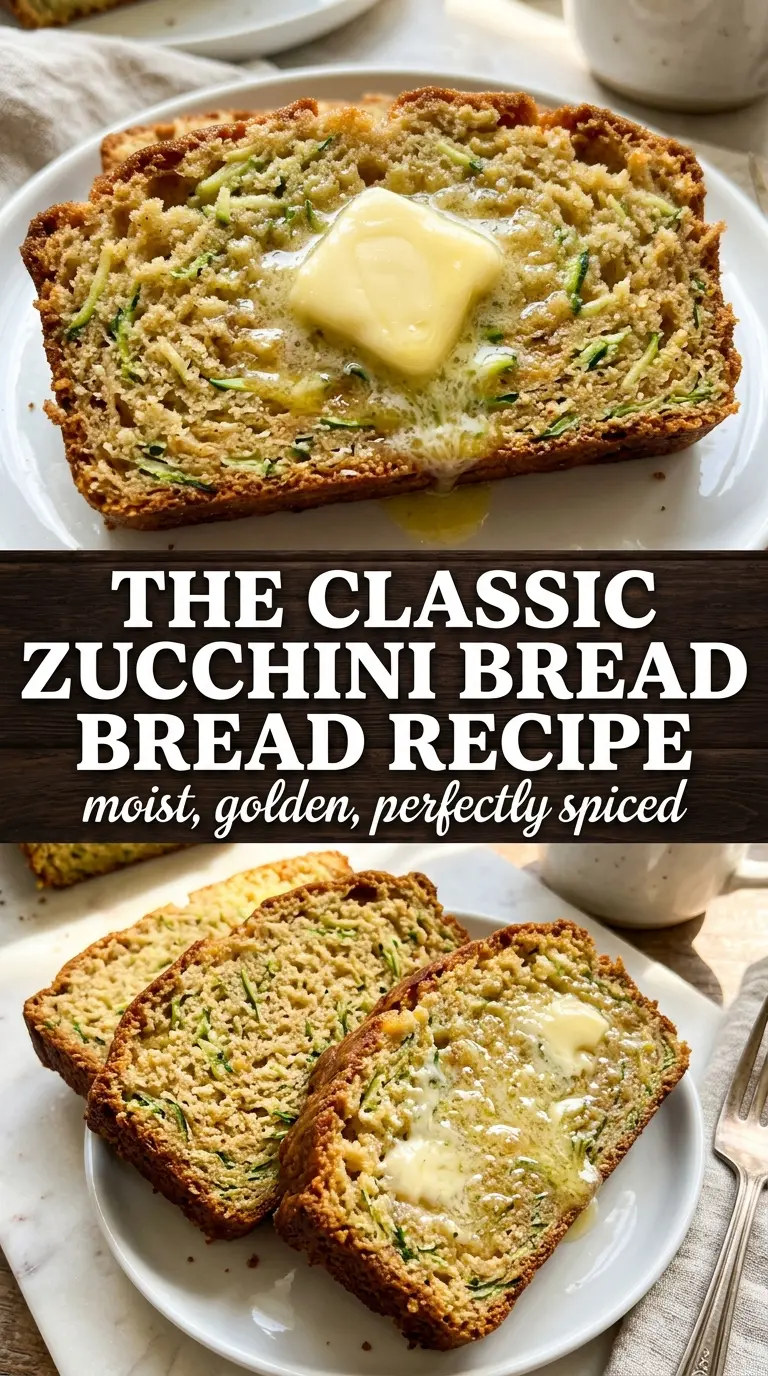
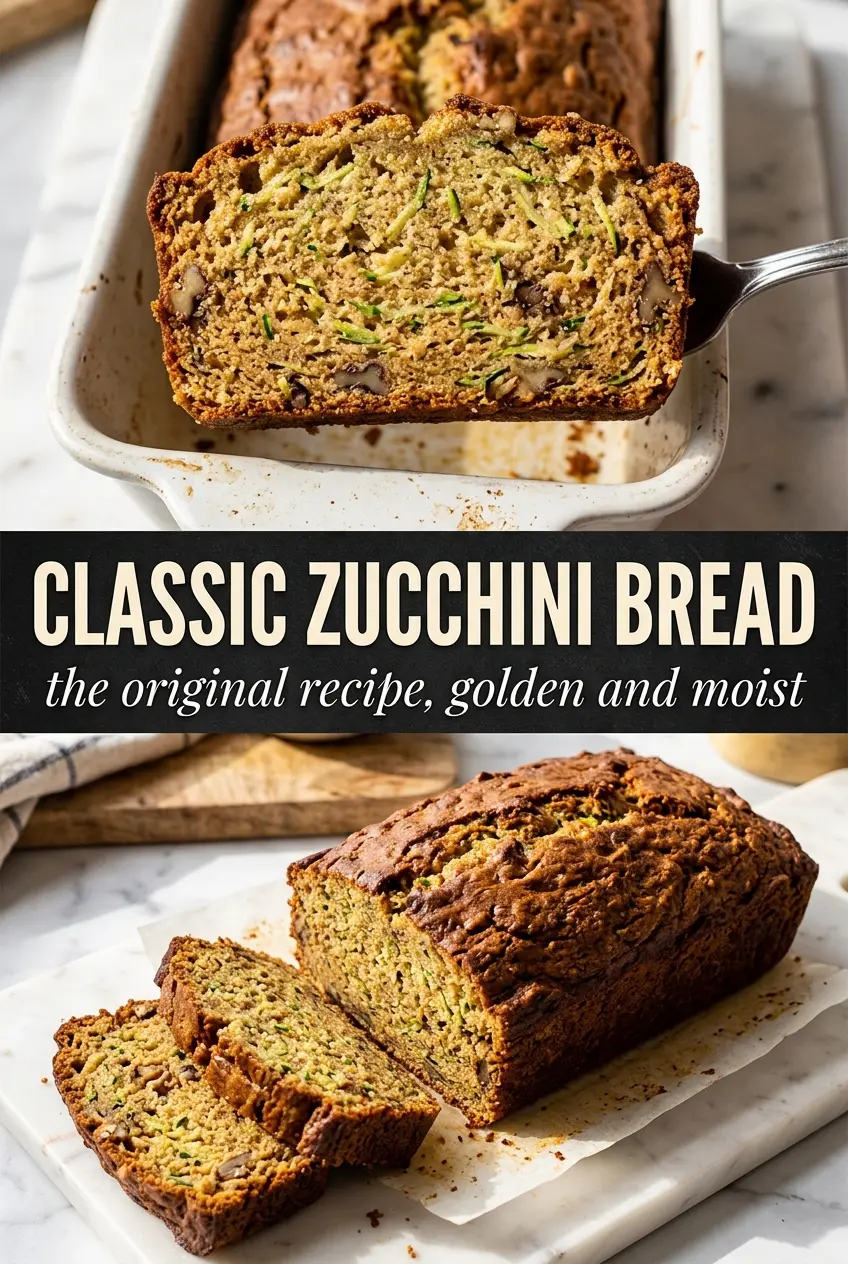
Classic zucchini bread earns its place because it stays tender for days and slices cleanly without turning dry or cakey. The crumb is soft and moist with a gentle cinnamon warmth, and the top bakes up into that deep golden, slightly cracked crust that makes a loaf look homemade in the best possible way.
The trick is leaving the zucchini alone. Grated zucchini carries a lot of water, and that moisture is what keeps the bread supple as it cools. The batter also comes together with oil instead of butter, which gives you a softer texture and keeps the loaf from seizing up as it sits on the counter.
Below, I’ll show you why this loaf stays so tender, how to handle the zucchini without overthinking it, and the small timing detail that keeps the center from sinking after the bake.
The loaf came out so moist with a perfect cinnamon crumb, and the top cracked beautifully just like the photo. I baked it in one pan and it was still tender three days later.
Like this zucchini bread? Save it to Pinterest for the days when you want a moist, cinnamon-spiced loaf with a crackly golden top.
The Zucchini Problem: Too Much Moisture, Not Enough Structure
Most zucchini bread fails in one of two ways: it bakes up wet and gummy in the middle, or it turns dry because the baker tried to squeeze all the moisture out. This version lands in the sweet spot because the zucchini moisture is part of the batter’s structure, not something to fight. The loaf needs that water content to stay tender while the flour and eggs set around it.
The other thing that matters is not overmixing once the dry and wet ingredients meet. Stir until the flour streaks disappear, then stop. If you keep going, the bread tightens up and loses that soft, sliceable crumb that makes a good zucchini loaf worth making in the first place.
- Oil keeps the crumb soft at room temperature longer than butter does here, which is why this loaf still tastes good on day two and day three.
- Eggs give the batter enough lift and structure to support the moisture from the zucchini without collapsing.
- Baking soda plus baking powder work together to lift a batter that’s dense with sugar and vegetables; leaving one out usually means a flatter loaf.
- Grated zucchini should go in exactly as written. Don’t drain it, and don’t pack it down. Loose shreds blend into the batter more evenly and keep the texture tender.
What Each Ingredient Is Doing in the Loaf
- All-purpose flour gives the loaf its backbone. Bread flour would make it chewier, and cake flour would make it too fragile for all the zucchini inside.
- Sugar does more than sweeten. It helps the crust brown and keeps the crumb tender, which is why this loaf tastes better after it cools completely.
- Cinnamon and nutmeg give the bread its classic warmth without turning it into dessert-cake territory. Nutmeg is subtle, but it rounds out the cinnamon in a way you notice more than you expect.
- Walnuts or pecans are optional, but they add a nice contrast against the soft crumb. Chop them fairly small so they don’t sink or make the slices fall apart.
Mix the Batter, Then Let the Oven Do the Work
Dry Ingredients First
Whisk the flour, baking soda, baking powder, salt, cinnamon, and nutmeg together until the mixture looks even all the way through. That step matters more than it seems, because uneven leavening leaves you with bitter pockets or a loaf that rises unevenly. If you see streaks of spice or clumps of soda, keep whisking until they disappear.
Build the Wet Base
Beat the sugar, oil, eggs, and vanilla until the mixture looks smooth and glossy, then stir in the grated zucchini. The batter will look loose and a little messy at this stage, and that’s exactly right. If it looks dry, the zucchini wasn’t measured loosely enough or the eggs were too small.
Fold, Don’t Beat
Add the wet mixture to the dry ingredients and fold just until the flour disappears. A few small streaks are better than an overworked batter, because gluten tightens fast in quick breads. If you’re using nuts, fold them in at the very end so they stay distributed instead of sinking into the bottom of the loaf.
Bake Until the Center Is Set
Divide the batter evenly between the pans and bake until the tops are deeply golden and a toothpick comes out clean from the center. If the top browns before the middle finishes, tent the pans loosely with foil for the last part of the bake. Don’t pull the loaves too early; zucchini bread that’s underbaked in the middle will sink as it cools.
Make it nut-free without losing the texture
Leave the walnuts or pecans out entirely and the loaf still works. The bread is sturdy enough on its own, and skipping the nuts gives you a softer, more uniform crumb that slices neatly for breakfast.
Turn it into a dairy-free loaf
This recipe is naturally dairy-free as written because the richness comes from oil and eggs instead of milk or butter. That means you don’t need a special substitute, and the crumb stays just as moist.
Bake one large loaf instead of two
You can use one larger loaf pan if that’s what you have, but the bake time will stretch a bit and the center will need a little longer than the recipe card estimate. Watch the middle, not the clock, because a thick loaf can look done on top while still being soft in the center.
Swap in half whole wheat flour
Replace up to half the all-purpose flour with whole wheat flour if you want a nuttier loaf and don’t mind a slightly tighter crumb. Go beyond that and the bread starts losing the soft, classic texture that makes zucchini bread so easy to eat.
Storage and Reheating
- Refrigerator: Store tightly wrapped for up to 5 days. The crumb stays moist, though the texture firms up a little after chilling.
- Freezer: Zucchini bread freezes well. Wrap individual slices or a whole cooled loaf tightly in plastic, then foil, and freeze for up to 3 months.
- Reheating: Thaw at room temperature, then warm slices lightly in a toaster oven or low oven. Skip the microwave if you want to keep the crust from turning soft and steamy.
Answers to the Questions Worth Asking
Classic Zucchini Bread
Ingredients
Equipment
Method
- Preheat the oven to 350°F and grease two 9x5 loaf pans (or one large loaf pan) for easy release after baking.
- Place the loaf pans on a sheet pan to catch any overflow and keep baking even.
- Whisk all-purpose flour, baking soda, baking powder, salt, cinnamon, and nutmeg in a large bowl until evenly combined.
- Beat granulated sugar, vegetable oil, eggs, and vanilla extract in a separate bowl until well combined and glossy.
- Stir in grated zucchini, leaving the moisture in for a tender crumb.
- Add the wet ingredients to the dry ingredients and fold until just combined, avoiding overmixing for a soft interior.
- Fold in walnuts or pecans if using, distributing them throughout the batter.
- Divide batter between the prepared loaf pans and bake at 350°F for 55–65 minutes, until a toothpick comes out clean and the top is deeply golden.
- Cool the loaves in the pan for 20 minutes so the crumb sets before moving, then transfer to a wire rack to finish cooling.