Beef stew earns its place on the table when the broth turns deep and savory, the beef gives up its chew and slips into tenderness, and the vegetables hold their shape without going chalky. The best versions don’t taste muddy or thin. They taste like every ingredient had a job and did it well.
This version builds flavor in layers: flour helps the beef brown and later thickens the pot just enough, tomato paste brings depth, and a splash of red wine lifts everything off the bottom of the pan. I use Yukon gold potatoes because they stay creamy instead of collapsing, and I add the peas at the very end so they stay bright.
Below, I’ll walk you through the sear that gives the stew its backbone, the ingredient choices that matter most, and a few smart swaps if you need to work with what’s in your kitchen.
The broth turned rich and glossy, and the beef was fall-apart tender after the full simmer. I loved that the potatoes held their shape and the peas stayed bright at the end.
Love the deep mahogany broth and tender beef in this classic stew? Save it to Pinterest for a cozy bowl that tastes even better the next day.
The Sear Is What Gives the Broth Its Backbone
Chuck is the right cut here because it has enough connective tissue to turn silky and rich during the long simmer, but it only gets there if you brown it properly first. If the pan is crowded, the meat steams, the flour pastes up, and you lose the dark fond that makes the stew taste like more than broth and vegetables.
That first high-heat sear is the difference between a stew with depth and one that tastes flat. Work in batches and don’t stir constantly; let the cubes sit until they release cleanly and show a dark crust on the outside. The stew will look better, smell better, and taste more finished because of it.
- Beef chuck — This is the cut that breaks down into tender, spoonable pieces without drying out. Leaner cuts stay stringy; chuck has the fat and connective tissue that reward a long simmer.
- Flour — Tossing the beef in flour helps with browning and gives the finished stew a little body. A light coating is enough; a thick, gummy layer will cling to the pan and burn.
- Red wine — Use something dry and drinkable. It lifts the browned bits from the pot and adds a quiet acidity that keeps the stew from tasting heavy.
- Yukon gold potatoes — These hold together better than russets and turn creamy instead of grainy. Cut them into even cubes so they finish cooking at the same time.
What Each Ingredient Is Actually Doing in This Recipe

- Primary ingredient (the star) — Quality matters most. Choose the best you can find.
- Cooking medium (oil, butter, or broth) — This carries flavors and prevents dryness.
- Seasonings (salt, pepper, spices, herbs) — Layer flavors so nothing overpowers. Build depth gradually.
- Aromatics (garlic, onion, herbs) — Cook with fat to bloom flavors. Become the foundation.
- Supporting ingredients — Complement the main ingredient without overpowering it.
- Sauce or liquid (if applicable) — Brings flavors together. Balance richness with acid.
- Acid (lemon, vinegar, wine, or other) — Brightens and prevents flat-tasting results.
- Final finish (garnish, glaze, or sauce) — Prevents one-dimensional taste and adds visual appeal.
Building the Stew in the Right Order
Browning the Beef in Batches
Toss the beef with the flour, then brown it in olive oil over high heat until the surfaces are deeply colored, not pale beige. If the cubes release liquid and start to gray, the pan is too crowded or not hot enough. Pull the meat out as soon as it has a crust; it will finish cooking later in the stew.
Softening the Vegetables Without Losing Them
Sauté the onion, carrots, and celery in the same pot until the onion turns translucent and the vegetables pick up a little color around the edges. Stir in the garlic and tomato paste for two minutes so the raw garlic bite cooks off and the paste darkens slightly. If you add the garlic too early, it can scorch and turn bitter before the stew even starts simmering.
Letting the Simmer Do the Work
Pour in the wine first and scrape up every browned bit from the bottom of the pot. Then add the broth, tomatoes, Worcestershire, thyme, bay leaves, and beef, bring it to a boil, and drop it down to a gentle simmer. A hard boil will tighten the meat and cloud the broth, so keep the surface at a lazy bubble and give it time.
Finishing with Potatoes and Peas
Add the potatoes once the beef is already tender, not at the beginning, or they’ll break down before the meat is ready. Cook them until a fork slips in easily, then stir in the peas for the last few minutes so they stay green and sweet. Pull out the bay leaves before seasoning the pot with salt and pepper.
What to Change Without Losing the Soul of the Stew
Make It Gluten-Free
Swap the all-purpose flour for a gluten-free flour blend that works for dredging, or skip the flour altogether and thicken the finished stew with a cornstarch slurry. You’ll lose a little of the old-fashioned browning help from the flour, but the stew still turns out rich if you sear the beef well.
Skip the Wine and Keep the Depth
Use extra beef broth plus a tablespoon of red wine vinegar or balsamic at the end. The wine brings a round, savory note, so without it the stew needs a little acidity to keep the broth from tasting heavy.
Use a Different Vegetable Mix
Parsnips, mushrooms, or pearl onions fit this stew well if you want a different mix of sweetness and earthiness. Add mushrooms with the onions so they can brown, and add parsnips with the potatoes so they don’t turn mushy.
Storage and Reheating
- Refrigerator: Store for up to 4 days. The broth thickens as it chills, and the flavor gets deeper.
- Freezer: Freezes well for up to 3 months. Cool completely first, then portion it into airtight containers; the potatoes may soften a little after thawing, but the stew still holds up.
- Reheating: Warm it slowly on the stove over low to medium-low heat, stirring now and then. A fast boil can turn the beef stringy and make the potatoes fall apart before the center is hot.
Questions I Get Asked About This Recipe
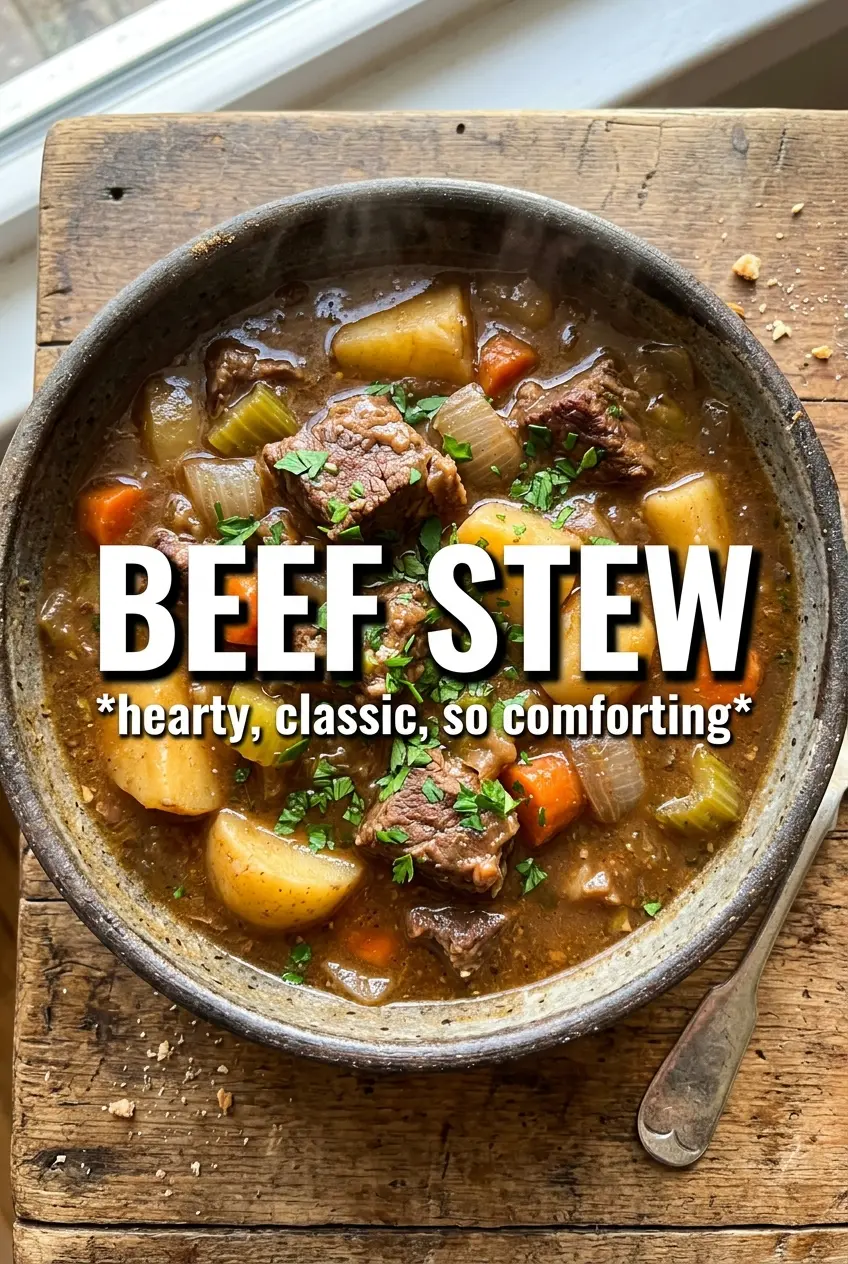
Beef Stew
Ingredients
Equipment
Method
- Toss the beef with all-purpose flour until evenly coated. The pieces should look lightly dusted before they hit the pan.
- Heat olive oil in a Dutch oven over high heat and sear the beef in batches until deeply browned, 3-5 minutes per batch. Spread the cubes in one layer and leave them undisturbed until you see a dark crust forming.
- Remove the browned beef to a plate. Keep any browned bits in the pot for flavor.
- Sauté onion, carrots, and celery for 5 minutes. Stir until the vegetables soften slightly and the onion turns translucent.
- Add garlic and tomato paste and cook for 2 minutes. Stir constantly until fragrant and the tomato paste darkens a bit.
- Deglaze with red wine, scraping up the browned bits from the bottom of the pot. Reduce until the wine smell cooks off, about 2-3 minutes.
- Add beef broth, diced tomatoes, Worcestershire, dried thyme, bay leaves, and the browned beef. Stir to ensure the beef is submerged in the liquid.
- Bring the stew to a boil, then reduce heat to a steady simmer and cover. Simmer for 60-75 minutes until the beef is very tender and pulls apart easily.
- Add cubed Yukon gold potatoes and cook for 20 minutes. Keep it at a gentle simmer so the potatoes cook through but don’t turn mushy.
- Add frozen peas and cook for 3 minutes. The peas should turn bright green and hot throughout.
- Remove bay leaves and season with salt and pepper to taste. Taste the broth and adjust before serving.