Cinnamon fried apples land in that sweet spot between spoon dessert and side dish: tender apple slices, a glossy brown sugar sauce, and enough cinnamon to make the whole skillet smell like you’ve been cooking for hours. The best part is the texture. The apples keep their shape instead of turning to mush, and the sauce clings to every slice instead of pooling thinly at the bottom of the pan.
This version works because the apples cook covered just long enough to soften before the cornstarch goes in. That short steam helps them turn tender without needing a long simmer, and the cornstarch thickens the juices into a sauce that looks silky instead of watery. Honeycrisp gives you a sweeter bite with a little snap, while Granny Smith stays a little firmer and brings a sharper edge against the brown sugar.
Below, I’ll show you the small details that keep the apples from going soft too fast, plus the best swaps if you only have one type of apple on hand. It’s a simple skillet recipe, but a few choices make the difference between good apples and the kind people keep sneaking straight from the pan.
The sauce turned glossy and thick in just a couple minutes, and the apples stayed tender instead of falling apart. I served them over pork chops and my husband asked if there were leftovers for breakfast.
Save these cinnamon fried apples for pork chops, pancakes, or a warm spoonful over vanilla ice cream.
The Mistake That Turns Fried Apples Mushy
The biggest failure with fried apples is overcooking them before the sauce has a chance to thicken. Apples keep softening as they sit in the hot skillet, so if you cook them until they look fully tender in the first stage, they’ll be too soft by the time the syrup is done. Covering the pan helps trap steam and speed up the softening, but the lid comes off before the apples lose their shape.
The other trap is adding the thickener too early. Cornstarch needs enough liquid to disperse cleanly, and it thickens fast once it heats up. Stir it in only after the apples are just tender, then simmer until the sauce turns shiny and coats the back of a spoon.
What Each Ingredient Is Doing in the Skillet
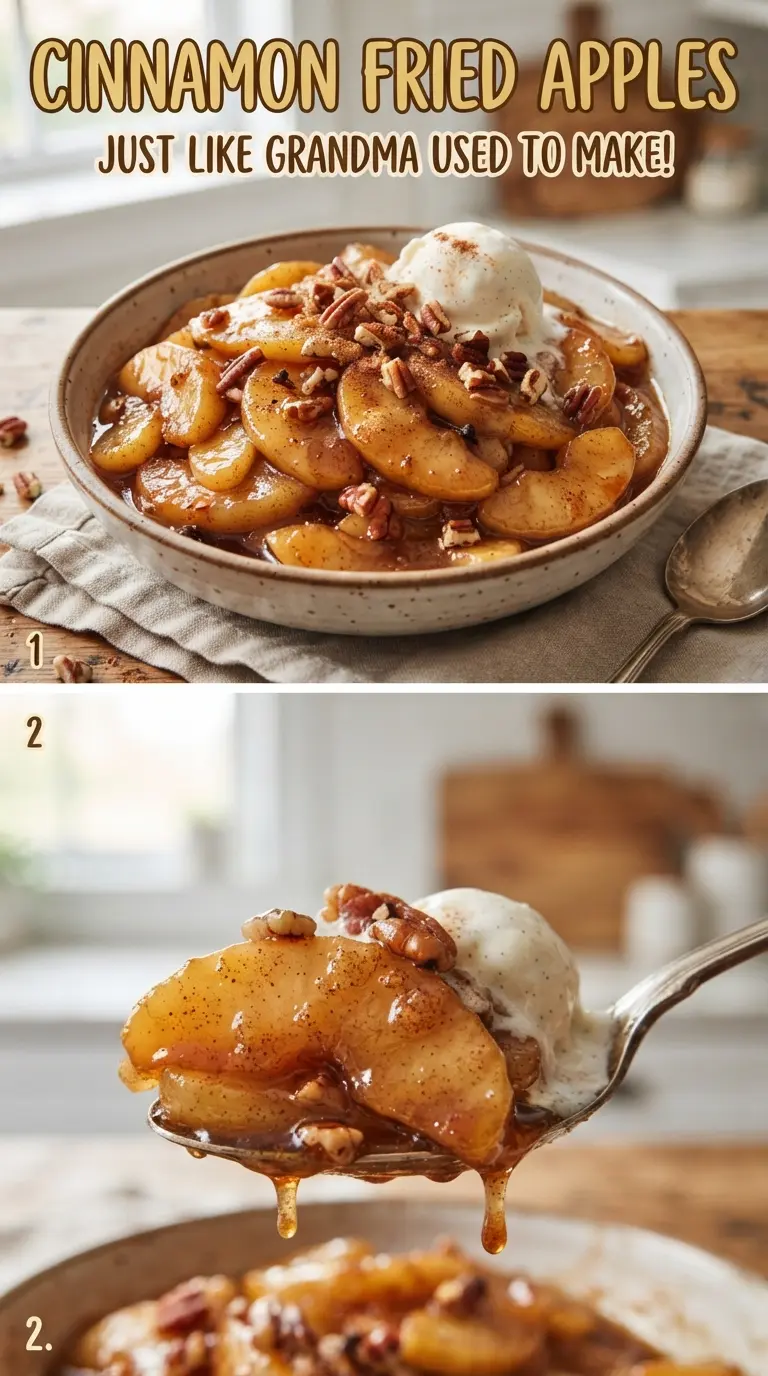
- Firm apples — Honeycrisp and Granny Smith both hold their shape well, which matters here. Softer apples break down too fast and turn the skillet into applesauce. Slice them evenly so they cook at the same pace.
- Butter — This gives the sauce body and helps the spices bloom. Salted or unsalted both work; if you use salted butter, keep the pinch of salt light.
- Brown sugar — This melts into the butter and apple juices to make the syrup. Packed brown sugar gives a deeper molasses note than white sugar, which tastes flatter in this dish.
- Cinnamon and nutmeg — Cinnamon is the main note, while nutmeg rounds it out and makes the whole pan taste warmer and more complete. Don’t overdo the nutmeg or it starts to read bitter and sharp.
- Cornstarch — This is what turns the juices into a glossy sauce instead of a thin syrup. Whisk it with the water first so it disperses evenly; dumping it straight into the pan can leave little gelled clumps.
- Vanilla — Stir it in at the end so it stays fragrant. If you add it too early, some of the aroma cooks off.
Getting the Apples Tender Without Breaking the Sauce
Starting the Skillet
Melt the butter over medium heat until it foams, then add the apples, sugar, cinnamon, nutmeg, and salt. Stir until every slice looks coated and glossy. The sugar won’t fully dissolve yet, and that’s fine; the fruit will release enough juice to build the sauce. If the heat runs too high here, the sugar can start to catch before the apples have softened.
Covered Softening
Cover the skillet and cook for 8 to 10 minutes, stirring once or twice. You’re looking for apples that are just tender at the edges but still hold their shape in the center. Granny Smith usually needs the full time, while Honeycrisp can soften a little faster. If the pan looks dry before the apples are tender, lower the heat and keep the lid on rather than adding extra liquid right away.
Thickening the Syrup
Whisk the cornstarch with the water until smooth, then pour it into the skillet and stir right away. The sauce should start turning glossy within a minute or two, then go from thin to spoon-coating as it simmers. If it stays cloudy or loose, give it another minute of gentle simmering. High heat can make the thickener seize in spots, so keep the simmer calm.
Finishing With Vanilla
Stir in the vanilla after the heat has done its job and turn off the burner. That last addition keeps the flavor round and fragrant instead of cooked out. Serve the apples warm while the sauce is still silky. As they sit, they’ll thicken a little more, which is exactly what you want.
How to Adapt These Fried Apples for Different Pans and Diets
Dairy-Free Version
Swap the butter for a plant-based butter that melts cleanly. Olive oil works in a pinch, but it gives the apples a different finish and loses some of that classic buttery sauce flavor. Use a neutral vegan butter if you want the closest result.
Less-Sweet Southern Side Dish
Cut the brown sugar back to 1/4 cup if you’re serving these with pork or biscuits and want them to read more like a side than dessert. The sauce will be a little less syrupy, but the apples and cinnamon will stand out more clearly.
Using Only Granny Smith Apples
All Granny Smith apples give you a firmer, tarter result that holds up beautifully. Add the full cook time and let the sauce finish thickening completely so the sharp apple flavor has time to mellow into the brown sugar.
Storage and Reheating
- Refrigerator: Store in an airtight container for up to 4 days. The sauce thickens as it chills, and the apples soften a little more.
- Freezer: Freezing works, but the texture gets softer after thawing. If you freeze them, cool completely and use a freezer-safe container for up to 2 months.
- Reheating: Warm gently in a skillet over low heat with a splash of water if the sauce has tightened up. Microwaving works too, but use short bursts so the apples don’t collapse.
Questions I Get Asked About This Recipe
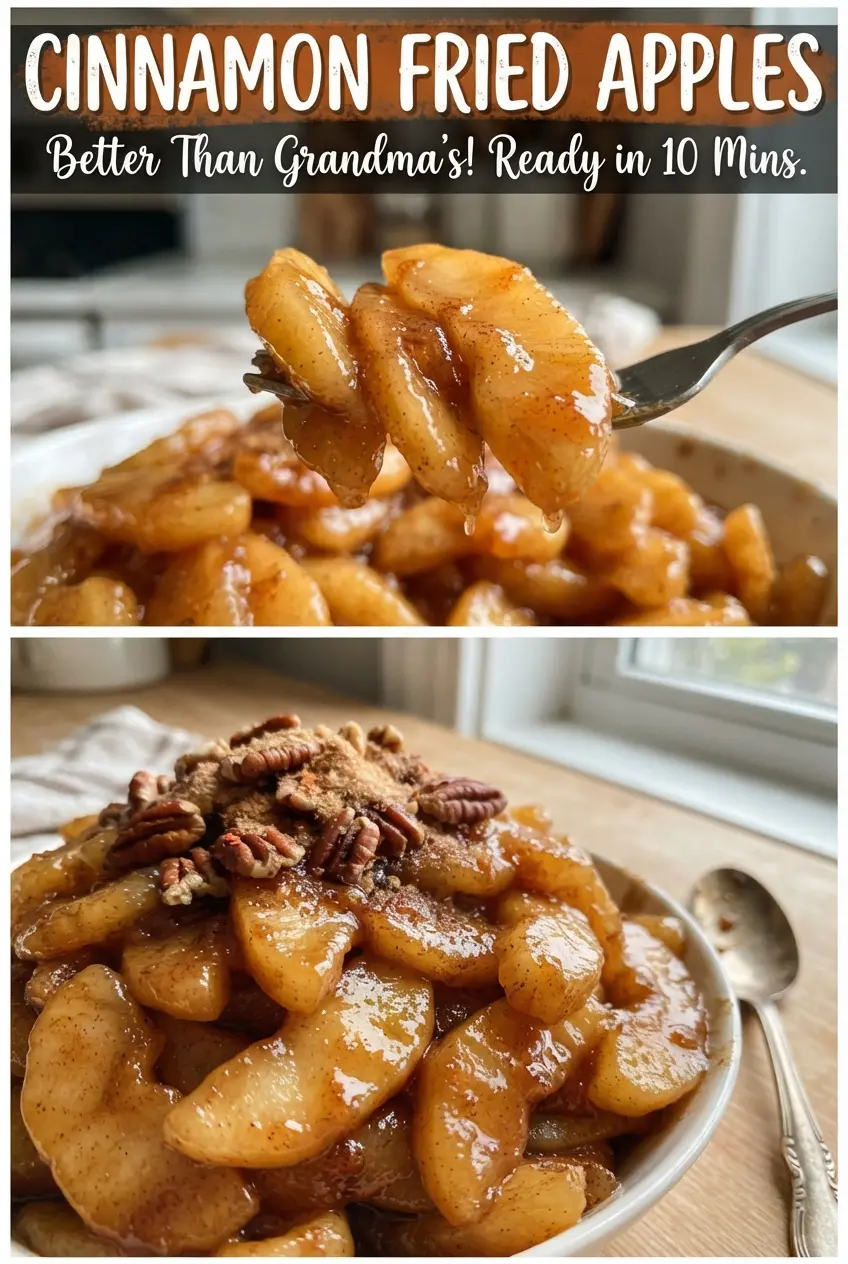
Cinnamon Fried Apples
Ingredients
Equipment
Method
- Melt the butter in a large skillet over medium heat until glossy and melted, about 1 minute. Keep the heat at medium so the apples start to soften without browning too quickly.
- Add the sliced apples, brown sugar, ground cinnamon, nutmeg, and salt, then stir to coat. You should see sugar begin to cling to the apple surfaces.
- Cover the skillet and cook the apples for 8-10 minutes, stirring occasionally. Stop when the apples are just tender and release steam.
- Whisk the cornstarch with the water until smooth, then pour it into the skillet. The mixture should blend in without lumps.
- Simmer for 2-3 minutes, stirring, until the sauce thickens and turns glossy. Watch for a coating texture that clings to the apples.
- Stir in the vanilla extract and cook for 30 seconds to 1 minute. Serve warm with a spoonable, glossy sauce.