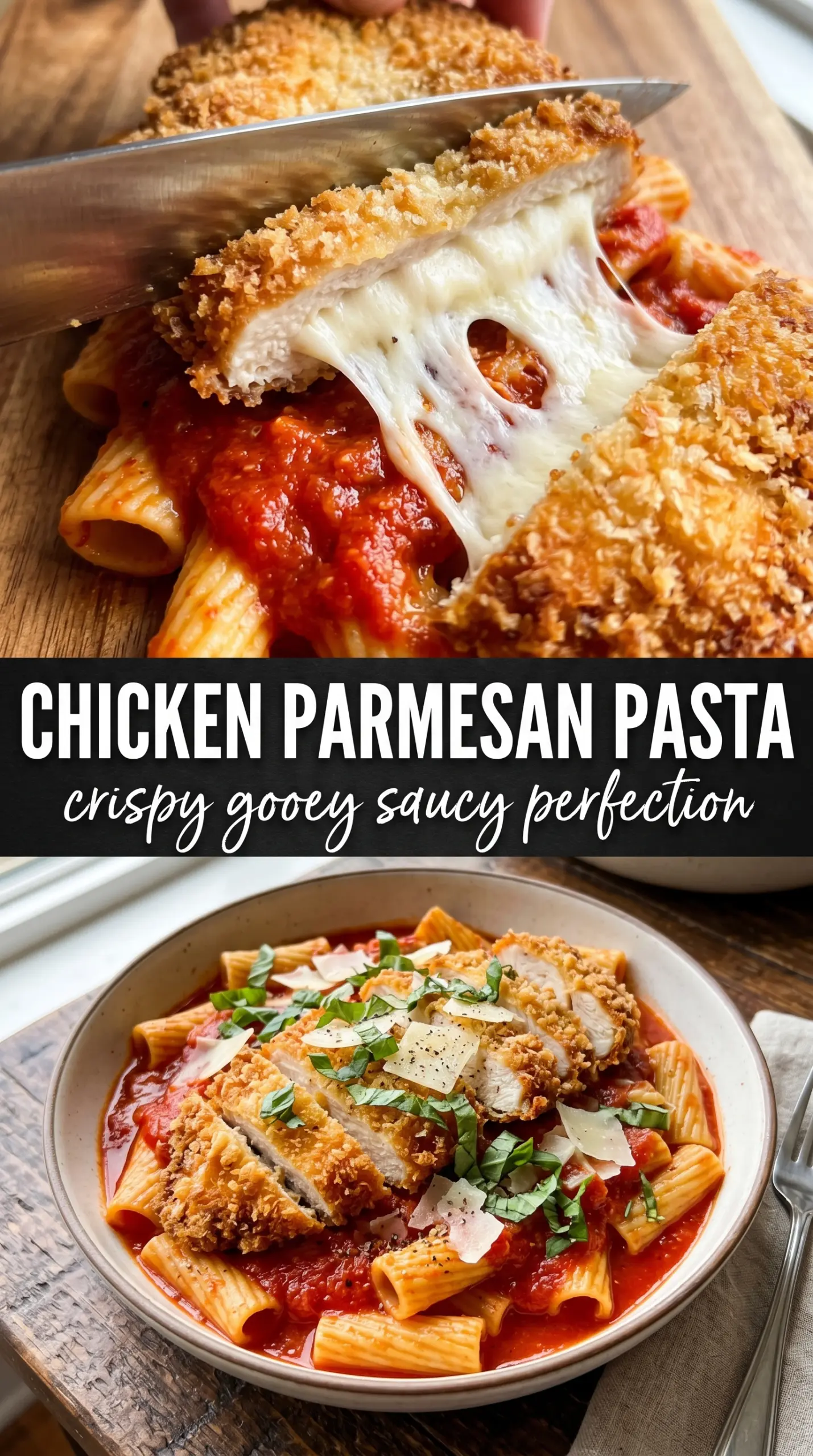
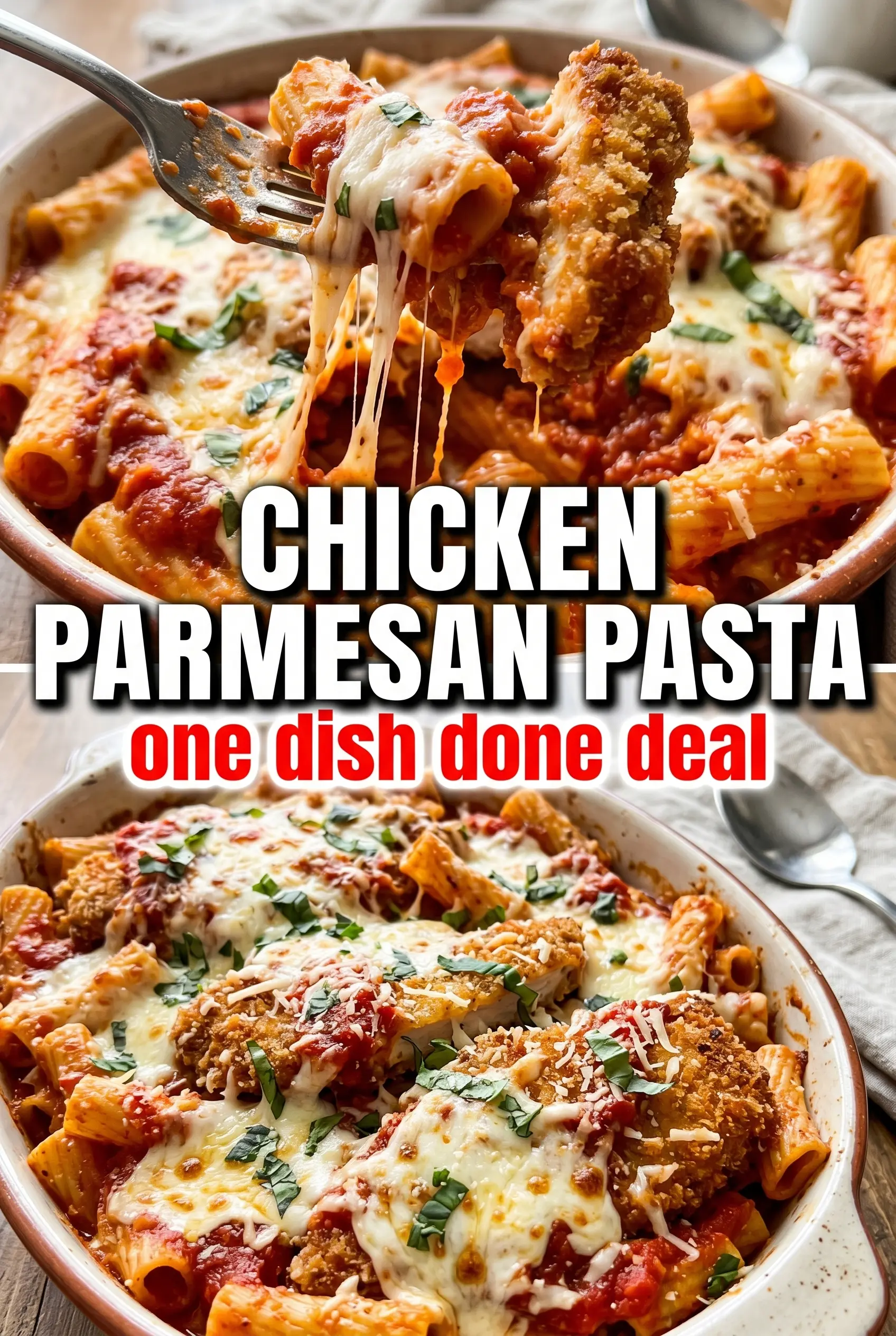
Golden breaded chicken, glossy marinara, and a blanket of melted mozzarella turn this Chicken Parmesan Pasta into the kind of baked pasta that gets scraped clean at the table. The chicken stays crisp on top, the penne catches sauce in every ridge, and the whole dish lands with that familiar chicken parm comfort without the fuss of frying cutlets and building separate portions.
What makes this version work is the order. The pasta is already cooked before it goes into the baking dish, so it only needs enough sauce to stay juicy and finish in the oven. The chicken is browned before baking, which gives you real color and crunch instead of pale, steamed breading. That short pan-fry matters more than people think, because the oven finishes the chicken but doesn’t create the crust.
Below, I’ve laid out the small details that keep the coating on the chicken, the sauce from drying out, and the cheese from turning greasy. There’s also a simple storage note for the best way to reheat leftovers without losing that crisp top.
The chicken stayed crisp even after baking, and the marinara soaked into the penne without making it mushy. I served it straight from the pan and there wasn’t a noodle left.
Save this Chicken Parmesan Pasta for the nights when you want crispy chicken, saucy penne, and melted mozzarella in one baking dish.
The Part Most Chicken Parm Pasta Gets Wrong
The biggest mistake is treating the pasta and the chicken like they can both survive a long oven bake in the same way. They can’t. The pasta needs just enough sauce to stay loose and glossy, while the chicken needs to hit the oven already crisp so the breading doesn’t slide off into the sauce. If the sauce is too thick before it bakes, the pasta turns tight and dry. If it’s too thin, the whole pan comes out watery under the cheese.
The other place this dish falls apart is crowding the chicken in the skillet. When the pieces touch too much, they steam instead of browning, and that soft coating never really recovers in the oven. Give the chicken space and let the crust turn deeply golden before it goes into the baking dish.
- Flour — This first layer helps the egg cling to the chicken, which is what keeps the breadcrumbs in place. Shake off the excess or the coating turns pasty instead of crisp.
- Italian breadcrumbs — These bring seasoning and crunch. Plain breadcrumbs work in a pinch, but you’ll need to season them yourself and you won’t get quite the same savory edge.
- Parmesan — The grated cheese mixed into the breading adds salt, nuttiness, and a drier crust that browns well. Use freshly grated Parmesan if you can; the pre-grated shelf-stable kind doesn’t melt or toast as nicely.
- Marinara sauce — A good jarred marinara is fine here as long as it tastes balanced and isn’t overly sweet. This recipe doesn’t hide a weak sauce, so pick one you’d happily eat on its own.
- Mozzarella — Shredded mozzarella gives you the melt and the stretch. Low-moisture mozzarella is the right choice because fresh mozzarella can release too much liquid and make the top slippery.
- Penne — The ridges hold onto sauce and the tube shape gives you a sturdy bite under all that cheese. Any short pasta with some texture can work, but penne stands up best in a baked dish like this.
What Each Ingredient Is Actually Doing in This Recipe
- Primary ingredient (the star) — Quality matters most. Choose the best you can find.
- Cooking medium (oil, butter, or broth) — This carries flavors and prevents dryness.
- Seasonings (salt, pepper, spices, herbs) — Layer flavors so nothing overpowers. Build depth gradually.
- Aromatics (garlic, onion, herbs) — Cook with fat to bloom flavors. Become the foundation.
- Supporting ingredients — Complement the main ingredient without overpowering it.
- Sauce or liquid (if applicable) — Brings flavors together. Balance richness with acid.
- Acid (lemon, vinegar, wine, or other) — Brightens and prevents flat-tasting results.
- Final finish (garnish, glaze, or sauce) — Prevents one-dimensional taste and adds visual appeal.
How to Keep the Chicken Crispy Under the Cheese
Build the coating in three clean layers
Start with dry chicken pieces and coat them lightly in flour before they go into the egg. That thin flour layer gives the egg something to grab, and the egg is what lets the breadcrumb mixture cling evenly. Press the breadcrumbs on with your hands so the coating looks shaggy and well covered instead of patchy. If the chicken looks wet before it hits the pan, the crust will slip right off.
Brown the chicken before the oven ever sees it
Heat the olive oil over medium-high and add the chicken in a single layer. You want a hard sizzle right away. Let the pieces sit long enough to form a deep golden crust before turning them, because pale breading won’t magically crisp later. If the pan is crowded, work in batches. That extra few minutes is the difference between crunchy chicken and soft crumbs.
Let the pasta stay saucy, not soupy
Toss the cooked penne with marinara until every piece is coated, then stop. You’re aiming for glossy pasta that still looks a little loose in the bowl, since it will tighten in the oven as the cheese melts and the dish bakes. Spread it into the baking dish in an even layer so the chicken sits on top instead of sinking. If the pasta looks dry before baking, add a splash more sauce before it goes into the dish.
Finish hot enough to melt, not so hot that it dries out
Bake at 375°F until the mozzarella is fully melted and the edges are bubbling. The top should look creamy and lightly golden, not browned all over. Pull it when the cheese is settled and the dish still looks juicy underneath, because it will thicken a little as it rests. Scatter basil over the top after baking so it stays bright.
Three Ways to Make This Fit Your Table
Gluten-Free Version
Use a gluten-free flour blend and gluten-free breadcrumbs, then check that your marinara is certified gluten-free. The texture stays close to the original as long as you still fry the chicken until the crust is deeply golden before baking.
Lighter Chicken Parm Pasta
Use less mozzarella on top and add an extra spoonful of marinara to keep the pasta moist. You’ll lose a little of the heavy cheese pull, but the dish still tastes rich because the breaded chicken carries a lot of the flavor on its own.
Add a Vegetable Layer
Stir in sautéed spinach, mushrooms, or roasted zucchini with the pasta before baking. Keep the vegetables cooked and well drained so they don’t water down the sauce. This turns the dish into a fuller pan meal without changing the chicken parm character.
Storage and Reheating
- Refrigerator: Store leftovers in an airtight container for up to 4 days. The breading softens in the fridge, but the flavor holds up well.
- Freezer: This freezes best as individual portions. Cool completely, wrap tightly, and freeze for up to 2 months. The mozzarella texture gets a little softer after thawing, but it still works.
- Reheating: Reheat in a 350°F oven, covered for the first 10 minutes, then uncovered until hot. The main mistake is blasting it in the microwave, which makes the chicken rubbery and the pasta dry in patches.
Answers to the Questions Worth Asking
Chicken Parmesan Pasta
Ingredients
Equipment
Method
- Dredge the chicken pieces in flour, dip in beaten egg, then coat in breadcrumbs mixed with 1/2 cup Parmesan until evenly covered.
- Pan-fry the coated chicken in olive oil over medium-high heat for 3–4 minutes per side until golden and cooked through; drain on paper towels.
- Toss the cooked penne with marinara sauce and pour into a greased 9x13 baking dish for an even, saucy base.
- Arrange the crispy chicken pieces over the pasta, letting some pieces peek through for texture.
- Top with shredded mozzarella and Parmesan cheese so the surface looks thick and fully covered.
- Bake at 375°F for 20–22 minutes until the cheese is melted and golden with bubbling edges.
- Garnish with fresh basil right after baking for a bright green finish over the melted cheese layer.