Juicy chicken breasts in creamy garlic sauce earn their place in the dinner rotation because they deliver a proper pan sauce without turning into a fussy project. The chicken stays lightly browned and tender, and the sauce turns velvety enough to cling to the meat and pool around the edges of the plate. It tastes rich, but it still comes together in one skillet with ingredients you probably already keep on hand.
The part that makes this version work is the garlic handling. Some goes in early enough to mellow in butter, and the rest of the depth comes from a quick deglaze and a slow simmer with cream and Parmesan. That gives you a sauce with real body instead of a thin, flat coating. Searing the chicken first also leaves the browned bits in the pan, which is where most of the flavor lives.
Below, I’ve included the small technique details that keep the sauce smooth, plus a few swaps that still taste right if you need to work around what’s in your kitchen.
The sauce thickened up beautifully and didn’t split when I added the Parmesan. I used chicken broth instead of wine, and the garlic still came through in every bite.
Save these creamy garlic chicken breasts for the nights when you want a fast skillet dinner with a sauce that actually stays silky.
The Trick to Keeping the Cream Sauce Smooth After the Sear
The biggest mistake in a dish like this is rushing the sauce while the skillet is still too hot. After the chicken comes out, the pan needs a minute of breathing room before the butter, garlic, and cream go in. That keeps the garlic from scorching and helps the dairy stay smooth instead of turning grainy or oily.
Another thing that matters here is the order of the ingredients. The wine or broth lifts the browned bits off the bottom, which gives the sauce depth before the cream even hits the pan. Once the Parmesan goes in, the heat should stay at a gentle simmer, not a hard boil. That’s the difference between a sauce that coats the chicken and one that turns tight or broken.
- Boneless skinless chicken breasts — These cook fast and stay tender if you stop at 165°F. If yours are thick on one end, pound them to an even thickness so the thinner edge doesn’t dry out before the center is done.
- Heavy cream — This is what gives the sauce its body and protects it from splitting. Half-and-half will work in a pinch, but the sauce will be thinner and you’ll need a little more simmer time.
- Parmesan — Freshly grated melts in cleanly and helps the sauce thicken. Pre-grated cheese can work, but it often has anti-caking agents that make the sauce a little less silky.
- Dry white wine or chicken broth — Wine adds sharper depth, while broth keeps things mellow and family-friendly. Either way, the liquid should be used to deglaze the pan so none of those browned bits are wasted.
- Garlic — Eight cloves sounds bold because it is, and that’s the point. Mince it evenly so it cooks at the same pace; big chunks can taste raw while the rest is already turning sweet.
What Each Ingredient Is Actually Doing in This Recipe

- Primary ingredient (the star) — Quality matters most. Choose the best you can find.
- Cooking medium (oil, butter, or broth) — This carries flavors and prevents dryness.
- Seasonings (salt, pepper, spices, herbs) — Layer flavors so nothing overpowers. Build depth gradually.
- Aromatics (garlic, onion, herbs) — Cook with fat to bloom flavors. Become the foundation.
- Supporting ingredients — Complement the main ingredient without overpowering it.
- Sauce or liquid (if applicable) — Brings flavors together. Balance richness with acid.
- Acid (lemon, vinegar, wine, or other) — Brightens and prevents flat-tasting results.
- Final finish (garnish, glaze, or sauce) — Prevents one-dimensional taste and adds visual appeal.
Building the Sauce in the Same Pan Without Letting It Break
Searing the Chicken First
Season the chicken well before it hits the pan. You want a deep golden crust on both sides, not a pale surface with a few brown freckles. Medium-high heat gives you that crust while keeping the inside juicy, but if the pan is smoking hard, the outside will darken before the center catches up. Pull the chicken once it reaches 165°F and set it aside on a plate so it can rest while the sauce comes together.
Waking Up the Garlic in Butter
Drop the heat to medium before the butter goes in. The garlic should sizzle softly and smell fragrant within a minute or two, with the edges just starting to turn golden. If it browns too fast, it will taste bitter in the finished sauce, and there’s no fixing that later. Stir constantly and keep it moving through the butter so every bit cooks evenly.
Deglazing and Thickening the Cream
Pour in the wine or broth and scrape the bottom of the pan with a wooden spoon. Those browned bits dissolve into the liquid and build the backbone of the sauce. After that, add the cream and bring it to a gentle simmer, not a boil. When the Parmesan goes in, the sauce should turn glossy and coat the back of a spoon after a few minutes.
Bringing the Chicken Back for the Finish
Return the chicken to the skillet and spoon sauce over the top so it warms through without overcooking. This last pass is short. The chicken just needs to finish heating and pick up the garlic cream sauce on the outside. Sprinkle the thyme and parsley over the top right before serving so the herbs stay bright instead of fading into the sauce.
How to Adapt This Creamy Garlic Chicken Without Losing the Good Part
Make It Dairy-Free with Coconut Cream
Use full-fat coconut cream in place of heavy cream and skip the Parmesan, or stir in a dairy-free Parmesan substitute at the end. The sauce will be a little sweeter and less savory, but it still turns lush and spoonable. Keep the garlic and thyme as written so the flavor stays grounded.
Use Chicken Thighs for a Richer, More Forgiving Dinner
Boneless skinless thighs work well here and are harder to dry out if the timing runs long. They’ll need a few extra minutes in the skillet, but the payoff is a juicier bite and a little more richness in the pan. Keep the sauce the same, just check the internal temperature before returning them to the skillet.
Skip the Wine and Use Broth
Chicken broth gives you a milder sauce that’s still full of body. You lose the sharper edge that wine brings, so add a tiny squeeze of lemon at the end if the sauce tastes a little flat. That small lift keeps the cream from feeling heavy.
Storage and Reheating
- Refrigerator: Store leftovers in an airtight container for up to 3 days. The sauce will thicken as it chills.
- Freezer: This is not a great freezer meal. Cream sauces can separate after thawing, and the texture of the chicken gets drier.
- Reheating: Warm gently in a skillet over low heat with a splash of broth or cream. Don’t use high heat, or the sauce can break before the chicken is hot.
Questions I Get Asked About This Recipe
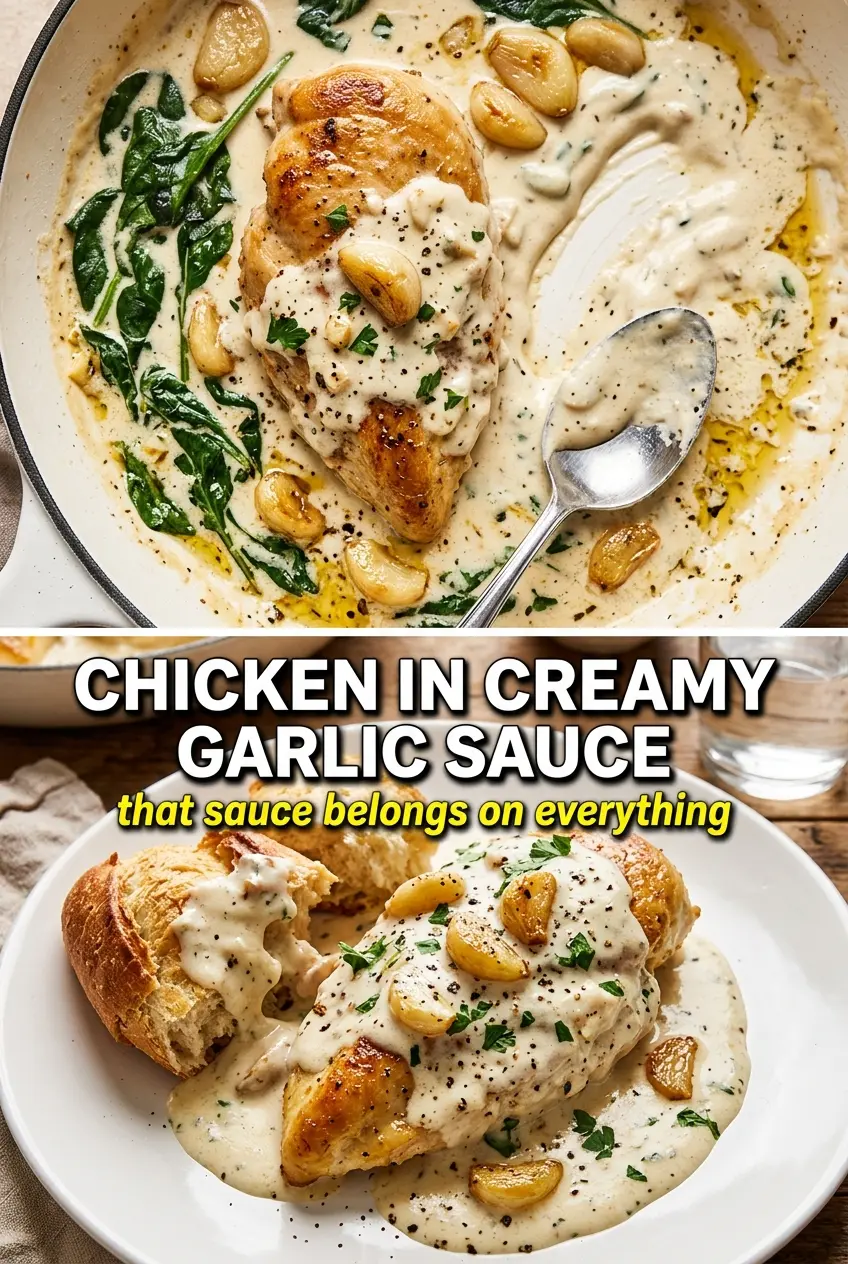
Chicken Breasts in Creamy Garlic Sauce
Ingredients
Equipment
Method
- Season the boneless skinless chicken breasts all over with salt, black pepper, and smoked paprika to taste. Sear in olive oil in a large skillet over medium-high heat for 5-6 minutes per side, until golden and the internal temperature reaches 165°F, then remove to a plate.
- Melt butter in the same pan over medium heat. Add minced garlic and cook for 2 minutes, stirring constantly, until fragrant and starting to turn golden.
- Pour in the dry white wine or chicken broth to deglaze the pan. Cook for 2 minutes, then stir in the heavy cream and bring to a simmer.
- Stir in Parmesan cheese, Italian seasoning, and cayenne pepper. Simmer for 4-5 minutes until the sauce is thick and glossy.
- Return the chicken breasts to the pan. Spoon the garlic cream sauce over each breast to coat.
- Garnish with fresh thyme and fresh parsley. Serve immediately while the sauce is thick and glistening.