Golden chicken, blistered peppers, and tender zucchini all in one pan make this skillet dinner the kind of meal that earns a permanent place in the weeknight rotation. The chicken stays juicy because it’s seared fast and pulled before it dries out, and the vegetables pick up just enough char to taste cooked, not soggy. A light garlic herb pan sauce ties everything together without turning the skillet into soup.
The trick here is heat management. The chicken needs a hot pan to get color before it cooks through, while the vegetables need enough space and heat to caramelize instead of steaming. That means working in the right order and letting each ingredient sit long enough to do its job. The broth and butter at the end loosen the browned bits from the pan and turn them into the quickest kind of sauce.
Below, I’ll walk through the small details that keep the chicken golden and the vegetables crisp-tender. There’s also a simple way to adapt this for meal prep or swap in whatever sturdy vegetables you already have on hand.
The chicken browned beautifully and the zucchini stayed tender instead of turning watery. I loved how the broth and butter picked up all the little browned bits from the pan.
Save this chicken and vegetables skillet for the nights when you want golden chicken, charred vegetables, and one pan to clean.
The Reason the Chicken Stays Juicy While the Vegetables Brown
The mistake most people make with skillet chicken and vegetables is crowding everything in at once. Chicken throws off moisture as it cooks, and vegetables do the same. If they’re piled together, they steam and the skillet never gets hot enough to brown anything properly. This recipe works because the chicken goes first, then the vegetables get their own turn in the same pan.
That order does two things. First, it builds a browned base on the chicken that tastes like you spent longer than 40 minutes in the kitchen. Second, it leaves just enough fond in the skillet for the broth to catch and turn into a quick pan sauce. If your vegetables are soft but pale, the pan wasn’t hot enough. If your chicken looks gray, it sat too long before it hit the skillet.
What Each Ingredient Is Actually Doing in This Skillet
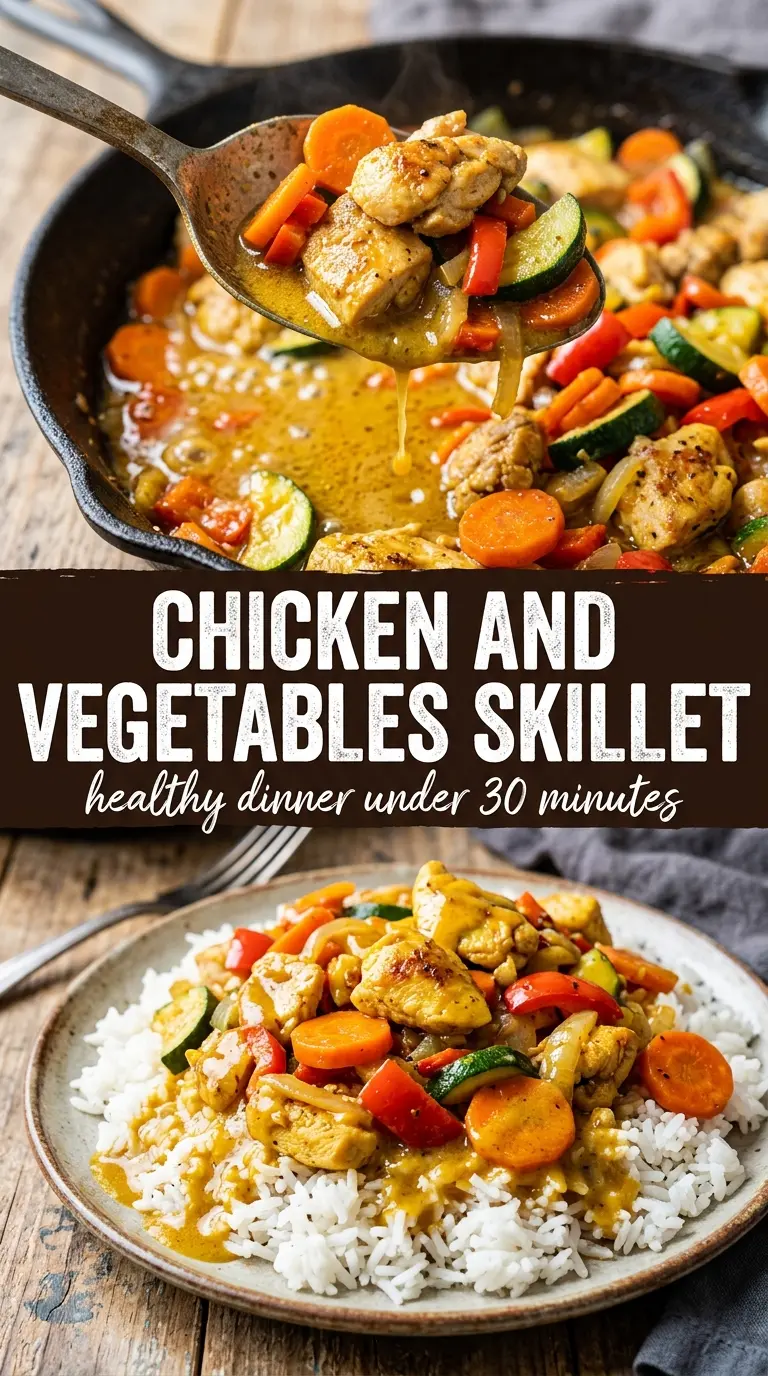
- Chicken breasts — Slicing them into strips gives you more browned surface area and keeps the cooking time short. If you swap in thighs, cut them into similar strips and expect a little more richness and a little less lean bite.
- Bell peppers, zucchini, and red onion — This mix gives you sweetness, moisture, and structure. The peppers and onion handle high heat well; the zucchini needs to be sliced thick enough to stay intact instead of collapsing into soft rounds.
- Italian seasoning and smoked paprika — These do the heavy lifting on flavor before the sauce even starts. Smoked paprika adds color and a subtle roasted note, while Italian seasoning brings the herb backbone that keeps the skillet from tasting flat.
- Chicken broth — A small splash loosens the browned bits and gives the butter something to emulsify into. Use low-sodium broth if you’re watching salt; the pan already carries plenty of seasoning from the chicken.
- Butter — This is the finish, not the base. Stir it in after the broth so it melts into a glossy sauce instead of separating or frying off in the pan.
How to Build the Pan Without Losing the Sear
Season the Chicken Before It Hits the Heat
Coat the chicken strips evenly with the seasoning before they go into the skillet. That gives the spices a chance to cling and toast instead of floating around in the pan. A dry surface helps here too, so if the chicken looks wet after cutting, blot it with paper towels. If the pieces are different sizes, the small ones will overcook before the larger ones are done.
Get the Chicken Deeply Golden First
Heat the olive oil until it shimmers, then add the chicken in a single layer. It should sizzle the second it lands. Leave it alone long enough to build color on one side before turning it. If you stir too soon, the chicken will release before it browns and you’ll lose the best flavor in the dish.
Cook the Vegetables Hard and Fast
Once the chicken comes out, use the same pan for the vegetables. The leftover fat and browned bits help them pick up color fast. Keep the heat high and don’t overcrowd the pan; if the skillet looks packed, the vegetables will steam instead of blister. You want the peppers to soften at the edges and the zucchini to keep a little bite.
Finish with Broth, Butter, and the Last Bit of Heat
Add the garlic for just a minute so it turns fragrant without burning, then pour in the broth to scrape up the browned bits. Return the chicken, then add the butter and toss until everything looks lightly glossy. If the pan is screaming hot when the butter goes in, pull it off the burner for a moment so the sauce stays smooth instead of greasy.
How to Adapt This Skillet for Different Nights
Make it dairy-free
Skip the butter and finish with another teaspoon of olive oil or a dairy-free butter alternative. You’ll lose a little of the silky richness, but the pan sauce will still pick up the browned bits and coat the chicken and vegetables well.
Use thighs instead of breasts
Boneless skinless chicken thighs work well here and bring a juicier, slightly richer result. They may need an extra minute or two in the skillet, but the method stays the same and they’re more forgiving if your heat runs hot.
Swap in sturdier vegetables
Broccoli florets, mushrooms, snap peas, or yellow squash can step in for part of the vegetable mix. Keep the total volume about the same and choose vegetables that can handle a hot skillet; softer vegetables will release too much moisture and blunt the sear.
Storage and Reheating
- Refrigerator: Store leftovers in an airtight container for up to 4 days. The vegetables will soften a bit, but the flavor stays solid.
- Freezer: This freezes fairly well for up to 2 months, though the zucchini will be softer after thawing. Freeze in portions and cool completely before packing it up.
- Reheating: Warm it in a skillet over medium heat with a splash of broth or water. The common mistake is blasting it in the microwave until the chicken turns dry and the vegetables go limp.
Answers to the Questions Worth Asking
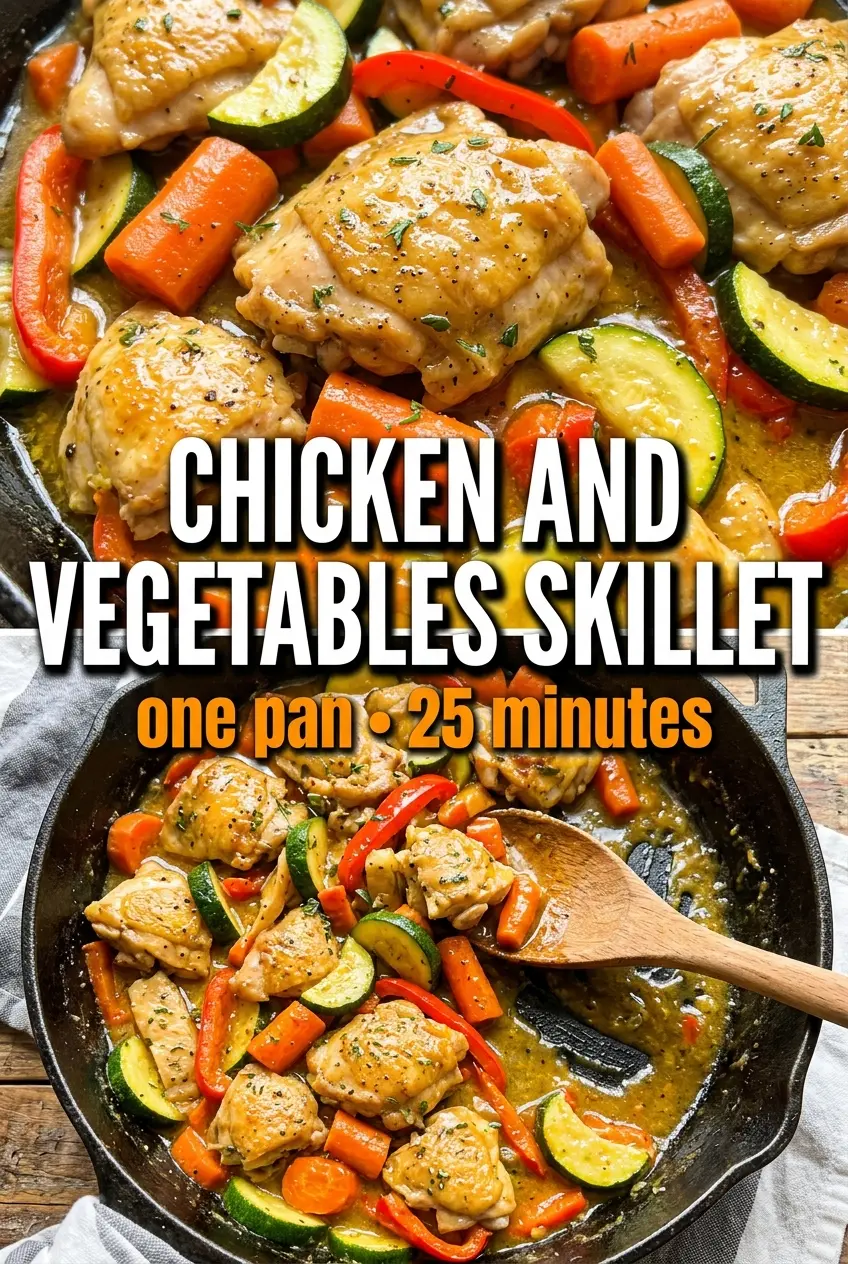
Chicken and Vegetables Skillet
Ingredients
Equipment
Method
- Season the chicken strips with Italian seasoning, smoked paprika, salt, and pepper to coat evenly.
- Heat olive oil in a large cast iron skillet over high heat, then sear the chicken for 4-5 minutes until deeply golden and cooked through to 165°F; remove from the pan.
- Add bell peppers, zucchini, and red onion to the same skillet and cook over high heat for 5-6 minutes until blistered with slightly charred edges.
- Add the garlic and cook for 1 minute until fragrant, then pour in the chicken broth and deglaze, scraping up browned bits.
- Return the chicken to the pan and add the butter, then toss to coat all ingredients in a light herb garlic sauce.
- Garnish with fresh parsley and serve with lemon wedges.