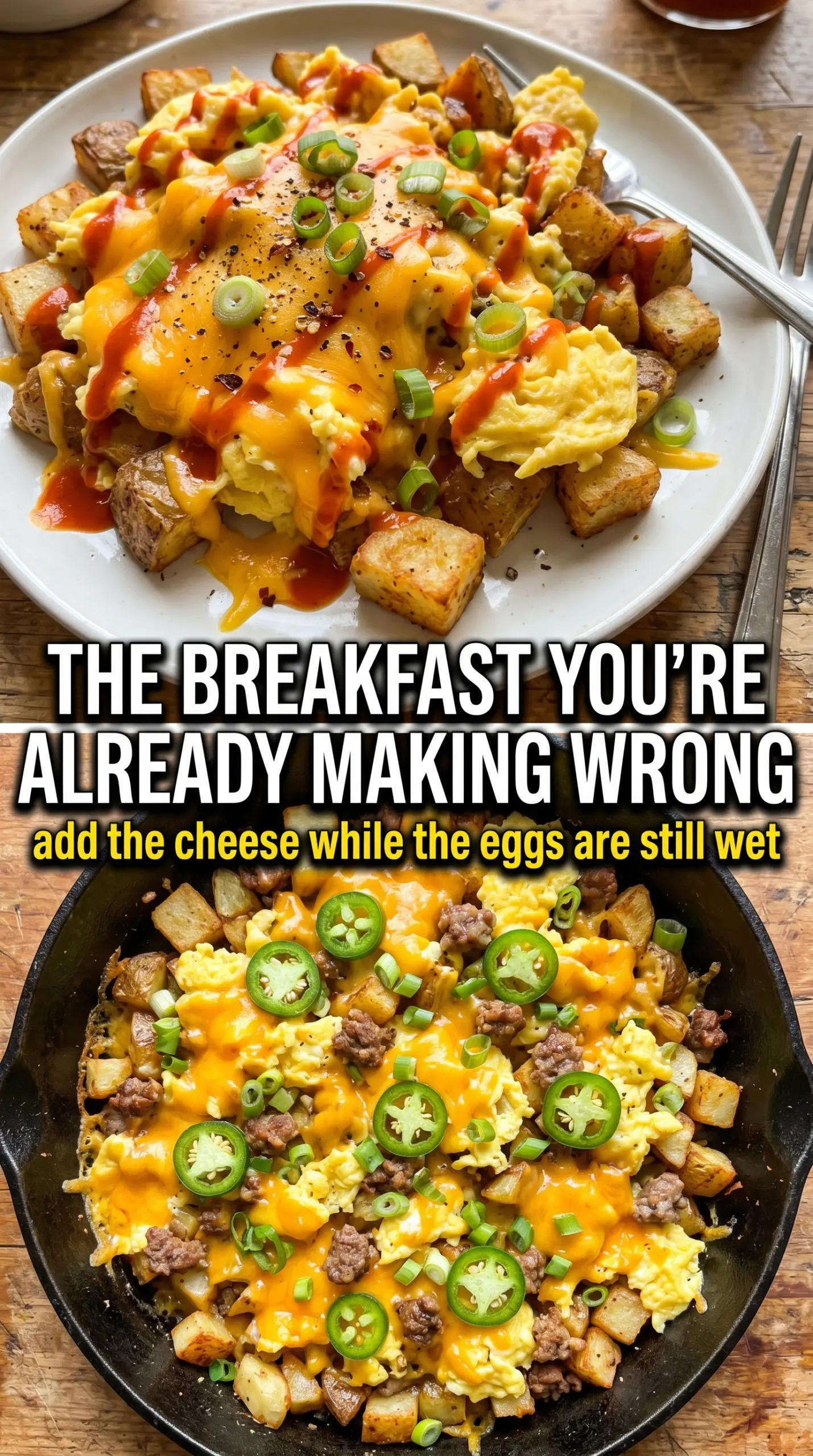
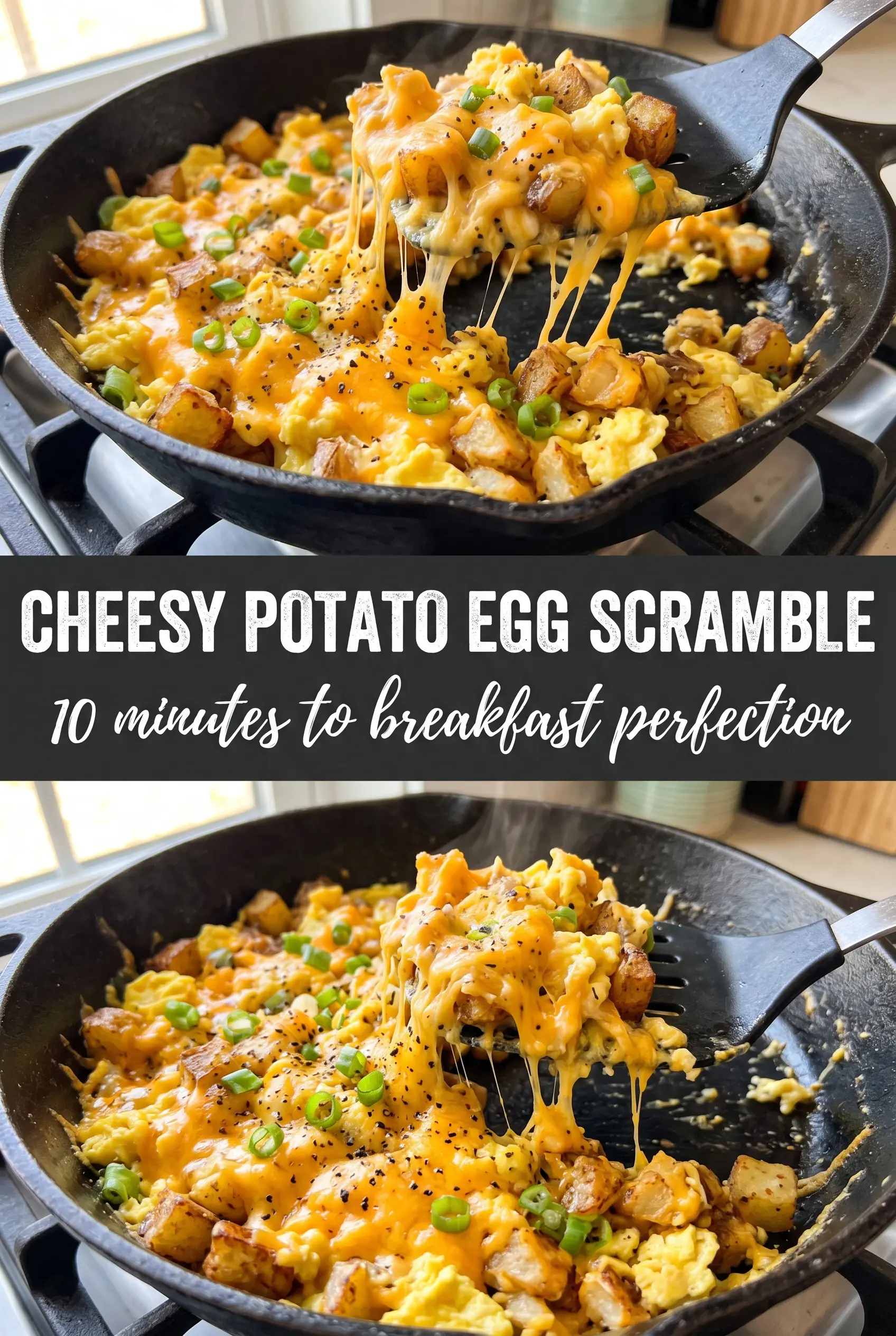
Golden crispy potatoes, fluffy eggs, and melted cheddar turn this cheesy potato egg scramble into the kind of breakfast that disappears fast. The potatoes hold onto their edges, the eggs stay soft, and the cheese melts through the skillet instead of sitting in one heavy layer on top. It eats like a proper one-pan breakfast, not a pile of separate parts.
The key is giving the potatoes enough time to brown before anything else crowds the pan. Once they’re crisp, the onion and bell pepper cook just long enough to soften and sweeten, and the eggs go in at the end so they stay tender. A little milk keeps the scramble loose and creamy, while sharp cheddar adds enough punch to season the whole pan.
Below, you’ll find the small timing details that keep the eggs from turning dry, plus a few smart swaps if you want to change up the vegetables or make this dairy-free.
The potatoes got that perfect crisp edge, and the eggs stayed soft instead of drying out. I loved how the cheddar melted all through the skillet instead of clumping on top.
Cheesy Potato Egg Scramble with crispy potatoes, melty cheddar, and soft scrambled eggs belongs on your breakfast rotation.
The Part Most Potato Egg Skillets Get Wrong
The mistake people make with a dish like this is rushing the potatoes before the pan has had time to do its job. If they go in too thick, or if the heat is too low, they steam and turn soft instead of building that crisp, golden edge that gives the scramble its best texture. Cut them small enough to cook through in the time it takes the onions and peppers to soften.
Once the potatoes are browned, the rest of the skillet moves quickly. The vegetables add moisture, which is fine as long as they cook just long enough to lose their raw bite before the eggs go in. Add the eggs at the end and stir gently; aggressive stirring breaks up the potatoes and can push the eggs from creamy to grainy in a hurry.
- Yukon gold potatoes — These hold their shape and brown nicely without falling apart. Russets work if that’s what you have, but they’re drier and a little more fragile, so watch them closely in the skillet.
- Sharp cheddar — Sharp cheddar gives the scramble its backbone. Mild cheese melts fine, but it tastes flatter, so use the sharper version if you want the cheese to come through the potatoes and eggs.
- Whole milk — A small amount keeps the eggs soft and just loose enough to fold through the potatoes. Half-and-half works for a richer result, but skip heavy cream unless you want the eggs to feel heavier.
- Butter — Butter helps the potatoes brown and adds flavor right from the start. If you use oil instead, the potatoes still crisp, but the skillet tastes less rounded.
What Each Ingredient Is Actually Doing in This Recipe
- Primary ingredient (the star) — Quality matters most. Choose the best you can find.
- Cooking medium (oil, butter, or broth) — This carries flavors and prevents dryness.
- Seasonings (salt, pepper, spices, herbs) — Layer flavors so nothing overpowers. Build depth gradually.
- Aromatics (garlic, onion, herbs) — Cook with fat to bloom flavors. Become the foundation.
- Supporting ingredients — Complement the main ingredient without overpowering it.
- Sauce or liquid (if applicable) — Brings flavors together. Balance richness with acid.
- Acid (lemon, vinegar, wine, or other) — Brightens and prevents flat-tasting results.
- Final finish (garnish, glaze, or sauce) — Prevents one-dimensional taste and adds visual appeal.
Getting the Potatoes Crispy Before the Eggs Take Over
Build the first crust
Melt the butter in a large skillet over medium-high heat, then add the diced potatoes in an even layer. Let them sit long enough to take on color before stirring, then toss occasionally so they brown on multiple sides. If you stir constantly, they never get a chance to build that crust, and you end up with pale, soft potatoes instead of the crispy base this dish needs.
Soften the vegetables without losing the crunch
When the potatoes are golden, add the onion and bell pepper and cook just until they lose their raw edge. The onions should turn translucent and the peppers should soften, but they shouldn’t collapse into the pan. Season here with garlic powder, salt, and black pepper so the vegetables pick up flavor before the eggs dampen everything down.
Fold in the eggs gently
Whisk the eggs with the milk until the mixture looks even and a little frothy, then pour it over the skillet. Stir slowly and scrape from the bottom so the eggs form soft curds around the potatoes instead of breaking them apart. Pull the pan from the heat when the eggs still look slightly glossy; they’ll finish setting from the residual heat.
Finish with cheese and chives
Scatter the cheddar over the top, cover the pan for about a minute, and let the steam melt it into the scramble. The cheese should look glossy and soft, not greasy or split. Finish with fresh chives and cracked pepper, then serve right away with hot sauce if you want a little heat cutting through the richness.
How to Change This Breakfast Without Losing the Skillet Magic
Make it dairy-free
Use olive oil instead of butter and swap in a dairy-free shredded cheese that melts well. The eggs will still cook up soft, but you’ll lose a little richness, so add extra black pepper and chives to keep the skillet tasting lively.
Use bacon or ham for a heartier version
Cook diced bacon or ham first, then use a little of the rendered fat in place of part of the butter. That gives the potatoes extra savoriness, but don’t overdo it or the skillet starts tasting heavy instead of balanced.
Swap the vegetables based on what’s in the fridge
Mushrooms, spinach, or diced zucchini can all work here, but cook off any extra moisture before the eggs go in. If the vegetable releases a lot of water, the skillet turns wet and the potatoes lose their crisp edges.
Turn it into a gluten-free breakfast skillet
This recipe is naturally gluten-free as written, as long as your cheese and seasonings are certified gluten-free. Serve it straight from the pan with fruit or toast on the side and it feels like a full breakfast without any extra work.
Storage and Reheating
- Refrigerator: Store leftovers in an airtight container for up to 3 days. The potatoes soften a bit, but the flavor holds up well.
- Freezer: I don’t recommend freezing this one. Eggs and potatoes both change texture after thawing, and the scramble turns watery.
- Reheating: Warm it in a skillet over medium-low heat with a small splash of water and a lid for a few minutes. The biggest mistake is blasting it in the microwave too long, which makes the eggs rubbery and dries out the potatoes.
Answers to the Questions Worth Asking
Cheesy Potato Egg Scramble
Ingredients
Equipment
Method
- Melt the butter in a large cast iron skillet over medium-high heat, then add the diced Yukon gold potatoes and cook for 12–15 minutes, stirring occasionally, until golden and crispy.
- Add the diced onion and red bell pepper and cook for 4 more minutes until softened, then season with garlic powder, salt, and cracked black pepper to taste.
- Whisk the eggs with the whole milk, then pour them over the potato mixture.
- Stir gently and cook for 3–4 minutes until the eggs are just set and still soft.
- Top with the shredded sharp cheddar, cover the skillet for 1 minute until melted, then garnish with fresh chives and serve with hot sauce.