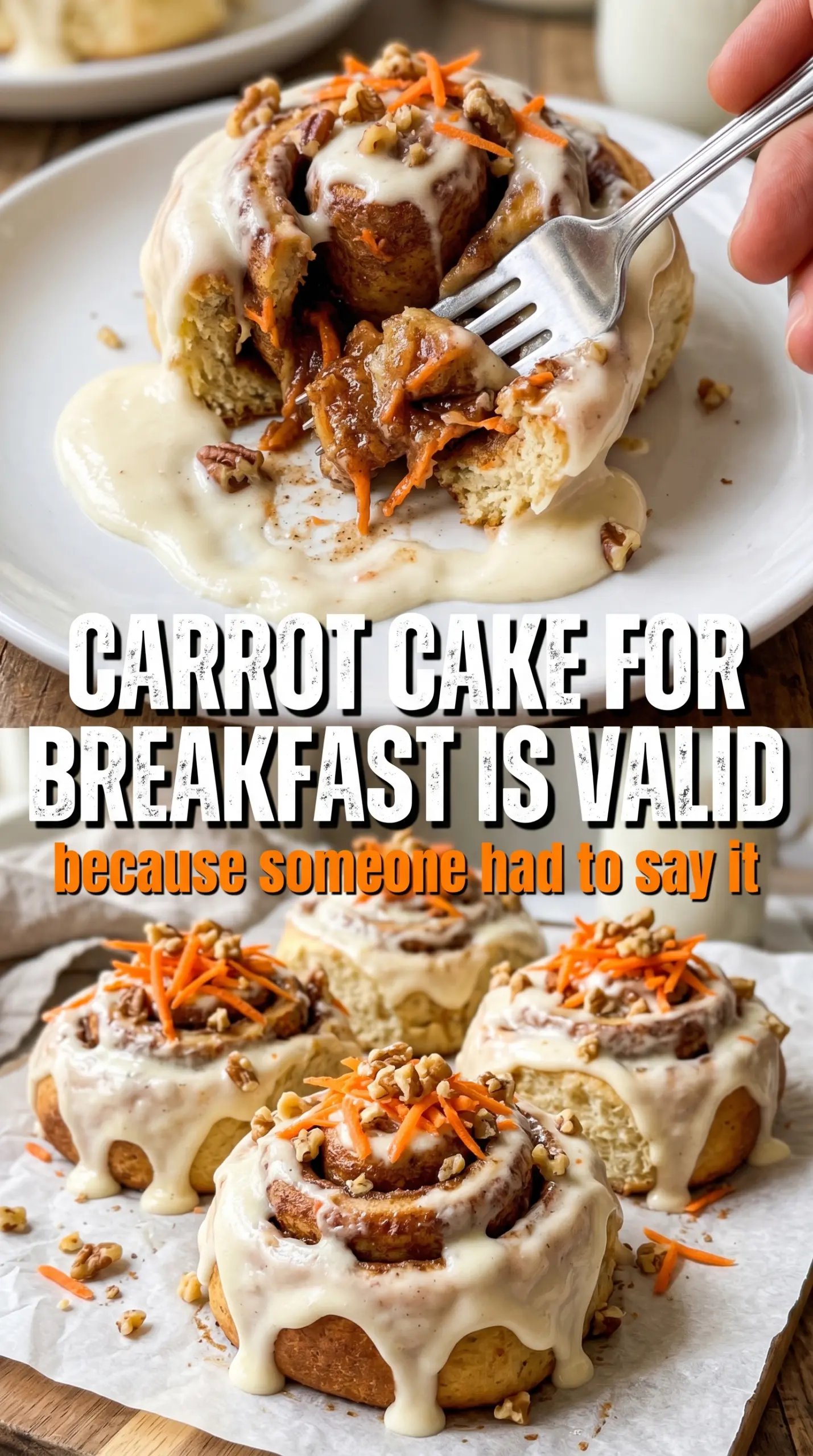
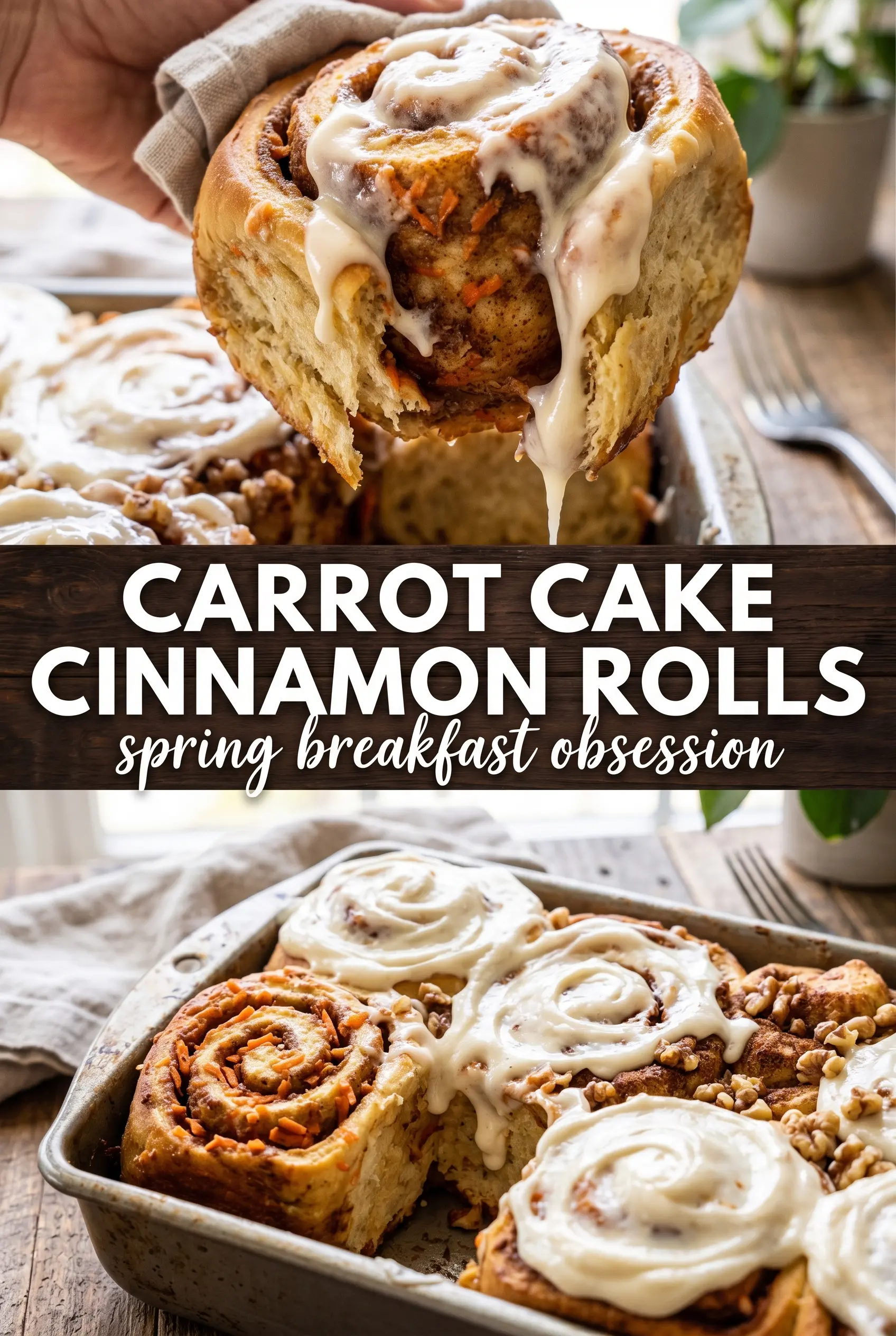
Plump cinnamon rolls with shredded carrot tucked into the filling hit that sweet spot between breakfast and dessert. The rolls bake up soft and tall, with warm spice in every swirl and a cream cheese frosting that melts just enough to slide into the cracks. They taste like carrot cake took a turn through the bakery case and came out even easier to serve warm from a pan.
The carrot stays in the filling here instead of the dough, which is the part that keeps the texture right. It softens as the rolls bake, so you get little ribbons of carrot-cake flavor without weighing down the dough. Brown sugar, cinnamon, nutmeg, and ginger do the heavy lifting, while the cream cheese frosting brings the familiar tang that makes the whole pan taste complete.
Below, I’ll walk through the part that matters most: how to roll the dough tight enough for clean spirals, how to keep the filling from leaking out, and how to frost them so the tops stay glossy and soft instead of crusting over.
The rolls came out pillowy and the carrot in the filling kept them from being too sweet. The frosting melted into the swirls just enough, and my kitchen smelled like cinnamon and spice for hours.
Like these carrot cake cinnamon rolls? Save them for a weekend breakfast with soft swirls, carrot-spice filling, and cream cheese frosting.
The Reason These Rolls Stay Soft Instead of Dense
The biggest mistake with sweet rolls is packing in too much filling before the dough has enough structure to hold it. Carrot cake cinnamon rolls work best when the dough is kneaded until smooth and elastic, then rolled to an even thickness so the spirals rise upward instead of spreading sideways. The instant yeast helps keep the schedule simple, but the first rise still matters. Skip that, and the rolls bake up tight in the center.
The other thing that changes the texture is the carrot. Shredded carrot adds moisture and a little heft, but it doesn’t behave like raisins or chopped nuts. It softens into the brown sugar mixture and keeps the filling from feeling dry, which means the rolls stay tender even after they cool a bit.
- Instant yeast — This gives you a reliable rise without proofing in a separate bowl. If you only have active dry yeast, bloom it in the warm milk first and add a few extra minutes to the rise.
- Warm milk — It should feel warm, not hot. Too much heat kills the yeast; too little slows the dough down and makes the first rise drag.
- Shredded carrots — Freshly shredded carrots work best because they soften evenly. Pre-shredded carrots are often drier and thicker, so they don’t melt into the filling the same way.
What Each Ingredient Is Actually Doing in This Dough
- All-purpose flour — This gives the rolls enough strength to hold a tight spiral while still baking soft. Bread flour makes them chewier; that’s not what you want here.
- Butter — Softened butter in the dough keeps the crumb rich, and the filling butter helps the sugar and spices spread evenly. Cold butter tears the dough and leaves gaps in the swirl.
- Brown sugar — This is the backbone of the filling. It melts into the carrot and spices, creating a sticky layer that stays moist under the frosting.
- Cream cheese — Don’t swap this for plain butter if you want the carrot-cake feel. The tang cuts the sweetness and makes the frosting taste balanced instead of just sugary.
- Vanilla extract — It rounds out the frosting and pulls the spice flavors together. Use pure vanilla if you can; the difference shows up in a simple frosting like this.
Rolling, Filling, and Frosting Without Losing the Swirl
Building a dough that rises cleanly
Mix the flour, yeast, sugar, and salt first so everything is evenly distributed before the wet ingredients go in. Add the warm milk, softened butter, and egg, then knead until the dough turns smooth and springy, not sticky and shaggy. If it clings to your hands after a few minutes, give it a light dusting of flour instead of dumping in a lot at once. Too much flour is what makes sweet rolls dry and bready.
Spreading the filling the right way
Roll the dough into a neat rectangle before adding the filling, because uneven edges create weak spots in the swirl. Spread the butter all the way to the corners, then scatter the brown sugar, spices, and shredded carrot in an even layer. Press the filling lightly into the butter so it sticks. If the dough starts sliding around, chill it for a few minutes. That stops the filling from squishing out when you roll.
Slicing and proving the rolls
Roll up the dough tightly from the long side so the spiral has enough structure to hold after slicing. Use a sharp knife or unflavored dental floss to cut 12 even rolls. Place them cut-side up in a greased 9×13 pan with a little space between each one, then let them rise until puffy and touching. If they don’t look noticeably fuller before baking, they’ll bake up dense in the middle.
Baking and frosting while warm
Bake until the tops are golden and the centers are set, about 20 to 25 minutes. Pull them when the pan smells deeply spiced and the rolls spring back lightly when touched in the center. Beat the cream cheese frosting until smooth, then spread it over the rolls while they’re still warm. That’s what lets it melt into the spirals instead of sitting in a stiff layer on top.
Three Ways to Make These Rolls Fit the Morning You’ve Got
Dairy-Free Carrot Cake Cinnamon Rolls
Use plant-based butter in both the dough and filling, and swap the milk for an unsweetened non-dairy milk that you’ve warmed gently. For the frosting, use a dairy-free cream cheese alternative. The texture stays soft, but the frosting will taste a little less tangy and a little sweeter, so stop adding sugar once it tastes balanced.
Extra-Spiced Version
Add a pinch of cloves or allspice to the filling if you want a stronger carrot-cake profile. Keep the amount small, because those spices can take over fast. This version tastes deeper and warmer, especially if you’re serving the rolls as a brunch centerpiece.
Make-Ahead Overnight Rolls
Shape the rolls and place them in the pan, then cover tightly and refrigerate overnight instead of doing the second rise on the counter. In the morning, let them sit at room temperature until they look puffy again before baking. Cold dough straight from the fridge bakes unevenly, with browned tops before the centers finish rising.
Storage and Reheating
- Refrigerator: Store covered for up to 4 days. The frosting firms up, but the rolls stay tender if you keep them airtight.
- Freezer: Freeze unfrosted rolls for up to 2 months. Wrap them tightly, then thaw before warming and frosting.
- Reheating: Warm individual rolls in the microwave for 20 to 30 seconds, or cover the pan with foil and heat in a low oven. Don’t blast them on high heat or the edges dry out before the center loosens.
Answers to the Questions Worth Asking
Carrot Cake Cinnamon Rolls
Ingredients
Equipment
Method
- In a mixing bowl, combine all-purpose flour, instant yeast, sugar, and salt.
- Add warm milk, butter (softened), and egg, then knead until smooth and elastic.
- Cover the dough and let it rise for 1 hour, until puffy and increased in volume.
- Roll the dough into a rectangle on a lightly floured surface.
- Spread softened butter over the dough.
- Sprinkle brown sugar, cinnamon, nutmeg, ginger, and shredded carrots evenly over the butter.
- Roll the dough up tightly to form a log.
- Slice the log into 12 rolls, then place them in a greased 9x13 pan.
- Cover and let the rolls rise for 30 minutes until visibly swollen.
- Bake at 375°F for 20–25 minutes until the tops are golden.
- Beat cream cheese (softened), powdered sugar, milk, and vanilla extract until smooth, then spread over the warm rolls.